What Is a Door Sweep Used For? Gaps, Drafts, and Fit
A door sweep is the strip attached to the bottom edge of a door that closes the gap between the door and the threshold or floor, blocking drafts, dust, insects, and light. Unlike the weather stripping on the sides and top of a door, which seals against the frame, a sweep has to seal against a moving, uneven surface: the floor. This guide covers the different sweep styles, how to measure and size one correctly, and the fit problems that make even a good sweep fail.
What a Door Sweep Actually Does
A gap of even a quarter inch under an exterior door adds up to roughly the same air leakage as a 3-inch hole in the wall, according to building science estimates used by weatherization programs, because that thin gap runs the full width of the door. A sweep closes that gap with a flexible blade, brush, or vinyl bulb that drags lightly across the floor or threshold as the door swings, cutting conditioned air loss, blocking rain from wind-driven splash, and keeping out crawling insects that a taller gap would let through freely.
The Main Sweep Styles
A drip cap or vinyl bulb sweep uses a rounded rubber or vinyl tube that compresses against the floor for a tight seal, best for exterior doors that need real weather resistance. A brush sweep uses stiff nylon or polypropylene bristles instead, which flex over uneven surfaces like carpet or an out-of-level threshold without binding, making it the better choice for doors that drag on carpet or where the floor isn’t perfectly flat. An automatic (or “drop”) door bottom raises off the floor when the door opens and drops down to seal only when it’s closed, which avoids the constant scraping wear of a fixed sweep but costs more and requires more precise installation.
Measuring and Fitting
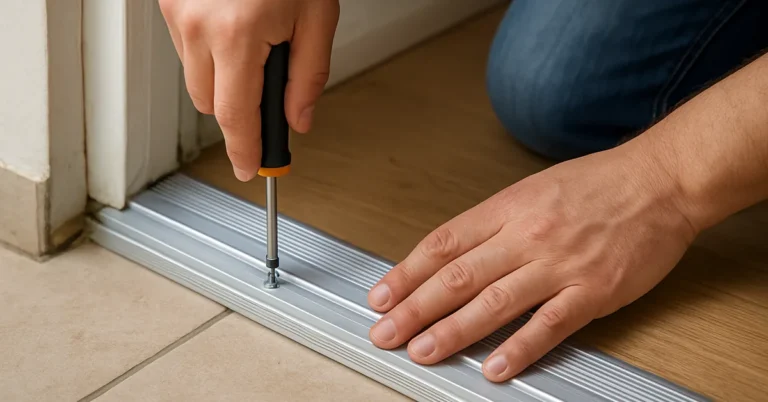
Measure the exact width of the door (not the frame opening), and buy a sweep slightly wider than needed since most come in standard lengths like 36 or 42 inches meant to be trimmed with a hacksaw. The critical fit measurement is the gap between the bottom of the door and the floor or threshold when the door is closed: too tight and the sweep drags hard enough to wear out within months or keep the door from closing fully; too loose and it doesn’t seal at all. Most sweeps have some adjustment range built into their mounting screws or slotted mounting channel, letting you raise or lower the blade slightly after installation to dial in contact.
Common Fit Problems
An uneven threshold, common on older homes where the sill has settled or worn unevenly, means a rigid vinyl sweep seals at one end but leaves a gap at the other; a brush-style sweep or a sweep with a flexible, self-adjusting seal handles that unevenness better. Carpet transitions cause the opposite problem: a sweep sized for a bare floor drags hard on carpet pile, so measure with the carpet in place, not the subfloor. If a sweep was installed correctly but still lets in light in a few spots when the door is closed, check that the door itself isn’t warped, since a bowed door bottom will leave the sweep unable to make even contact across its full width no matter how well it’s fitted.
Frequently Asked Questions
Do I need a door sweep if I already have a threshold with weatherstripping?
Often yes. A threshold’s built-in weatherstrip seals against the door face, but many doors still have a small gap at the very bottom edge that only a sweep mounted to the door itself closes. Check for daylight under the door with the threshold weatherstrip in place before deciding a sweep is redundant.
Will a door sweep work on an interior door?
Yes, and it’s a common fix for interior doors too, mainly to block sound transfer, stop pet hair and dust from migrating between rooms, or contain a room’s heating and cooling from a hallway with different conditions. A lighter brush sweep is usually enough since interior doors don’t need weatherproofing.
How long does a door sweep typically last?
A vinyl or rubber sweep on a heavily used exterior door usually needs replacing every 2 to 4 years as the material hardens, cracks, or wears down from constant floor contact. Brush sweeps last longer since bristles flex rather than compress, but they can mat down over time and lose some sealing effectiveness.
Sponsored / affiliate links. As an Amazon Associate I earn from qualifying purchases. I may earn additional commission from eligible campaigns.
 Door Draft Blocker 32 Inches Door Sweep for Interior Doors Wind Blocker Door Bottom Seal Weather Stripping Black Door Draft Stoppers for Bottom of Door 32 Inch Block Cold Air Noise Smoke Stopper
 Door Draft Stopper, 39.4" Door Sweep for Bottom of Door, Weather Stripping Seal Gap Filler, Blocks Cold Air & Noise, Save Energy, Easy Install (Brown)