Why Is My Door Rubbing? Find the Cause Before Planing or Adjusting
A door that rubs is almost always telling you something moved, either the door itself, the frame, or the hardware holding them together, rather than a sign you simply need to plane the edge. Planing before finding the real cause often makes the fit worse over time as the underlying movement continues. This guide walks through the actual causes in order of likelihood, how to check each one, and when planing is genuinely the right fix.
Check the hinges before anything else
Loose hinge screws let the door sag slightly on its hinge side, which drops the opposite top corner into the frame and causes rubbing at the top or the latch-side edge. Open the door and check for visible gaps at the hinge, then tighten each screw; if a screw spins without biting, the pilot hole has stripped and needs a longer screw or a golf tee and wood glue to rebuild the hole before retightening. A worn or loose hinge pin can also let the door drop; lifting the door slightly while it is open (checking for play at the hinge knuckle) reveals this quickly.
Seasonal wood movement
Solid wood doors expand across the grain when humidity rises in summer and shrink back in dry winter heating season, which is why a door that closes fine in January can bind along the top or latch edge by July. This kind of rubbing is usually mild, consistent across the whole edge, and reverses somewhat with the seasons. If the rubbing is seasonal and minor, waiting it out or planing only a small amount off the worst spot is often better than an aggressive fix that leaves a gap once humidity drops again.
A racked or settled frame
Houses settle, and door frames can shift out of square over years, especially near foundation movement or above a header that has sagged slightly. Signs of this include diagonal rubbing (contact at the top-hinge-side corner and the bottom-latch-side corner simultaneously), cracks in the drywall above the frame, or a strike plate that no longer lines up with the latch. Check the frame with a level on both jambs and across the head jamb; if it is measurably out of plumb, the fix is usually shimming or resetting the frame, not planing the door, since planing a door to fit a racked frame just moves the problem.
When planing is actually the right fix
Planing makes sense only after hinges are confirmed tight and the frame is confirmed square, and the rubbing is a genuine size mismatch, such as a new door hung slightly oversized or a floor covering (new carpet, added flooring) that has raised the finished floor height. Mark the exact contact point with a pencil or chalk while the door is nearly closed, then remove the door and plane only that marked area in thin passes, checking fit frequently rather than removing a lot of material at once. For paint-related rubbing where added coats of paint have built up thickness on the edge over years, sometimes stripping old paint restores clearance without cutting any wood at all, similarly to how identifying the real cause of a door hitting the frame saves unnecessary planing.
Frequently Asked Questions
Why does my door only rub in summer?
Higher humidity causes wood fibers to absorb moisture and swell across the grain, which is most noticeable on the top and latch edges of solid wood doors. This typically resolves partially on its own once indoor humidity drops in cooler months.
Can I fix a rubbing door without removing it?
Hinge adjustments and screw tightening can be done with the door in place. Planing generally requires removing the door from its hinges to work on a flat, stable surface and to plane evenly along the full edge.
How much wood should I remove when planing a rubbing door?
Remove material in thin passes, often just a millimeter or two at a time, and re-hang the door to check fit between passes. Removing too much in one pass can create a visible gap that cannot be undone without adding material back.
Sponsored / affiliate links. As an Amazon Associate I earn from qualifying purchases. I may earn additional commission from eligible campaigns.
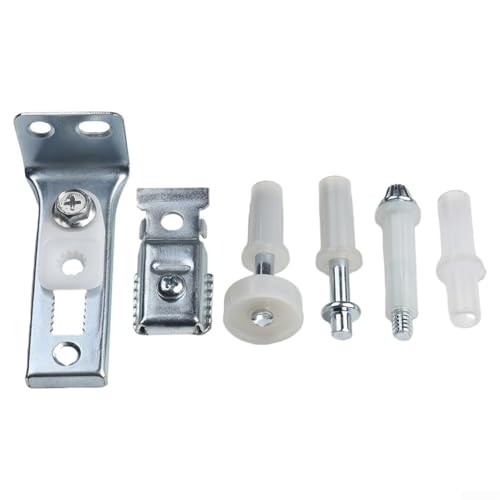 Bi-Fold Door Hardware Repair Kit, Fits 1" to 1-3/8" Thick Closet or Room Doors, Includes Top and Bottom Brackets, Pivots, Guide Wheel for Smooth Operation and Easy Installation
 Bypass Sliding Door Hardware Kit for Closet Doors - Pocket Door Track and Rollers, Double Box Rail Barn Door Hardware for Cabinets