Air Vs Airless Paint Sprayer: Which One Is Actually Better?
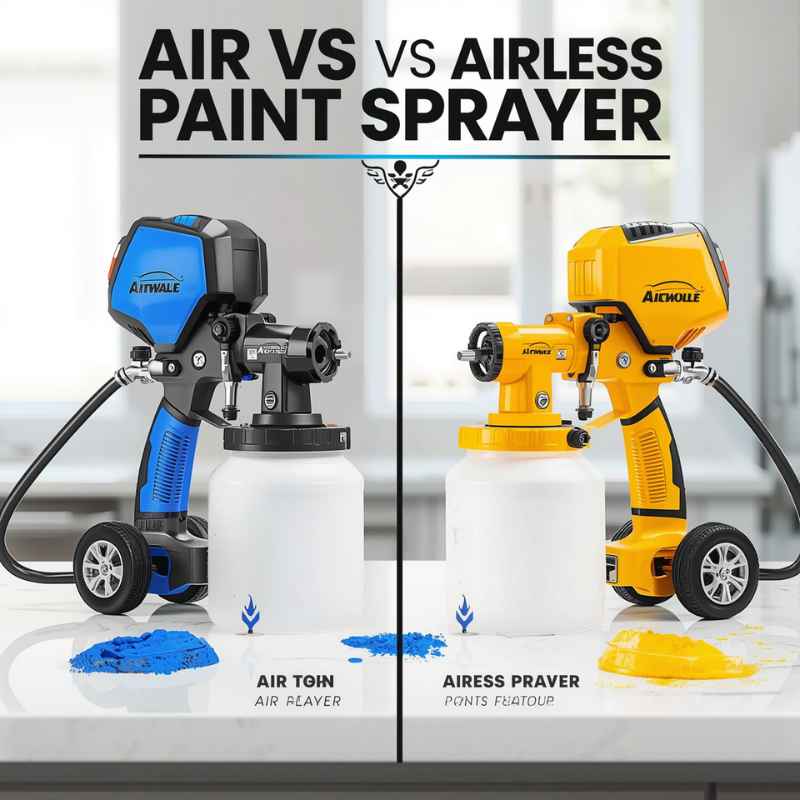
Choosing between an air and an airless paint sprayer depends on your project’s needs. Air sprayers offer fine control and a smooth finish for detailed work. Airless sprayers are faster and better for large surfaces but can be less precise. Understanding their core differences helps you pick the best tool.
Understanding Paint Sprayer Types
Paint sprayers make painting faster. They also give a smooth look. There are two main kinds: air sprayers and airless sprayers.
They use different ways to spray paint. This means they are good for different jobs.
How Air Paint Sprayers Work
An air sprayer uses compressed air. This air comes from an air compressor. The air is pushed through the sprayer.
It mixes with the paint. This makes a fine mist. The mist sprays onto your surface.
Think of it like a perfume bottle. You press down, and a fine mist comes out.
There are a few types of air sprayers. HVLP stands for High Volume Low Pressure. These use a lot of air.
But the air pressure is low. This helps control overspray. It also puts more paint on the wall.
This is good for saving paint. Traditional air sprayers use higher pressure. They can spray paint very quickly.
Air sprayers are known for their control. They give a very smooth finish. This makes them great for furniture.
They are also good for cabinets. You can get a very fine line. This means less mess around edges.
But they can be slower for big walls.
How Airless Paint Sprayers Work
An airless sprayer does not use air. It uses high pressure. A pump in the sprayer pushes paint.
It pushes it very hard. This high pressure forces paint through a small tip. This small tip breaks the paint into a spray.
It’s like a leaky hose with water. The water sprays out fast.
Airless sprayers are much faster. They can cover large areas quickly. Think of big walls or houses.
They don’t need an air compressor. This makes them more portable sometimes. They are often easier to use for beginners on big jobs.
The spray from an airless sprayer can be a bit wider. It might have more overspray. This means paint can land where you don’t want it.
You need to use drop cloths. You also need to mask off areas carefully. The finish can be very good.
But it might not be as fine as an air sprayer.
My First Painting Project Mishap
I remember my first big DIY painting job. It was my living room. I wanted a super smooth, professional look.
I’d seen friends use sprayers and loved the results. So, I bought what I thought was the best option. It was a fancy airless sprayer.
I was so excited to get started.
I prepped the room carefully. Or so I thought. I put down drop cloths.
I taped off the trim. I was ready to go. I hooked up the sprayer, poured in the paint, and hit the trigger.
WHOOSH! Paint flew everywhere. It was like a mini hurricane of beige.
It coated my new bookshelf. It dusted the ceiling fan. It even made a Jackson Pollock-esque splatter on my dog, who was hiding under a blanket.
Panic set in. I spent hours cleaning. The smooth finish I dreamed of looked rough in places.
I learned a hard lesson that day. Different tools do different jobs. My excitement turned into frustration.
I realized I hadn’t understood the tools I was using. This experience taught me the real importance of choosing the right paint sprayer for the task at hand.
Air Sprayer Quick Facts
What it is: Uses compressed air to spray paint.
Best for: Fine details, furniture, cabinets, smooth finishes.
Needs: Air compressor, hoses.
Pros: Excellent control, smooth finish, less overspray potential.
Cons: Slower for large areas, requires more setup.
Choosing the Right Sprayer for Your Project
The biggest factor is the job size. Big walls need speed. Small, detailed items need control.
Think about what you are painting.
For Large Walls and Ceilings
If you’re painting a whole room, a whole house exterior, or a large fence, speed is key. An airless paint sprayer is usually your best friend here. It can lay down a lot of paint very fast.
This saves you so much time. You can finish a large room in an hour or two.
An airless sprayer covers more ground with each pass. It’s designed for this kind of work. You’ll still need to prep well.
Masking is important. But the actual spraying is quick. You can get a good, even coat on big, flat surfaces.
For Furniture, Cabinets, and Trim
When you need a perfect, glass-like finish, reach for an air sprayer. This is especially true for furniture. Think tables, chairs, or doors.
Cabinets also look amazing with an air-sprayed finish. You want to see no brush marks or roller lines. An air sprayer is the way to go.
An HVLP sprayer is great for these small projects. It gives you lots of control. You can aim the spray exactly where you want it.
This means less paint on things you aren’t painting. The fine mist creates a smooth, even coat. It looks like it was done in a factory.
For Fences and Decks
A fence or a deck can go either way. If it’s a simple picket fence, an airless sprayer will be fast. You can walk along and spray.
If you have a complex deck with railings and stairs, it might take more thought.
For a deck, the goal is often coverage. You want to get into all the wood grain. An airless sprayer is often good here too.
It can get the paint into the wood. Make sure to use a tip size that works for the paint you are using. Some stains are thin.
Some paints are thick.
Airless Sprayer Quick Facts
What it is: Uses high pressure to spray paint.
Best for: Large walls, houses, fences, quick coverage.
Needs: The sprayer itself, paint, possibly an extension cord.
Pros: Fast, covers large areas quickly, portable without compressor.
Cons: More overspray, can be harder for fine detail, needs careful prep.
The Experience of Using Each Type
Let’s talk about what it feels like to use these tools. It’s not just about the result. It’s about the process too.
Your comfort and ease matter.
My Weekend with an HVLP
I decided to refinish some old wooden chairs. They were beautiful but worn. I wanted them to look new again.
I borrowed an HVLP sprayer from a friend. Setting it up was easy. It had a small cup for paint.
I thinned the paint just a bit, as the manual said. Then, I put on a mask and gloves.
Holding the sprayer felt light. The trigger was smooth. I aimed at one of the chair legs.
A soft mist of paint came out. I moved my hand slowly. The paint laid down evenly.
There was hardly any overspray. I could see the old wood disappear under a fresh, smooth coat. It was so satisfying.
I finished all four chairs in an afternoon. The finish was incredible. It looked like they came from a fancy store.
This experience made me a big fan of air sprayers for detail work.
Conquering the Big Wall with Airless
Later, I tackled my garage. It’s a huge space. I needed to paint the walls and ceiling.
I rented a big airless sprayer. It was heavier. It had a long hose connecting to a big bucket of paint.
It felt powerful.
I started spraying. The paint came out with force. It covered the wall fast.
This was amazing! I could see progress in minutes. But I had to be careful.
If I stopped moving, I got drips. If I sprayed too close, I got thick spots. I also noticed a lot of paint dust in the air.
I was glad I had a mask on. Masking everything was crucial. Even with careful masking, I found some tiny paint specks on my tools.
But for the sheer size of the job, it was worth it. The garage looked bright and clean so quickly. It was a different kind of satisfaction – the thrill of brute force efficiency.
Paint Sprayer Differences at a Glance
| Feature | Air Sprayer (HVLP) | Airless Sprayer |
|---|---|---|
| Power Source | Air Compressor | Electric Pump |
| Spray Mechanism | Air mixes with paint | High pressure breaks paint |
| Speed for Large Areas | Slower | Much Faster |
| Finish Quality | Very Fine, Smooth | Good, can have texture |
| Overspray | Lower | Higher |
| Portability (Tool Only) | Lighter sprayer, needs compressor | Can be heavier, self-contained |
Factors Beyond Speed and Finish
There are other things to think about too. These can make one sprayer better for you than the other.
Cost and Investment
Airless sprayers can be less expensive to buy initially. A good homeowner-grade airless sprayer might cost a few hundred dollars. You might also rent them for jobs.
Buying a good air compressor and a quality air sprayer setup can cost more upfront. However, if you paint a lot, the compressor can be used for other tools too.
Consider the cost of paint. Air sprayers often use less paint. They are more efficient.
This can save you money on paint for small projects. For big jobs, the speed of an airless might mean you use more paint but finish faster.
Maintenance and Cleaning
Cleaning is crucial for any paint sprayer. Both types need thorough cleaning. Airless sprayers often have more complex parts.
They might need flushing with water and a special solvent. You need to get all the paint out of the pump and hoses.
Air sprayers, especially HVLP models with cups, are usually easier to clean. You can often wash the cup and nozzle parts with water or thinner. However, you also have to clean the air compressor and hoses.
If you don’t clean them well, paint can dry inside, causing problems.
Paint Types and Viscosity
Paint thickness, or viscosity, is important. Airless sprayers can handle thicker paints. They can spray latex paints straight from the can.
This is a big advantage for large jobs.
Air sprayers often need paint to be thinned. This is especially true for HVLP sprayers. You need to add a reducer.
This makes the paint flow through the small nozzle. Not all paints can be thinned. Some stains and lacquers work well.
Always check the paint can and the sprayer manual.
Tips for Choosing
For Quick Projects: If you paint a few things a year, renting might be best.
For DIYers: A good HVLP sprayer is great for furniture. A basic airless sprayer works for walls.
For Pros: Invest in high-quality tools for both types, depending on your specialty.
Which One is “Better”? The Verdict
The truth is, neither is universally “better.” They are different tools for different tasks. It’s like asking if a hammer or a screwdriver is better. They both have a job.
When an Air Sprayer Wins
An air sprayer is better when you need precision and a flawless finish. If you are painting a vintage dresser, intricate trim, or a delicate piece of art, an air sprayer is your choice. The control it offers is unmatched.
You can achieve that smooth, spray-gun look that’s hard to get with a brush or roller.
For anyone who values detail and a showroom shine on smaller items, the air sprayer is king. It might take more time, but the results are often stunning. Think of kitchens or bathrooms where cabinets and doors need that perfect touch.
When an Airless Sprayer Wins
An airless sprayer is better when you need to cover a lot of surface area quickly. If you have a large room, an entire house exterior, or a long fence, an airless sprayer will save you hours. Its power and speed are its main selling points.
For large-scale projects, the airless sprayer is the clear winner. It’s the workhorse that gets the job done fast. It’s often more forgiving for beginners on large walls, though prep is still vital.
What This Means for Your Next Project
Before you buy or rent, ask yourself these questions:
- What am I painting? (Size and detail level)
- How much time do I have?
- What kind of finish do I want?
- What is my budget?
- How often will I use this tool?
Answering these will point you toward the right sprayer. Sometimes, the best solution might even be both. You could use an airless for the main walls and an air sprayer for the trim and doors.
Normal Paint Sprayer Behavior
With an air sprayer, expect a fine mist. You should see a smooth, even coat. Little to no “splatter” should occur.
If you hear the compressor running a lot, it might be working too hard. That could mean your paint is too thick.
With an airless sprayer, expect a wider fan of paint. It should be a consistent spray. If you see thin lines at the edges of the spray, the tip might be worn out or too small.
If the paint is sputtering, it could be an air bubble or low pressure.
When to Worry
For any sprayer, if you see uneven spraying, that’s a red flag. This could be drips, spurts, or thin spots. It might mean the sprayer is clogged.
It could also mean the paint is not the right consistency. For airless sprayers, a worn tip causes bad patterns.
If your sprayer is leaking paint from the body, stop immediately. That can be dangerous. Check all connections.
Make sure everything is tight. If you have a serious leak, it might be time for a repair or replacement.
Quick Tips for Better Spraying
Whether you choose air or airless, these tips help:
- Practice first: Use cardboard or scrap wood. Get a feel for the sprayer.
- Thin paint correctly: Too thick, and it won’t spray. Too thin, and it will run.
- Maintain consistent speed: Move your arm smoothly. Don’t stop mid-pass.
- Overlap passes: Overlap each sprayed section by about half. This ensures full coverage.
- Clean immediately: Don’t let paint dry in the sprayer. It’s much harder to clean later.
- Use a tip guard/nozzle: Protect the sensitive parts from damage.
Frequently Asked Questions About Paint Sprayers
Can I use an airless paint sprayer for furniture?
While you can use an airless sprayer for furniture, it’s often not ideal. Airless sprayers can create more overspray and a less refined finish compared to air sprayers. For detailed furniture, an HVLP air sprayer is usually the better choice for a smooth, professional look.
Do I really need an air compressor for an air sprayer?
Yes, a quality air compressor is essential for any air sprayer. The compressor provides the compressed air needed to atomize the paint. The size and power of the compressor depend on the sprayer’s air requirements, often listed as CFM (Cubic Feet per Minute).
Is an airless sprayer easier for a beginner?
Many beginners find airless sprayers easier for painting large walls because they are faster and don’t require an air compressor. However, controlling overspray and achieving an even coat on large surfaces still requires practice. Learning to use either sprayer effectively takes time.
Can I spray exterior paint with an air sprayer?
Yes, you can spray exterior paint with an air sprayer, especially if the paint is properly thinned and the sprayer is designed for it. However, for very large exterior jobs like a whole house, an airless sprayer is usually much more efficient and practical due to its speed.
How do I prevent drips when using an airless sprayer?
To prevent drips with an airless sprayer, maintain a consistent spraying speed and distance from the wall. Overlap each pass by about 50%. Avoid stopping mid-pass.
Also, ensure you’re using the correct spray tip size for your paint and that the paint isn’t too thick.
What is the best paint sprayer for cabinets?
For cabinets, the best paint sprayer is typically an HVLP (High Volume Low Pressure) air sprayer. These sprayers offer excellent control and produce a very fine, smooth finish that mimics a factory-applied coating, which is ideal for cabinet doors and frames.
Conclusion
Choosing between an air and an airless paint sprayer comes down to your specific project. Air sprayers excel at fine detail and smooth finishes. Airless sprayers are champions of speed and large coverage.
Understand their core differences. Then, pick the tool that fits your needs best. Happy painting!
Sponsored / affiliate links. As an Amazon Associate I earn from qualifying purchases. I may earn additional commission from eligible campaigns.