How to Rekey a Schlage Lock
Some Schlage residential locks can be rekeyed at home if they use a standard pin-and-tumbler cylinder and you have the original working key or a new key already cut to the desired code; many Schlage smart locks still use a mechanical keyway for backup access, but their electronic functions follow model-specific reset or rekey procedures instead of a generic pin-stack method. If you use the wrong kit or lose control of the parts, the cylinder can stop working, waste time, or send you to a locksmith. This guide shows which Schlage locks can be rekeyed at home, what parts and tools each type needs, and when to stop and hire a locksmith.
What rekeying changes
Rekeying changes the pin stack inside a standard Schlage pin-and-tumbler cylinder so a different key lifts the plug to the correct shear line. The cylinder has to come out of the lock first. On a traditional Schlage knob, lever, or deadbolt, the work happens inside that removable cylinder, not in the rest of the lockset.
That is also why smart locks are a different question. Schlage smart locks with a mechanical keyway still use a conventional backup key cylinder, but the electronic lock functions themselves are not rekeyed like a standard pin stack; follow the model’s reset or programming steps in the manufacturer instructions for that exact lock.
Remove the cylinder, keep the plug under control, and rebuild the pin stack to match the new key. The cleanest way to do that is to work on one cylinder at a time and keep the old pins in order until you confirm the new stack.
Standard knob and lever cylinders
Standard Schlage knob and lever cylinders use a removable cylinder body with a retaining clip, so the key must keep the plug indexed while you slide it out with a follower. If the cylinder is not turning freely, do not force it apart; a bent plug or scattered top pins can make the lock unusable.
Single-cylinder and double-cylinder deadbolts
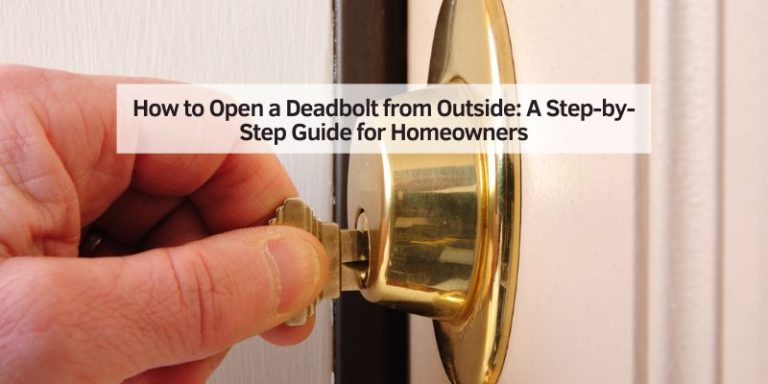
Deadbolt cylinders are serviced by removing the cylinder cap, not by treating the body like a knob cylinder. On Schlage deadbolts, that means removing the cap from the cylinder end, keeping the plug aligned with the key and follower, and then reinstalling the cap after the pin stack is rebuilt. The exact cap style can differ by deadbolt family, so match the kit to the exact deadbolt and confirm whether it is single- or double-cylinder before you remove parts.
Keypad and smart locks with a mechanical keyway
For smart locks, separate the electronic reset or programming steps from the mechanical key cylinder. If the model has a keyway, the backup cylinder may be rekeyable like a normal Schlage cylinder, but the lock’s electronic credentials and settings follow the specific product manual.
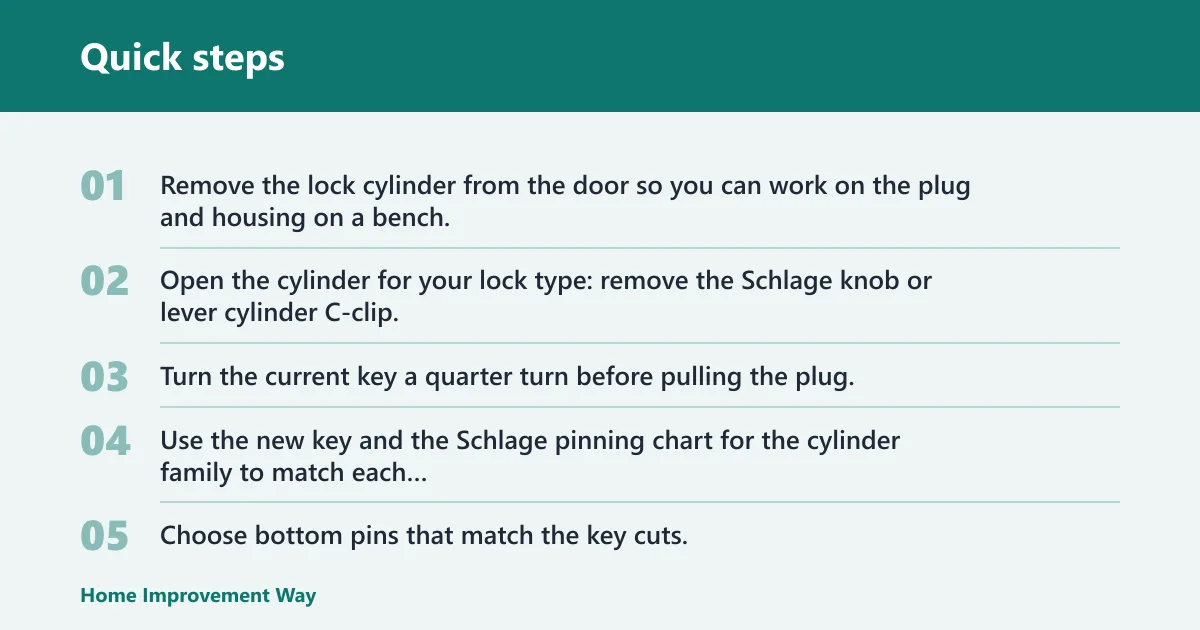
- Remove the lock cylinder from the door so you can work on the plug and housing on a bench.
- Open the cylinder for your lock type: remove the Schlage knob or lever cylinder C-clip, or remove the Schlage deadbolt cylinder cap.
- Turn the current key a quarter turn before pulling the plug, then slide the plug out with a follower so the top pins and springs stay captured.
- Use the new key and the Schlage pinning chart for the cylinder family to match each chamber to the correct cut depth.
- Choose bottom pins that match the key cuts, then build the stack so the shear line aligns when the new key is inserted.
- Reinstall the plug, reinstall the deadbolt cap or C-clip, and test the new key before putting the cylinder back on the door.
If the key you want to use is already cut, read the cut depths and match each chamber to the pining chart that applies to that Schlage cylinder family. If the cylinder also uses master pins, those are the intermediate pins between the top pin and bottom pin, and CLK Supplies lists master pin sizes from 2-9.
Suppose the follower slips while the plug is halfway out. Stop and reset the housing before anything else falls free. A scattered spring or reversed top pin can make the cylinder bind, even if the key cuts are correct. Some cylinders cannot be safely repinned at home without a functioning operating key to control plug rotation and alignment.
Schlage rekey decision table
| Lock type | Working key required? | Can a shop rekey without original key? | Rekeyable at home? | Required parts/tools | Stop-and-call-a-locksmith warning signs |
|---|---|---|---|---|---|
| Knob or lever cylinder | Yes for easiest DIY repinning; some shops can decode or rekey from the cylinder itself | Usually yes, if the cylinder is standard and accessible | Yes, if it is a standard pin-and-tumbler Schlage cylinder | Rekeying kit for the correct keyway, original key or new cut key, screwdriver, plug follower, clip tool | C-clip will not release, plug binds, pins scatter, or the cylinder is damaged |
| Single-cylinder deadbolt | Yes for easiest DIY repinning; the cylinder itself may be decoded by a shop | Usually yes, if the plug and cap come apart cleanly | Yes, if it is a standard pin-and-tumbler deadbolt | Rekeying kit that matches the lock type and keyway, screwdriver, cylinder cap removal tool if needed, follower, new key | Cap is stuck, cap tabs deform, plug will not slide, or you cannot reassemble the stack cleanly |
| Double-cylinder deadbolt | Yes for easiest DIY repinning; both sides must be handled separately | Often yes, but both cylinders may need service if they are keyed differently | Yes, if both cylinders are standard pin-and-tumbler units | Two matching cylinders or two repin stacks, follower, screwdriver, cap tools, correctly cut keys | Misaligned internal parts, different keying on each side, or a cap that will not reseat |
| Keypad/smart locks with mechanical keyway | Sometimes for the backup cylinder; electronic functions do not use a normal rekey path | Usually yes for the mechanical cylinder only, but model-specific procedures apply | Usually no for the full lock; only the mechanical backup cylinder may be serviceable | Model manual, reset/programming steps, and if applicable the correct cylinder service parts | If the lock is electronic-only, sealed, or the manual calls for a reset rather than cylinder service |
| Keyed-alike replacement sets | No rekeying needed if bought as a matched set | Yes, if the cylinders are standard and you are changing them later | No rekeying needed at purchase | Buy the same box code from the vendor side when possible | If the locks were bought separately, Schlage does not store key codes in its system for later matching |
What you’ll need
- A Schlage rekeying kit that matches the lock type and keyway
- The original working key, or a new key already cut to the key you want to use
- A screwdriver
- A plug follower to keep top pins and springs in place
- A clip tool for knob and lever cylinders, or a cap removal tool for deadbolts
- Replacement pins sized for the new key
Schlage key depths run 0-9. Schlage bottom pins run 0-9, master pins run 2-9, and top pins run 1-3. CLK Supplies lists a Schlage plug diameter of .500 inches, which is a useful check when you are looking at cylinder-specific parts. Use the correct Schlage keyway and cylinder family, since parts are not interchangeable across all lock bodies.
Can you rekey a Schlage lock yourself?
Yes, if the lock is a standard Schlage pin-and-tumbler cylinder, the plug turns freely, and you can keep track of small parts. If the cylinder is keyed alike with several locks already, or if the lock is a smart model with a mechanical keyway, the job may be better left to a locksmith or hardware store. Schlage support and warranty language also indicate that damage caused by improper service can void coverage or fall outside warranty repair.
DIY is most realistic when you already have the right kit and a clear key to copy. It is less realistic when the lock has been apart before, the key is missing, or you are not sure whether the cylinder is a deadbolt cap style or a knob-and-lever C-clip style.
How to rekey a Schlage lock to match existing key
If the new key is already cut and you want the lock to match it, the job is straightforward: read that key and build the cylinder around its cuts. You do not need the old key for that part if the cylinder is already out and the key you want to use fits the keyway.
The practical limit is the keyway and the cylinder type. Schlage recommends keyed-alike purchases from the dealer or retailer that supplied the lock because matching at purchase is easier than changing multiple locks later. Bob Vila notes that different lock brands cannot share the same key through rekeying, and multiple locks can be matched only when they are the same manufacturer.
How to rekey a Schlage lock without the original key
Without the original key, you are usually working from the new key alone, or from the lock code if the cylinder and keyway support that approach. If you cannot rotate the plug or verify the stack, the job becomes much harder and a shop rekey is usually the better route. A shop may be able to rekey or decode the cylinder by model and condition, but not every worn or damaged cylinder can be serviced cleanly.
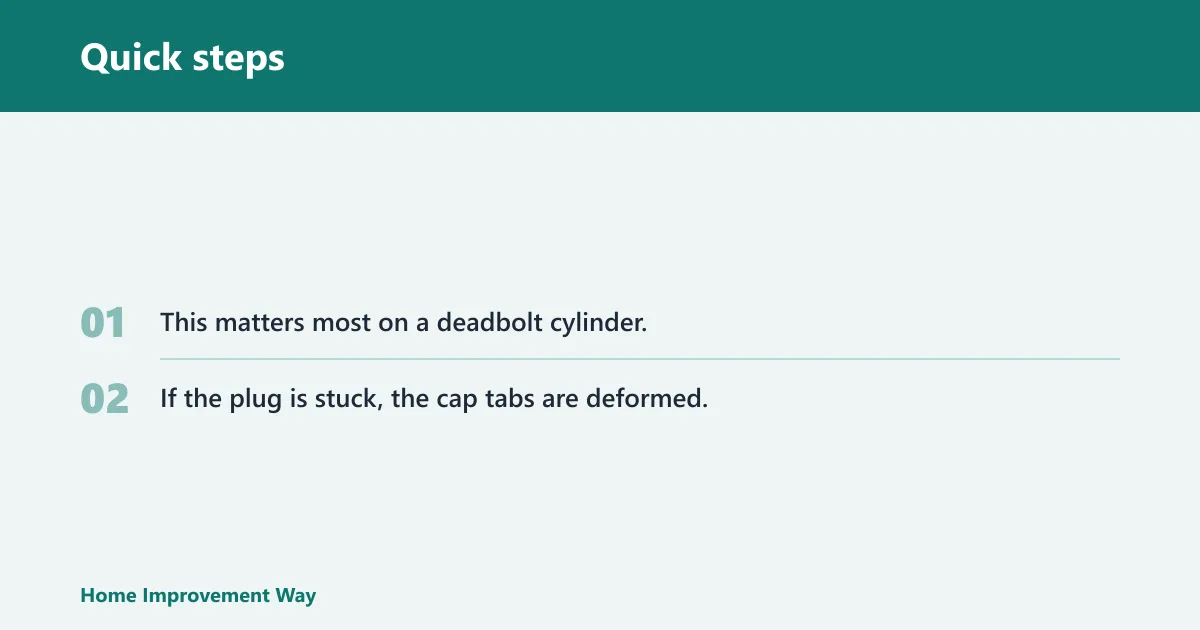
This matters most on a deadbolt cylinder, because the cap has to come off before repinning and then go back on cleanly. If the plug is stuck, the cap tabs are deformed, or the cylinder was installed with mixed parts, take it to a locksmith or hardware store rather than forcing it apart.
When should you call a locksmith?
Call a locksmith when the plug binds, the follower slips twice, pins do not match the key depth, or the cylinder is already damaged. A hardware store that offers rekeying can also be a good option if you have the lock in hand but not the right parts or confidence to finish cleanly.
Professional rekeying is also the better route when the lock is smart, when multiple locks need to end up on one key, or when you want to avoid warranty risk from DIY mistakes. Schlage’s warranty language does not cover damage caused by improper disassembly or rekeying.
Common mistakes
Using the wrong kit is the first problem. The kit has to match the lock type and keyway, or the pins and tools may not fit correctly.
Mixing up the deadbolt cap and the knob or lever C-clip is another. The same source lists knob and lever cylinders as using a C-clip on the back, while deadbolts use a cylinder cap instead.
Losing top pins or springs usually happens when the follower is skipped. Keep the plug moving under control the whole time.
Skipping the final test is the last common error. Test the new key with the cylinder out of the door, then again after reinstallation, before you trust the lock.
Frequently asked questions
How to rekey a Schlage lock with a master key
Use the master key system only if the cylinder was built for it. Schlage master pins run 2-9, so the stack has to be arranged around both the operating key and the master key cuts. If you do not have the original stack, a locksmith can rebuild it faster.
How to rekey a Schlage deadbolt without the original key
Remove the deadbolt cylinder, take off the cylinder cap, and inspect the stack before changing any pins. If the plug will not turn or the cap will not release cleanly, stop there. A locksmith can decode the cylinder and repin it without guessing at the stack. That is especially true for deadbolts with worn caps or mixed parts.
How much does it cost to rekey a Schlage lock?
Costs vary by model and region. DIY cost is usually the price of a matching Schlage rekeying kit plus a new key, while professional pricing depends on whether the work is done in a shop or on-site. Typical locksmith and retailer pricing guidance commonly puts single-cylinder rekeying in a broad range of about $20 to $50 per cylinder in-shop, with service-call pricing higher when travel is involved. If you need several locks matched, ask for the per-cylinder rate first. Local market rates vary.
Can you rekey a Schlage smart lock?
Not with the same pin-and-tumbler method used for a traditional Schlage cylinder. Many Schlage smart locks have a mechanical keyway for backup access, and that backup cylinder may be serviceable, but the smart-lock features themselves follow the exact model’s reset or programming instructions. If it does not use a removable pin cylinder, do not force a standard rekey kit.
Can I rekey a Schlage lock myself?
Yes, if you have the right kit, the correct keyway, and a standard cylinder that comes apart cleanly. If any of those are missing, the risk rises fast. A shop or locksmith is the safer choice when the lock binds, the parts do not match, or the model is electronic.
Sponsored / affiliate links. As an Amazon Associate I earn from qualifying purchases. I may earn additional commission from eligible campaigns.