How to Secure an Exterior Door Without Replacing the Lock
To secure an exterior door without replacing the lock, start with the latch side. Fit the strike plate, use longer screws where the frame will hold them, and, if the door opens inward, add a door stop or security bar that sits firmly on the floor. A weak latch zone fails fast, even when the deadbolt works. This guide shows reversible fixes first, then stronger add-ons for the hinge side, strike side, and door swing.
What you’ll need
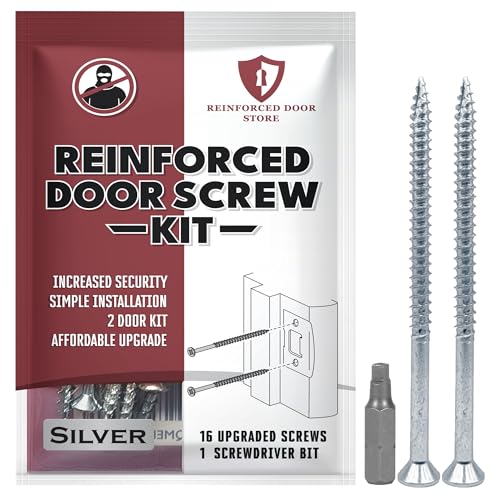
For most no-replacement fixes, the useful tools are basic: a flashlight, tape measure, Phillips screwdriver, and screws sized for the frame material. For add-ons, confirm compatibility before buying. Portable devices and reinforcement parts vary by latch style, backset, bore size, threshold shape, and floor surface, so fit-check first rather than forcing a near-match.
- Flashlight
- Tape measure
- Phillips screwdriver
- Replacement screws that fit your frame material
- Door reinforcement plate, if compatible with your hardware
- Portable door lock, if your latch geometry allows it
- Door stop or security bar sized for your door swing
- Manufacturer instructions for any add-on hardware
What should you fix first on an exterior door?
Start at the latch zone, not the lock core. The strike plate, screw holding power, and door gap do more to decide whether a door resists a shove than the key cylinder does. If the door already binds, sticks, or fails to latch cleanly, fix that first; a temporary blocker works best only after the door closes and seats correctly.
Why the latch zone matters
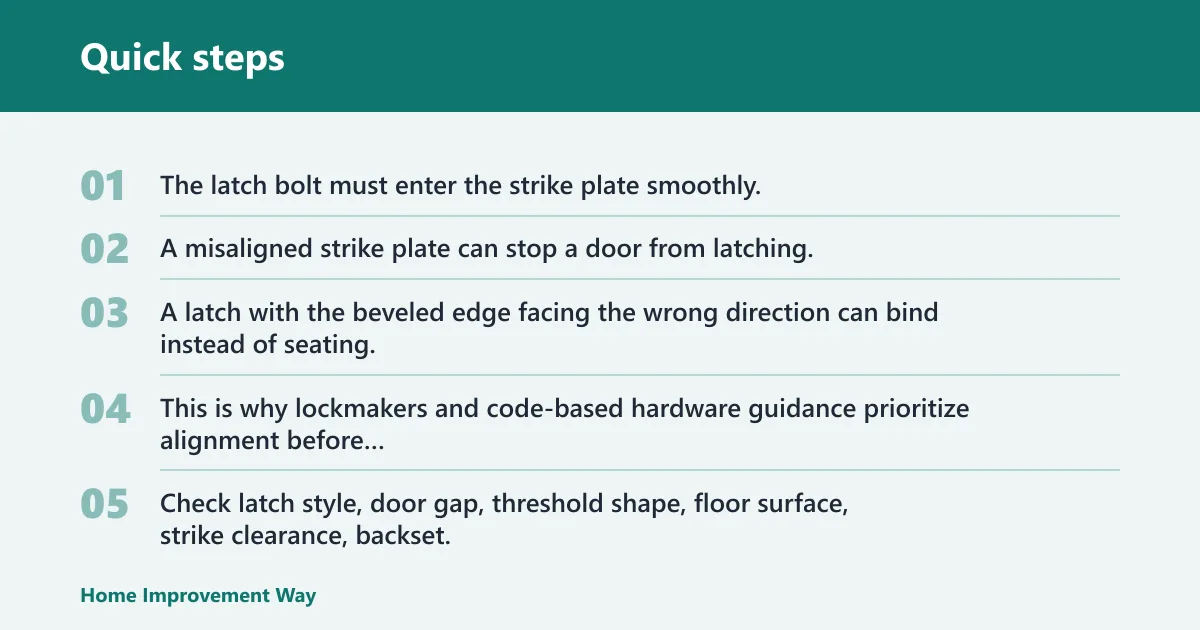
The latch bolt must enter the strike plate smoothly, and the deadbolt must line up with its opening and thumb-turn path. A misaligned strike plate can stop a door from latching. A latch with the beveled edge facing the wrong direction can bind instead of seating. This is why lockmakers and code-based hardware guidance prioritize alignment before add-on resistance.
What should you check before buying a portable lock or reinforcement part?
Check latch style, door gap, threshold shape, floor surface, strike clearance, backset, and bore hole diameter. Portable devices and reinforcement parts fail most often when one of those dimensions is wrong. A common residential lockset uses a 2-3/8 inch or 2-3/4 inch backset, and typical knob/deadbolt bores are about 2-1/8 inches; many add-ons assume those dimensions.
Quick checks for swing direction and gap size
Check whether the door opens inward or outward. Many add-on blockers fit only inward-opening doors, while some products are made for outward swing. Also check the gap around the latch side. If the door has a large gap, a sloped threshold, or visible sag, a simple blocker may slide out of position or fail to seat.
When is repair the right move instead of a workaround?
If the frame is split, the strike area is crushed, or the deadbolt will not throw freely, a temporary fix is the wrong next step. Repair or replace the damaged part first. A brace can slow entry, but it should not hide a door that does not latch correctly. For related fixes, see strike plate repair and door sag fixes.
How do you tighten the latch zone?
Work from the strike plate outward. If the latch and strike line up, the door closes and locks with less force, and any temporary blocker has a better base to work from. Small changes matter here. A few millimeters of misalignment can stop the latch from setting, even when the hardware itself is not broken.
Step-by-step alignment checks
- Close the door slowly and mark where the latch and deadbolt contact the strike area.
- Loosen the strike plate screws, shift the plate so the latch bolt enters cleanly, then tighten and test.
- If screw holes are stripped, move to longer screws that fit the frame and hardware; longer screws can help when screw holes are stripped.
- Check that the latch bolt’s beveled edge faces the direction the door closes.
- Confirm the deadbolt thumb-turn and tailpiece line up without binding.
Most U.S. residential doors use either a 2-3/8 inch or 2-3/4 inch backset. Most modern locksets ship with an adjustable latch that accommodates both backset sizes. Standard bore holes are commonly around 2-1/8 inches for knobs and deadbolts, which is why backset and bore diameter are the first measurements to verify before adding a portable lock or replacement latch.
Say your front door latches only if you lift the handle while closing it. That often points to strike misalignment or a sagging door, not a dead lock. Tightening the latch zone may solve the problem before any add-on is needed.
What is the best temporary way to secure a front door from the inside?
For an inward-opening door, a door stop or security bar is usually the best temporary inside fix. A door stop is simple and can include an alarm. A heavy security bar adds more resistance to kicking and shoulder force. Both are removable, which makes them useful when the door still needs normal daily use.
Best options for inward-opening doors
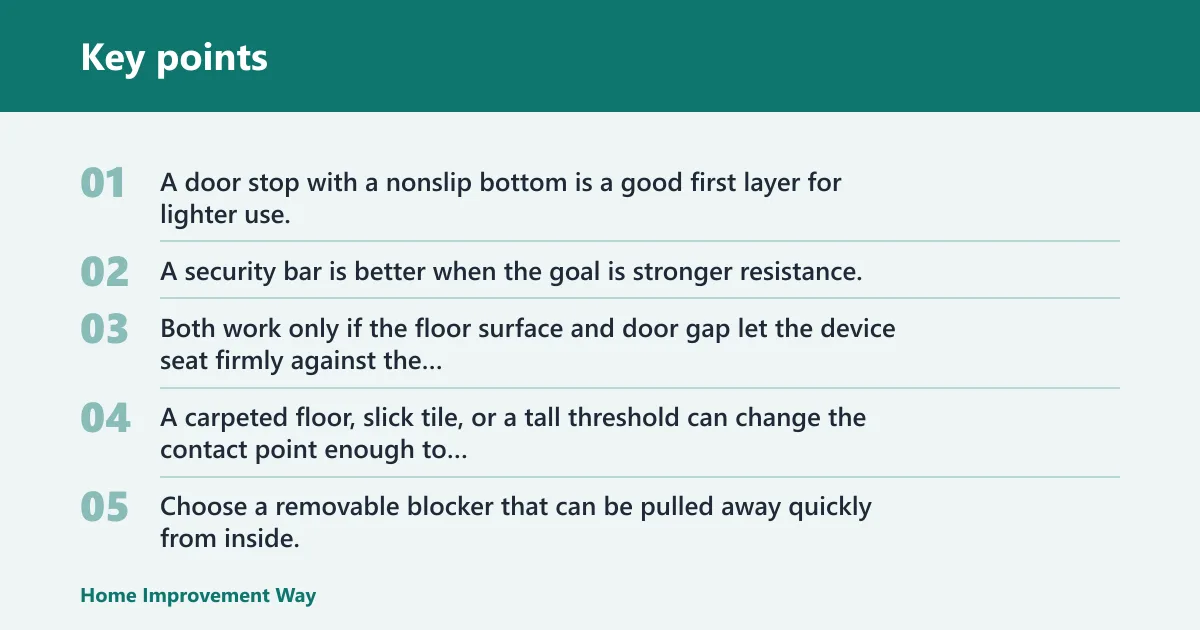
A door stop with a nonslip bottom is a good first layer for lighter use. A security bar is better when the goal is stronger resistance. Both work only if the floor surface and door gap let the device seat firmly against the door. A carpeted floor, slick tile, or a tall threshold can change the contact point enough to disqualify some models.
What to do if the door must still open normally
Choose a removable blocker that can be pulled away quickly from inside. If the door must open and close several times a day, test the setup with the door fully shut, then open it once to confirm the device does not jam the exit path. NFPA 101 and residential code guidance both emphasize that occupied exits must remain free for emergency egress.
Why improvised rope or belt setups are unsafe
Do not tie a belt, rope, or strap to furniture or a fixed point on an exterior exit door. That can trap people inside and delay emergency exit. It can also fail if the furniture slides, the handle shape is poor, or the line cuts into the hardware. Emergency-egress cautions from life-safety codes are the reason improvised barricades are a bad tradeoff.
Can I make a door harder to kick in without changing the lock?

Yes. The biggest gains usually come from the strike side and the frame, not the cylinder. Longer screws, a better strike plate fit, and a rigid inside blocker can make a door much harder to kick or shoulder open while keeping the existing lock in place. For the strongest low-cost gain, reinforce the frame where the latch actually lands.
Start with the strike plate and screws
Use longer screws where the frame material accepts them, and keep the strike plate aligned to the latch. A strike plate that sits off-center can stop the latch from engaging cleanly. If screw holes are already stripped, longer screws can bite into fresh wood and hold better. Many manufacturers and security standards bodies treat this as the first meaningful upgrade because it improves load transfer into the jamb.
Then add a stronger temporary blocker
A security bar helps resist force at the door slab, while a door stop is lighter and faster to move. Pick the least invasive device that still matches the threat. If the door opens inward and the occupant is inside, a bar is usually the stronger choice. If the floor is uneven or the threshold is tall, choose a model that can still seat squarely.
What door reinforcement parts do and do not fix
Door reinforcement plates and wraparound strike reinforcements help the latch side survive force, but they do not fix a warped slab, loose hinges, or a deadbolt that never throws fully. If the strike area is already crushed, reinforce after alignment repair. For deeper frame-side help, see door reinforcement plates and door sag fixes.
How much does the hinge side matter?
If the hinge screws are short or loose, the frame can flex at the hinge side and let the latch side separate. Tightening hinge fasteners can help the door stay seated so the latch and strike plate keep contact under load. A sturdy latch zone still depends on the slab staying square in the opening.
What works on an outward-opening exterior door?
Outward-opening doors need different hardware. Many door stops and standard security bars are built for inward swing and will not seat correctly on an outward-opening door. Some portable door locks also depend on latch and strike geometry that does not suit an outward swing. When the door opens out, the fit rules are stricter, not looser.
Products made for outward swing
Look for products listed by the manufacturer for outward-opening doors. Do not assume a bar or portable lock fits just because it attaches to the door or latch. On outward swing, the hardware must clear the path of the door as it closes and opens. The right product also has to preserve egress from the inside when the door is part of an occupied exit path.
Why some bars and stops will not fit
An inward-door bar usually braces against the floor and the door’s interior face. On an outward-opening door, that geometry can put the device in the wrong place or let the door swing past it. A standard stop may also slide away from the force direction instead of resisting it. Threshold shape and floor surface matter here too; a tapered threshold can defeat a device that otherwise seems close.
When a lock repair beats a workaround
If the door is outward-opening and the lock or strike does not align, the better fix may be a real repair. A misfit workaround can leave the door hard to use and still easy to force. Repairing the latch, strike, or hinge side often gives a cleaner result. For related guidance, see outward-opening door security.
Which no-replacement fix is best for your door?
This table matches common door situations to the least invasive option that still adds real resistance. The best choice depends on swing direction, floor and threshold shape, and whether the hardware must come off quickly for daily use. Use the least permanent option that still seats correctly and preserves the needed exit path.
| Scenario | Door swing | Threshold/floor type | Renter-safe reversibility | Expected resistance level | Egress impact | Recommended no-replacement fix |
|---|---|---|---|---|---|---|
| Nighttime extra security while sleeping | Inward-opening | Flat threshold, hard floor | High | Medium to high | Low if removed quickly from inside | Portable door lock plus door stop with nonslip bottom, if the latch geometry fits |
| Vacation or hotel-style temporary setup | Inward-opening | Flat threshold, carpet or hard floor | High | Medium | Low if used only when occupied | Portable door lock that fits the existing latch hardware |
| Entry door with force concerns and solid floor | Inward-opening | Flat threshold, hard floor | Medium | High | Low to medium | Security bar with a firm floor contact point |
| Loose latch but the lock still turns | Inward-opening | Any threshold, any common residential floor | Medium | Medium | Low once alignment is corrected | Strike plate shift and longer screws before any blocker |
| Need a quick barricade during a short absence | Inward-opening | Threshold that allows stable floor contact | High | Medium | Medium if someone inside must remove it later | Door stop only if someone remains inside to remove it later |
| Door opens outward and must still operate daily | Outward-opening | Raised threshold or uneven landing | Medium | Low to medium | Medium if the wrong device blocks the swing path | Hardware listed for outward-swing doors; repair alignment first |
| Door has a misaligned strike plate and binds | Either | Any threshold, any floor type | Low | Low until repaired | Low after repair, high if forced | Strike plate realignment and minor mortise adjustment |
| Door still needs normal inside opening every day | Inward-opening | Flat threshold, carpet or hard floor | High | Low to medium | Low if removed after use | Portable door lock used only when needed, then removed |
What are the most common mistakes?
Most failures come from using the wrong blocker, ignoring fit, or trying to force hardware to work in a poor frame. A temporary fix should add resistance without breaking normal function. If the door geometry or frame condition is wrong, even a good product can become a bad setup.
- Do not use a standard door stop or security bar on an outward-opening door unless the product is made for that swing.
- Do not treat a portable door lock as a cure for bad latch geometry; if the hardware does not seat cleanly, it may be ineffective.
- Do not force a misaligned latch or deadbolt. If the bolt binds, shift the strike plate instead.
- Do not swap hardware without checking backset and bore hole diameter first.
- Do not leave a blocker in place if it prevents fast exit from the inside.
A common first-timer mistake is adding a heavy bar while the strike plate is still loose. The bar may hold at the floor, but the frame can still flex at the latch side if the screws are weak. Fix the latch zone first, then add the bar if needed. If the strike area needs more structure, a reinforcement plate can be the better next step than a larger blocker.
If the door uses about a 2-3/8 inch backset but the replacement latch expects only 2-3/4 inch, The bolt path may sit off-center, and the door may stop latching cleanly. That is a fit problem, not a force problem. The same logic applies when the bore hole is undersized or the latch body is too deep for the prep.
When should you repair a lock instead of trying a workaround?
Repair the lock when the bolt, tailpiece, strike, or frame does not line up cleanly, or when the door must keep working every day. A workaround is best for short-term use. A repair is better when the door binds, the hardware rubs, or the latch will not seat without force. For a lock that still misbehaves after alignment, see deadbolt troubleshooting.
Move from workaround to repair if the strike plate cannot be aligned with minor shifting, if the deadbolt binds during turn or throw, or if the frame is damaged enough that longer screws do not hold. If the door is the main exterior exit, reliable operation matters as much as added resistance. That is also where emergency-egress rules matter most: a door should still release cleanly from the inside.
Frequently asked questions
How can I secure an exterior door without replacing the lock?
Start with the strike plate, screw length, and latch fit. Then add a door stop, security bar, or portable door lock if the door swing allows it. For the best result, keep the door able to open normally from inside unless the product is used only when someone is present. Code and manufacturer guidance both point to fit first, blocker second.
Will a doorstop or security bar work on a front door?
Yes, if the front door opens inward and the device can seat firmly against the floor and door. A door stop is better for quick, light use. A security bar is better when you want more resistance to a shove or kick. The fit still depends on threshold shape, floor material, and door gap.
Can I use longer screws or a strike plate upgrade without replacing the lock?
Yes. Longer screws can help when screw holes are stripped, and a strike plate shift can fix latch misalignment. Check that the backset and bore hole still match the lockset, then tighten and test the door. If the bolt still binds, the repair needs more adjustment. When the latch prep is wrong, a stronger strike plate alone will not compensate.
What internal fixes pair well with a temporary blocker?
Strike plate repair, hinge tightening, and door sag correction are the best companions to a temporary blocker. Those repairs keep the slab seated so the blocker is not forced to do all the work. If the door is outward-swinging, the better pairing is often alignment repair plus hardware made specifically for that swing.
How do I know if a portable lock is disqualified by the door fit?
If the latch style does not match, the gap is too large, the threshold prevents the device from seating, the floor is too slick for stable contact, or the bore/backset dimensions are outside the product’s stated range, the portable lock is a poor fit. In those cases, a strike-side repair or a different add-on is the safer choice.
Sources: NFPA 101, Life Safety Code; International Residential Code door egress provisions; ANSI/BHMA residential lock and latch hardware standards; and manufacturer installation guidance for strike plates, reinforcement plates, and portable door locks.
Sponsored / affiliate links. As an Amazon Associate I earn from qualifying purchases. I may earn additional commission from eligible campaigns.