Is a Deadbolt Lock the Safest Choice? What Actually Matters
A deadbolt is the safest single lock you can add to an exterior door, but “safest” comes down to the ANSI/BHMA grade, the bolt’s throw length, and how the strike plate is anchored, not the brand printed on the cylinder. This guide covers lock grading, single- vs double-cylinder deadbolts, throw length, strike plate reinforcement, and where a strong lock still fails because of a weak door or frame.
What the ANSI/BHMA Grade Actually Tells You
Every residential deadbolt is tested and stamped Grade 1, 2, or 3 under ANSI/BHMA 156.36. Grade 1 is commercial-duty: it must survive ten strikes from a 75-pound impact and roughly 250,000 open/close cycles without failing. Grade 2 drops the cycle count and impact resistance somewhat but still holds up well for a house. Grade 3 is the builder-grade minimum, usually what a production home comes with from the factory, and it is the easiest to force with a kick or a pry bar. Most hardware store deadbolts sold as “premium” are actually Grade 2; true Grade 1 units cost roughly 40 to 100 dollars more but are worth it on a primary entry door.
Single-Cylinder vs. Double-Cylinder
A single-cylinder deadbolt is keyed on the outside and turns by a thumbturn inside, which lets you exit quickly in an emergency. A double-cylinder deadbolt requires a key on both sides, which stops someone from breaking a nearby window and reaching in to turn the thumbturn, but it also means an occupant needs a key to get out. Because of this, many local fire codes (based on the IRC and IFC) restrict or prohibit double-cylinder deadbolts on required egress doors unless there’s an approved alternate exit. Check your local code before installing one, especially on a bedroom-adjacent exterior door.
Throw Length and Strike Plate Reinforcement
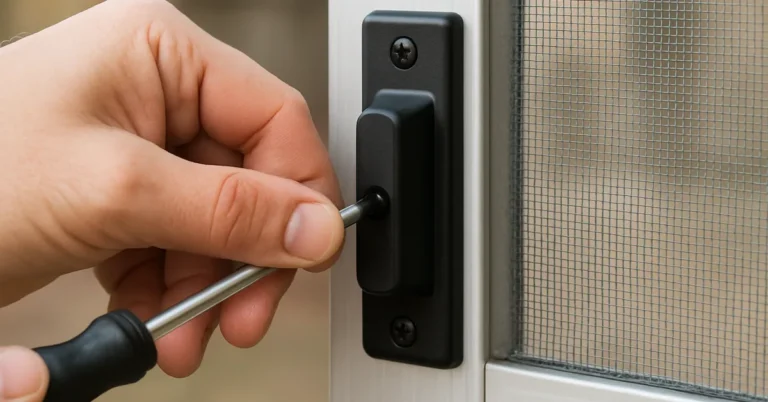
Throw length is how far the bolt extends into the door frame, and it matters more than most buyers realize. A 1-inch throw is the practical minimum for exterior doors; some Grade 1 bolts extend 1-1/4 inches. The bigger weak point is usually the strike plate: builder-grade strike plates are held with two 3/4-inch screws that only bite into the door jamb, not the wall framing behind it, so a solid kick can rip the whole plate loose. A security strike plate with 3-inch screws that reach the stud behind the jamb turns the door frame itself into the resistance, which is what actually stops a forced-entry kick.
The Door and Frame Matter as Much as the Lock
A Grade 1 deadbolt in a hollow-core door or a thin, unreinforced jamb is only as strong as that weakest link. Forced entry attempts typically go through the door panel or frame around the lock, not through the bolt itself. A solid-core or solid-wood exterior door, paired with a reinforced frame and the long-screw strike plate above, does more for real security than upgrading the lock alone. If your current deadbolt ever gets stuck in the locked position, that’s often a sign the strike plate and bolt aren’t aligned correctly, which is worth fixing before you rely on it for security.
Smart Deadbolts and Security Tradeoffs
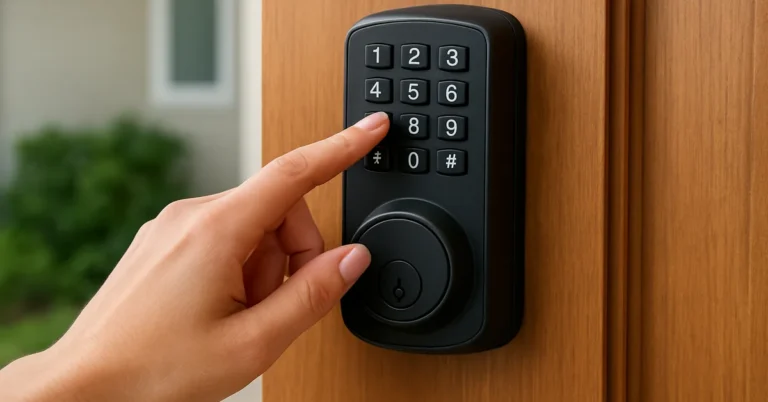
Keypad and app-controlled deadbolts add convenience, but “smart” is not a security grade. Many smart locks on the market are only rated Grade 2 or 3 despite marketing language that implies otherwise. If security is the priority, check the printed ANSI grade on the smart lock’s spec sheet the same way you would a mechanical deadbolt, rather than assuming electronics equal strength.
Frequently Asked Questions
Is a Grade 1 deadbolt worth the extra cost for a house?
Yes, especially on the primary entry door and any door with a glass sidelight or window nearby. The 40 to 100 dollar upgrade over Grade 2 buys measurably better resistance to kicking and prying.
Do double-cylinder deadbolts violate fire code?
Often yes on required egress doors. Many jurisdictions adopting the IRC or IFC restrict them unless there is an approved alternate exit, so check with your local building department before installing one near a bedroom exit.
Does the deadbolt grade matter if the door itself is hollow-core?
Less than you’d hope. Forced entry usually exploits the weakest component, and a hollow-core door or thin jamb will fail before a quality deadbolt does. Upgrade the door and strike plate alongside the lock for real improvement.
Sponsored / affiliate links. As an Amazon Associate I earn from qualifying purchases. I may earn additional commission from eligible campaigns.