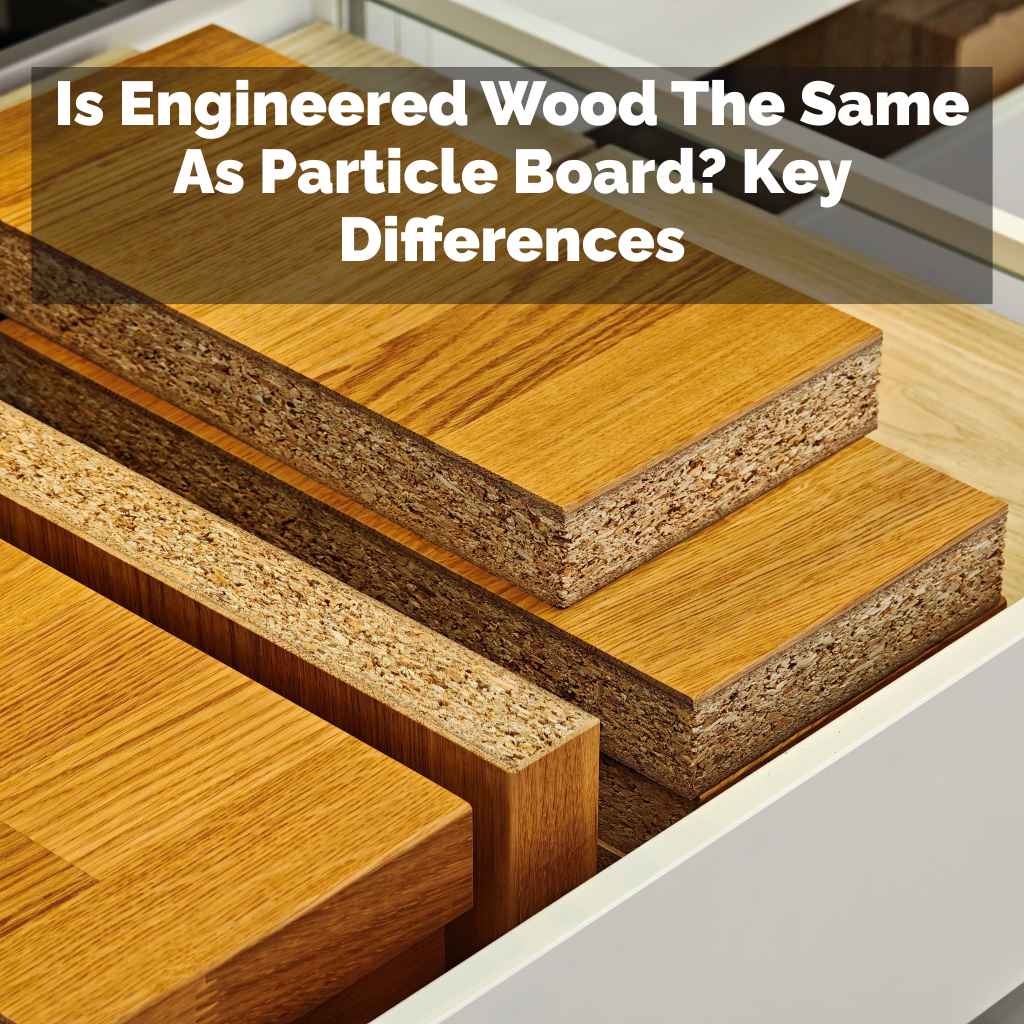
Is Engineered Wood The Same As Particle Board? Key Differences
Engineered wood and particle board are both wood composite materials. However, engineered wood is generally stronger and more stable than particle board. This is due to how they are manufactured, using different types of wood fibers or particles and binders.
What is Engineered Wood?
Engineered wood is a broad term. It covers many types of wood products. These products are made by binding together wood strands, particles, or fibers.
The goal is to create materials that are stronger and more stable than natural wood. Think of it as a wood product made by humans. They use science and machines to make it work better.
These materials often use wood scraps or byproducts. This is a smart way to use wood resources. They mix these wood pieces with glues and resins.
Then, they press them together under heat and pressure. This makes a strong, solid panel.
There are several popular kinds of engineered wood. Plywood is one. It’s made from thin layers of wood veneer.
These layers are glued together with the grain running in different directions. This cross-graining makes plywood very strong.
Another type is oriented strand board (OSB). OSB uses flat wood strands. They are pressed together in layers.
The strands are oriented in specific directions. This gives OSB good strength and rigidity.
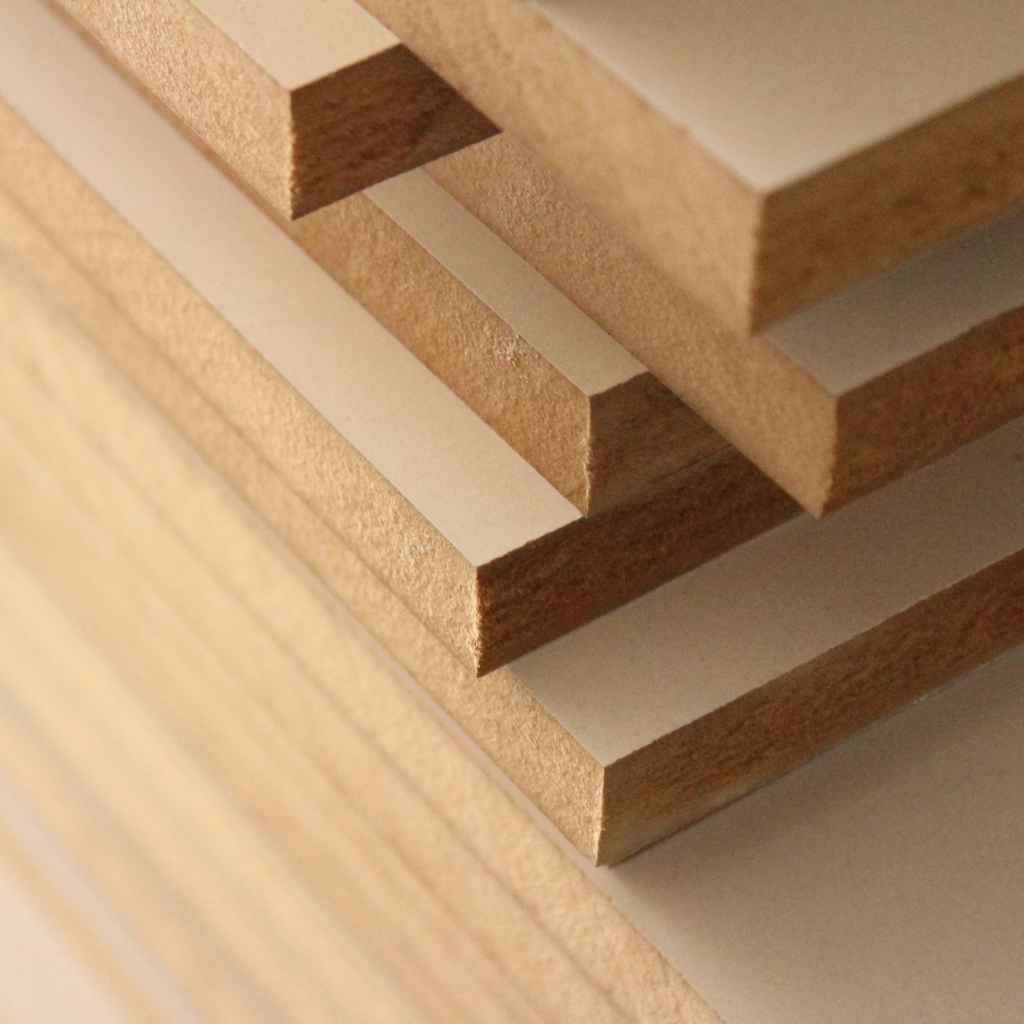
Medium-density fiberboard (MDF) is also engineered wood. It’s made from wood fibers. These fibers are mixed with wax and resin.
Then, they are pressed into panels. MDF is very smooth and uniform. It’s great for painting.
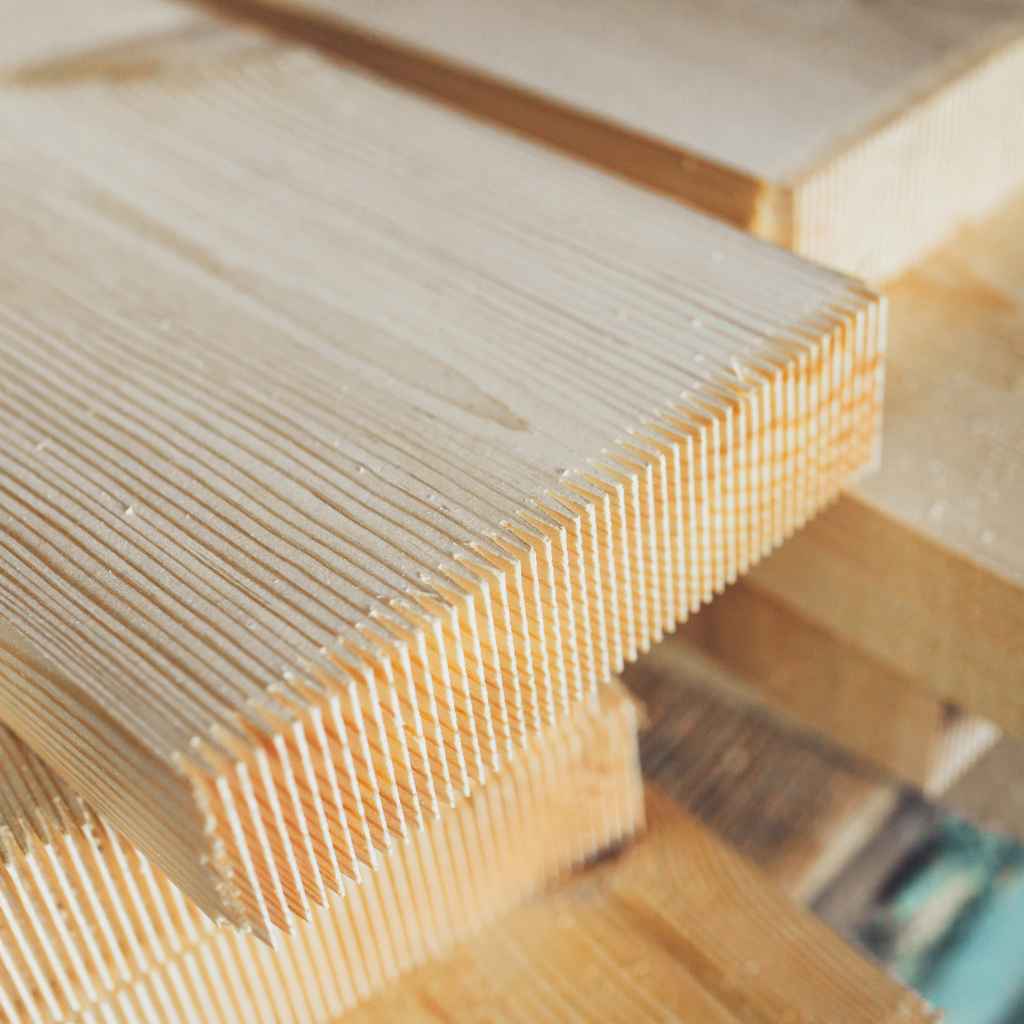
Glued laminated timber (glulam) is another example. It uses many layers of solid lumber. These are glued together to form large beams.
Glulam is very strong. It’s used in construction for beams and columns.
What is Particle Board?
Particle board is a type of engineered wood. But it’s made differently. It uses smaller wood particles.
Think of wood chips, sawdust, and wood shavings. These small bits are mixed with a synthetic resin. Then, they are pressed together.
This forms a dense panel.
The particles in particle board are much smaller. They are more like fine dust or small chips. This gives particle board a different feel and strength.
It’s not as strong as plywood or OSB. The particles are held together by the binder. Heat and pressure are used in making it.
Particle board is often less expensive than other engineered woods. It’s widely used for furniture. It’s also used for subflooring or underlayment in homes.
It’s a good choice when cost is a major factor.
There are different grades of particle board. Some are denser and stronger than others. The type of wood used and the resin can change its properties.
But overall, particle board is softer. It can also swell if it gets wet.
How Are They Made Differently?
The main difference is in the wood material used. Engineered wood often uses larger pieces. This can be thin wood sheets (veneer) for plywood.
Or it can be long, flat strands for OSB. Or finely ground fibers for MDF. These larger pieces or fibers create a more structured board.
They allow for better grain alignment or layering.
Particle board uses very small wood particles. Sawdust, shavings, and small chips are common. These small pieces are mixed randomly.
They don’t have a specific orientation. This random mix is what makes particle board weaker.
The binders are also important. Both use resins and glues. But the type and amount can differ.
The pressing process also varies. It depends on the desired density and strength.
For example, making plywood involves gluing thin sheets of wood. These are called veneers. They stack these veneers.
They place the grain of each layer at a right angle. This makes it very strong in all directions. It resists warping and cracking.
Making OSB is similar but uses strands. These strands are long and flat. They are mixed with a binder.
Then they are pressed. The strands in the outer layers are aligned in one direction. The inner layers have strands going the other way.
This creates a strong, stable panel.
MDF uses wood fibers. These are like a fine powder. They are mixed with wax and resin.
Then they are heated and pressed. This creates a smooth, dense board. It’s uniform throughout.
There are no gaps or voids.
Particle board is made by mixing small particles. These are mixed with resin. Then they are pressed into a mat.
The mat is then heated and pressed again. This forms the final board. The small, random particles are the key difference.
Key Manufacturing Differences at a Glance
Wood Material:
- Engineered Wood: Veneers, strands, fibers
- Particle Board: Sawdust, chips, shavings
Structure:
- Engineered Wood: Layered, oriented, or fibrous
- Particle Board: Randomly mixed small particles
Resulting Strength:
- Engineered Wood: Generally higher strength and stability
- Particle Board: Lower strength, can be less stable
Strength and Durability
This is where the biggest differences show up. Engineered wood, especially types like plywood and OSB, is much stronger. The way the wood is put together makes it more robust.
Plywood’s cross-graining helps it resist bending and breaking. OSB’s oriented strands offer excellent structural integrity.
MDF is also quite strong. It’s very dense. It holds screws well.
It doesn’t have wood knots or grain patterns that can cause weak spots. This makes it consistent. But it can sag under heavy weight over long spans.
Particle board is the weakest of these. The small, randomly placed particles mean it has fewer strong points. It can crumble if too much force is applied.
It’s also more prone to breaking.
Durability is also a factor. Engineered wood products tend to last longer. They resist wear and tear better.
Plywood, for instance, is very durable. It’s used in many structural applications. OSB is also very durable.
It’s a common choice for sheathing in homes.
Particle board is less durable. Its biggest enemy is moisture. If it gets wet, it can swell.
It can become soft and crumbly. This swelling is often permanent. This makes it a poor choice for areas that might get damp.
Think bathrooms or kitchens. Or outdoors.
Screws and nails hold differently too. In engineered wood, screws and nails grip better. Especially in plywood or OSB.
They can hold more weight without pulling out. In particle board, screws can strip easily. This is because the material is softer.
You might need special hardware. Or anchors for anything heavy.
I remember helping a friend move. Particle board dressers are common. Lifting a particle board dresser often causes the drawers to fall out.
The sides started to break apart. It was clear the material just couldn’t handle the stress. Extreme care is required when handling particle board furniture.
It was a clear lesson in how different these materials can be.
Water Resistance
This is a big one for anyone using these materials. Most engineered wood products are not fully waterproof. But some are much better than others.
Exterior-grade plywood, for example, uses special waterproof glues. It can withstand some exposure to the elements. It’s often used in construction for things like roofing and siding.
OSB can also be made with moisture-resistant binders. But it’s still not meant for direct water contact. If it gets wet, it can delaminate or break down.
MDF is particularly bad with water. It’s made from wood fibers and glue. It soaks up moisture like a sponge.
When it swells, it often doesn’t go back to its original shape. This makes it very unsuitable for wet areas. It can also grow mold.
Particle board is also very sensitive to water. It’s made of compressed wood particles. These particles are held by glue.
When water gets in, it softens the glue. It makes the particles swell and separate. The board can lose its shape and strength.
It can become unusable. Some particle board products have added moisture-resistant treatments. But they are still not a good choice for wet environments.
If you’re building a shed or a deck, you’d never use plain particle board. You’d look for treated lumber or exterior-grade plywood. For indoor furniture, you have to be careful.
Spills on a particle board tabletop can cause lasting damage.
Moisture Vulnerability Comparison
Plywood: Varies. Exterior grades are best. Interior grades can swell.
OSB: Can swell if exposed to moisture for long periods. Some types are more resistant.
MDF: Highly susceptible to moisture. Swells significantly and can be ruined.
Particle Board: Very susceptible to moisture. Swells and loses integrity easily.
Cost and Availability
Particle board is generally the cheapest option. This is a major reason it’s used so widely. Especially in mass-produced furniture.
It’s readily available. You can find it at most lumber yards and home improvement stores.
Engineered wood costs can vary a lot. Plywood and OSB are usually more expensive than particle board. But they are still more affordable than solid hardwood.
MDF can be somewhere in the middle. The price depends on the thickness and grade of the material.
The availability of engineered wood is also very good. Plywood and OSB are staples in construction. MDF is common for cabinetry and furniture making.
You can find them in many sizes and thicknesses.
For DIYers, the cost factor is important. If you’re building something that doesn’t need to be super strong. Or something that won’t be exposed to moisture.
Particle board might seem like a good deal. But you have to weigh that against its shorter lifespan and potential for damage.
I once priced out a large bookshelf. Using solid wood would have been very costly. Plywood was a good middle ground.
The price of particle board, however, is often surprisingly low. It was significantly cheaper. I considered it.
But I knew the books would be heavy. And I wanted it to last. So, I opted for the plywood.
It was a bit more money. But I felt better about its strength.
Uses and Applications
The uses for engineered wood and particle board often overlap. But their ideal applications differ based on their properties.
Engineered Wood Applications:
- Plywood: Flooring underlayment, wall and roof sheathing, furniture, cabinetry, concrete forms, boats, and even aircraft parts. Its strength and stability make it very versatile.
- OSB: Structural sheathing for walls, floors, and roofs in homes. It’s a common alternative to plywood in construction.
- MDF: Cabinet doors, furniture panels, shelving, speaker boxes, and decorative trim. It’s excellent for painted surfaces because it’s so smooth.
- Glulam: Large structural beams, arches, and columns in buildings.
Particle Board Applications:
- Furniture: Tabletops, shelves, drawer bottoms, and cabinet carcasses. Especially in budget-friendly furniture.
- Subflooring: As an underlayment beneath carpets or other flooring.
- Countertops: Sometimes used as a core for laminate countertops.
- Moulding and Trim: Can be used for some decorative molding.
- Core Material: Often used as a core for decorative overlays like laminate or veneer.
What stands out is that engineered wood is often used for structural purposes. Or for things that need to hold weight or withstand stress. Particle board is more for non-structural uses.
Or where cost is the main driver.
Choosing the Right Material: Quick Guide
Need High Strength? Choose Plywood or OSB.
Need Smooth Finish for Painting? MDF is a great choice.
Budget is Key for Furniture? Particle Board can work, but be careful.
Exposure to Moisture Likely? Avoid Particle Board and MDF. Look for exterior-grade engineered wood.
Structural Building Component? Plywood or OSB.
Health and Safety Concerns
This is an important aspect for any home material. Both engineered wood and particle board use adhesives. These adhesives can contain formaldehyde.
Formaldehyde is a chemical that can be harmful. It can off-gas into the air. This can cause respiratory problems or allergic reactions.
The amount of formaldehyde varies. Older particle board products might have higher levels. Modern products often have lower formaldehyde emissions.
Look for labels like “U.S. EPA TSCA Title VI compliant.” This means they meet strict standards for formaldehyde emissions.
The U.S. Environmental Protection Agency (EPA) sets these standards. They are meant to protect indoor air quality.
CARB (California Air Resources Board) also has standards that many manufacturers follow.
Particle board was historically known for higher formaldehyde emissions. This is because of the type of resins used and the manufacturing process. Engineered wood products can also have formaldehyde.
But many types, like plywood, often use different binders or have lower emissions.
MDF can also be a source of formaldehyde. Especially if it’s not a low-emission product. However, it’s also very fine dust.
When cutting MDF, it creates a lot of fine particles. These can be inhaled. Always wear a good dust mask and eye protection when cutting or sanding these materials.
Good ventilation is also crucial.
When buying materials for your home, it’s wise to check for certifications. Look for low-VOC (Volatile Organic Compound) or formaldehyde-free options. If you have sensitivities, this is especially important.
Some specialized products are made with less harmful binders.
Appearance and Finishing
The look of these materials can be quite different. Natural wood has grain patterns. It has color variations.
Engineered wood tries to mimic this or provides a blank canvas.
Plywood has layers you can see on the edges. The surface can have a wood grain. It can be sanded and finished.
It takes stains and paints well. But the grain might not be as consistent as solid wood.
OSB has a rougher texture. Its surface is made of visible wood strands. It’s not typically used for visible surfaces unless it’s painted or covered.
Its raw look is industrial.
MDF is very smooth and uniform. It has no visible grain. This makes it perfect for painting.
It provides a flawless surface. It also takes veneer or laminate very well. The edges can be rounded or shaped easily.
Particle board usually has a more uniform, sometimes slightly rougher, texture than MDF. It’s rarely used without a covering. It’s almost always covered with laminate, veneer, or a paper finish.
This covering provides the decorative appeal. The particle board itself is not meant to be seen.
When you buy furniture, the “wood look” you see is often a laminate or veneer applied to a particle board core. This makes it look like real wood. But the strength and durability come from the core material underneath.
Many dining tables are made from similar materials. The top looked like beautiful oak. But I knew from the price that it couldn’t be solid oak.
Looking underneath reveals the particle board edges. The laminate was applied well. It looked good.
But it wasn’t the same as a solid wood table.
Choosing a finish depends on the material and desired look. For a painted finish, MDF or smooth plywood is best. For a stained finish, plywood or solid wood is preferred.
For a laminate look, particle board is often the core.
Environmental Impact
Both engineered wood and particle board can be more environmentally friendly than using solid lumber. This is because they often use wood byproducts. Sawdust, shavings, and smaller pieces of wood that would otherwise be wasted can be used.
This reduces the need to cut down as many large trees. It makes better use of the whole tree. Sustainable forestry practices are also important.
Many manufacturers source their wood from responsibly managed forests.
However, the glues and resins used in their manufacturing can be a concern. Formaldehyde and other chemicals are often petroleum-based. Their production can have an environmental footprint.
Low-VOC and formaldehyde-free options help reduce this impact. Recycled content is also a positive factor.
Particle board can sometimes be made with a higher percentage of recycled wood. This can make it a more sustainable choice in that regard. But the binders still need consideration.
When comparing, consider the entire lifecycle. How was it made? What is it made of?
How long will it last? A more durable product that lasts longer might be more sustainable than a cheap one that needs replacing quickly.
It is best to look for FSC (Forest Stewardship Council) certified wood products. This means the wood comes from forests managed responsibly. It’s a good indicator of ethical sourcing.
For engineered products, checking for low-emission certifications is also key.
Sustainability Factors to Consider
Wood Source: Certified sustainable forests (FSC).
Material Use: Utilization of wood byproducts and waste.
Binders/Adhesives: Low-VOC, formaldehyde-free options are better.
Product Lifespan: Durable products that last longer are more sustainable.
Recycled Content: Materials made with recycled wood are a plus.
When is Particle Board a Good Choice?
So, is particle board always bad? Not at all. It has its place.
It’s a good choice when:
- Cost is the primary concern. If you need a functional item and budget is tight, particle board can be very cost-effective.
- The item will not be subjected to heavy loads or stress. Think of drawer bottoms, back panels of cabinets, or inexpensive shelving for light items.
- The material will be fully covered. If it’s covered with laminate, veneer, or a thick paint finish, the appearance is not an issue.
- It will not be exposed to moisture. Particle board must stay dry. So, it’s okay for furniture in a dry living room. But not for a bathroom vanity.
- The item is not expected to last for decades. If you plan to replace the item in a few years, particle board might suffice.
I’ve seen some decent-looking furniture that used particle board for the main cabinet boxes. The visible parts, like doors and drawer fronts, were often higher quality. This is a smart way to balance cost and appearance.
When is Engineered Wood (Non-Particle Board) Better?
You’ll want to opt for other types of engineered wood when:
- Strength and durability are paramount. For structural uses, load-bearing shelves, or furniture that needs to withstand wear and tear.
- Moisture resistance is needed. For kitchens, bathrooms, or outdoor projects, choose appropriate exterior-grade engineered wood.
- The material needs to hold screws or hardware securely. Plywood and OSB offer much better holding power.
- You want a longer-lasting product. Engineered wood generally has a longer lifespan.
- The material will be visible and needs a good finish. Plywood and MDF offer better options for staining or painting.
For example, when building a workbench in a garage, use a thick plywood top. It needs to handle tools and occasional spills. I wouldn’t use particle board for that.
It would be ruined quickly.
Summary: Key Differences Recap
Let’s quickly sum up the main points. It’s easy to confuse them, but they are distinct.
Engineered Wood (general category): Made from wood fibers, strands, or veneers. Glued and pressed. Generally stronger, more stable.
Examples include plywood, OSB, MDF.
Particle Board: Made from very small wood particles (sawdust, chips). Glued and pressed. Less strong, less stable.
Very sensitive to moisture. Typically the most economical option.
The core difference lies in the size and arrangement of the wood components and the resulting structural integrity.
Frequently Asked Questions
Is engineered wood the same as composite wood?
Yes, engineered wood is a type of composite wood. Composite wood is a broad term for any product made by binding together wood strands, particles, or fibers. Engineered wood products like plywood, OSB, and MDF are all forms of composite wood.
Particle board is also a type of composite wood.
Can you paint particle board?
Yes, you can paint particle board. However, it’s important to prepare it properly. You’ll want to seal the surface first with a primer or a wood filler.
This is because particle board can absorb paint unevenly. It can also swell if it absorbs too much moisture from the paint. Using a good quality primer will help create a smooth, even surface for your paint.
Is plywood stronger than particle board?
Yes, plywood is generally much stronger and more durable than particle board. Plywood is made by layering thin sheets of wood veneer with the grain of each layer at a right angle. This cross-graining provides superior strength and stability.
Particle board is made from small, randomly oriented wood particles, making it weaker.
Which is better for furniture: MDF or particle board?
Both MDF and particle board are common in furniture. MDF is generally considered superior to particle board for furniture. MDF is denser and smoother than particle board.
It holds screws better and has a more uniform finish, making it ideal for painted surfaces or for applying veneers. Particle board is weaker and more prone to damage, especially from moisture.
Does engineered wood contain formaldehyde?
Many engineered wood products, including particle board and MDF, can contain formaldehyde in their adhesives. However, regulations have led to the development of low-formaldehyde or no-formaldehyde options. Always look for products that meet U.S.
EPA TSCA Title VI or CARB standards if formaldehyde content is a concern.
Can particle board be used for structural purposes?
No, particle board is not suitable for structural purposes. It lacks the strength and stability needed for building structures like walls, floors, or roofs. Engineered wood products like plywood and OSB are used for these applications due to their superior structural integrity.
What is the difference between MDF and particle board edges?
MDF has a very smooth, dense edge that can be easily shaped, routed, or painted. Particle board edges are typically rougher and more crumbly due to the smaller particles. They are more prone to chipping and damage if not protected or finished carefully.
Conclusion
So, are engineered wood and particle board the same? No. They are both made from wood bits, but how they’re made and what they’re made of leads to big differences.
Understanding these differences helps you choose the right material. It ensures your projects are strong, last long, and look great. Always consider the intended use, the environment, and your budget when making your choice.
Sponsored / affiliate links. As an Amazon Associate I earn from qualifying purchases. I may earn additional commission from eligible campaigns.