Plenums for Heat Load Calculation: Do You Need Them?
Plenums for heat load calculation are a common consideration, but whether you absolutely need them depends on the specifics of your HVAC system design. Understanding their role can help you make informed decisions about your building’s thermal performance and energy efficiency. This post will break down what plenums are, why they matter in heat load calculations, and when they become a necessity versus a helpful addition.
Simply put, plenums are not always mandatory for heat load calculations, but they become essential when ductwork requires a distribution box for air supply or return, or when you need to account for specific airflow dynamics and pressure considerations in HVAC system design.
Key Takeaways
- Plenums for heat load calculation serve as crucial transition points for air distribution in HVAC systems, impacting airflow and pressure.
- The necessity of a plenum for heat load calculations hinges on the system’s design, specifically the integration of ductwork with the air handling unit.
- Understanding the function of supply and return plenums helps in accurately assessing heating and cooling loads, ensuring system efficiency.
- While not universally required, plenums can significantly influence thermal performance and comfort, especially in complex or large-scale applications.
- Accurate heat load calculations, whether plenums are involved or not, are vital for proper HVAC sizing and optimal energy consumption.
What is a Plenum in HVAC?
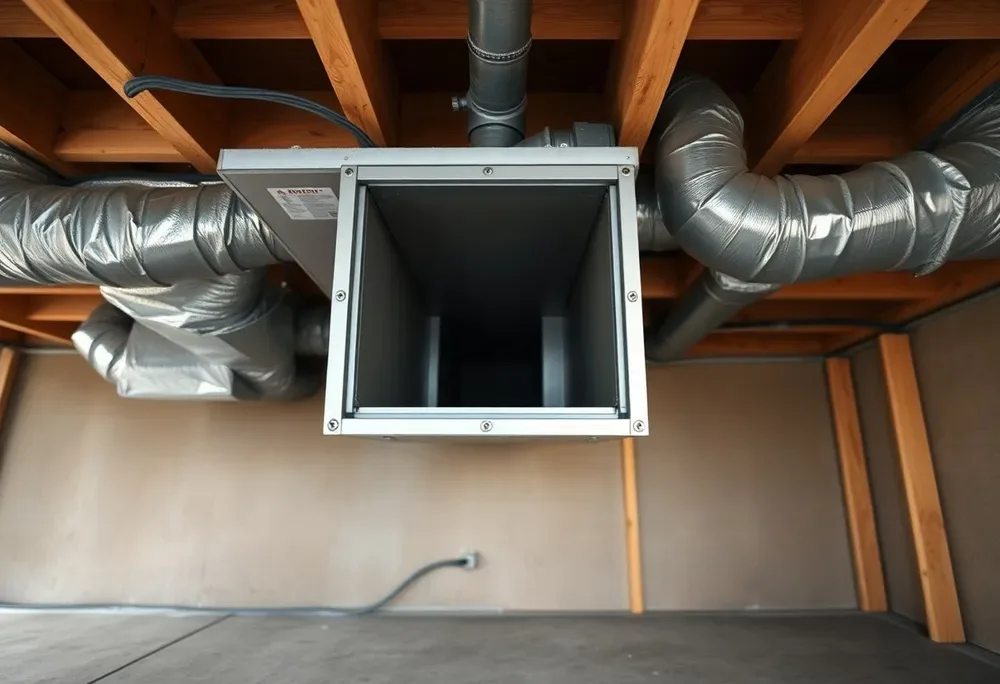
In the context of heating, ventilation, and air conditioning (HVAC) systems, a plenum is essentially a box or chamber that connects ductwork to an air handling unit (AHU) or furnace. It acts as a distribution point for air, allowing for even airflow into multiple ducts or collecting return air from various sources before it re-enters the system. These chambers are typically constructed from sheet metal and are designed to manage air pressure and velocity effectively.
There are two primary types of plenums: the supply air plenum and the return air plenum. The supply plenum receives conditioned air from the AHU and distributes it to the supply ducts leading to different zones of a building. Conversely, the return plenum collects unconditioned air from the return ducts, which then travels back to the AHU for reconditioning.
Their presence is integral to the smooth operation of many HVAC configurations.
The design and size of a plenum are critical factors in an HVAC system’s performance. An undersized plenum can restrict airflow, leading to increased static pressure and reduced efficiency, while an oversized one might be inefficiently designed or unnecessary for the airflow requirements. Proper engineering of these components directly influences the accuracy of heat load calculations and the overall effectiveness of the heating and cooling system.
- Supply Air Plenum: Connects the AHU’s supply outlet to multiple supply ducts.
- Return Air Plenum: Connects multiple return ducts to the AHU’s return inlet.
- Construction: Typically made of sheet metal, custom-fitted to system components.
- Function: Manages airflow, pressure, and velocity for efficient distribution or collection.
- Importance: Crucial for balanced airflow and accurate load calculations.
Why Plenums Matter for Heat Load Calculations
Heat load calculations are performed to determine the amount of heating or cooling a building requires to maintain a comfortable indoor temperature. This calculation involves assessing various factors, including heat gain from solar radiation, internal heat sources (like occupants and equipment), and heat loss through walls, windows, and the building envelope. The HVAC system’s components, including plenums, play a significant role in how accurately these loads are met.
Plenums, particularly the supply plenum, affect how conditioned air is delivered to different spaces. If the plenum is not properly designed, it can lead to uneven air distribution. This means some areas might receive more conditioned air than needed, while others receive less, leading to discomfort and inefficient operation.
In heat load calculations, the assumed delivery efficiency and airflow rates are directly influenced by the plenum’s characteristics.
Furthermore, the static pressure within a plenum can impact the overall system performance. Higher static pressure due to a restrictive plenum can reduce the volume of air delivered, meaning the system might struggle to meet the calculated heat load, especially during peak demand. Accurate modeling of these pressure dynamics is essential for correct HVAC sizing, and this often requires considering the plenum’s geometry and its connection to the ductwork.
The presence or absence of a properly designed plenum directly translates into the system’s ability to satisfy the building’s heating and cooling needs efficiently.
- Assists in determining actual airflow delivery rates to different zones.
- Influences static pressure within the ductwork system.
- Impacts the uniform distribution of conditioned air, affecting comfort.
- Directly affects the efficiency of the air handling unit’s performance.
- A well-designed plenum can improve the accuracy of heat load calculations by ensuring the system can deliver the calculated air volume.
When Are Plenums Absolutely Necessary?
There are specific scenarios where a plenum is not merely a beneficial component but a fundamental necessity for the HVAC system’s operation and for accurate heat load calculations. The most common situation is when a single outlet from an air handling unit needs to be connected to multiple supply ducts, or when multiple return ducts need to consolidate into a single return for the AHU. In these cases, the plenum acts as the essential interface, ensuring balanced and efficient air transfer.
For instance, in a large commercial building, an AHU might serve numerous zones. The supply air from the AHU must be divided and routed through a network of supply ducts. A well-designed supply plenum is critical to ensure that each duct receives the appropriate volume of conditioned air, matching the specific heat load of its zone.
Without such a plenum, the air distribution would be chaotic, leading to significant inefficiencies and an inability to meet the precise heating or cooling demands calculated for each area.
Similarly, for return air, especially in systems with many return grilles and ducts, a return plenum is often required to consolidate this airflow before it reaches the AHU. This consolidation helps maintain consistent static pressure on the return side, which is vital for the fan’s performance and for the accuracy of the air volume measurements used in heat load calculations. In essence, whenever you have a transition from a single point to multiple points (or vice versa) for air distribution, a plenum becomes a necessary component for functional and calculable airflow.
Scenario 1: Multi-Zone Distribution from a Single AHU Outlet
When a single air handling unit (AHU) serves multiple distinct zones within a building, the conditioned air must be distributed effectively to each. The AHU typically has one large supply outlet. To connect this to several smaller supply ducts, a supply plenum is indispensable.
This plenum acts as a manifold, allowing for the air to be split and directed into the appropriate ductwork for each zone. Without it, direct connection of multiple ducts to the AHU outlet would create excessive turbulence and uneven pressure, making proper airflow control impossible.
The design of this supply plenum must account for the total airflow required by all served zones and the airflow required by each individual zone. Engineers use the heat load calculations for each zone to determine the necessary airflow, and then design the plenum and downstream ductwork to deliver these precise volumes. The plenum’s internal dimensions, shape, and the configuration of its outlets are all calculated to minimize pressure loss and ensure balanced airflow.
This direct impact on airflow delivery makes it a non-negotiable element for accurate heat load management.
Key Features of a Necessary Supply Plenum
- Facilitates the transition from a single AHU outlet to multiple supply ducts.
- Enables balanced air distribution to various building zones.
- Essential for systems designed to meet specific heat loads in individual areas.
- Helps manage static pressure on the supply side for consistent airflow.
- Critical for achieving the calculated airflow rates required by each zone.
Scenario 2: Consolidation of Multiple Return Ducts
On the return side, a similar necessity arises when multiple return ducts from different parts of the building converge before entering the air handling unit. A return plenum serves as the central collection point for this air. It allows for the efficient merging of air streams, smoothing out any turbulence and ensuring a consistent flow of air back to the AHU.
This is particularly important for systems where accurate measurement of return air volume is necessary for performance monitoring and adjustments based on calculated heat loads.
The absence of a proper return plenum can lead to turbulent airflow entering the AHU, which can affect the performance of sensors and filters, and potentially lead to fan inefficiency. Moreover, for heat load calculations, understanding the total volume of return air is as critical as understanding the supply air. A well-designed return plenum ensures that the air returned accurately reflects the conditioned air that was supplied, allowing for a closed-loop assessment of the system’s performance against the calculated loads.
Considerations for a Necessary Return Plenum
- Collects air from multiple return ducts into a single stream for the AHU.
- Helps stabilize airflow and pressure before it reaches the AHU.
- Ensures accurate measurement of return air volume for system analysis.
- Prevents turbulence that could affect AHU performance and sensor readings.
- Crucial for systems where the return airflow directly impacts system efficiency and load calculations.
When Plenums Are Optional but Beneficial
In simpler HVAC systems, particularly those serving a single, undivided space with a direct connection between the AHU and a single supply duct or return duct, a distinct plenum box might not be strictly necessary. In such configurations, the AHU’s outlet or inlet might connect directly to the main duct. However, even in these cases, a plenum can offer significant benefits that contribute to more efficient operation and more reliable heat load calculations.
For instance, a supply plenum, even a short one, can help stabilize airflow as it exits the AHU. This stabilization can reduce noise, improve the efficiency of air mixing if the AHU has internal components, and ensure a more uniform velocity profile entering the main supply duct. This uniformity is beneficial for accurate airflow measurements and can lead to more precise adherence to the calculated heat load requirements of the space.
Similarly, on the return side, a transition piece that functions somewhat like a plenum can help streamline the airflow before it enters the AHU. This can prevent unwanted drafts or pressure fluctuations that might otherwise affect the system’s performance and the accuracy of any integrated sensors. While not a hard requirement for basic functionality, incorporating a plenum or a plenum-like transition can optimize system performance and enhance the reliability of the data used in heat load calculations, especially for systems aiming for peak efficiency.
Improving Airflow Stability and Efficiency
A primary benefit of even a simple plenum is its ability to act as a buffer, smoothing out air velocity and pressure fluctuations that originate from the fan or the immediate discharge of the AHU. This is particularly true for supply plenums. By providing a larger internal volume, the air has a chance to equalize in pressure and velocity before being forced into the ductwork.
This stabilization reduces the likelihood of creating high-velocity jets in one part of the duct and low-velocity areas in another, leading to a more consistent delivery of conditioned air throughout the space.
This consistent delivery directly supports the goal of meeting calculated heat loads. If air delivery is uneven, some parts of the building might be over-cooled or over-heated, while others struggle to reach the desired temperature. A stable airflow pattern, facilitated by a well-designed plenum, ensures that the system operates as intended, delivering the calculated heating or cooling precisely where and when it’s needed.
This not only improves comfort but also optimizes energy usage, as the system is less likely to overcompensate in certain areas.
- Reduces air turbulence exiting the AHU.
- Promotes more uniform air velocity and pressure in the main duct.
- Enhances the efficiency of air delivery to conditioned spaces.
- Contributes to better temperature control and occupant comfort.
- Optimizes energy consumption by ensuring precise air delivery.
Enhancing System Longevity and Maintenance
The inclusion of plenums can also contribute to the longevity and ease of maintenance of an HVAC system. By stabilizing airflow and reducing turbulence, plenums help to minimize wear and tear on ductwork connections and the AHU itself. Less stress on these components can translate into a longer operational lifespan for the system.
Moreover, plenums can serve as access points for inspection and cleaning of the ductwork transitions. If debris accumulates at the point where the duct connects to the AHU, it can be more easily accessed and removed through the plenum. This accessibility can simplify routine maintenance tasks, ensuring that the system continues to operate at peak efficiency and that the accuracy of heat load calculations remains valid over time by preventing obstructions that could alter airflow characteristics.
- Minimizes stress on ductwork and AHU components.
- Can extend the operational lifespan of HVAC system parts.
- Provides accessible points for inspection and cleaning of duct transitions.
- Simplifies routine maintenance procedures.
- Helps maintain optimal airflow and system performance over time.
How Plenums Affect Heat Load Calculations
The way plenums influence heat load calculations primarily stems from their impact on airflow and pressure dynamics within the HVAC system. Accurate heat load calculations rely on precise data about the volume of air that needs to be delivered to a space to compensate for heat gain or loss. Plenums play a direct role in ensuring that the system can actually deliver this calculated volume of air.
Consider a supply plenum. If it’s designed too small or with sharp, restrictive turns, it will increase the static pressure. This increased pressure makes it harder for the AHU fan to push the required volume of air through the system.
Consequently, the actual airflow delivered might be less than what was specified in the heat load calculation. This discrepancy can lead to a system that is undersized for the actual load, resulting in inadequate heating or cooling, and increased energy consumption as the system runs longer trying to compensate.
On the return side, a poorly designed plenum can also create pressure imbalances. This can affect the AHU’s ability to draw air back efficiently, potentially leading to negative pressure issues within the building or reduced airflow to the fan. These effects need to be accounted for in detailed HVAC design, especially for complex systems where precise airflow control is paramount to meeting calculated loads.
Therefore, the plenum’s design is not an afterthought but an integral part of the system engineering that underpins the validity of heat load calculations.
| Plenum Factor | Impact on Heat Load Calculation | Resulting System Performance |
|---|---|---|
| Supply Plenum – Increased Static Pressure | Reduces actual airflow delivered, making calculated load seem higher than achievable by the fan. | Undersized system, poor comfort, increased energy use. |
| Supply Plenum – Balanced Air Distribution | Ensures calculated airflow is delivered evenly across zones. | Optimal comfort, efficient operation, system meets calculated load. |
| Return Plenum – Restricted Airflow | Affects return air volume, potentially skewing system performance metrics. | Reduced system efficiency, potential negative pressure issues. |
| Return Plenum – Stable Air Collection | Ensures accurate return air volume is fed back to the AHU. | Accurate performance monitoring, reliable system operation. |
The way plenums are integrated into the system design directly impacts the fidelity of the heat load calculations. A poorly designed plenum can invalidate the assumptions made during the calculation process, leading to an HVAC system that fails to perform as intended.
Considerations for Plenum Design in Calculations
When engineers perform heat load calculations, they often rely on software or standard calculation methods that assume a certain level of efficiency in air delivery. The presence and design of plenums are factored into these assumptions. For example, industry standards and software presets often account for typical pressure drops associated with transition pieces and plenums.
However, if a custom plenum is designed, its specific dimensions, the number and angle of its outlets, and the material used will have a unique impact on static pressure and airflow. Advanced HVAC design often involves dynamic modeling where these plenum-specific characteristics are explicitly calculated and entered into the software. This ensures that the heat load calculation is based on the system’s actual predicted performance, not just general assumptions.
The sizing of the AHU’s fan is directly linked to the total system resistance, which includes the resistance from the plenums. If the plenums are designed inefficiently, the fan might need to be oversized to overcome the added resistance, leading to higher energy consumption. Conversely, an efficiently designed plenum might allow for a smaller, more energy-efficient fan, which is a direct outcome of optimizing the system based on accurate heat load calculations and plenum performance data.
Therefore, detailed plenum design is crucial for achieving the desired results from heat load calculations.
- Software Integration: HVAC calculation software often has parameters for plenum resistance.
- Custom Designs: Specific plenum dimensions require specialized analysis.
- Fan Sizing: Plenum resistance directly influences fan power requirements.
- Energy Optimization: Efficient plenum design contributes to lower energy bills.
- Accuracy of Load Calculation: Directly impacts the system’s ability to meet the calculated needs.
Types of Plenums and Their Impact
The impact of a plenum on heat load calculations can vary significantly based on its type and design. A simple transition box, for instance, might offer minimal pressure drop, while a more complex, custom-fabricated plenum designed for optimal airflow distribution will have different performance characteristics.
A common type is a “plenum box,” often rectangular, attached directly to the AHU. Its internal baffling and outlet configurations are key. Another approach involves integrating the plenum function into the AHU casing itself, which can be highly efficient but requires specific AHU design.
Understanding the specific type of plenum or transition piece being used is vital for accurate calculations.
For example, a supply plenum with numerous, closely spaced outlets might create more turbulence than one with fewer, more widely spaced outlets. Similarly, a return plenum that consolidates air from many small ducts into one large opening will behave differently than one that gradually merges multiple ducts. These nuances must be considered when translating heat load requirements into system specifications.
| Plenum Type | Typical Design | Potential Impact on Calculations |
|---|---|---|
| Supply Plenum Box | Rectangular or square metal box attached to AHU supply outlet. | Can cause moderate static pressure if not sized or baffled correctly; requires consideration of outlet distribution. |
| Return Plenum Box | Box connected to AHU return inlet, consolidating air from multiple ducts. | Impacts return air velocity and pressure; critical for accurate air volume measurement. |
| Integral AHU Casing | Plenum formed as part of the AHU structure. | Often highly efficient, minimal pressure loss, but depends entirely on AHU manufacturer design. |
| Transition Fittings | Simple tapered or shaped pieces connecting duct to AHU. | Low impact if well-designed; may not require separate calculation if resistance is negligible. |
The choice and design of plenum types are directly tied to ensuring the HVAC system can effectively meet the heating and cooling loads determined by careful calculation.
Statistics on HVAC System Efficiency and Ductwork
Ductwork and air distribution systems are often overlooked components that significantly impact overall HVAC efficiency. Statistics highlight the importance of proper design, which directly relates to the role of plenums.
According to the U.S. Department of Energy, typical houses can lose 20% to 30% of the air that passes through their duct systems due to leaks, poorly connected components, or uninsulated ducts. While this statistic focuses broadly on ductwork, issues like leaks and poor connections are often found at the transition points to and from air handlers, where plenums are located.
Properly sealed and designed plenums contribute to reducing these losses.
Furthermore, studies have shown that optimizing airflow can improve system efficiency by as much as 15% to 20%. This optimization is heavily reliant on balanced air delivery, which plenums help to achieve. A system that can deliver air efficiently and evenly, as supported by effective plenums, is better equipped to handle the calculated heat loads without excessive energy consumption.
The proper functioning of plenums is a silent but critical contributor to these efficiency gains.
- Air Leakage: Houses can lose 20-30% of their conditioned air through duct leaks (U.S. Department of Energy).
- Efficiency Gains: Optimized airflow can boost HVAC efficiency by 15-20%.
- System Balance: Plenums aid in balanced air delivery, crucial for meeting heat loads.
- Energy Consumption: Efficient systems require less energy to maintain desired temperatures.
- Maintenance Impact: Regular maintenance of ductwork and plenums is essential for sustained efficiency.
These statistics underscore that attention to detail in components like plenums is not trivial but directly contributes to the overall performance and efficiency of the entire HVAC system, as it relates to meeting calculated heating and cooling demands.
Frequently Asked Questions
Do I need a plenum if I only have one supply duct?
Generally, if your air handler has a single supply outlet and you connect it directly to a single supply duct, a distinct plenum box may not be strictly necessary. However, a transition fitting that smooths airflow might still be beneficial for optimal performance and reduced noise.
Can a poorly designed plenum negatively affect my HVAC system’s lifespan?
Yes, a poorly designed plenum can lead to increased static pressure, forcing the fan motor to work harder, and can cause turbulent airflow that stresses ductwork connections. Over time, this increased strain can reduce the lifespan of both the fan and the duct system.
How does a plenum help with noise reduction in an HVAC system?
Plenums can act as mufflers by diffusing the sound generated by the fan and air movement within the AHU. Their larger internal volume allows for air to expand and stabilize, reducing the velocity and thus the noise transmitted into the ductwork and then into the building spaces.
What is the difference between a supply plenum and a return plenum?
A supply plenum receives conditioned air from the AHU and distributes it to multiple supply ducts. A return plenum collects air from multiple return ducts and feeds it back into the AHU for reconditioning. They serve opposite but complementary functions in air circulation.
Are there specific standards for designing plenums for heat load calculations?
While there aren’t standalone standards solely for plenum design, their performance (pressure drop, airflow distribution) is a critical input for HVAC system design standards like those from ASHRAE (American Society of Heating, Refrigerating and Air-Conditioning Engineers). These standards guide how plenum performance impacts the overall system capacity and efficiency necessary to meet calculated heat loads.
Final Thoughts
Ultimately, whether a plenum is a mandatory component for your heat load calculations hinges on the complexity of your HVAC system. For multi-zone distribution or air consolidation, plenums are essential for accurate airflow management and system performance. Even in simpler systems, incorporating plenums or transition pieces can enhance efficiency, reduce noise, and ensure the HVAC system reliably meets the calculated heating and cooling demands.
Proper consideration of plenum design is a key element in achieving an optimal and energy-efficient HVAC installation.
Sponsored / affiliate links. As an Amazon Associate I earn from qualifying purchases. I may earn additional commission from eligible campaigns.