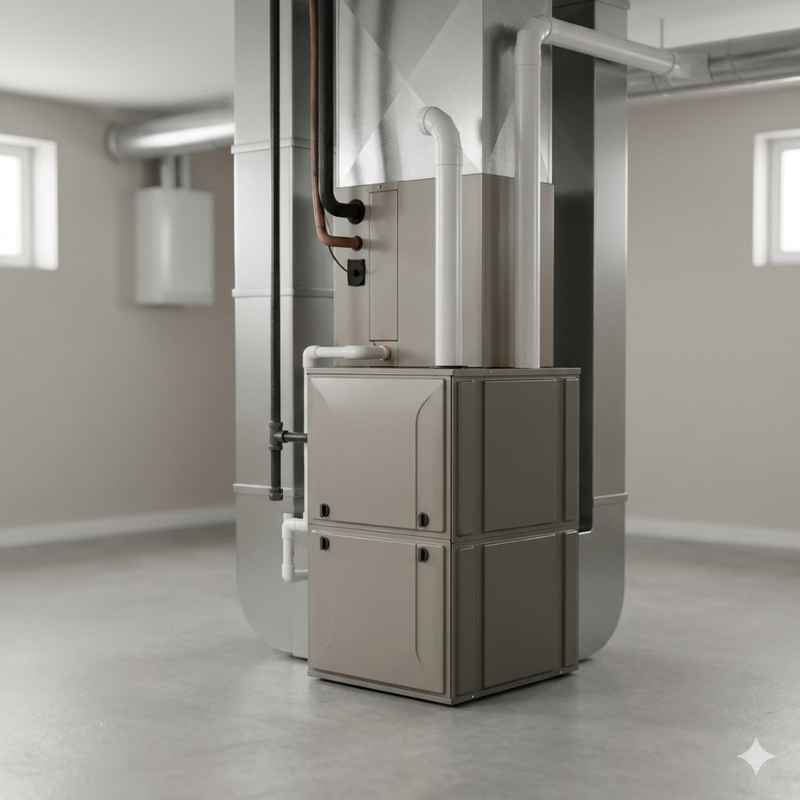
Does A Heater Warranty Change When Home Ownership Changes?
Buying a home is a big step. You want everything to work right. Sometimes, the heating system might still be under warranty.
This can save you money if something breaks. But what happens to that warranty if you sell the house? Or if you just bought one?
It’s a common question. People wonder if the warranty stays with the home. Or if it’s just for the original owner.
Let’s look into this. We’ll make it clear. You’ll know exactly what to expect.
This helps you avoid surprises later on.
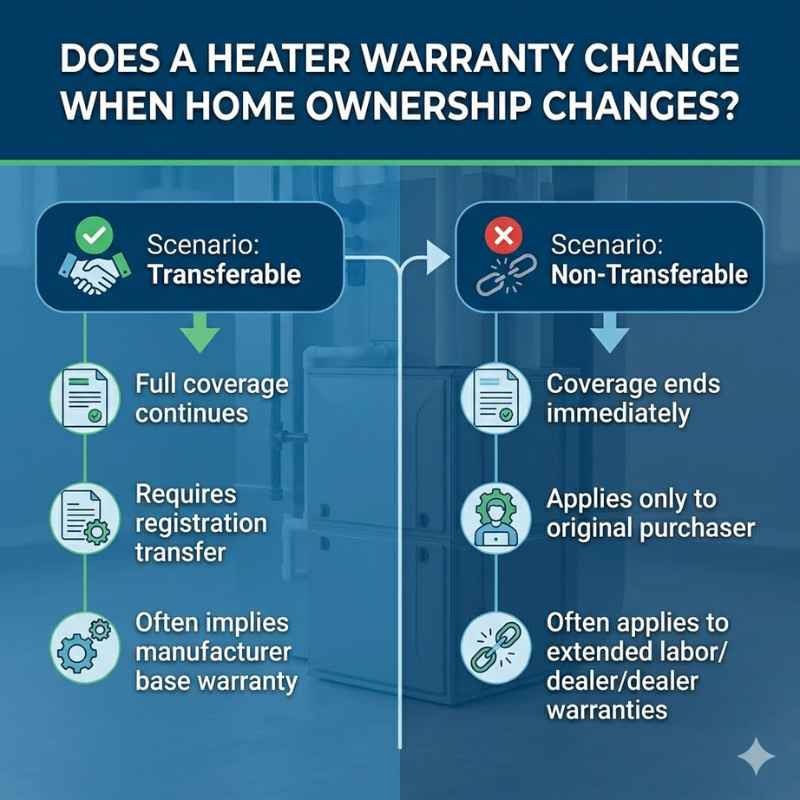
The transferability of a heater warranty depends on the specific warranty terms. Some warranties transfer automatically to new owners, while others require formal transfer and may incur a fee. Always check the warranty document for details.
Understanding Heater Warranties and Home Sales
A heater warranty is a promise from the maker. It says the heater will work well. It covers repairs for a set time.
This is usually a few years. Sometimes it’s even longer. There are a few types of warranties.
One is the manufacturer’s warranty. This comes straight from the company that made the heater. It’s often included when you buy a new system.
Another type is an extended warranty. You buy this separately. It gives you more coverage time.
Sometimes, a home builder offers a warranty too.
When you sell a house, lots of things transfer. The house itself goes to the new owner. So do the appliances.
Things like the stove, fridge, and maybe the water heater. People often think the heater warranty works the same way. It’s a part of the home’s systems, right?
The truth is a bit more complex. It’s not always a simple yes or no. It really comes down to what the warranty document says.
This is the key to everything. You need to read the fine print. It tells you the rules.
Why Warranty Transfer Matters
Imagine you just bought a house. You’re excited. Then, a few months later, your furnace breaks.
That could be a big, costly repair. If you have a warranty, you might be covered. But if that warranty isn’t yours, you’re out of luck.
You’d have to pay for it yourself.
For sellers, it’s also important. If you’re selling your home, a good warranty can be a selling point. It shows you took care of the systems.
It can make a buyer feel more secure. If the warranty is transferable, it might make your house more attractive. Buyers like knowing they have protection.
So, knowing if your heater warranty transfers is key. It affects your wallet. It also affects your peace of mind.
It’s about managing expectations. For both sides of a sale.
Types of Heater Warranties and Their Transferability
Let’s break down the different kinds of warranties. And how they usually behave when a home changes hands.
Manufacturer Warranties
These are the most common. They come with the heating unit itself. Most manufacturer warranties are tied to the product.
Not just the person who bought it first. This is good news for buyers. It means the warranty often follows the heater.
However, there are often conditions. The warranty might need proof of installation. Or it might have a time limit that started when the heater was first put in.
Not when the house was sold. Sometimes, you might need to register the product. The new owner would have to do this.
For example, a 10-year parts warranty from the maker might still have 7 years left. If the heater is properly registered and maintained, the new owner could potentially use it. They might need to show proof of the original purchase date.
Or an invoice from the installer.
In many cases, the manufacturer’s warranty is transferable. But it’s not automatic. The new homeowner needs to take steps.
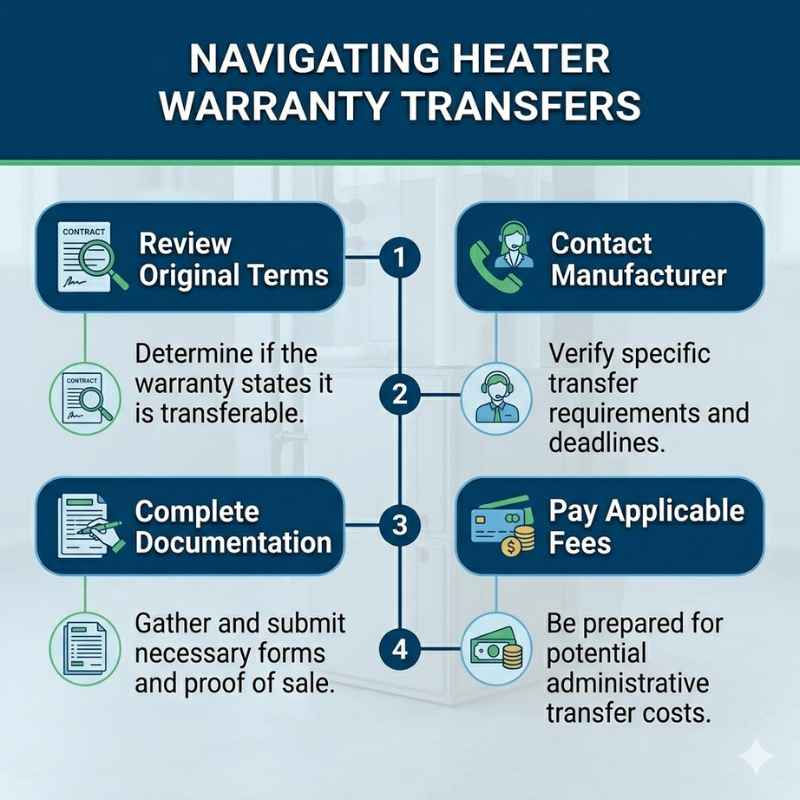
They should contact the manufacturer. They need to ask about the transfer process. Some companies have a form to fill out.
Others might charge a small fee for the transfer.
Manufacturer Warranty Checkpoints
Key Questions to Ask:
- Is the warranty tied to the serial number of the unit?
- Does it require registration by the original owner?
- What documentation is needed to prove ownership and installation date?
- Is there a formal transfer process?
- Are there any fees associated with transferring?
Extended Warranties and Service Contracts
These are warranties you purchase. They offer coverage beyond the manufacturer’s period. Or they might cover things the manufacturer warranty doesn’t.
Like labor costs.
Extended warranties are more like insurance policies. They are often tied to the person or contract. Not necessarily the unit itself.
This means transferability can be tricky. It depends heavily on the contract terms.
Some companies allow transfers. They might require a fee. Or they might need the new owner to qualify.
This could mean a home inspection. Or proving the system is in good working order. Other companies do not allow transfers at all.
The coverage ends when the original owner sells the home.
If you’re buying a home with an existing extended warranty, ask for the contract. Read it carefully. Understand the transfer policy.
If you’re selling, check your contract. See if you can pass on the remaining coverage to the new buyers. This can be a great selling feature.
Extended Warranty Transfer: What to Look For
- Contract Language: Does it explicitly mention transferability?
- Transfer Fee: Is there a cost to transfer the contract?
- Notification Period: How soon after closing must the transfer be requested?
- New Owner Requirements: Does the new owner need to meet certain conditions?
- Coverage Details: Does the new owner get the exact same coverage?
Home Builder Warranties
When a house is new, the builder often provides a warranty. This covers various parts of the home. Including the heating system.
These are usually quite comprehensive for the first year or two.
Builder warranties are typically tied to the property. This means they are generally transferable. The warranty is seen as part of the home’s structure and systems.
When the home is sold, the warranty usually transfers with it.
However, the new owner should still confirm this. They should get a copy of the original builder’s warranty. They should also check if any steps are needed.
Sometimes, the builder might want to be notified. Especially if it’s a third-party warranty provider the builder used.
It’s good practice for the seller to provide the buyer with all warranty documents. This includes builder warranties. It shows the buyer what they are protected by.
And what the process is for making a claim.
Builder Warranty Snapshot
| Coverage Type | Often includes systems (HVAC), structure, and appliances. |
| Typical Duration | 1-2 years for systems, longer for structure. |
| Transferability | Usually transferable with the property. |
| Action Needed | Provide documents to new owner; potentially notify builder. |
The Role of Installation and Maintenance
A key factor for any warranty is proper installation. And regular maintenance. Many warranties are void if the system wasn’t installed by a qualified professional.
Or if it hasn’t been serviced regularly.
This is true for both the original owner and any subsequent owner. If a buyer takes over a home, they need to show that the system has been maintained. This usually means having service records.
These records prove the system has been looked after.
For example, a manufacturer might require annual check-ups. These are done by licensed HVAC technicians. If the previous owner skipped these, the warranty could be invalid.
This applies even if the new owner wants to start the maintenance now.
So, if you’re selling, gather all your maintenance records. Present them to the buyer. If you’re buying, ask for these records.
They are crucial for keeping the warranty valid. It’s a shared responsibility when the ownership changes.
What Happens During a Home Sale: Seller’s Perspective
If you are selling your home, think about your heater warranty. It can be a valuable asset. Here’s what you should do.
First, find all warranty documents. Look for the original purchase receipt. Also, find the warranty certificates.
Check the expiration dates. Note down the type of coverage. Is it a manufacturer warranty?
An extended one? A builder warranty?
Next, understand the transfer policy. Read the warranty terms. If it’s an extended warranty, contact the provider.
Ask them directly if it can be transferred. What are the steps? Are there fees?
If it’s a manufacturer warranty, find out if registration is needed. Or if you need to inform them.
Decide if you want to offer the warranty transfer. If it’s easily transferable and free, it’s a great selling point. You can mention it in your listing.
You can also offer it as part of the sale. This can give potential buyers more confidence.
Make sure to give the buyer all relevant paperwork. This includes warranty information. And maintenance records.
This makes the transition smooth. It also ensures they can use the warranty if needed. Be upfront about any limitations.
Honesty builds trust.
Seller’s Warranty Checklist
- Locate all warranty documents.
- Identify warranty types and expiration dates.
- Confirm transferability with providers.
- Note any transfer fees or requirements.
- Gather all maintenance records.
- Decide how to present it to buyers.
- Provide all documentation to the new owner.
What Happens During a Home Sale: Buyer’s Perspective
As a homebuyer, you have a lot to consider. The heating system is a major one. You want to make sure it’s reliable.
And that you have protection.
When you are looking at a house, ask about the heating system. Ask if there are any active warranties. Request to see all the warranty documentation.
This is very important. Do not skip this step.
Review the warranty terms carefully. Pay close attention to transferability. Who is the provider?
What is covered? For how long? Are there deductibles?
Does the warranty require specific maintenance?
Also, ask for maintenance records. This shows how well the system has been cared for. If records are missing, it’s a red flag.
It might mean the warranty is no longer valid. Or that the system is at higher risk of problems.
If you want the warranty to transfer, you need to know the process. Contact the warranty provider yourself. Understand what you need to do.
Is there a deadline? Will there be a fee? Do you need an inspection?
It’s wise to get your own home inspection. This includes checking the HVAC system. Your inspector can tell you its condition.
This information is valuable. It helps you negotiate with the seller. It also prepares you for future maintenance.
Buyer’s Warranty Action Plan
- Inquire about existing warranties early.
- Request all warranty documents and maintenance records.
- Read warranty terms, focusing on transferability and coverage.
- Contact warranty providers to confirm transfer process and costs.
- Include an HVAC inspection in your general home inspection.
- Factor in potential future maintenance or repair costs.
Real-World Scenarios and Common Issues
Let’s look at a few real-life situations. These can happen when a home changes hands.
Scenario 1: The Ignored Warranty
Sarah bought a house. The seller mentioned the furnace was “practically new” and had a warranty. Sarah didn’t ask for details.
Three months later, the furnace quit. She called the manufacturer. They said the warranty expired two years ago.
The seller had meant the purchase date, not the installation date.
This is a common mix-up. Warranties often start from the date of manufacture. Or installation.
Not when the house was sold. Sarah learned the hard way. Always get the exact dates and terms.
Scenario 2: The Transfer Fee Surprise
Mark bought a home. The seller had an excellent extended warranty. Mark was thrilled.
He called the warranty company to transfer it. They said yes. But there was a $300 transfer fee.
And a mandatory inspection that cost another $200. Mark hadn’t budgeted for this.
This highlights the need to ask about fees. And any extra steps. A transferable warranty can be great.
But the costs can add up. It’s important to know the total expense.
Scenario 3: The Missing Records
The Johnsons sold their home. They gave the buyers all the warranty papers. But they couldn’t find the maintenance receipts.
The buyers, Mr. and Mrs. Chen, later had an issue with the AC.
The warranty company denied the claim. They said proof of regular maintenance was required.
This shows how vital maintenance records are. They are the proof. Without them, even a valid warranty might be useless.
Sellers should keep these records organized. Buyers should always ask for them.
Contrast: Warranty Transfer Expectations
Myth: A warranty automatically transfers with the house like the deed.
Reality: Transferability depends on the specific warranty terms and provider.
Myth: All warranties are free to transfer.
Reality: Some extended warranties or service contracts have transfer fees.
Myth: Proof of ownership is enough to claim warranty service.
Reality: Maintenance records are often required to keep a warranty valid.
Legal and Contractual Considerations
When buying or selling a home, contracts are key. The purchase agreement is the main document. It outlines what transfers with the property.
Sellers should clearly state in the purchase agreement what warranties they are transferring. Buyers should ensure that any agreed-upon warranties are listed. If a seller promises to transfer a warranty, it should be in writing.
Some warranties are part of a home warranty plan. These are often purchased by the seller before listing. Or by the buyer during closing.
These plans are usually designed to be transferable. They cover a specific period. And they often have a clear process for transfers.
If there’s a dispute, the contract is what matters. The warranty document itself is also a legal contract. It outlines the rights and responsibilities of both parties.
It’s always best to have everything in writing.
What If the Warranty Doesn’t Transfer?
Sometimes, a heater warranty just won’t transfer. Or the new owner decides not to transfer it. What then?
The first thing is to know the system’s condition. If you’re buying a home and the warranty doesn’t transfer, your home inspection is even more important. It tells you what you’re dealing with.
You might need to consider buying a new warranty. Many companies offer plans for existing homes. These plans can be a good way to protect yourself.
Especially for older or complex systems. You’ll need to research these options.
You can also prepare for potential repairs. Start saving a little money each month. This creates a fund for unexpected issues.
It’s a good financial practice for any homeowner.
For sellers, if the warranty isn’t transferable, don’t try to hide it. Be upfront. It’s better to be honest.
You can still highlight the recent installation or good condition of the system.
Options When Warranty Doesn’t Transfer
- Get a Thorough Home Inspection: Understand the system’s current state.
- Purchase a New Home Warranty: Explore plans for existing homes.
- Budget for Repairs: Start a savings fund for unexpected issues.
- Focus on System Age and Condition: Highlight these facts if selling.
Tips for Smooth Warranty Transfers
Making sure a warranty transfers smoothly takes a little effort. But it’s worth it. Here are some simple tips.
For Sellers:
- Start early. Gather all documents well before listing.
- Contact providers to confirm transfer procedures.
- Be transparent with potential buyers.
- Provide a clear list of all transferable warranties.
For Buyers:
- Ask about warranties during the viewing process.
- Make warranty transfer a contingency in your offer.
- Verify warranty details with the provider yourself.
- Ensure maintenance records are provided.
General Tips:
- Keep all paperwork organized.
- Understand that policies vary greatly.
- When in doubt, ask the warranty provider directly.
A little proactive work can save a lot of stress. It ensures you get the full benefit of any existing warranty. Or that you know what you’re buying without one.
Frequently Asked Questions about Heater Warranties and Home Sales
Is a heater warranty automatically transferred when I sell my home?
No, it is not automatic. Transferability depends entirely on the specific terms and conditions of the warranty. Some warranties transfer with the product, others are tied to the original owner, and some require a formal transfer process or fee.
What should I do if my heater warranty is not transferable?
If the warranty is not transferable, you have a few options. You can consider purchasing a new home warranty plan for the property. You can also start saving money to cover potential future repairs.
Highlighting the age and good condition of the system to potential buyers is also advisable.
How can a buyer ensure they get the benefit of a seller’s heater warranty?
Buyers should always inquire about existing warranties during the home buying process. They should request all warranty documents and maintenance records. Making the transferability of specific warranties a contingency in the purchase offer is also a good strategy.
Confirming the transfer process directly with the warranty provider is crucial.
Are builder warranties usually transferable?
Yes, builder warranties are typically tied to the property itself. This means they are generally transferable to new owners. However, it is still recommended to obtain a copy of the original warranty and confirm any necessary notification procedures with the builder or their warranty provider.
What is the difference between a manufacturer’s warranty and an extended warranty regarding transferability?
Manufacturer warranties are often tied to the product (the heater) and may be more easily transferable, though conditions apply. Extended warranties or service contracts are often more like insurance policies tied to the original contract holder, making their transferability more dependent on specific contract clauses and potential fees.
Why are maintenance records so important for heater warranties?
Maintenance records serve as proof that the heating system has been regularly serviced and cared for. Many warranty providers require these records to validate claims, ensuring the system has been operated and maintained according to the manufacturer’s specifications. Without them, a warranty claim can be denied.
Conclusion
So, does a heater warranty change when home ownership changes? The answer is a clear: maybe. It truly depends on the specific warranty.
Always check the terms. For sellers, this is a chance to add value. For buyers, it’s a critical part of due diligence.
Knowing the rules helps everyone.
Don’t assume. Ask questions. Get it in writing.
This way, you can protect your investment. And enjoy a warm home without worries. It’s about being informed.
And prepared for the responsibilities of homeownership.
Sponsored / affiliate links. As an Amazon Associate I earn from qualifying purchases. I may earn additional commission from eligible campaigns.