Do Copeland Scroll Compressors Have Crankcase Heaters?
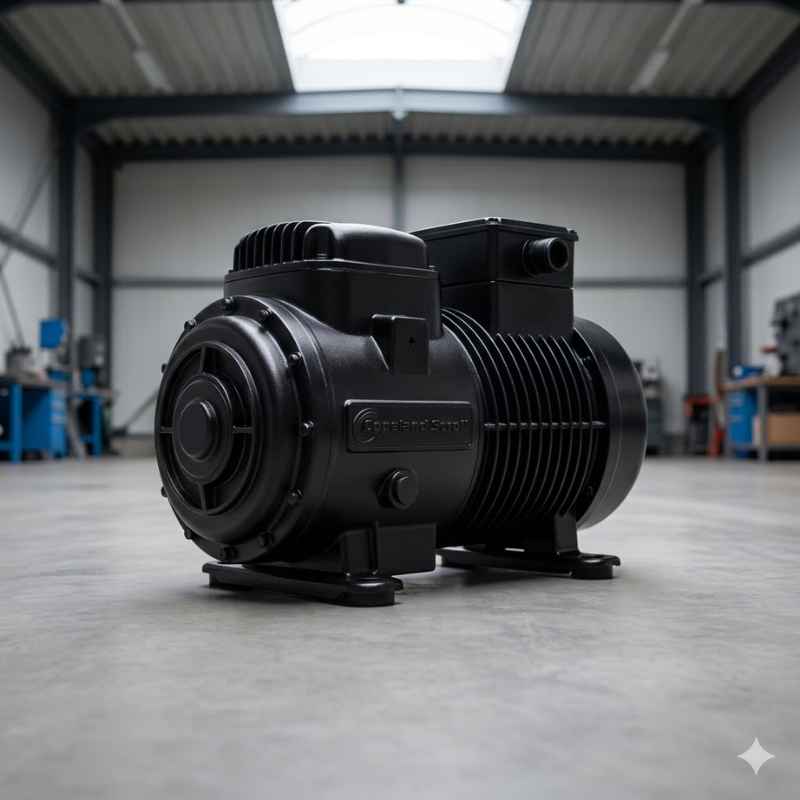
Copeland scroll compressors do not come with built-in crankcase heaters as a standard feature. However, crankcase heaters are often recommended and installed separately as an accessory, especially in specific climate conditions or when the compressor is mounted in a location prone to oil slugging or low ambient temperatures. Their primary purpose is to keep the compressor oil warm, preventing refrigerant from dissolving into it and protecting the compressor from damage during startup.
Understanding Crankcase Heaters and Compressors
So, what exactly is a crankcase heater, and why would you even need one for a compressor? Think of a compressor as the heart of your air conditioning or refrigeration system. It moves the refrigerant around, making the cooling or heating process happen.
The crankcase is the bottom part of the compressor.
This is where the oil lives. This oil is super important. It lubricates all the moving parts inside the compressor.
Without enough lubrication, things can grind to a halt very quickly. That’s why keeping the oil healthy is a top priority for any HVAC tech or homeowner who cares about their system.
Now, here’s where crankcase heaters come in. In certain situations, the oil in the crankcase can get too cold. When it gets cold, the refrigerant, which is a gas that can turn into a liquid, can start to dissolve into the oil.
This is called refrigerant dilution.
When the compressor starts up, if the oil has too much refrigerant dissolved in it, it’s like trying to start a car with water in the oil. It doesn’t lubricate well at all. This can cause major damage to the compressor.
A crankcase heater warms the oil. This keeps the refrigerant from dissolving into it.
It ensures the oil stays thick and slippery. This protects the compressor when it needs to start up, especially on those chilly mornings. It’s a simple but effective way to prevent serious problems down the road.
My Own Close Call with a Cold Compressor
I remember one particularly brutal winter a few years back. I was working on a service call at a small restaurant. They had a walk-in freezer that had been acting up.
The technician before me had been there a week prior and said it was just a minor refrigerant leak.
But this time, the compressor was making a terrible racket. It sounded like rocks grinding inside a metal box. The owner was beside himself; his frozen goods were at risk.
I popped the access panel to the compressor unit. It was mounted in a small, unheated utility room that felt like an icebox.
I could feel the cold seeping out from the compressor housing. I immediately suspected oil slugging due to low temperatures. The refrigerant had likely condensed in the crankcase overnight, diluting the oil.
When the thermostat called for cooling, the compressor tried to start, but the oil wasn’t doing its job.
Panic set in for a moment. Losing that compressor would mean a huge repair bill for the restaurant and a lot of lost product. I knew I had to act fast.
I explained to the owner what was likely happening and the importance of a crankcase heater. He hadn’t even known such a thing existed. We got one installed right away.
Within a few hours, the noise stopped. The compressor ran smoothly again. It was a huge relief, and a lesson learned for me about the critical role of crankcase heaters in specific environments.
Why Crankcase Heaters Matter
Prevents Oil Dilution: Refrigerant can mix with compressor oil at low temperatures. This thins the oil, reducing its lubricating ability.
Protects During Startup: Warm oil ensures proper lubrication when the compressor begins its cycle, especially after periods of inactivity.
Extends Compressor Life: By avoiding lubrication failures and stress, heaters help compressors last much longer.
Improves System Efficiency: A well-lubricated compressor runs more efficiently, using less energy.
When Do You Actually Need a Crankcase Heater?
Copeland scroll compressors are tough. They are designed to be quite robust. But like anything, they have their limits.
The need for a crankcase heater really depends on where the compressor is located and how it’s used. It’s not a universal requirement for every single installation.
One of the biggest factors is ambient temperature. If your compressor is in a place that gets very cold, a heater is a good idea. Think about outdoor units in northern climates.
Or, as in my story, an indoor utility room that isn’t heated.
Another common situation is when a system might sit idle for a while. Refrigerant can migrate to the coldest spot. That spot is often the compressor crankcase.
If the system is in a place that experiences temperature swings, this can be a real problem. The refrigerant can pool up.
System design also plays a role. Some systems are more prone to oil slugging. This is when liquid refrigerant or oil is drawn into the compressor cylinder.
This can happen if the system isn’t properly charged or if there are issues with refrigerant flow.
So, if your compressor is in a basement, a garage, an unconditioned attic, or outdoors in a place that sees freezing temperatures, you should seriously consider a crankcase heater. It’s a small investment that can save you a lot of headaches and money.
Situations Favoring Crankcase Heaters:
- Compressors located outdoors in cold climates (below 40°F or 4°C for extended periods).
- Compressors in unheated spaces like garages, basements, or utility rooms.
- Systems that experience frequent cycling or long off-times.
- Refrigeration systems where low ambient temperatures are common.
- Systems prone to refrigerant migration or oil slugging.
How Crankcase Heaters Work
It’s pretty straightforward, really. A crankcase heater is essentially a small heating element. It’s designed to be installed on the compressor’s crankcase.
When the compressor is not running, and the temperature drops to a certain point, the heater turns on.
It gently warms the oil in the crankcase. This warmth does a couple of crucial things. First, it prevents the oil from becoming too saturated with refrigerant.
Remember how refrigerant can dissolve into cold oil? The warmth keeps that from happening.
Second, the warmth helps any refrigerant that might have condensed in the crankcase to vaporize. This vapor then gets pushed out with the normal refrigerant flow when the compressor starts. This ensures that when the compressor kicks on, it’s dealing with oil that’s pure and ready to lubricate.
Most crankcase heaters are designed to operate when the compressor is off. Some might have a thermostat or be wired to the control circuit of the system. This makes sure they only heat when needed.
This saves energy and prevents overheating the oil.
The goal is not to make the oil boiling hot. It’s just to keep it warm enough. This is usually somewhere between 40°F and 50°F (4°C to 10°C).
This keeps the oil in its optimal liquid state for lubrication and prevents the issues we’ve talked about.
The Difference Between Built-in and Add-on Heaters
As we mentioned, Copeland scroll compressors typically do not come with crankcase heaters built-in from the factory. They are usually offered as an optional accessory. This is a common practice for many compressor manufacturers.
Why? Because not every installation requires one. Building them into every single unit would increase the cost for everyone, even those who don’t need them.
It’s more practical to offer them as an add-on for specific situations.
This also gives installers flexibility. They can assess the specific job site conditions. They can then decide if a crankcase heater is necessary.
If it is, they can choose the right type and size for the compressor and the environment.
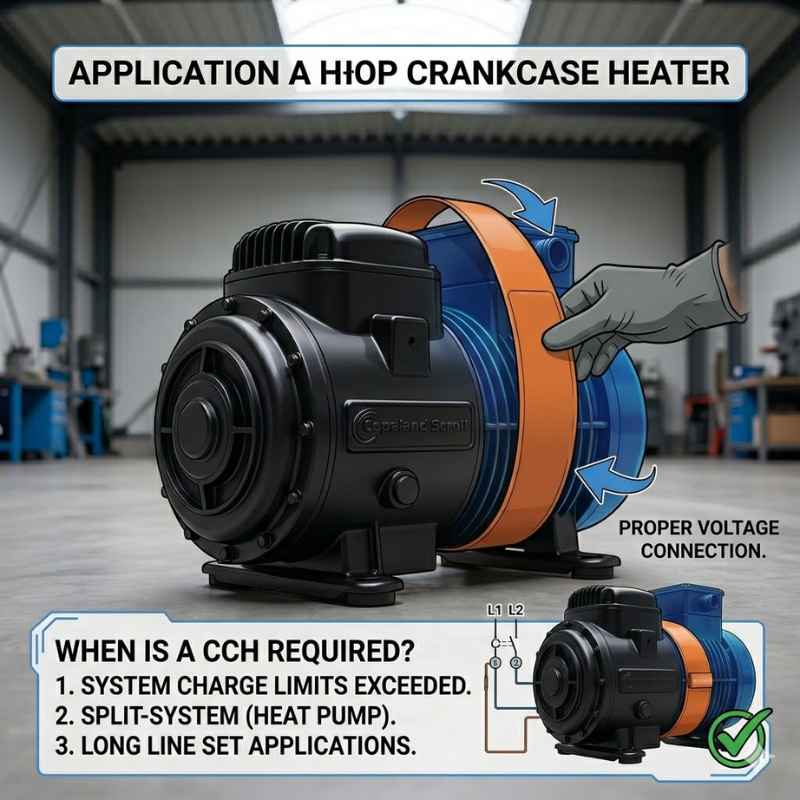
There are generally two main types of crankcase heaters you’ll see: strap-on heaters and immersion heaters. Strap-on heaters are the most common. They wrap around the outside of the crankcase.
Immersion heaters, on the other hand, are inserted directly into the oil.
The strap-on type is easier to install and service. They don’t require draining the oil. Immersion heaters might offer more direct heating.
But they involve more complex installation. For most residential and light commercial applications, strap-on heaters are the go-to choice.
Crankcase Heater Types:
- Strap-On Heaters: Wrap around the exterior of the crankcase. Easy to install and maintain. Most common type.
- Immersion Heaters: Inserted directly into the compressor oil. Offer direct heating but require more involved installation.
What Happens If You Don’t Have One When You Need One?
This is where the real consequences come into play. If your system operates in conditions where a crankcase heater is recommended, but you don’t have one, you’re taking a significant risk. It’s like driving your car in a blizzard without snow tires – you might be okay for a while, but trouble is likely around the corner.
The most common issue is compressor failure. As we’ve discussed, refrigerant dilution leads to poor lubrication. This causes increased friction and wear on the internal components.
Bearings can seize up. Valves can get damaged. The compressor can eventually overheat and seize completely.
This is not a cheap fix. A compressor is one of the most expensive parts of an HVAC system. Replacing it can cost hundreds, if not thousands, of dollars.
On top of that, you’ll have the cost of lost cooling or heating during the repair time. This can also lead to significant discomfort for your family or customers.
Another less obvious consequence is reduced system efficiency. Even before a catastrophic failure, a poorly lubricated compressor works harder. It uses more electricity.
This means higher energy bills. Over time, this inefficiency adds up.
In refrigeration systems, inadequate crankcase heating can also lead to frost build-up. This can cause further operational issues and potential damage. It’s a domino effect.
One problem leads to another, making the situation worse.
Identifying the Signs of a Problem
Sometimes, a compressor might be struggling due to cold conditions even before it fails completely. You might hear strange noises. These could be knocking or grinding sounds, especially when the system starts.
This is the compressor crying for help.
You might also notice that your system is taking longer to cool or heat your space. Or it might not be reaching the desired temperature at all. This could be a sign that the compressor isn’t running efficiently.
Increased energy bills can also be a subtle indicator. If your electricity costs have suddenly jumped without any clear reason, it’s worth investigating your HVAC system. It could be that the compressor is working overtime due to poor lubrication.
In some cases, you might see visible signs of oil leaks around the compressor. This isn’t always directly related to the heater, but it can indicate that the oil is under stress or has been contaminated.
If you suspect there might be an issue, the best thing to do is call a qualified HVAC technician. They can assess the situation. They can check the compressor’s oil and look for signs of refrigerant dilution.
They can also tell you if your specific installation would benefit from a crankcase heater.
Warning Signs of Compressor Trouble:
- Unusual noises (grinding, knocking) during startup or operation.
- Reduced cooling or heating performance.
- Higher than usual energy bills.
- Visible oil leaks around the compressor.
- System takes longer to reach set temperatures.
Checking Your Existing System
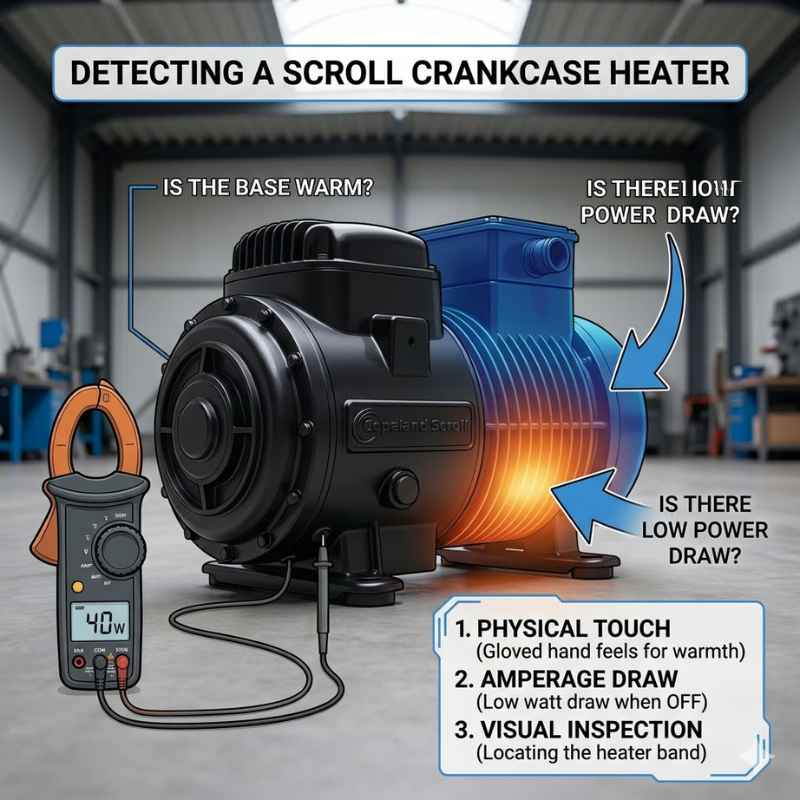
If you’re curious about your current setup, you can often tell if a crankcase heater is installed. Look at the compressor itself. Most strap-on heaters are wrapped around the bottom portion of the compressor casing.
They usually have a power cord or wires leading to the electrical control box.
The heater itself might look like a dark-colored band or a metal plate with wires. Sometimes, it might be hard to see because it’s tucked away or covered by insulation. If you’re unsure, it’s always best to consult your system’s installation manual or call a professional.
A technician can easily check for you. They can confirm if a heater is present and if it’s functioning correctly. They can also check the compressor oil for signs of contamination.
This is part of a routine maintenance check. Doing this regularly can catch potential problems early.
Routine maintenance is key to a long-lasting HVAC system. It’s not just about changing filters. It’s about ensuring all components are working as they should.
Checking for crankcase heaters and their operation falls into this important category, especially for systems in certain climates or locations.
Installation Considerations
If you’ve determined that a crankcase heater is necessary for your Copeland scroll compressor, the installation is usually straightforward. However, it’s crucial to have it done by a qualified HVAC technician. They have the knowledge and tools to do it correctly and safely.
The technician will first identify the correct type and wattage of the heater. This depends on the size of the compressor and the ambient temperature conditions. Using the wrong type can be ineffective or even damaging.
For strap-on heaters, the surface of the compressor crankcase needs to be clean and dry. This ensures good contact for efficient heat transfer. The heater is then securely fastened around the crankcase.
Proper insulation might also be applied over the heater to direct heat inward.
The heater is then wired into the system’s electrical controls. This is typically done so that the heater operates only when the compressor is off and the temperature drops below a certain threshold. This prevents energy waste and potential overheating of the oil.
After installation, the technician will test the system. They will ensure the heater turns on and off as expected. They might also measure the oil temperature.
This confirms the heater is working effectively. Proper installation is vital for both the heater’s function and the overall safety of the HVAC system.
Crankcase Heater Installation Steps:
- Assess Needs: Determine if a heater is required based on climate and location.
- Select Correct Heater: Choose the appropriate type and wattage for the compressor size.
- Prepare Compressor: Ensure the crankcase surface is clean and dry for optimal heat transfer.
- Install Heater: Securely attach the strap-on or immersion heater. Add insulation if needed.
- Electrical Wiring: Connect the heater to the system’s controls to ensure proper operation.
- Test and Verify: Confirm the heater functions correctly and consult with the technician on performance.
Alternatives and When They Might Apply
While crankcase heaters are the most common and effective solution for preventing oil dilution in cold conditions, there are some alternative considerations. However, these are often less direct or only suitable for specific scenarios.
One approach is to ensure proper system design and refrigerant management. For example, using a suction accumulator can help prevent liquid refrigerant from reaching the compressor. This is more about preventing oil slugging in general, but it’s related to protecting the compressor from liquid.
In some very specific, high-end applications, advanced oil management systems might be used. These can include oil separators and reservoirs that help maintain oil quality and temperature. But these are typically found in large commercial or industrial refrigeration systems, not standard home AC units.
Another thought might be to simply relocate the compressor to a warmer, conditioned space. If the current location is the problem, moving it might seem like an obvious solution. However, this can be a major and costly undertaking, often more expensive than installing a crankcase heater.
For some very small, specialized systems, there might be less common heating solutions. But for the vast majority of Copeland scroll compressor applications, especially in residential and light commercial settings, the crankcase heater remains the primary and most practical method of protection against cold weather issues.
Impact on System Lifespan and Efficiency
The impact of a properly functioning crankcase heater on your HVAC system’s lifespan and efficiency is significant. It’s an ounce of prevention that’s truly worth a pound of cure.
By preventing refrigerant dilution and ensuring proper lubrication, crankcase heaters directly reduce wear and tear on the compressor’s internal components. This means the compressor is less likely to suffer premature failure. A compressor that lasts its full expected lifespan is a huge cost saving.
Moreover, a compressor that is properly lubricated runs more smoothly and efficiently. It doesn’t have to work as hard to overcome friction. This translates directly into lower energy consumption.
Your monthly electricity bills will reflect this improved efficiency.
Think about it this way: if the oil is acting like it should, the compressor can do its job without struggling. This leads to consistent performance. Your system will cool or heat your home more effectively and reliably.
The long-term savings from avoiding a compressor
What This Means for You
So, what’s the takeaway for you, the homeowner or building manager? It boils down to awareness and proactive care. First, be aware that your Copeland scroll compressor, while robust, might need a crankcase heater depending on its environment.
If your system is located in a climate that experiences cold temperatures, or if the compressor is in an unconditioned space like a garage or basement, you should inquire about installing a crankcase heater. Don’t wait until you hear strange noises or your system stops working.
Consider this a preventative maintenance step. It’s like putting on winter tires for your car. You hope you won’t need them, but you’re prepared if you do.
A qualified HVAC technician can assess your specific situation and provide a recommendation.
Regular professional maintenance of your HVAC system is key. During these checks, ask your technician to inspect the compressor. They can look for signs of oil dilution and confirm if a crankcase heater is installed and working correctly.
This diligence protects your investment and ensures comfort.
Quick Fixes and Tips
While there aren’t really “quick fixes” for issues related to a missing or faulty crankcase heater, there are proactive steps you can take:
- Regular Maintenance: Schedule annual HVAC system check-ups. This is the best way to catch potential problems early.
- Educate Yourself: Understand the conditions your compressor operates in. Know if your location experiences cold enough temperatures to warrant a heater.
- Consult Professionals: If you have any doubts about your system’s performance or the need for a crankcase heater, always talk to a certified HVAC technician.
- Listen to Your System: Pay attention to unusual noises or performance changes. These are often early warning signs.
Frequent Questions
Do all Copeland scroll compressors need crankcase heaters?
No, not all Copeland scroll compressors require crankcase heaters. They are most beneficial in climates with cold ambient temperatures or when the compressor is located in an unconditioned space prone to low temperatures.
How can I tell if my compressor has a crankcase heater?
Look for a heating element, often a dark strap or band, wrapped around the lower part of the compressor casing. It will have wires connected to the electrical system. If you’re unsure, an HVAC technician can confirm.
What happens if refrigerant gets into the compressor oil?
Refrigerant can dilute the compressor oil, making it thinner. This reduces its lubricating ability. When the compressor starts, this poor lubrication can cause damage to internal parts, leading to failure.
Can a crankcase heater be added to an older system?
Yes, in most cases, a crankcase heater can be added to an existing system. An HVAC professional can determine the correct type and size for your compressor and install it safely.
How much does a crankcase heater cost?
The cost varies, but a crankcase heater itself typically costs between $50 and $150. Professional installation can add another $150 to $300, depending on the complexity and your location.
Is a crankcase heater necessary if the compressor is indoors?
It depends on the indoor location. If the space is heated and consistently above 40°F (4°C), it might not be necessary. However, if it’s an unconditioned basement, garage, or utility room that experiences significant temperature drops, a heater is highly recommended.
Conclusion
Understanding whether your Copeland scroll compressor needs a crankcase heater is vital for its health. While not standard on every unit, they are crucial protective devices in specific environments. By knowing when they are needed and ensuring your system is properly equipped, you invest in its longevity and efficient operation.
Always consult with a qualified HVAC professional for personalized advice and service.
Sponsored / affiliate links. As an Amazon Associate I earn from qualifying purchases. I may earn additional commission from eligible campaigns.