Where Do You Connect Thermostat Wires On Modine Heaters?
Ever stare at a tangle of wires and wonder, “Which one goes where?” It’s a common feeling when dealing with home repairs. Your Modine heater is supposed to keep you warm. But if the thermostat isn’t hooked up right, that cozy feeling is nowhere in sight.
This can feel frustrating, especially when the weather gets cold.
Let’s break down where those thermostat wires connect on your Modine heater. We’ll make it simple. You’ll learn about the common setups.
Plus, we’ll cover safety steps. By the end, you’ll feel much more confident.
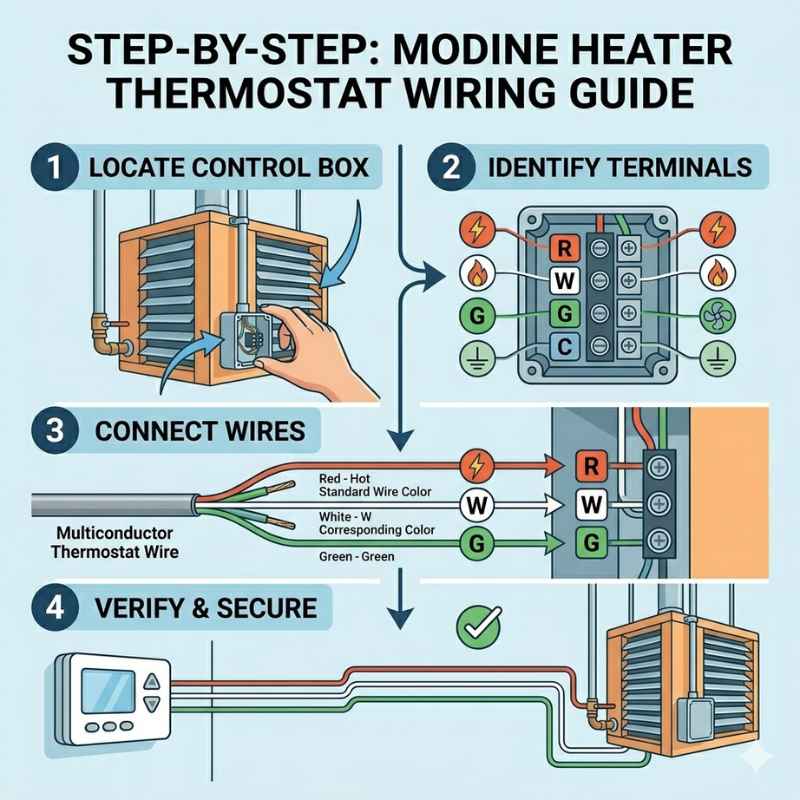
Connecting thermostat wires on a Modine heater involves identifying the correct terminals on the heater’s control board or junction box that correspond to your thermostat’s low-voltage control signals (typically R, W, G, Y, C). Always consult your specific Modine model’s wiring diagram and ensure power is completely off before starting.
Understanding Modine Heater Wiring Basics
Modine heaters are built to last. They have systems that control how and when they turn on. At the heart of this control is the connection to your thermostat.
This connection uses low-voltage wires. These wires send signals. The signals tell the heater to start, stop, or adjust its output.
Think of it like a light switch, but much smarter.
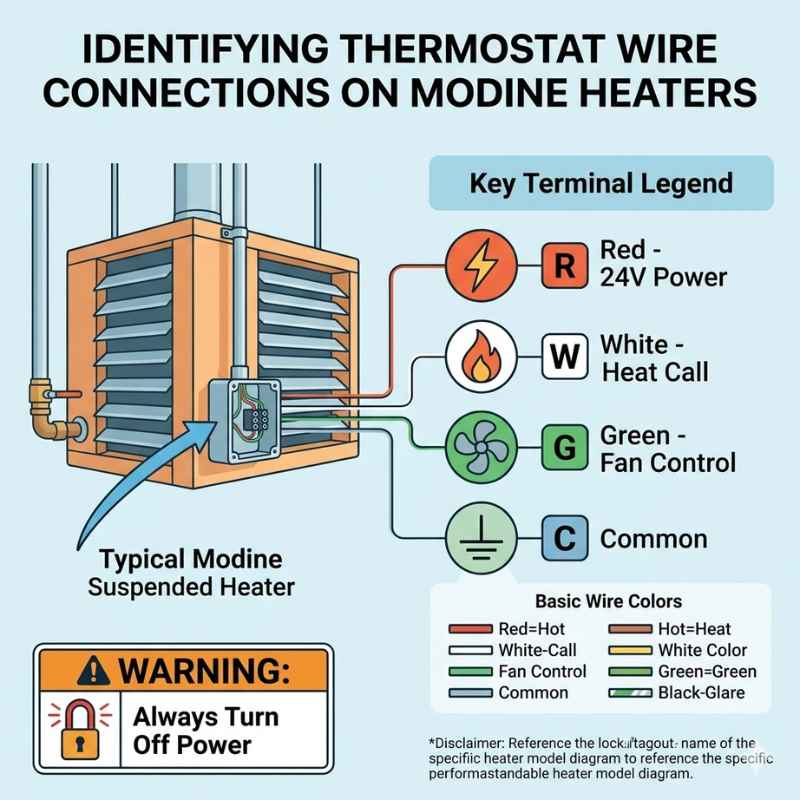
Most modern thermostats use a simple color code. Common wires include:
- R (or Rh/Rc): This is the power wire. It provides 24-volt power.
- W: This wire tells the heater to produce heat.
- G: This wire controls the fan. It tells the fan to turn on.
- Y: This wire usually signals for cooling. Many Modine heaters are for heating only.
- C: This is the common wire. It provides a return path for power.
Your specific Modine heater model might have slight variations. It’s always best to check the manual. The manual has a wiring diagram.
This diagram is your best friend for this job.
The thermostat wires run from your thermostat. They go to the heater. Inside the heater, there’s a control panel.
This panel has terminals. You need to match the thermostat wires to the correct terminals on this panel. It’s like plugging in a lamp.
The plug needs to fit the socket.
Safety is super important here. Before you touch any wires, you must turn off the power. Find the breaker switch for your heater.
Flip it off. Double-check that the heater has no power. You can use a voltage tester.
This ensures it’s safe to work on.
My Own Wiring Fumble: A Cold Night Story
I remember one winter. It was freezing outside. My old Modine unit in the garage stopped blowing hot air.
I figured, “No big deal, I’ll just change the thermostat batteries.” That didn’t help. I found an old thermostat manual online. I decided to check the wires connected to the heater itself.
I thought I knew what I was doing.
I found the control board. It had several terminals. I saw wires labeled R, W, and G.
I assumed they matched my thermostat perfectly. I unscrewed one wire. Then I screwed on another one.
I was in a bit of a rush. The cold was getting to me. I thought I was fixing it.
I turned the power back on. Nothing happened. The heater stayed cold.
A wave of panic washed over me. What did I do wrong? I looked at the wiring diagram again.
It was then I saw it. I had mixed up the R wire with the G wire. The power was going to the fan directly.
It wasn’t telling the heat to turn on. I felt so silly.
It was a good lesson. Even simple wiring needs attention to detail. I carefully reconnected the wires as the diagram showed.
I double-checked each one. Then I turned the power back on. A moment later, I heard the familiar rumble of the Modine heater.
Warm air started to flow. I breathed a sigh of relief. That night, I learned the value of patience and precision.
Common Thermostat Wire Colors and Their Role
R Wire: This provides the 24-volt power from the transformer. It’s like the main power line.
W Wire: This signal tells the heater to start its heating cycle. It engages the burner and blower.
G Wire: This wire controls the fan motor. It makes the fan spin to circulate air.
Y Wire: This is usually for cooling systems. For heating-only Modine units, it’s often not used.
C Wire: The common wire completes the circuit. It’s needed for thermostats that have Wi-Fi or digital displays.
Where to Find the Connection Points
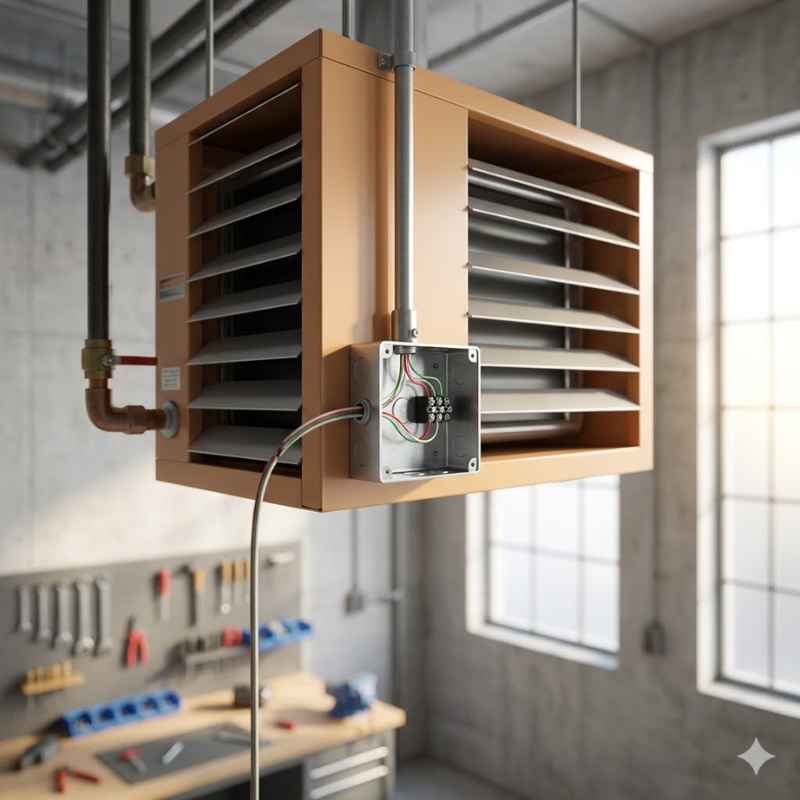
The exact spot where you’ll connect thermostat wires depends on your Modine heater model. Many units have a main control panel. This panel is often located behind a service door or cover.
You’ll need to open this cover to access the components inside.
Inside, look for a circuit board or a terminal strip. This is where the low-voltage wires from your thermostat will connect. The terminals are usually clearly labeled.
They often correspond to the letters on your thermostat wires: R, W, G, etc.
Some older Modine units might have a junction box. This box could be separate from the main heating components. It still serves the same purpose: a place to connect the low-voltage wiring.
Key things to look for:
- Labeling: The terminals should have letters printed next to them. These letters match your thermostat wires.
- Wire Nuts: Sometimes, the thermostat wires are connected with wire nuts inside the heater.
- Screws: More often, they are screwed onto terminal posts.
Always refer to your specific Modine heater’s installation manual or service guide. It will show a diagram. This diagram is specific to your unit.
It will pinpoint the exact location of the terminal strip or connection points for the thermostat wiring.
Spotting the Control Board
Location: Usually inside the main cabinet of the heater.
Appearance: A green circuit board with many components. It will have screw terminals.
Labels: Look for labels like R, W, G, Y, C, or similar on or near the terminals.
Common Wiring Scenarios for Modine Heaters
There are a few standard ways thermostat wires are connected. The exact setup depends on your thermostat type and heater features.
Scenario 1: Basic Heating Only
This is the simplest setup. You have a basic thermostat. It only controls heat and the fan.
- Thermostat R connects to Heater R.
- Thermostat W connects to Heater W.
- Thermostat G connects to Heater G.
In this case, you might not use Y or C wires. The heater’s internal system handles the fan operation when heat is called for.
Scenario 2: Heating with a Continuous Fan Option
Some thermostats allow you to run the fan continuously. This helps with air circulation.
- Thermostat R connects to Heater R.
- Thermostat W connects to Heater W.
- Thermostat G connects to Heater G.
The thermostat’s “Fan On” setting will use the G wire to tell the fan to run. The “Auto” setting will have the fan run only when heating.
Scenario 3: Digital or Smart Thermostat (Requires C Wire)
Modern digital and smart thermostats need constant power. This is usually supplied by a C wire.
- Thermostat R connects to Heater R.
- Thermostat W connects to Heater W.
- Thermostat G connects to Heater G.
- Thermostat C connects to Heater C (if available).
If your Modine heater doesn’t have a C terminal, you might need to install a 24-volt transformer. You could also use a “C-wire adapter.” This adapter uses existing wires to create a C connection.
Scenario 4: Multi-Stage Heating or Cooling (Less Common for Basic Modine)
Some advanced systems use additional wires like Y2 or W2. These are for second-stage heating or cooling. Most standard Modine heaters for single-zone applications won’t use these.
If your thermostat has them, and your heater doesn’t support them, you won’t connect them.
Always match the labels on your thermostat to the labels on the heater’s control board. If a wire isn’t used by your thermostat, you can cap it off with a wire nut and leave it disconnected. Make sure it’s safely tucked away so it doesn’t touch anything.
Quick Scan: Wire Connection Guide
| Thermostat Wire | Modine Heater Terminal (Common) | Purpose |
|---|---|---|
| R (or Rh/Rc) | R | 24V Power |
| W | W | Heat Call |
| G | G | Fan Control |
| Y | Y (often unused for heat-only) | Cooling Call |
| C | C (if available) | Common / Continuous Power |
Real-World Context: Why Wiring Matters So Much
Imagine your Modine heater is a well-trained dog. It waits for commands. The thermostat is the dog’s owner.
The wires are the leash and the spoken commands. If the leash is attached to the wrong post, or the command is garbled, the dog won’t do what the owner intends.
In a home, the thermostat is the brain. It senses the room temperature. It decides if the heater needs to turn on.
It sends a signal through the wires. These wires are very specific pathways. Each wire carries a different instruction.
For example, a “W” wire command is different from a “G” wire command.
If you mix up the “W” and “G” wires, the heater might think you want the fan to run when it should be heating. Or it might try to heat when it should just circulate air. This leads to the heater not working correctly.
It might not heat at all. Or it might run constantly. It could also lead to error codes on the thermostat or heater.
The environment plays a role too. In colder climates, a properly working heater is essential. A faulty thermostat connection means no heat.
This can lead to discomfort. It can even cause pipes to freeze in unheated areas like garages or basements where Modine heaters are often installed.
User behavior also influences wiring. Sometimes people change their thermostat. They might get a fancy new one.
They assume the old wiring will just work. But new thermostats often have different power needs. They might need that “C” wire for continuous power.
If it’s not connected, the thermostat might not power on. Or it might lose its settings.
The design of the heater’s control board is also key. It’s built with specific terminal points for these low-voltage signals. These points are designed to receive the correct voltage and signal.
Connecting them incorrectly can potentially damage the thermostat, the heater’s control board, or both. It’s like plugging a USB-C cable into a micro-USB port – it just won’t fit right and could cause damage.
What This Means for You: Knowing When It’s Normal
After connecting your thermostat wires, how do you know if it’s right? There are a few simple checks.
Normal Operation:
- Setting the thermostat to heat: You should hear the Modine heater kick on. The burner should ignite, and warm air should start blowing from the vents.
- Setting the thermostat fan to “Auto”: The fan should only run when the heater is actively heating.
- Setting the thermostat fan to “On”: The fan should run continuously, blowing air even if the heat isn’t on.
- Digital/Smart Thermostat: The display should be bright and clear. It should hold its settings and respond to your commands.
When to Worry (Signs of Incorrect Wiring):
- No Heat: You set the thermostat to heat, but nothing happens. No ignition, no warm air.
- Fan Runs Constantly: The fan blows air all the time, even when the thermostat is set to a lower temperature.
- Heater Turns On and Off Rapidly: The system cycles on and off very quickly. This is called short-cycling.
- Thermostat Displays Errors: Your thermostat might show error codes related to wiring or power.
- Heater Doesn’t Respond to Fan Setting: The fan won’t turn on even when you tell it to.
Simple Checks You Can Do:
If things aren’t working, the first step is to re-check your wiring against the diagram. Make sure each wire is in the correct terminal. Also, ensure the wires are making good contact.
Sometimes a loose connection is the culprit.
Check your thermostat batteries if you have a battery-powered model. Even if you have a C wire, some thermostats still use batteries as a backup. A low battery can cause strange behavior.
Look for any loose wires or signs of damage on the control board. If you see anything concerning, it might be time to call a professional.
Myths vs. Reality About Thermostat Wiring
Myth: All thermostat wires are the same color and have the same function.
Reality: While there are common color codes (R, W, G), always verify them against your specific thermostat and heater manual. Colors can sometimes be inconsistent.
Myth: If my thermostat doesn’t use cooling, I don’t need to worry about the Y wire.
Reality: While the Y wire might not be connected for heating, it’s still part of the standard thermostat wiring. You can usually leave it capped off. For some advanced thermostats, it might play a role in system diagnostics.
Myth: If my heater works, the wiring is definitely correct.
Reality: A heater might run in a basic, incorrect mode for a while. This can lead to inefficiency or eventual system failure. Proper wiring ensures optimal performance and longevity.
Quick Fixes and Tips for Thermostat Wiring
When you’re troubleshooting thermostat wiring, a few tips can save you a lot of headache.
1. Always Turn Off Power: I can’t stress this enough. Before touching any wires, go to your electrical panel.
Find the breaker for your furnace or heater. Flip it off. This prevents electrical shock.
It also stops you from accidentally shorting something out.
2. Consult Your Manuals: Every thermostat and heater is slightly different. Your Modine heater manual has a wiring diagram.
Your thermostat manual also shows its wiring. Use both together. They are your most reliable guides.
3. Take Pictures: Before you disconnect anything, take a clear photo with your phone. Capture how the wires are currently connected.
This is a lifesaver if you get confused midway through. You can always refer back to the picture.
4. Use the Right Tools: A small Phillips head screwdriver is usually all you need for terminal screws. A wire stripper can be helpful if you need to expose more wire.
A non-contact voltage tester is crucial for confirming the power is off.
5. Don’t Force It: Wires should fit easily into terminals or wire nuts. If you have to force a connection, something is likely wrong.
Check the wire gauge and the terminal type. Ensure the wire is stripped to the correct length.
6. Label Everything: If you’re unsure about a wire, label it with a piece of tape. Write the letter or color on it.
This helps keep things organized. It’s especially useful if you have many wires.
7. C-Wire Considerations: If your thermostat needs a C wire and your heater doesn’t have one available on its control board, you have options. You can install a plug-in transformer.
Or use a C-wire adapter. These adapters often work by using the fan wire (G) and heat wire (W) to create a virtual C connection. Research these options carefully.
8. When in Doubt, Call a Pro: Electrical work can be tricky. If you’re uncomfortable, or if you’ve tried everything and it’s still not working, don’t hesitate to call an HVAC professional.
They have the experience and tools to diagnose complex issues.
Quick Tips for Success
Tip: Use a permanent marker to label wires if the existing labels are worn off.
Tip: Ensure wire ends are clean and free of corrosion for a good connection.
Tip: Never connect wires directly to 120V terminals. Thermostat wires are low voltage.
Tip: Keep your workspace clean and well-lit. This reduces errors.
Frequent Questions About Modine Heater Thermostat Wiring
What if my Modine heater doesn’t have a ‘C’ terminal?
If your Modine heater lacks a ‘C’ terminal and your thermostat requires one (common for digital and smart thermostats), you have a few solutions. You can install a separate 24-volt transformer that powers your thermostat directly. Another common method is using a C-wire adapter kit.
These kits often utilize existing wires, like the fan wire, to create the necessary common connection. Always follow the specific instructions for the adapter or transformer you choose.
Can I use a smart thermostat with my Modine heater?
Yes, you can generally use a smart thermostat with a Modine heater. Most smart thermostats are designed to work with standard low-voltage heating systems. However, you must ensure the wiring compatibility.
Pay close attention to whether the smart thermostat requires a C wire for continuous power. If it does, and your heater’s control board doesn’t have a ‘C’ terminal, you’ll need to address that wiring requirement as mentioned above.
My thermostat has a wire labeled ‘O/B’. Do I need to connect it for my Modine heater?
The ‘O/B’ wire is typically used for heat pumps to switch between heating and cooling modes. Since most Modine heaters are direct heating units (not heat pumps), you usually won’t need to connect the ‘O/B’ wire. Consult your thermostat’s manual.
If it specifies a different use for ‘O/B’ on a heating-only system, follow that guidance. Otherwise, you can leave it disconnected and capped off.
What happens if I mix up the R and W wires?
Mixing up the ‘R’ (power) and ‘W’ (heat call) wires can cause problems. If you connect the ‘W’ wire to the ‘R’ terminal, the thermostat might not receive power. If you connect the ‘R’ wire to the ‘W’ terminal, the heater might constantly try to heat without a proper signal.
This can lead to the heater not functioning at all or running incorrectly, potentially causing damage.
How do I know if my Modine heater is compatible with a new thermostat?
Most Modine heaters designed for residential or light commercial use are compatible with standard low-voltage (24-volt) thermostats. The key compatibility factor is the thermostat’s wiring requirements, especially if it needs a C wire. Always check the specifications of both your Modine heater (refer to its manual) and the new thermostat to ensure they use the same voltage and signal types.
If you’re unsure, consult a professional.
Is it safe to connect thermostat wires myself?
Connecting thermostat wires is generally considered a DIY-friendly task for homeowners with some basic electrical comfort. The voltages involved (typically 24 volts) are very low and not dangerous. However, the most critical safety step is to ALWAYS turn off the power to the heater at the circuit breaker before you begin.
If you are uncomfortable working with electrical wiring or are unsure about any step, it is always safer to hire a qualified HVAC technician.
Conclusion and Final Thoughts
Getting your thermostat wires connected correctly on your Modine heater is a key step. It ensures your home stays warm and comfortable. By understanding the wire functions and where they connect, you can tackle this task with confidence.
Always prioritize safety by turning off power. Refer to your manuals. And remember that patience pays off.
Enjoy your warm space!
Sponsored / affiliate links. As an Amazon Associate I earn from qualifying purchases. I may earn additional commission from eligible campaigns.