Do Heaters That Turn On And Off Automatically Use More Power?
Heaters that turn on and off automatically, often controlled by a thermostat, do not inherently use more power. Their energy consumption depends on how often and for how long they need to run to maintain a set temperature, which is usually more efficient than continuous operation.
Understanding Automatic Heaters and Power Use
So, what exactly makes a heater turn on and off by itself? It’s all thanks to a little gadget called a thermostat. This device is the brain of your heating system.
It has a sensor that checks the air temperature in your home.
When the air gets too cool, the thermostat tells the heater to switch on. It pumps out heat to warm things up. Once the room reaches the temperature you set on the thermostat, it signals the heater to shut off.
This on-and-off cycle helps keep your home at a steady, comfortable warmth without running constantly.
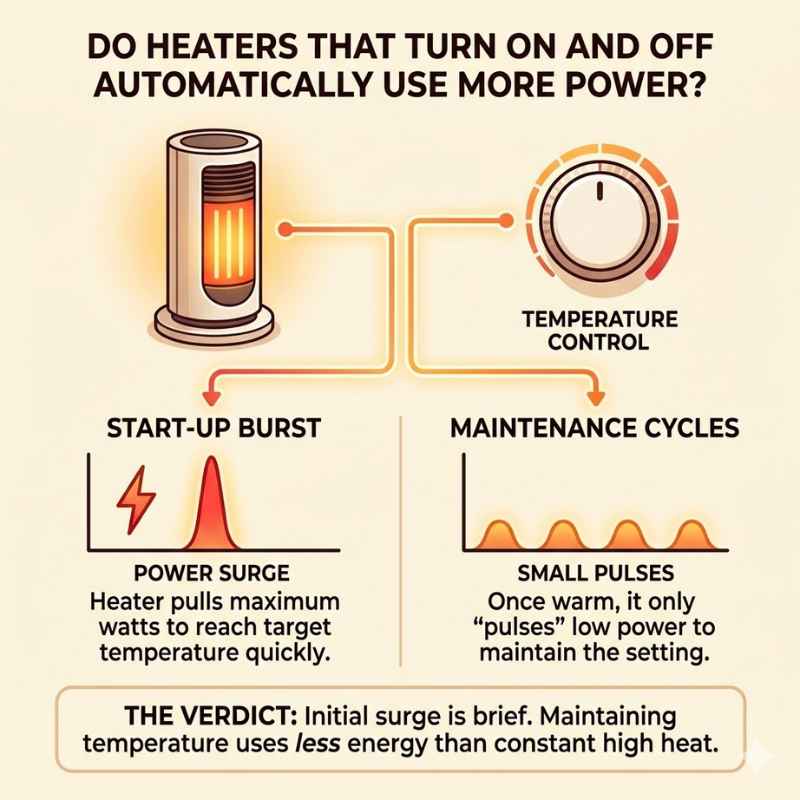
This constant checking and switching is what many people think might waste energy. They imagine the heater using a burst of power every time it turns on. While there is a small surge when it starts, it’s typically not enough to make a big difference.
The real power usage happens when the heating element is actively working.
The key idea is that it only runs when needed. This is often much smarter than having a heater going non-stop. We’ll explore this more.
It helps you save money over time. It also makes your home feel more consistently cozy. Understanding this simple process is the first step.
My Own Heater Switch-On Scare
I remember a few years back when I first got a space heater with a built-in thermostat. It was a chilly October. I set it to 70 degrees in my living room and went to bed.
The next morning, I saw the electric bill. My eyes went wide. It seemed much higher than I expected for just a few weeks of using the heater at night.
My first thought was that the automatic on-off feature was the culprit. I pictured it kicking on every five minutes, guzzling electricity. I felt a bit panicked, thinking I had made a bad purchase.
I even called the manufacturer, worried I had a faulty unit. They patiently explained how thermostats work.
It turned out I had been using it quite a bit more than I realized. The nights were getting colder. I also had friends over a lot that month, and the heater was running when we were all in the room for hours.
The thermostat was just doing its job, keeping it comfortable. It wasn’t a flaw; it was normal use.
That experience taught me a lot. The auto feature is meant to save energy, not waste it. It’s all about how you use it and what temperature you set.
It’s easy to blame the technology. But often, our habits play a bigger role. This realization helped me relax and understand my energy use better.
How Thermostats Work: The Basics
Sensor: A small part inside the thermostat checks the room’s temperature. It’s like a tiny thermometer.
Setting: You tell the thermostat what temperature you want. This is your target heat level.
Switching: When the room temperature drops below your setting, the thermostat turns the heater ON. When it reaches or goes above your setting, it turns the heater OFF.
Efficiency Goal: This cycle stops the heater from running all the time. It aims for a steady warmth.
The Science Behind the Switch: Energy Consumption
Let’s dive a bit deeper into the energy side of things. When a heating element in an electric heater turns on, it needs a jolt of power to start. This is called the starting wattage.
It’s a bit higher than its running wattage.
However, the thermostat is designed to minimize how often this happens. It’s not like the heater is switching on and off every few seconds. It waits until the temperature drops a certain amount below your set point.
Then it runs long enough to bring the temperature back up.
Think of it like a light switch. Flipping a light switch on and off many times in a minute uses a tiny bit more energy than leaving it on for a while. But the difference is often very small for most appliances.
For a heater, the main power use is when the heating coils are glowing hot.
The benefit of the automatic system is that it prevents overheating. If a heater ran constantly, it would make the room much hotter than you want. This would waste a lot of energy.
The thermostat stops this waste. It ensures the heater only works as hard as it needs to.
Consider a simple analogy. If you were filling a bathtub, you wouldn’t leave the faucet running all the time. You’d turn it on until the tub is almost full, then turn it off.
You might need to add a little more water later. This is like your thermostat working to keep the temperature just right. It’s much more efficient.
Comparing Heater Types
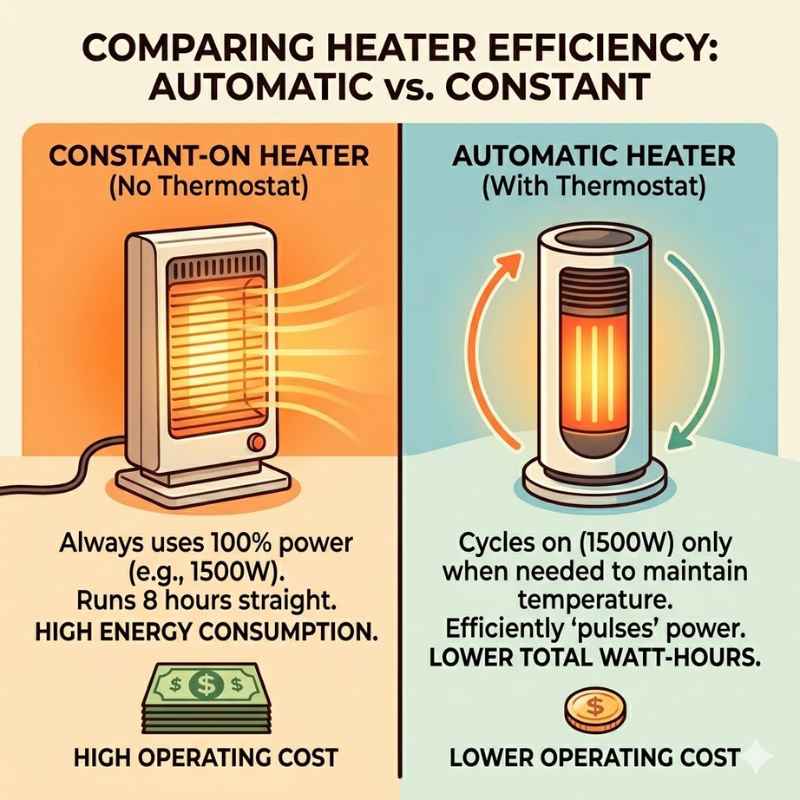
Manual Heaters: You have to turn them on and off yourself. They run constantly until you stop them. This can lead to wasted energy if you forget to turn them off.
Thermostat-Controlled Heaters: These use a sensor to regulate temperature. They cycle on and off. This is generally more energy-efficient for maintaining a set warmth.
Smart Heaters: These connect to Wi-Fi. You can control them with an app. They offer features like scheduling and energy monitoring.
They can be very efficient when programmed well.
Factors That Really Affect Your Heater’s Power Use
While the automatic on-off feature itself isn’t usually the energy hog, many other things can make your heater use more power. Understanding these can help you save money.
1. The Temperature Setting: This is the biggest factor. Every degree you set your thermostat higher means the heater has to work harder and longer.
For every degree above 68°F, your heating costs can go up by 1-3%. Setting it lower when you’re away or asleep makes a huge difference.
2. Insulation and Drafts: If your home isn’t well-insulated, warm air escapes easily. Cold air can sneak in through gaps around windows and doors.
This forces your heater to run much more often to keep up. Think of it like trying to fill a leaky bucket. You’ll use a lot more water.
3. Heater Size and Type: Is your heater powerful enough for the room? Or is it too big?
An undersized heater will struggle and run constantly. An oversized one might heat the room too quickly and short-cycle, which isn’t always ideal either. Different types of heaters also have different efficiency ratings.
4. How Often You Use It: This sounds obvious, but it’s worth stating. If you use your heater for many hours each day, your energy bill will naturally be higher.
The thermostat just manages how it runs during those hours.
5. Outside Temperature: On very cold days, your heater will have to work harder to maintain the indoor temperature. Heat naturally flows from warmer areas to colder areas.
The bigger the temperature difference, the faster heat is lost from your home.
6. Maintenance: Like any machine, heaters need care. Dust can build up on heating elements or in vents, making them less efficient.
Dirty filters in furnace systems can also restrict airflow, making the system work harder.
These are the real culprits behind high energy bills. The thermostat is actually trying to help you manage them. It’s a tool, and like any tool, its effectiveness depends on how you use it and the conditions it’s working in.
Quick Check: Drafts and Insulation
Test: On a windy day, hold your hand near windows and doors. Can you feel cool air coming in?
Fix: Use weatherstripping around doors and windows. Caulk any visible cracks in the walls. Add insulation to attics and crawl spaces if needed.
Impact: Stopping heat loss means your heater doesn’t have to work as much. This saves energy and money.
Real-World Scenarios: When the Heater Cycles
Let’s look at how your heater’s on-off cycle plays out in different home situations. It’s all about context.
Scenario 1: A Well-Insulated Home in Mild Weather
Imagine your home has good insulation and you set your thermostat to 70°F. On a day where it’s 50°F outside, the heater might turn on for 10 minutes. Then it might stay off for 30-45 minutes.
It cycles smoothly. The power draw is efficient because the heat stays inside.
Scenario 2: An Older, Drafty Home in Cold Weather
Now picture a similar 70°F setting, but this time the house has leaky windows and poor attic insulation. It’s 20°F outside. The heater might run for 20 minutes.
Then it might only stay off for 15 minutes before the temperature drops too much. It cycles much more frequently. This uses more total energy because it’s constantly fighting the cold air coming in.
Scenario 3: Overnight Energy Saving
Many people lower their thermostat by 5-10°F at night. Say you set it to 65°F while sleeping. The heater will run less.
When you wake up and raise it back to 70°F, it will run longer to reach that higher temperature. But the overall energy used during the cooler night hours is less. This is a smart way to use the thermostat.
Scenario 4: A Smart Thermostat with a Schedule
A smart thermostat can learn your habits. It can be programmed to lower the heat when you’re usually out of the house or asleep. Then, it can bring the temperature back up just before you arrive home or wake up.
This proactive approach can lead to significant energy savings. The cycles are optimized for your life.
These examples show that the heater turning on and off is just a reaction. The real story is about how much heat your home needs and how well it holds onto that heat. The thermostat is your partner in managing that need efficiently.
Understanding “Short Cycling”
What it is: When a heater turns on, heats up the room quickly, and then turns off again after only a short time. It does this repeatedly.
Why it happens: Often caused by an oversized heater for the space, or a very well-insulated room heating up extremely fast.
Energy Impact: It’s not necessarily bad. Modern heaters are designed to be efficient even with shorter runs. The key is that the thermostat is controlling it.
What This Means for Your Energy Bill
So, let’s bring it back to that question about your power bill. Does a heater that turns on and off automatically use more power? The answer is generally no.
In fact, it’s designed to use less power than a heater that runs continuously.
The automatic cycle is there to maintain a steady temperature. It prevents the waste that comes from overheating a room. The energy used during those brief start-up surges is usually minor compared to the energy saved by not running constantly.
The real impact on your bill comes from:
- How high you set the thermostat.
- How well your home keeps heat in.
- How many hours a day you need heating.
- The efficiency of the heater itself.
If you’re seeing a high bill, it’s more likely due to one or more of these factors. Your automatic heater is probably doing its job correctly. It’s just that the demands placed on it are high.
Think about it this way: if you leave a heater on high all day, even with an on-off switch, it will run a lot and cost more. But if you set it to a comfortable, lower temperature, the thermostat will cycle it less often, saving energy. The automation is a benefit, not a drawback, for energy use.
When to Worry (and When Not To)
It’s normal for your heater to cycle on and off. This is its intended function. You should not worry if you hear it click on and off periodically throughout the day, especially during colder weather.
However, there are a few situations where you might want to investigate further:
- Constant Running: If your heater seems to be running almost non-stop, even when the room feels too warm, there might be an issue with the thermostat or the heater itself.
- Rapid Cycling: If the heater turns on and off very quickly, like every minute or two, it could indicate an oversized unit or a problem with airflow. This isn’t necessarily more expensive, but it’s not ideal for the equipment.
- No Heat: If the heater turns on but no warm air comes out, or it doesn’t turn on at all when it should, there’s a problem that needs attention.
- Unusual Noises: Any strange grinding, banging, or buzzing sounds could signal a mechanical issue.
For most people, the cycling is just the system doing its job. It’s a sign that the thermostat is working to keep your home at the set temperature. The energy it uses is part of maintaining that comfort.
Don’t let the clicking fool you into thinking it’s being wasteful.
Simple Checks to Do
Check the Filter: For forced-air systems, a dirty filter makes the furnace work harder. Check and change it regularly.
Feel for Drafts: Walk around your home. Can you feel cold air coming in from windows or doors? Seal them up.
Listen to the Cycles: Notice how long the heater runs and how long it stays off. Does it seem reasonable for the weather?
Quick Tips for Efficient Heating
Here are some simple things you can do to make sure your automatic heater is as efficient as possible:
- Set it and Forget It: Find a comfortable temperature and leave it there. Avoid constantly adjusting the thermostat up and down.
- Use a Programmable or Smart Thermostat: These tools allow you to set schedules. You can have the heat lower when you’re not home or asleep, and warmer when you are. This is one of the easiest ways to save energy.
- Seal Air Leaks: Check around windows, doors, electrical outlets, and anywhere pipes or wires enter your home. Use caulk or weatherstripping to seal them.
- Improve Insulation: Make sure your attic and crawl spaces are properly insulated. This is a major factor in heat loss.
- Use Curtains and Blinds: Open them during the day to let sunlight warm your home. Close them at night to help keep heat in.
- Close Vents in Unused Rooms: If you have rooms you don’t use, closing the heating vents in those areas can help direct warm air to where you need it most. (Note: Check your system’s manual, as some systems require all vents to be open).
- Regular Maintenance: Have your heating system checked by a professional once a year. This ensures it’s running smoothly and efficiently.
These tips don’t change how the thermostat works. They change the environment your heater is working in. They reduce the demand for heat.
This means the heater cycles less often and for shorter periods. It’s about making your home a better place to hold heat.
Frequently Asked Questions About Automatic Heaters
Will my electric bill go up if my heater turns on and off automatically?
No, your electric bill will not necessarily go up just because your heater turns on and off automatically. This is how efficient heaters work. They cycle to maintain a set temperature, using power only when needed.
This is usually more efficient than a heater running constantly.
How often should a heater with a thermostat cycle on and off?
The cycling frequency varies greatly. It depends on outside temperature, insulation, and your thermostat setting. In mild weather, it might cycle every hour or so.
On very cold days, it might cycle every 15-30 minutes. Consistent, long runs followed by longer off periods are generally good signs of efficiency.
Is a heater that clicks on frequently bad for my energy bill?
Frequent clicking means the heater is turning on. This uses power. If it clicks on very, very often (every minute or two), it might be short-cycling, which isn’t ideal.
But usually, the on-off cycles controlled by a thermostat are designed to save energy compared to continuous operation.
What’s the difference between a manual thermostat and an automatic one?
A manual thermostat is just an on/off switch. A heater with one runs constantly until you turn it off. An automatic thermostat has a sensor.
It turns the heater on when it gets cold and off when it reaches your desired temperature. This auto function saves energy.
Can a smart thermostat help reduce my heater’s power consumption?
Yes, absolutely. Smart thermostats offer features like scheduling, remote control, and learning your habits. You can program them to lower the heat when you’re away or asleep.
This reduces unnecessary heating and significantly cuts down on power usage and costs.
If my heater runs a lot, does that mean the automatic setting isn’t working?
Not necessarily. If your heater runs a lot, it means your home is losing heat quickly. This could be due to very cold weather, poor insulation, or drafts.
The automatic setting is still working by trying to keep your home warm. You might need to address insulation or sealing issues.
Conclusion
So, there you have it. Your heater turning on and off automatically is not a sign of energy waste. It’s actually the smart way it’s designed to work.
The goal is always to keep you comfortable without running up a huge bill. Focus on your home’s insulation, your thermostat settings, and regular maintenance. These are the true keys to efficient heating.
You’ve got this!
Sponsored / affiliate links. As an Amazon Associate I earn from qualifying purchases. I may earn additional commission from eligible campaigns.