Prefinished Vs Site Finished Hardwood Floors: Which Wins?
When you choose hardwood flooring, you usually have two main ways to get it installed. One is prefinished. This means the wood planks come to your home already stained and sealed at the factory.
The other is site-finished. This is when unfinished wood planks are laid down, and then stained and sealed right there in your house.
Each way has its own unique charm and set of rules. Understanding these differences will help you pick the best fit for your style, your budget, and your life. We’ll look at what makes them different, what’s good about each, and what might make you say “no, thank you.”
The main difference is when the finish is applied. Prefinished floors are finished in a factory before they reach your home. Site-finished floors are finished on-site after installation.
This impacts appearance, durability, cost, and installation time.
What Exactly Are Prefinished Hardwood Floors?
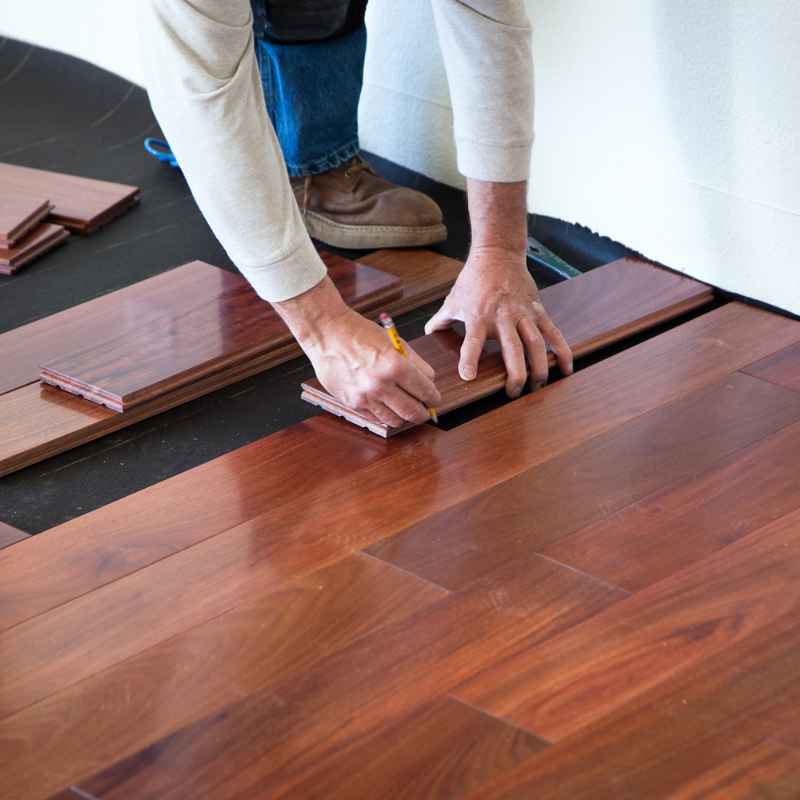
Think of prefinished hardwood floors like ready-to-wear clothes. The factory does all the work. The wood planks are cut, sanded, stained, and coated with a protective finish.
This often happens multiple times. These finishes can be very tough and modern.
They are ready to go the moment they are installed. This means less mess and less time for your home. You can often walk on them soon after they are laid.
This speed is a big plus for busy families or quick remodels.
Prefinished floors often have a slightly raised “edge” between planks. This is due to the multiple layers of factory finish. Some people like this look.
Others prefer a smoother, flatter surface.
Pros of Prefinished Hardwood Floors
- Faster Installation: Since the finishing is done elsewhere, installation is much quicker.
- Less Mess: No sanding dust or fumes in your home during installation.
- Durable Finish: Factory finishes are often very hard-wearing. They can include aluminum oxide for extreme toughness.
- Consistent Look: The color and sheen are uniform across all planks.
- Wider Plank Options: Many prefinished floors come in wider plank sizes, which are trendy now.
- Warranties: Often come with good manufacturer warranties on the finish.
Cons of Prefinished Hardwood Floors
- Edge Appearance: The slight bevel or “micro-edge” between planks is visible.
- Limited Customization: You are limited to the stain colors and finish sheens offered by the manufacturer.
- Repairs Can Be Tricky: If one plank gets damaged, matching the factory finish for a repair can be hard.
- Can Look “Manufactured”: Some people feel they don’t have the same natural charm as site-finished floors.
What About Site-Finished Hardwood Floors?
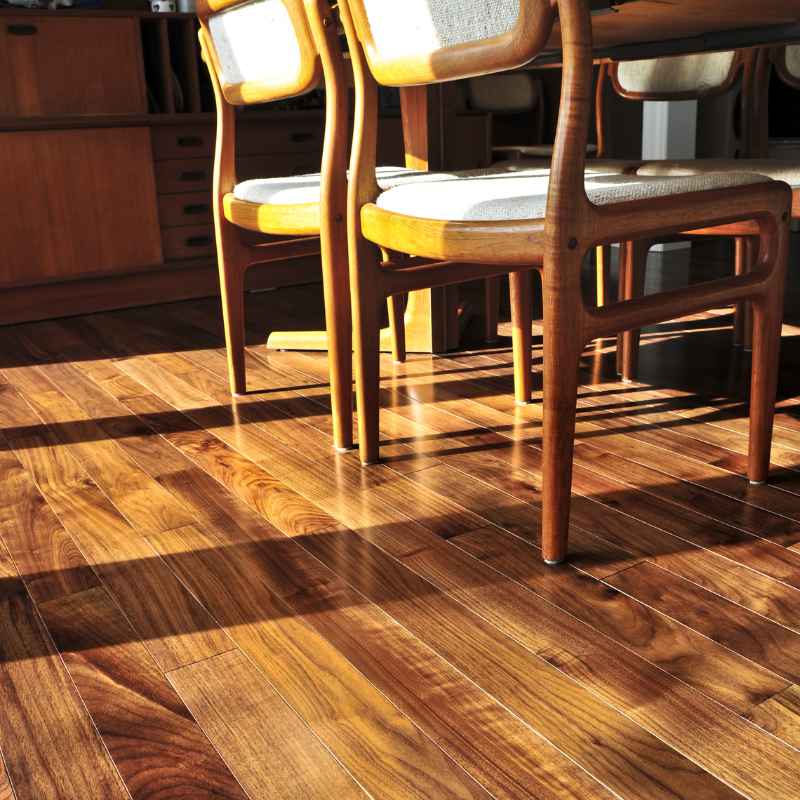
Site-finished hardwood floors are like custom-tailored suits. They are built for you, right in your home. You start with raw, unfinished wood planks.
These are installed. Then, a professional sands them smooth. After that, they apply the stain and protective coats right there.
This allows for complete customization. You can pick any stain color you like. You can choose the sheen too, from super matte to high gloss.
This method often results in a perfectly smooth, seamless floor.
The process takes longer. There will be dust from sanding, and you’ll need to stay out of the area while finishes cure. But the end result can be stunning and perfectly unique to your home.
Pros of Site-Finished Hardwood Floors
- Seamless Appearance: The floor is sanded flat, creating a smooth, unified surface with no visible edges between planks.
- Complete Customization: You can choose any stain color and finish sheen to match your decor exactly.
- Easier Repairs: If a plank is damaged, it can be replaced and then sanded and finished to blend in.
- Unique Character: Many feel site-finished floors have a more natural, handcrafted look.
- Can Refinish Multiple Times: The floor can be sanded and refinished again over the years to update its look or fix wear.
Cons of Site-Finished Hardwood Floors
- Longer Installation Time: The entire process, including sanding, staining, and drying, takes several days.
- Messy Process: Sanding creates a lot of fine dust, even with good containment.
- Fumes and VOCs: Stains and finishes release fumes that can be strong. You need good ventilation.
- Higher Initial Labor Cost: The labor involved in sanding, staining, and finishing adds to the cost.
- Drying Time: You must avoid walking on the floor during curing, which can take a few days.
My First Experience: The Dust and the Dread
I remember helping a client choose floors for their new home. They really wanted that seamless, custom look. We picked beautiful oak planks.
The installer started the job. I got a call a few days later. “There’s dust everywhere!” the client said.
It was a bit of a panic.
The installer was good, but even with his best efforts, some fine dust had escaped. It settled on light-colored furniture. The client was frustrated.
They had to clean for hours. This is a very real part of site-finishing. It’s a trade-off for that perfect, smooth finish.
That experience taught me to always set clear expectations about the dust. I learned to advise clients to cover furniture and perhaps stay elsewhere for a few days. It’s a messy job, but the reward is often worth it for those who want that truly custom feel.
Understanding the Cost Difference
Cost is often a big factor. Generally, site-finished floors can cost more upfront than prefinished floors. This is due to the extra labor involved.
You’re paying for skilled artisans to sand, stain, and seal your floor by hand.
Prefinished floors might seem cheaper at first because the finishing cost is built into the plank price. However, the price difference isn’t always huge. It depends on the type of wood, the brand, and the complexity of the finish.
Let’s look at some general numbers. Keep in mind these can change based on where you live and the materials you choose.
Cost Comparison: Prefinished vs. Site-Finished (Estimates)
Prefinished Hardwood Floors:
- Material Cost: $4 – $12 per square foot (for the wood itself)
- Installation Cost: $3 – $7 per square foot
- Total Estimated Cost: $7 – $19 per square foot
Site-Finished Hardwood Floors:
- Material Cost: $3 – $8 per square foot (for unfinished wood)
- Labor (Sanding, Staining, Finishing): $5 – $10 per square foot
- Installation Cost (Laying the planks): $3 – $7 per square foot
- Total Estimated Cost: $11 – $25 per square foot
Note: These are rough estimates. High-end wood species, complex finishes, or challenging installation sites can increase costs.
So, while prefinished might look cheaper on paper, the total cost can be quite close. You’re paying for different things: factory-applied durability versus custom artistry. Over the long run, if you plan to refinish your floors, site-finished can save money by allowing multiple refinishes.
Appearance: The Visual Divide
This is where personal taste really comes into play. Prefinished floors have a distinct look. The factory finish sits on top of the wood.
Often, you’ll see a small groove, or “micro-bevel,” where each plank meets the next. This is to help hide slight height differences from the multi-layer finish.
Some people love this defined edge. They feel it adds to the plank-by-plank look of a wood floor. Others find it makes the floor look a bit “busy” or less natural.
They prefer a smoother, flatter surface.
Site-finished floors offer that seamless look. When sanded and finished on-site, the planks become one unified surface. The stain soaks into the wood.
The finish creates a smooth, continuous layer over the top. This gives a very elegant and flowing appearance.
The texture and sheen are also key. Prefinished floors come with specific sheens, like satin or semi-gloss. Site-finished floors allow you to choose almost any level of shine.
You can even go for a “matte” finish that looks very natural.
Appearance Checklist:
Prefinished:
- Plank Definition: Visible micro-bevels between planks.
- Surface Texture: Can sometimes feel slightly “plastic-y” due to hard factory coatings.
- Sheen Options: Limited to manufacturer’s choices (e.g., satin, semi-gloss).
- Color Consistency: Very uniform color across all planks.
Site-Finished:
- Plank Definition: Seamless, smooth surface with no visible edges.
- Surface Texture: Feels more natural, like the wood itself.
- Sheen Options: Wide range from matte to high gloss.
- Color Consistency: Can have slight variations, adding to natural character.
What you see is what you get with prefinished. With site-finished, you have the power to create exactly what you envision. It’s like choosing a paint color for your walls – you can get exactly the shade you want.
Durability and Maintenance: What Holds Up Best?
When it comes to durability, both types can be very long-lasting. However, they achieve it differently. Prefinished floors often have a very hard, factory-applied finish.
This finish usually contains aluminum oxide. This is a super-tough material that makes the surface very resistant to scratches and wear.
These finishes are designed to withstand a lot of foot traffic. They are great for busy homes with kids and pets. The downside?
If this super-tough finish does get scratched deeply, it’s very hard to repair seamlessly. You might need to replace the whole plank.
Site-finished floors rely on the quality of the stain and finish applied on-site. High-quality polyurethane or oil-based finishes can be very durable. They protect the wood from moisture and wear.
Because the finish is applied directly to the wood and then the whole floor is sanded flat, repairs are usually easier.
If a plank gets damaged on a site-finished floor, a professional can often
Maintenance for both is similar. Regular sweeping or vacuuming is key. For deeper cleaning, a slightly damp mop with a wood floor cleaner is best.
Avoid harsh chemicals or too much water, which can damage the wood.
Durability & Maintenance Notes:
Prefinished:
- Surface Hardness: Often very high due to aluminum oxide in factory finishes.
- Scratch Resistance: Excellent against surface scratches. Deep gouges can be hard to fix.
- Maintenance: Regular cleaning. Avoid harsh chemicals.
- Refinishing: Generally not recommended to fully refinish, as it can damage the tough factory coating. Spot repairs are difficult.
Site-Finished:
- Surface Hardness: Varies with the quality of the applied finish.
- Scratch Resistance: Good with quality finishes.
- Maintenance: Regular cleaning. Avoid harsh chemicals.
- Refinishing: Can be sanded and refinished multiple times over its lifespan, extending its life and allowing for style updates. Easier to repair damaged planks.
Think about how you live. If you have young kids and pets and want minimal fuss, the tough finish of prefinished might be appealing. If you’re willing to do a little more care for a floor you can truly customize and refresh, site-finished is a strong contender.
The Installation Process: What to Expect
The installation process is a key differentiator. Prefinished floors are much simpler to install. The installer simply lays down the planks.
They are often glued down or nailed to a subfloor. Sometimes, they can even float over an existing floor.
This means less disruption to your home. The installer brings the finished product, and it’s put in place. You might be able to walk on them the same day the installation is complete.
This is a big plus if you’re on a tight schedule.
Site-finished floors require a multi-step process. First, the unfinished planks are installed. Then, the installer must sand the entire floor.
This involves heavy machinery and creates a lot of dust. After sanding, the stain is applied, and then multiple coats of finish are put on. Each coat needs drying time.
This whole process typically takes 3 to 5 days, sometimes longer. During this time, you can’t walk on the floor. You also need to let the finish cure for a few more days before moving furniture back.
It’s a much more involved process.
Installation Timeframes:
- Prefinished: Usually 1-3 days for a typical room.
- Site-Finished: Typically 3-5 days (or more) for a typical room, including drying times.
I had a client once who was renovating their kitchen and dining area. They chose site-finished floors for that seamless look. They were moving into their new home shortly after.
We had to plan the flooring installation very carefully. It meant delaying their move-in date by almost a week. It’s a trade-off for the custom result, but it’s an important one to consider.
Real-World Scenarios: When to Choose Which
Let’s imagine some common home situations. This might help you see which option fits your life best.
Scenario Examples:
Scenario 1: Busy Family with Young Kids and Pets
- Primary Need: Durability, ease of cleaning, quick installation.
- Recommendation: Prefinished hardwood floors. The tough factory finish can handle spills, muddy paws, and dropped toys better. The faster installation means less disruption.
Scenario 2: Homeowner Doing a High-End Renovation and Wants a Specific Look
- Primary Need: Custom color, seamless appearance, unique character.
- Recommendation: Site-finished hardwood floors. This allows for precise color matching and a truly bespoke floor that flows perfectly.
Scenario 3: Renter or Someone Planning to Move in a Few Years
- Primary Need: Affordability, faster installation, less commitment.
- Recommendation: Prefinished hardwood floors. While site-finished can be refinished, the upfront cost and time investment might not be worth it for a shorter stay.
Scenario 4: Homeowner with Allergies or Sensitivities
- Primary Need: Minimal fumes and dust during installation.
- Recommendation: Prefinished hardwood floors. This avoids the significant dust and strong fumes associated with on-site sanding and finishing.
Think about your daily routine. Do you entertain often? Are you worried about scratches from furniture?
Do you have specific design ideas in mind? Your answers can guide you toward the right choice.
What This Means for Your Home: Key Takeaways
So, what does all this mean for your actual home and your life? It boils down to priorities. If you value speed, a super-tough finish out of the box, and minimal mess during installation, prefinished is likely your best bet.
If you dream of a perfectly smooth floor, want to choose your exact stain color, and don’t mind a longer, more involved installation process, then site-finished is the way to go. It offers that bespoke, one-of-a-kind look.
It’s also worth considering the long-term. Site-finished floors can be sanded and refinished multiple times. This means your floor can evolve with your style.
A prefinished floor with a deeply scratched aluminum oxide finish might be harder to “refresh” without replacing planks.
For many people, the convenience and durability of prefinished floors are enough. For others, the custom beauty of site-finished floors is irresistible. There’s no single “right” answer; it’s about what’s right for you and your home.
Quick Tips for Making Your Choice
Here are a few simple things to do when you’re deciding:
- Get Samples: Always get samples of both types. Look at them in your home’s light.
- Talk to Installers: Ask professionals about their experiences with both. Get quotes for both options.
- Consider Your Lifestyle: Think about kids, pets, and how you use your space.
- Budget Realistically: Understand the full cost, including labor and potential hidden fees.
- Visualize the Finish: Imagine the micro-bevels vs. a seamless surface. Which appeals more?
Don’t rush this decision. It’s an investment in your home that you’ll live with for many years. Taking the time to understand the differences will lead to a floor you’ll love.
Frequently Asked Questions About Hardwood Floors
Can prefinished floors be refinished?
While technically possible to lightly screen and recoat some prefinished floors, it’s generally not recommended to fully sand and refinish them like site-finished floors. The extremely hard factory finishes, like those with aluminum oxide, can be difficult to sand through without damaging the wood. Doing so also removes the protective warranty.
How long do site-finished floors last?
With proper care and maintenance, site-finished hardwood floors can last for generations, often 50 to 100 years or even longer. The ability to refinish them every 10-15 years allows for refreshing the surface and extending their lifespan significantly.
Which type of hardwood floor is more expensive?
Generally, site-finished hardwood floors have a higher upfront cost due to the extensive labor involved in sanding, staining, and applying multiple finish coats on-site. Prefinished floors might have a lower initial installation cost but can sometimes be more expensive per square foot for the material itself.
Is there more dust with site-finished floors?
Yes, site-finished flooring installation creates significantly more dust than prefinished installation. The sanding process required to smooth the raw wood planks produces fine wood dust that can spread throughout the home if not properly contained. Prefinished installation involves minimal dust.
Which is better for high-traffic areas?
Prefinished floors often have a superior factory-applied finish (like aluminum oxide) that is incredibly hard and resistant to scratches and wear, making them excellent for high-traffic areas. However, a high-quality site-finished floor with durable polyurethane can also hold up very well.
Can I choose custom colors with prefinished floors?
No, with prefinished floors, you are limited to the stain colors and finish sheens that the manufacturer offers. You cannot achieve custom colors or unique finishes that are possible with site-finished floors.
Conclusion
Choosing between prefinished and site-finished hardwood floors is a significant decision. Both offer beautiful results. Your choice depends on your priorities: speed, custom looks, durability, or budget.
Weigh the pros and cons carefully to find the perfect flooring for your home’s story.
Sponsored / affiliate links. As an Amazon Associate I earn from qualifying purchases. I may earn additional commission from eligible campaigns.