Range Hood Venting Cost: Materials, Labor, and Complexity
Range hood venting cost usually runs about $500 to $2,500. Poor venting can raise the install bill later through code fixes, leaks, noise, and weak smoke capture. This guide breaks the bill into materials, labor, and routing complexity, then shows how each install scenario changes the total.
Typical cost range
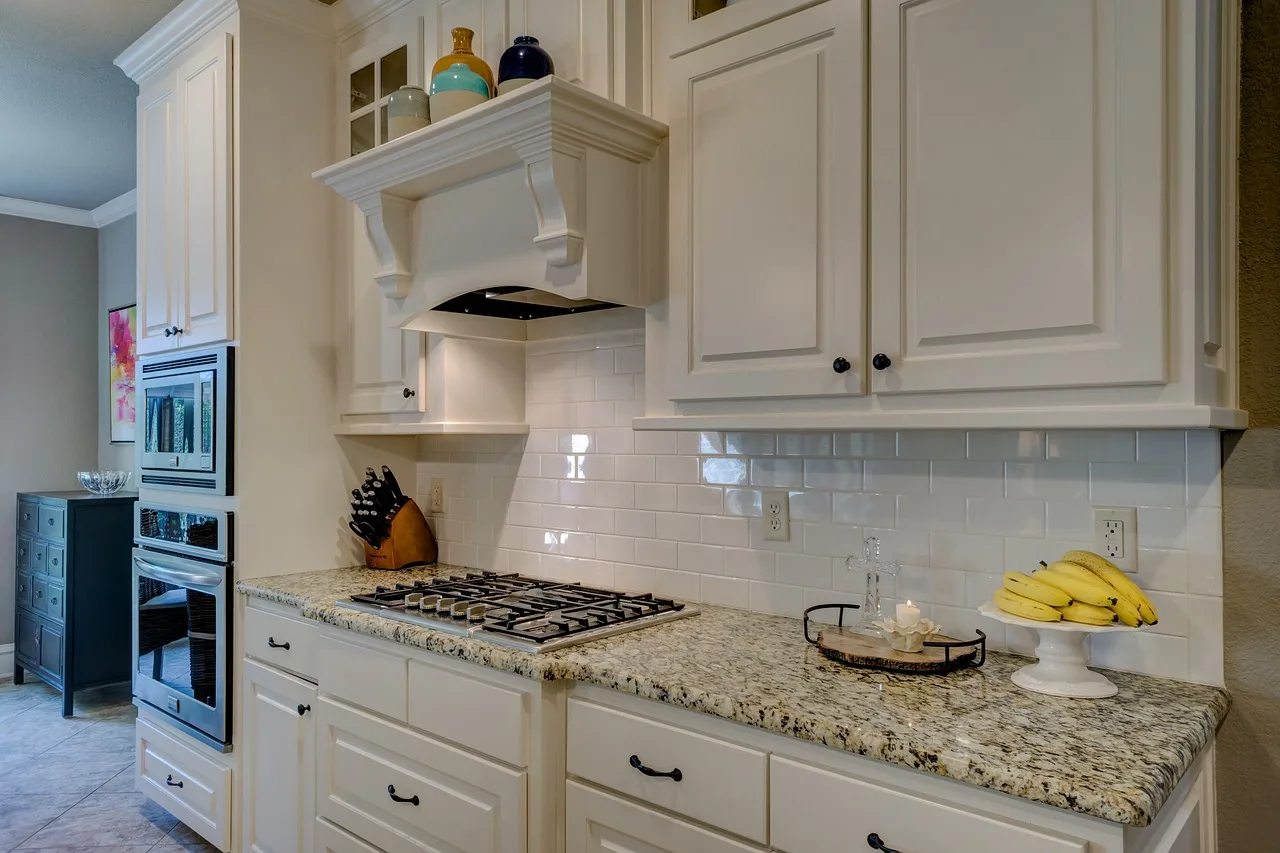


Most homeowners spend $400 to $1,500 for a complete range hood installation, and typical range hood installation costs $400 to $1,800 with a national average of $900. The total rises when the hood needs new ductwork, a different termination point, permits, or electrical changes.
That total usually includes the hood, duct materials, a cap, sealant, fasteners, labor, and sometimes inspection fees. It can also include patching, firestopping, and disposal. Ducted hoods add about $200–$600 extra in materials and labor compared with ductless setups.
Range hood type matters, too. Under-cabinet and wall-mounted units usually cost less to route than island hoods, which often need longer or more visible duct paths. Higher-CFM models can add a second bill item: makeup air.
What drives the price?
The price comes from three pieces: materials, labor, and complexity. Materials cover the duct, cap, sealant, insulation, and hardware. Labor covers installation time, cutting, sealing, and cleanup. Complexity comes from the route, the framing, and what has to be cut or repaired.
Materials
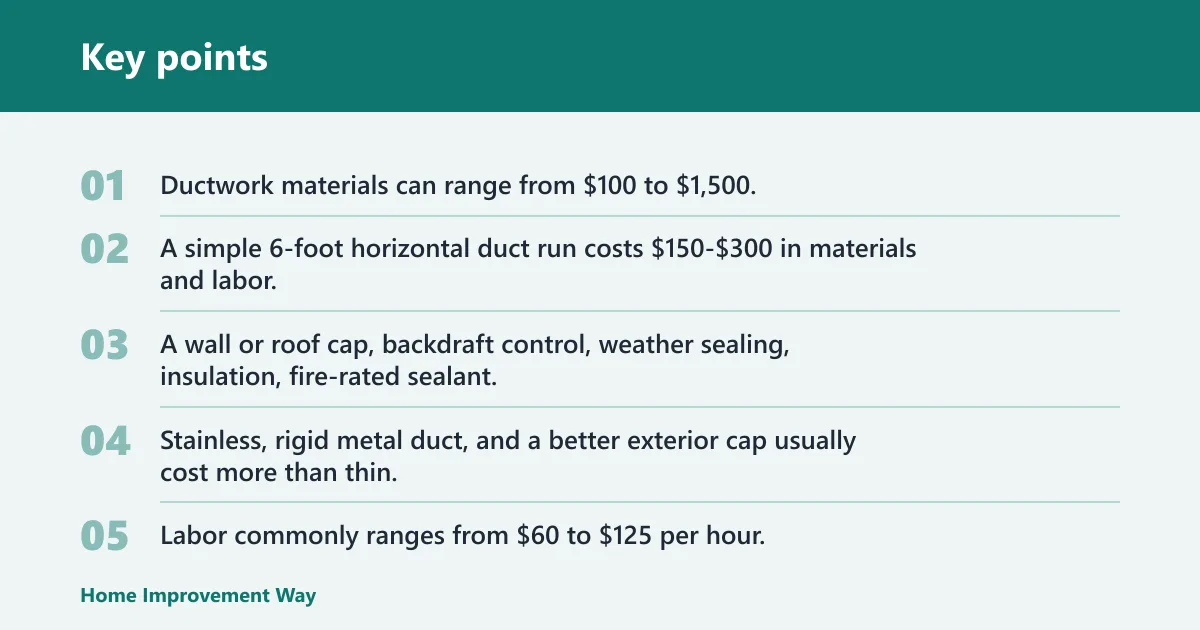
Ductwork materials can range from $100 to $1,500, and per-foot duct cost commonly ranges from $5 to $20. A simple 6-foot horizontal duct run costs $150-$300 in materials and labor, while a long run with elbows and an exterior cap can run $400-$800.
Material cost is not just duct pipe. A wall or roof cap, backdraft control, weather sealing, insulation, fire-rated sealant, tape, hangers, and fasteners all add up. Stainless, rigid metal duct, and a better exterior cap usually cost more than thin, short runs with fewer fittings.
Labor
Labor commonly ranges from $60 to $125 per hour. Straightforward labor often takes 3–12 hours depending on complexity, and labor for a standard wall-mounted, ducted hood is often $150 to $450. A basic swap is quicker than a new route through framing, attic space, or a roof.
Regional labor rates move the total, but so does the scope. Two jobs in the same market can land far apart if one only replaces an existing hood and the other needs cutting, framing, inspection, and trim repair.
Complexity
Complexity is where costs jump. The big triggers are a new opening in an exterior wall or roof, long duct paths, attic access, soffits, masonry, and any need to move wiring. Stone, brick, or multiple wall penetrations may add $200–$800.
Say your kitchen has a 30-inch wall-mounted hood above a cabinet run, and the old vent hole is already in place. That job may stay near the lower end because the route is short and the cap is already sized. Now change only one factor: the hood must vent through a second-story roof. Labor, sealing, and flashing all rise.
Range hood types and cost differences
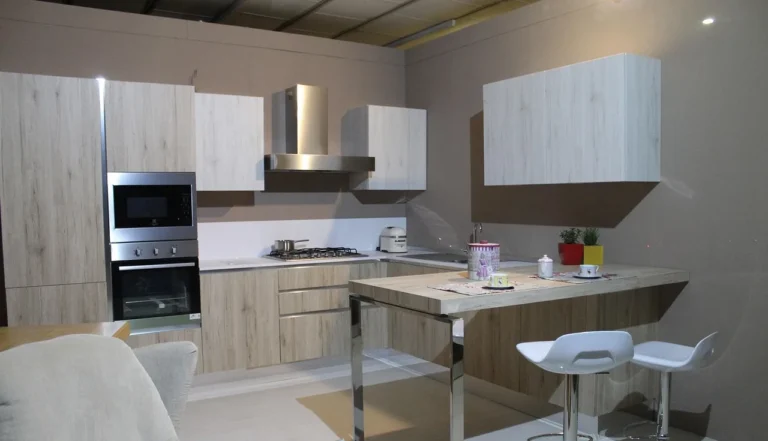
Hood type changes both material count and labor time. Under-cabinet and wall-mounted hoods usually have the simplest vent paths. Island hoods are harder because the duct often has a longer, less direct route. Insert and liner setups can hide the work, but they still need proper ducting.
Under-cabinet and wall-mounted hoods
These are often the least expensive to vent if a wall chase or nearby exterior wall already exists. A ducted wall-mounted hood may need only a short run, a cap, and a few fittings. If the opening already exists, the bill is mostly labor and minor replacement parts.
Island hoods and longer vent runs
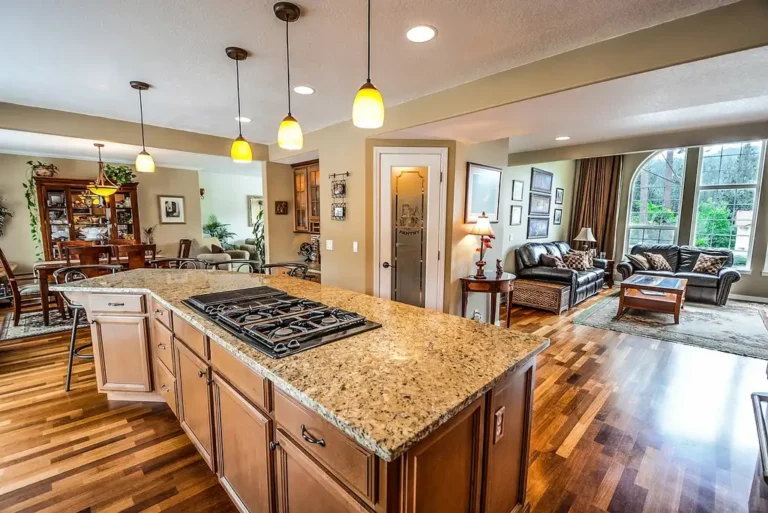
Island hoods usually cost more because the duct has to travel farther and often through the ceiling. More elbows, more framing checks, and more finish repair increase the total. Long runs also create more resistance, which can push the install toward larger duct sizes or a more powerful hood.
Insert liners and ducted vs. ductless systems
Insert liners sit inside custom cabinetry and often require careful sizing and trim work. Ducted systems cost more than ductless systems because they need exterior venting, caps, and sealing. Ductless hoods skip the vent run, but they do not remove moisture and heat the same way.
Higher-CFM hoods above 400 CFM may trigger make-up air requirements. Common output ranges are roughly 400-600 CFM for typical residential use, 600-1,200 CFM for higher-output models, and about 1,200-2,000 CFM for professional-grade units. The more output you want, the more likely the project grows beyond a simple hood swap.
Venting cost matrix
This matrix shows how scope changes the bill. Material ranges are for the venting portion, not the hood itself. Labor hours reflect common job lengths, and add-ons often decide whether the project stays moderate or turns into a larger remodel task.
| Scenario | Estimated materials | Labor hours | Likely add-ons | Complexity triggers |
|---|---|---|---|---|
| Existing wall vent swap | $100-$400 | 4-8 | New cap, sealant, minor electrical trim, disposal | Existing opening fits the new hood; short duct; no framing changes |
| New wall penetration | $250-$800 | 6-10 | Wall cutting, patching, backdraft damper, weather sealing | Fresh hole through siding or masonry; may need exterior finish repair |
| Roof termination | $400-$1,200 | 8-16 | Roof flashing, cap, waterproofing, attic access, patching | Longer route; flashing detail; leak risk; steep or tight roof access |
| High-CFM install with makeup air | $900-$3,500+ | 12-16 | Makeup air damper and duct, controls, permit review, electrical changes | High output above 400 CFM may trigger code-driven makeup air; system balancing needed |
These rows also explain hidden costs that competitors often skip. Extra framing, drywall repair, firestopping, insulation, and repainting can appear after a bad opening or a long reroute. Roof terminations can also add patching risk if the flashing or shingles need repair.
When does labor get expensive?
Labor gets expensive when the installer cannot move in a straight line from hood to exterior cap. A short, open run is quick. A long run behind cabinets, through an attic, around a beam, or across a roof plane takes more time and more judgment.
Typical labor hours by project scope
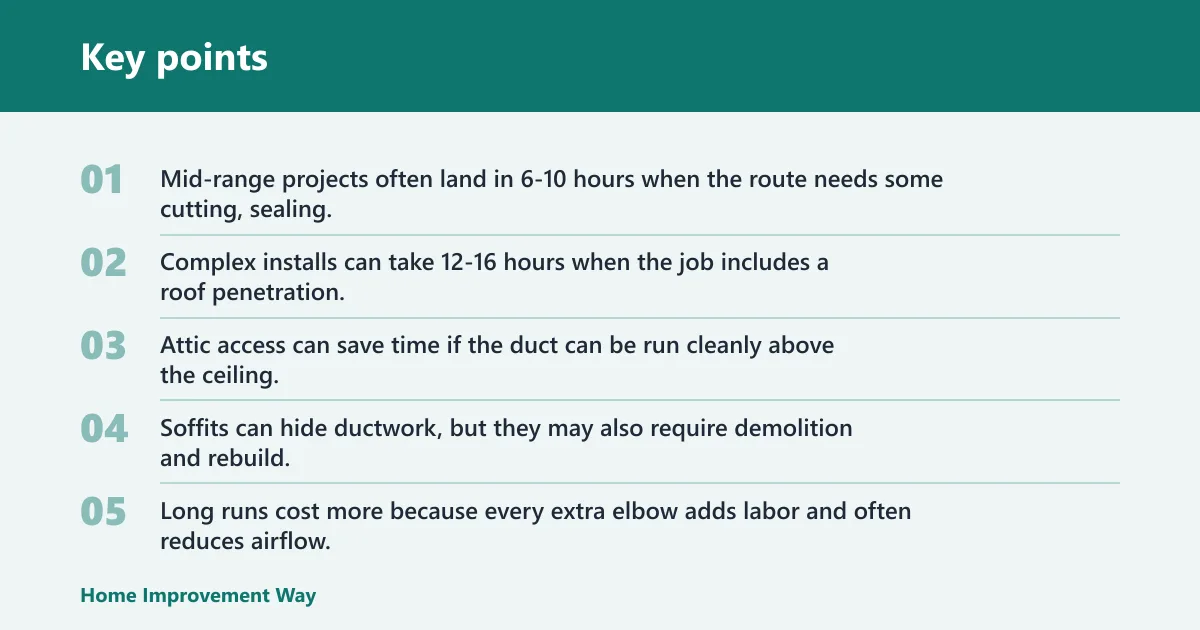
Most basic installs fit inside 4-8 hours. Mid-range projects often land in 6-10 hours when the route needs some cutting, sealing, or patching. Complex installs can take 12-16 hours when the job includes a roof penetration, difficult access, or a high-CFM upgrade.
Attic access, soffits, and long duct runs
Attic access can save time if the duct can be run cleanly above the ceiling. Soffits can hide ductwork, but they may also require demolition and rebuild. Long runs cost more because every extra elbow adds labor and often reduces airflow, which can force a larger duct or a stronger hood.
How much does a long duct run cost versus a short one? A longer run with elbows and an exterior cap can run $400-$800. That jump comes from more parts, more sealing, and more time in cramped spaces.
Framing, drywall repair, and repainting
Framing changes matter because a vent path may cross a stud bay, joist, or cabinet support. Drywall patching, texture matching, and paint touch-up can turn a vent install into a small finish project. Those extras are easy to miss when comparing bids, so ask what the quote includes.
Suppose a homeowner wants a hood moved 3 feet to clear a new range. If the vent path stays in the same wall cavity, labor may stay moderate. If the move forces a new stud cut and a drywall patch on both sides, the price changes quickly.
Do permits, electrical work, or makeup air add to cost?
Yes. Permits, wiring changes, and makeup air can each add a separate line item. Local jurisdiction rules decide whether you need an electrical permit, a construction permit, or an inspection. For higher-output hoods, makeup air can become a code-driven requirement rather than an optional upgrade.
Permit and inspection fees
Permits and inspections commonly range from $50 to $250, though some local jurisdictions run as low as $0 or as high as $500 depending on scope and fee schedules. The permit may be tied to construction work, electrical work, or both. An inspection can add time if the job is not ready on the first visit.
Electrical or circuit changes
A vented hood may need a new receptacle, a dedicated circuit, or relocation of controls. Electrical work adds labor and sometimes permit costs. If the hood needs a hardwired connection or a circuit upgrade, that work can rival the venting labor itself on a simple install.
Makeup air as a code-driven add-on
High-CFM hoods above 400 CFM may trigger make-up air requirements, and systems can add $500-$3,000 to the project. A makeup air setup usually includes a damper and duct, plus controls that bring outside air into the house when the hood runs. Without it, the home can backdraft combustion appliances or pull air from weak points.
Frequently asked questions
How much does range hood venting cost?
Range hood venting cost usually falls between $500 and $2,500 for a typical project, and it can reach $4,000 or more when the route is long, the termination is on the roof, or electrical and code work are involved. The hood type, duct path, and finish repairs drive the total.
What makes range hood venting more expensive?
Long duct runs, more elbows, roof termination, masonry walls, attic access, and patching all raise the price. A higher-CFM hood can also add makeup air, which may be a code requirement. Labor rates vary by market, but scope usually matters more than the city name on the quote.
How much do materials for range hood venting cost?
The total depends on duct length, cap type, insulation, sealant, fasteners, and whether the run uses rigid metal. Flexible duct may cost less upfront, but code and manufacturer instructions often limit or prohibit it for range hood runs.
How much labor does a range hood vent install take?
Labor commonly takes 3–12 hours, with 4-8 hours typical for a straightforward job. Roof penetrations, long runs, and finish repair push the time higher.
Does venting through a wall or roof change the price?
Yes. Wall terminations are often cheaper because they usually involve less access, less sealing, and less weatherproofing risk. Roof terminations cost more because they require flashing, waterproofing, and often attic work. A roof job also carries more leak risk if the cap or seal fails.
Watch for framing repair, drywall patching, paint touch-up, firestopping, insulation, disposal, permit fees, and electrical changes. A new wall or roof opening can also bring weather sealing and exterior finish repair. Those hidden costs are easy to miss until the installer opens the wall or ceiling.
Is flexible duct cheaper for range hood venting?
Usually, yes on material price, but not always on the final bill. Flexible duct can seem cheaper for short connections, yet it may not meet code or manufacturer requirements for a range hood run. Rigid metal duct is the safer default for most vented hood installations.
Sponsored / affiliate links. As an Amazon Associate I earn from qualifying purchases. I may earn additional commission from eligible campaigns.