Range Hood Venting Codes: What to Check Before Install
Before you install a vented range hood, verify duct size, exterior outlet, makeup air, clearance, and permit rules. Miss one item, and you can end up with a failed inspection, backdrafting, grease buildup, or expensive drywall and roof repairs. Use this checklist to check code and manufacturer requirements before you cut anything.
What code applies to your hood?
For most homes, start with International Residential Code Section M1503. It is the main residential reference for range hood venting, and it says the hood must discharge outdoors. Then check whether your jurisdiction also uses the International Mechanical Code, because local adoption can change the rule set you must follow.
The practical rule is simple: the adopted code controls, and the hood manufacturer controls anything stricter in its listing. If the manual calls for a larger duct, a specific cap, or a different install method, follow the manual unless the local code demands more.
IRC M1503 basics
M1503 is where a homeowner should look first for exterior discharge, duct material, and makeup air triggers. One sourced rule says the hood must discharge to the outdoors under IRC rules. Another says the duct must terminate outside, not into an attic, crawl space, or wall cavity.
When the IMC may also apply
The IMC can matter when your jurisdiction adopts it for mechanical work or uses it alongside the IRC. That matters because code enforcement is jurisdiction-specific. A hood that looks acceptable under one local amendment may need a different termination, damper, or makeup air setup elsewhere.
How local amendments change the answer
Local amendments can change the duct type, permit process, inspection timing, or makeup air trigger. Check the adopted code version before you buy the hood or duct kit. If the city or county changes a rule, the local amendment wins over a general code summary.
Range hood code check matrix
Use this table before rough-in. It turns code research into a yes/no check list you can compare against the hood manual, the adopted code, and the permit office requirements. Resolve every row before you cut drywall, a wall, or a roof opening.
| Item | Homeowner check | Pass/fail result | Who verifies it |
|---|---|---|---|
| Duct material | Confirm smooth metal duct only; no ribbed flex, no plastic duct. | Pass only if the full run is smooth metal. | Homeowner, installer, inspector |
| Duct diameter | Match the hood manual and confirm the run meets the minimum if listed as 3 1/4 by 10 inches rectangular or 6 inches round. | Pass only if the manual and code minimum both align. | Homeowner, installer |
| Termination location | Verify outdoor discharge only; no attic, crawl space, or wall cavity termination. | Pass only if air exits outdoors. | Homeowner, inspector |
| Damper presence and orientation | Check for a backdraft damper at the termination and confirm it opens outward and closes when off. | Pass only if airflow moves out and reverse flow is blocked. | Installer, homeowner, inspector |
| Makeup air trigger | Check whether the hood exceeds 400 CFM and whether local code requires makeup air. | Pass only if the makeup air plan matches the adopted code. | Designer, permit office, homeowner |
| Local amendment check | Confirm which code edition and amendments your jurisdiction adopted before buying parts. | Pass only if the plan matches local rules. | Permit office, homeowner |
| Manufacturer-spec override | Compare the hood manual to code minimums and use the stricter requirement. | Pass only if the install meets the stricter rule. | Homeowner, installer |
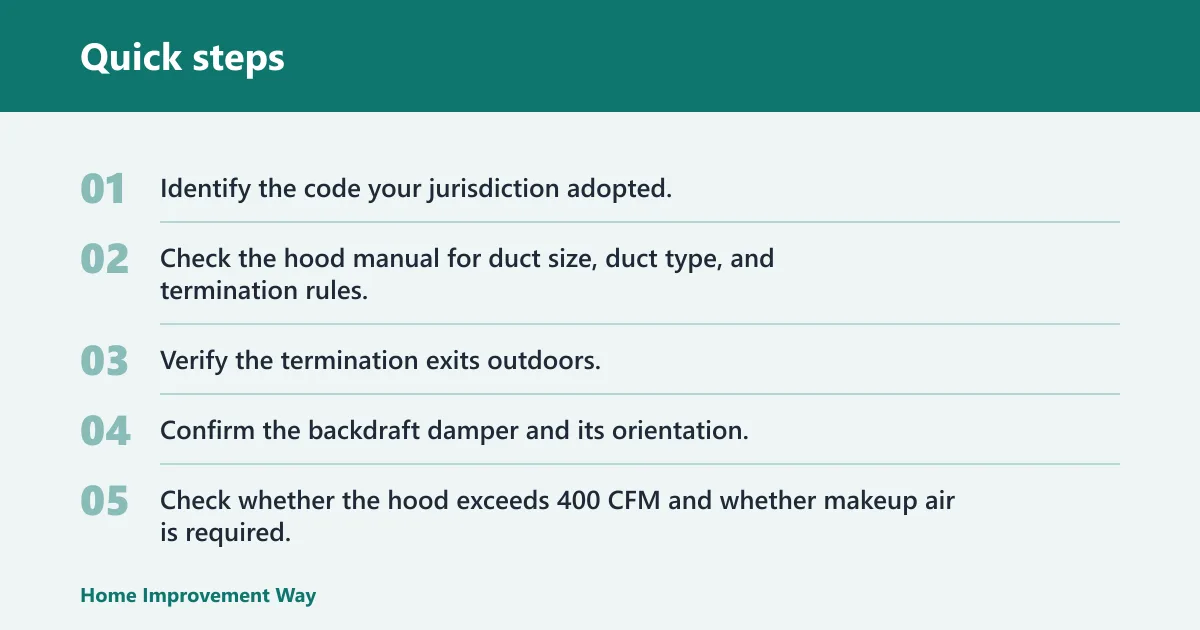
- Identify the code your jurisdiction adopted.
- Check the hood manual for duct size, duct type, and termination rules.
- Verify the termination exits outdoors.
- Confirm the backdraft damper and its orientation.
- Check whether the hood exceeds 400 CFM and whether makeup air is required.
- Pull the permit before cutting exterior surfaces.
Can a range hood vent into an attic or crawl space?
No. A vented range hood should discharge outside, and one sourced rule says the duct must terminate outside, not into an attic, crawl space, or wall cavity. If the outlet stops in a hidden space, grease and moisture can collect there, and the install can fail inspection.
What counts as an illegal termination
An illegal termination is any route that ends inside the building shell instead of outdoors. That includes attic space, crawl space, and wall cavity discharge. A soffit termination can be allowed in some installations, but you still need to verify the adopted code and the hood manual before treating it as acceptable.
Before closing the wall, trace the duct from the hood collar to the cap location. Look for accidental dead ends inside a cabinet chase, attic knee wall, or soffit pocket. If the duct disappears into an inaccessible cavity, stop and correct it before finishing surfaces.
Say your remodel routes a 6-inch round duct through a soffit and the cap lands inside the soffit box, not outdoors. That is not a valid termination. Move the outlet so the duct discharges to exterior air and the cap stays accessible for inspection and service.
What duct size and material should you check?
Check the hood manual first, then compare it with the code minimum. One source lists a minimum of 3 1/4 inches by 10 inches rectangular, and another lists 6 inches round as the equivalent minimum duct size. If the manual calls for a larger duct, the manual wins.
Matching the hood manual to the duct
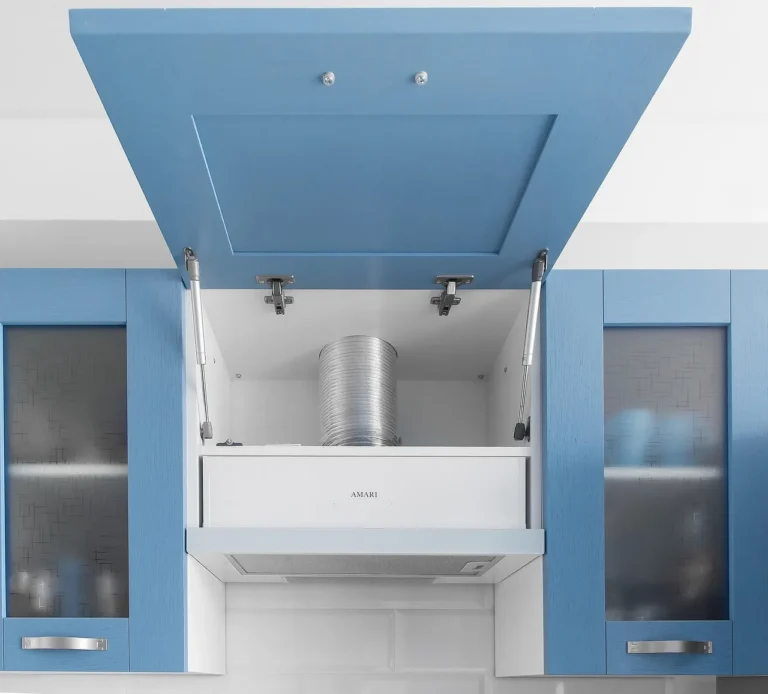
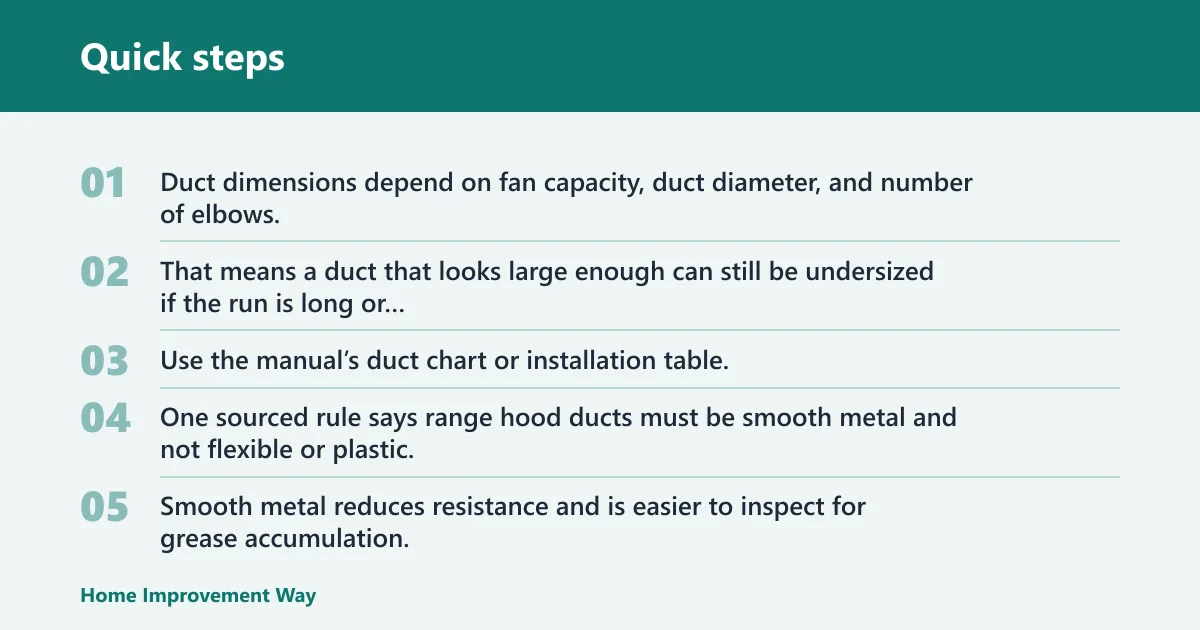
Duct dimensions depend on fan capacity, duct diameter, and number of elbows. That means a duct that looks large enough can still be undersized if the run is long or elbow-heavy. Use the manual’s duct chart or installation table, then verify the field layout matches it before cutting.
Smooth metal duct versus ribbed flex or plastic
One sourced rule says range hood ducts must be smooth metal and not flexible or plastic. That excludes ribbed flex and plastic duct. Smooth metal reduces resistance and is easier to inspect for grease accumulation, loose joints, and crushed sections.
When manufacturer specs override the minimum
The minimum size in code is not a ceiling. If the manufacturer specifies a larger duct, use the larger size. The same applies to a cap or a transition piece. Code minimums set a floor; the product listing can require more.
A common first-timer mistake is buying 6-inch duct because the hood collar is 6 inches round, then adding three elbows and a long horizontal run. The hood still fits the duct, but the total layout may not meet the manual. Check the entire path, not just the collar size.
Do you need makeup air for a high-CFM hood?
Makeup air becomes a major check when the exhaust hood exceeds 400 CFM. One sourced rule says makeup air is required at that point. The exact setup can be passive or motorized, but the key question is whether the adopted code and the hood listing both call for it.
How the greater than 400 CFM trigger works
The trigger is stated as greater than 400 CFM, not 400 exactly. That distinction matters. Before buying the hood, confirm the exhaust rating on the manufacturer listing and then check whether the local code keeps the same threshold or uses a different trigger.
Passive versus motorized makeup air
Passive makeup air uses a vent or opening that admits replacement air with limited mechanical parts. Motorized systems use a fan or powered damper. The code issue is not style; it is whether the replacement air is required, sized correctly, and coordinated with the hood operation.
What to confirm before buying the hood
Check the hood’s listed airflow, the planned duct run, and the local rule for makeup air. If the hood may exceed 400 CFM, do not buy only the hood and duct. Confirm the makeup air design at the same time so the permit set and rough-in match the final install.
What should you verify before cutting the wall or roof?
Before you cut an exterior wall or roof, check permit requirements, outlet location, damper direction, and joint access. The cut itself is the point of no easy return. Once the hole is made, any mismatch in code, flashing, or cap location becomes slower and more expensive to fix.
Permit requirements and inspection timing
Ask the permit office whether your project needs a mechanical permit, an electrical permit, or both. Many jurisdictions want inspection after rough-in and before the final cover-up. If the inspector needs to see the duct and damper, leaving the wall open can save a costly tear-out.
Opening clearance checks at the termination point
Do not rely on a generic distance rule for windows and doors. Clearance requirements can vary by adopted code and by opening type. Check the local rule for the exact wall, roof, or soffit termination you plan to use, and verify it before cutting.
Damper direction and accessible joints at rough-in
The backdraft damper should be at the termination and should open outward and close when the hood is off. Also check that duct joints are accessible where inspection matters. Hidden, unsealed, or unreachable joints can make leakage and grease buildup harder to correct later.
Suppose the hood is rated over 400 CFM and the duct run ends at a roof cap. If the damper is installed backward, the hood may push air poorly and allow reverse flow when off. Catch that rough-in error before the roof is patched.
Frequently asked questions
What code requirements should I check before installing a range hood?
Check IRC Section M1503 first, then confirm whether your jurisdiction also uses the IMC. Verify outdoor discharge, duct material, duct size, damper presence, makeup air, and any local amendments. If the hood manual is stricter than the code minimum, use the stricter requirement.
What duct size does my range hood need?
Start with the hood manual, then compare it with the code minimum. One source lists 3 1/4 inches by 10 inches rectangular, and another lists 6 inches round as the equivalent minimum. If the manual asks for more, the manual controls.
Do I need makeup air for a range hood over 400 CFM?
Often yes. One sourced rule says makeup air is required when the exhaust hood exceeds 400 CFM. Confirm the exact trigger in your local code and verify whether the system should be passive or motorized before you buy the hood or start framing.
What kind of duct material is allowed for a range hood vent?
Use smooth metal duct. The duct must be smooth metal and not flexible or plastic. Ribbed flex and plastic duct are poor choices for this use and should not be treated as acceptable substitutes when the code or manual calls for smooth metal.
Do I need a permit for cutting an exterior wall or roof for a range hood vent?
Often you do, but the answer depends on your jurisdiction. Check with the permit office before cutting. Some areas require a mechanical permit, and some also require inspection before the final finish goes on. That keeps the rough-in visible for approval.
Sponsored / affiliate links. As an Amazon Associate I earn from qualifying purchases. I may earn additional commission from eligible campaigns.