Are Ceramic Heaters Good? Safety, Running Cost, and Best Uses
Ceramic heaters are good for short-term, room-by-room supplemental heat when you need warmth near where people are sitting or working. They are not automatically cheaper than every other heater, and their safety depends more on placement, outlet use, clearance, and supervision than on the word “ceramic” on the box.
How does a ceramic heater make heat?
A ceramic space heater uses electric resistance to produce heat and usually uses a fan to move warmed air into the room. The ceramic element is paired with controls that cycle or limit output, but the electricity used still becomes room heat. The key practical difference is how quickly and evenly the unit warms a small occupied area.
The term ceramic does not by itself prove safety, low cost, or quiet operation. Those outcomes depend on the heater’s wattage, thermostat behavior, fan design, room size, insulation, electrical circuit, and how the heater is used.
When is a ceramic heater a good choice?
A ceramic heater is a sensible choice when one person needs temporary heat in a small, enclosed room and the main system does not need to heat the entire home to the same comfort level. A desk area, home office, or occupied bedroom during the evening are common use cases, provided the heater can sit safely on a clear floor.
It is a poor choice for heating a large open floor plan, curing dampness in a hidden space, warming an unoccupied room for hours, or compensating for a failing furnace. Those jobs need a building, HVAC, or moisture solution rather than a portable appliance.
What determines the running cost?
Running cost comes from wattage multiplied by time and your local electricity rate. A label that says 1,500 watts means the unit can draw 1.5 kilowatts at full output. Multiply 1.5 by the number of hours used, then multiply by the electricity price per kilowatt-hour on your utility bill to estimate the cost.
The useful comparison is not “ceramic versus non-ceramic.” Compare how many hours the room actually needs supplemental heat. A thermostat that cycles after the room reaches temperature can reduce run time, while a drafty room can keep any plug-in heater running near full output.
| Question | What it tells you | Better decision |
|---|---|---|
| Is one room occupied? | Spot heating may be practical | Heat that room rather than the whole house |
| Does the heater run constantly? | The room may be losing heat | Check drafts, insulation, and thermostat setting |
| Does the plug or outlet feel hot? | Possible electrical problem | Stop using the heater and have the circuit checked |
Which safety rules matter most?
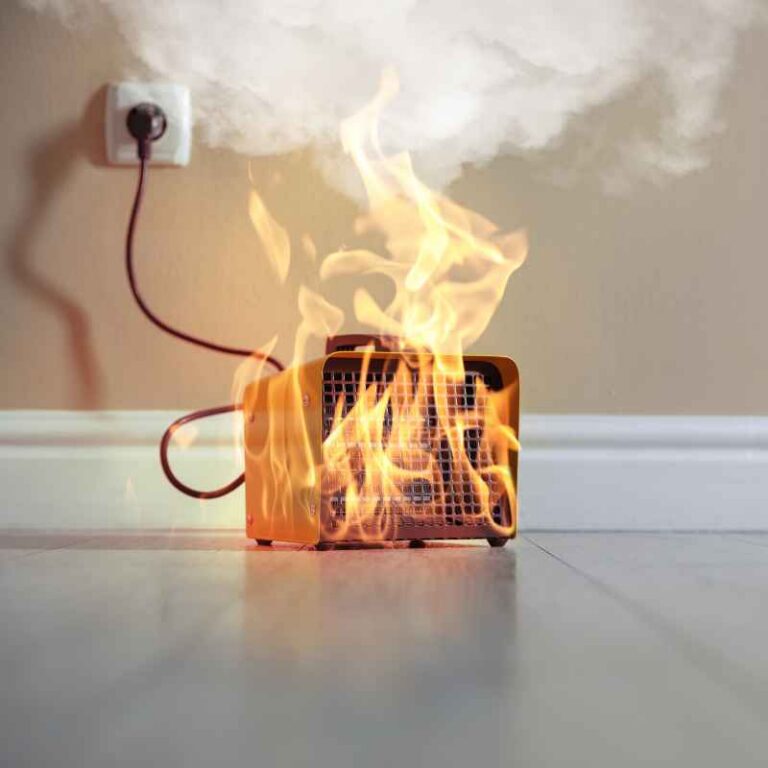
The U.S. Consumer Product Safety Commission advises portable-heater users to keep combustible materials away, plug the heater directly into a wall outlet, and avoid extension cords or power strips unless the manufacturer specifically permits their use. Follow the heater manual because clearance and placement requirements vary by model.
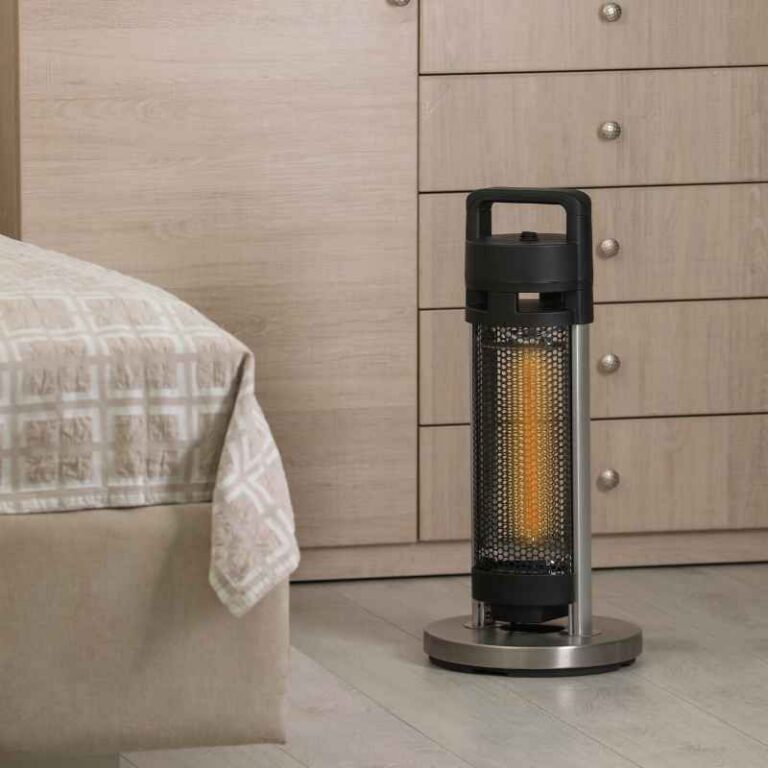
Place the heater on a stable, level floor where bedding, curtains, paper, furniture, and pet beds cannot drift into its clearance zone. Do not use it in a wet location unless it is explicitly rated for that use. Do not run its cord under rugs, through doorways, or where it can be damaged.
What features are worth checking before you use one?
Look for an adjustable thermostat, tip-over shutoff, overheat protection, a stable base, a cord in good condition, and certification from a recognized testing laboratory. These are risk-control features, not permission to leave the heater unattended.
The information gain in this guide is the decision boundary: a ceramic heater is a zone-heating tool. It is not a repair for heat loss, a wiring workaround, or an overnight appliance. That distinction makes the cost and safety advice usable instead of generic.
How can you tell whether the room is suitable for a portable heater?
Start with the room rather than the product. A closed, occupied room with a safe open floor area, a sound wall outlet, and a clear place for the heater is a better candidate than a drafty open area with foot traffic, pets, bedding, or a crowded extension-cord setup. Portable heat works best when the heat can stay near the person using it.
If a room stays cold even when the heater runs continuously, look for the reason before buying a larger unit. Air leaks at doors and windows, missing insulation, an undersized central system, or a thermostat problem may be driving the discomfort. A plug-in heater can mask those issues while raising electricity use.
What is the safest way to use a ceramic heater day to day?
Put the heater on the floor, keep its intake and outlet clear, and use the wall outlet without adapters, damaged cords, or overloaded power strips. Check the cord and plug before each use, especially after moving the unit from storage. A heater that tips easily or has to share a crowded outlet is not in a safe operating position.
Turn the heater off when you leave the room or go to sleep. Keep the manual available because cleaning, filter care, thermostat use, and clearance can differ by model. When a unit repeatedly trips its protection feature, do not defeat the feature; find out whether the problem is airflow, placement, the unit itself, or the circuit.
When should you stop using the heater?
- Stop if the plug, cord, or receptacle becomes hot, discolored, loose, or smells burned.
- Stop if a breaker trips, the unit repeatedly shuts itself off, or the fan makes a new grinding sound.
- Stop if the heater is needed to keep pipes from freezing or to compensate for a failed permanent heating system; contact a qualified HVAC or electrical professional instead.
Frequently asked questions
Are ceramic heaters cheaper to run than central heating?
A portable ceramic heater can be practical for heating one occupied room while the central thermostat is set lower. It does not create heat more efficiently than another resistance heater at the same wattage, and it is not a substitute for a properly sized whole-home heating system.
Can you leave a ceramic heater on overnight?
Do not rely on any portable space heater as an unattended overnight heat source. Follow the heater manual, keep clearance around the unit, plug it directly into a wall outlet, and use the product only while its safety instructions can be followed.
Are ceramic heaters safe around children and pets?
They can reduce some exposed-element risk, but the heater, cord, outlet, and nearby fabrics still create hazards. Place the unit on a stable floor, maintain the manufacturer’s required clearance, and keep children and pets from touching or covering it.
The practical next step
Use a ceramic heater only where its job is clear: warming an occupied room for a limited time. Estimate the cost from wattage and your own electricity rate, then make safety setup the deciding factor. If the heater exposes a wiring, outlet, or whole-home heating problem, stop and address that root cause.
Sponsored / affiliate links. As an Amazon Associate I earn from qualifying purchases. I may earn additional commission from eligible campaigns.
 AZEUS Portable AC and Heater Unit, 420W 110V Compact Air Conditioner for Tent RV Truck Cabin and Small Room, 1400W Cooling, 800W Heating, Remote Control, Dehumidifier, Sleep Timer, ChampagneMEGAWISE Portable Air Conditioner and Heater, 420W 110V Compact AC Unit with Remote Control, 1400W Cooling Capacity, 800W Heating, Dehumidifier, Fan, Sleep Timer, Champagne