How Long Does Loctite Super Glue Take To Dry? Full Answer
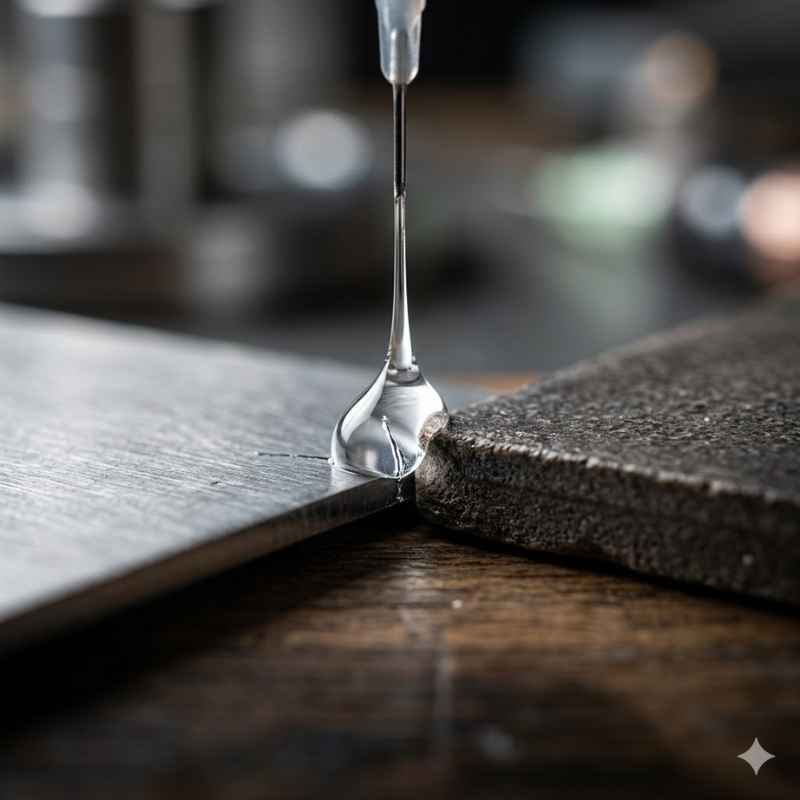
Loctite Super Glue, also known as cyanoacrylate, works its magic through a process called anionic polymerization. This might sound fancy, but it’s pretty simple. The glue needs moisture to start hardening.
When the glue touches the moisture on surfaces and in the air, it begins to cure. This reaction happens very fast. That’s why you feel that initial grip almost right away.
Most Loctite Super Glue products are designed for quick fixes. You’ll often see “instant” or “fast-drying” on the label. This usually means you can handle the bonded parts within seconds to a minute.
But “dry” and “fully cured” are different things. The glue might feel hard quickly, but it’s still building its full strength over time. This is a key point many people miss.
Think of it like baking a cake. It looks done on the outside when it comes out of the oven. But it needs to cool down to set properly.
Super glue is similar. It sets fast, but it keeps getting stronger. This strength development is important for how long your repair will last.
We’ll explore what makes it set and when it’s truly ready.
How Fast Does Loctite Super Glue Set?
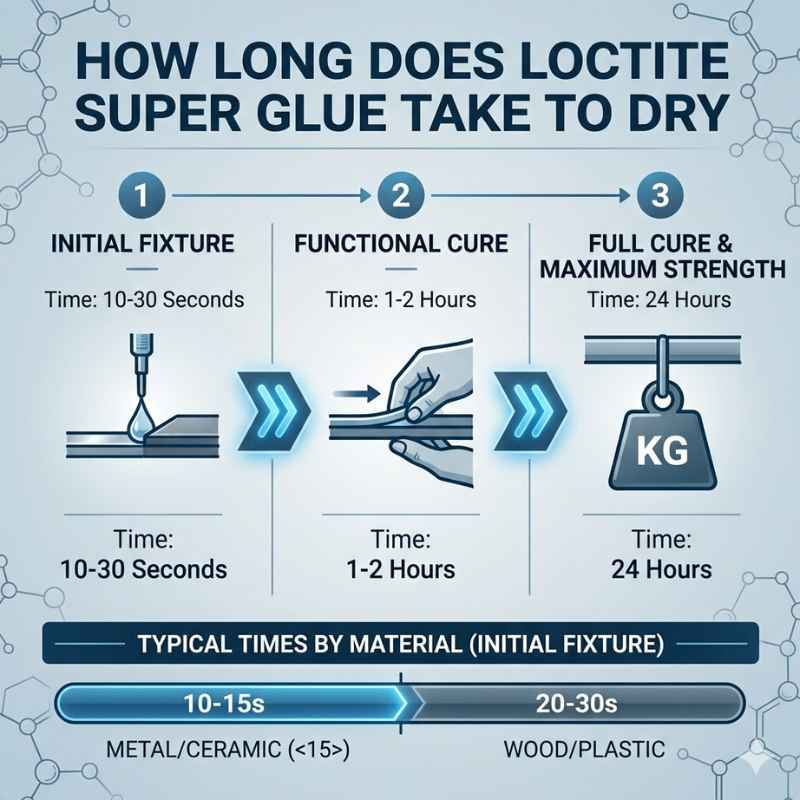
The “set” time is what you notice first. It’s that moment when the two pieces you’re gluing won’t slide apart anymore. For most standard Loctite Super Glue formulas, this initial set happens very quickly.
We’re talking about 10 to 30 seconds. Sometimes, it feels even faster. This is the glue grabbing onto the surfaces and locking them in place.
This speed is why it’s so popular for small jobs. You can mend a broken ceramic mug handle or reattach a sole to a shoe in just a minute or two. The surfaces will feel stuck.
You can even move the object a little without it falling apart. It’s that instant gratification many DIYers look for. But remember, this is just the beginning.
This fast setting is due to the chemical reaction. Moisture on the surface of the items you are bonding acts as a catalyst. It starts the hardening process.
So, even a tiny bit of moisture in the air or on the material is enough. This is why it’s called “super” glue – it’s designed for speed and a strong initial hold.
What About Full Cure Time?
The full cure time is when the glue reaches its maximum strength. This is when it’s as strong as it’s going to get. For many Loctite Super Glue products, this can take up to 24 hours.
Yes, a full day! Even though it feels dry much sooner, it’s still gaining strength. This is a vital detail for ensuring your repair is durable.
During this 24-hour period, the chemical bonds within the glue are fully forming. They are interlocking and becoming more robust. If you put a lot of stress on the bond before it’s fully cured, it might fail.
You might see a crack or the pieces might separate. This is a common reason why people think super glue isn’t strong enough, when in reality, they might have rushed the curing process.
So, while you can handle your glued item after just a minute or so, avoid putting it to heavy use for a full day. This applies to things like jewelry repairs, model building, or any situation where the bond will experience stress. Patience here really pays off.
It ensures your fix lasts much longer.
Key Factors Affecting Drying Time
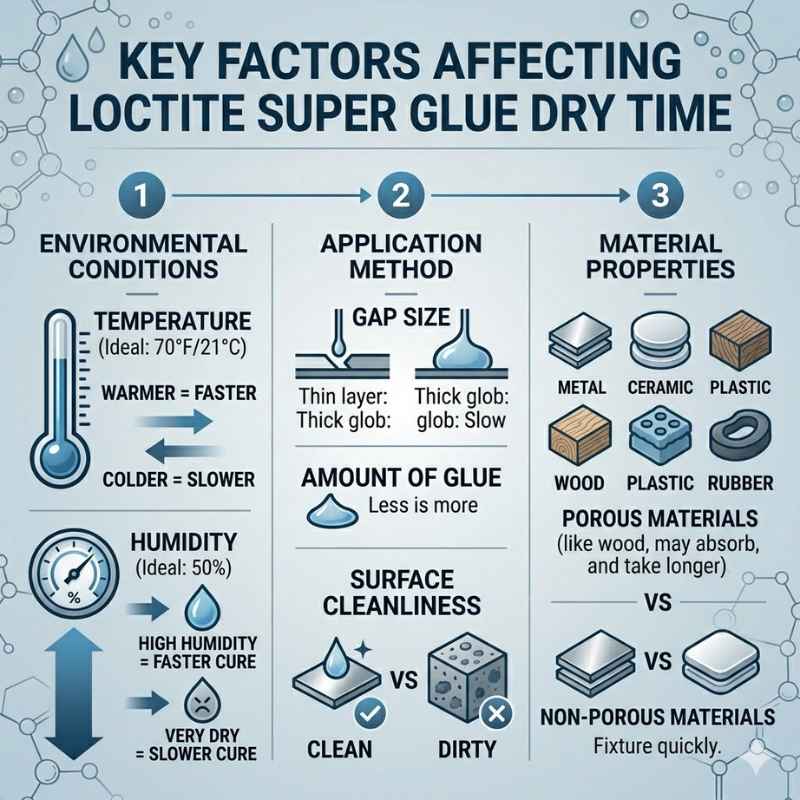
Temperature: Warmer temperatures speed up the chemical reaction. Colder temps slow it down.
Humidity: Higher humidity levels also speed up curing. Low humidity can slow it down.
Surface Type: Porous materials can absorb moisture, affecting cure speed. Non-porous surfaces rely more on air humidity.
Amount of Glue: Too much glue can take longer to cure. A thin, even layer is best.
Airflow: Good airflow helps the moisture react with the glue. Stagnant air can slow things.
My Own Experience with a Broken Picture Frame
I remember one time I was trying to fix a delicate wooden picture frame. It had snapped right in the middle of a decorative carving. My daughter had accidentally knocked it over.
Panic set in. This frame held a special photo of her as a baby. I grabbed my trusty tube of Loctite Super Glue.
I’d used it a hundred times before for small things.
I applied a tiny bead along the broken edge, carefully pressed the two pieces together, and held them for about 30 seconds. It felt solid. I let out a sigh of relief.
Then I set it down on my workbench to admire my quick fix. The two pieces were perfectly aligned, and the glue seemed invisible. “Great!” I thought.
Later that evening, I went to place the frame back on the shelf. As I gently picked it up, I felt a slight give. The spot where the break was still felt a little… soft.
I hadn’t given it enough time to fully cure! I’d assumed the instant grip meant it was done. I ended up having to re-glue it, making sure to leave it undisturbed overnight.
That was a lesson learned: instant set doesn’t mean instant strength. I learned to respect the full cure time, even for seemingly simple repairs.
Understanding Different Loctite Products
Loctite makes a range of super glues. Each one is a bit different. Some are for general use.
Others are specially formulated for specific materials like plastic, wood, or metal. You can even find gel formulas that are thicker and less likely to run. This thickness can also affect how quickly they cure.
For example, Loctite’s standard Super Glue (often in a small plastic bottle with a red cap) is designed for maximum speed. It’s the one I usually reach for. It sets in seconds.
But there’s also Loctite Control Super Glue, which gives you a bit more time to reposition things. This means it might have a slightly longer set time, but it offers more control.
Then there are special formulas. Loctite Plastics Bonding System is designed to bond plastics that other super glues struggle with. It often comes with an activator.
This activator helps the glue cure faster and stronger on plastic surfaces. Always check the product packaging. It will tell you the recommended set and cure times for that specific formula.
Using the right glue for the job is also important for a lasting bond.
Loctite Super Glue Types & General Times
| Product Type | Typical Set Time | Typical Full Cure Time |
|---|---|---|
| Loctite Super Glue (Liquid) | 10-30 seconds | 24 hours |
| Loctite Control Super Glue | 30-60 seconds | 24 hours |
| Loctite Super Glue Gel | 30-60 seconds | 24 hours |
| Loctite Plastics Bonding System | 30-60 seconds (with activator) | 24 hours |
Note: These are general guidelines. Always refer to the product label.
Tips for Achieving the Best Dry Time
Getting the best performance from your Loctite Super Glue is all about preparation and the right conditions. It’s not just about squeezing the glue out. A few simple steps can make a big difference.
These steps help the glue bond correctly and reach its full strength faster.
First, make sure the surfaces you are joining are clean and dry. Any dirt, grease, or oil can interfere with the bond. Use rubbing alcohol or a cleaner appropriate for the material.
Then, let the surfaces dry completely. If you are gluing something that might hold moisture, like wood, let it air dry for a bit.
When you apply the glue, use only a small amount. A thin, even layer is best. Too much glue creates a thick bead.
This thick layer takes longer to cure because the moisture needs to reach the center. It can also squeeze out and make a mess. Often, one drop per square inch is enough.
For really fast curing, especially in dry environments, you can lightly mist the surfaces with water. This gives the glue the moisture it needs to start reacting. Be careful not to soak the surfaces, though.
Just a very light spray or damp cloth is sufficient. And remember to press the pieces together firmly. Hold them still for at least 30 seconds.
When is it Safe to Handle?
After the initial 30 seconds to a minute, the glue should feel solid. You can gently wiggle the pieces. They shouldn’t slide apart.
This means it’s safe to handle the object. You can move it carefully. You can even continue working on other parts of your project.
This is the “set” time.
However, “safe to handle” does not mean “fully cured.” It means the initial bond is strong enough to hold the pieces in place. You can take the item out of a clamp. You can put it back on a shelf.
But avoid putting stress on the joint. Don’t try to bend it or subject it to any real force.
Think about a freshly painted wall. You can touch it gently after a short time, but you can’t really put furniture against it or lean on it for hours. Super glue is similar.
Give it that full 24-hour cure time for the strongest possible bond. This is especially true if the item will be used regularly or face any kind of strain.
Quick Checks for Bond Strength
Tap Test: Gently tap the glued area. Does it feel hard and solid?
Wiggle Test: Gently try to move the pieces. Is there any give or sliding?
Visual Inspection: Is the glue completely dry and clear? Are there any gummy or wet spots?
Stress Test (After 24 Hours): For critical repairs, apply a small, controlled amount of pressure to test the bond.
Common Mistakes People Make
One of the biggest mistakes is rushing the cure time. As I mentioned with my picture frame, it’s easy to think the glue is fully cured just because it feels hard. But the chemical bonds are still developing.
Applying stress too soon is a primary cause of super glue failures.
Another common error is using too much glue. People often think more glue means a stronger bond. This is rarely true with super glue.
Excess glue takes longer to dry. It can also weaken the bond by preventing the surfaces from sitting flush against each other. Plus, it creates a messy, visible bond line.
Not preparing the surfaces properly is another mistake. Glue sticks best to clean, dry surfaces. Dirt, dust, oil, or old glue residue will prevent a good bond.
Many people skip this step, thinking the super glue is so strong it will just stick anyway. It won’t stick as well, or as long.
Finally, not using the right type of glue for the material is a problem. Some plastics are very difficult to bond with standard super glues. Loctite offers specific products for these situations.
Using the wrong glue might result in a bond that fails quickly or doesn’t stick at all.
What Affects the Speed Beyond Humidity and Temperature?
We’ve talked about temperature and humidity. They are the biggest players. But other things matter too.
The type of materials you are bonding is a huge factor. Porous materials like wood or fabric soak up moisture from the glue and the air. This can speed up the initial set.
Non-porous materials like glass, metal, or certain plastics rely more on the humidity in the air. If the air is very dry, the glue might take longer to cure. This is why using an accelerator or a light mist of water can be helpful in dry climates or on smooth surfaces.
You are providing the necessary moisture for the reaction.
The surface area also plays a role. A larger surface area means more contact points for the glue to bond. This can sometimes help the bond form faster.
However, it also means you need to apply the glue carefully to ensure even coverage. Tiny, intricate parts might require a different application technique than a large, flat surface.
Finally, ventilation is important. Good airflow helps dissipate the fumes from the glue. It also brings fresh moisture to the bond.
If you are working in a very small, enclosed space with no air movement, the curing process might be slightly slower. It also means more fumes building up, which is not ideal for breathing.
What This Means for Your Repairs
Quick Fixes: For minor repairs where immediate handling is needed (like a loose button), the initial set time is your friend. Just be gentle.
Durable Bonds: For items that will see use or stress (tools, toys, furniture), waiting the full 24 hours is crucial for strength.
Material Matters: Understand that different materials react differently. Be patient and check the packaging for specific advice.
Environmental Boost: In dry conditions, a little extra moisture can speed things up. In humid conditions, you might not need to do anything extra.
When is a Bond Considered “Dry” for Practical Purposes?
For practical purposes, a bond is usually considered “dry” enough for careful handling after the initial set. This is typically within 30 seconds to two minutes. At this point, the object should be stable enough not to fall apart if you pick it up gently.
You can often move it to a safe place to cure fully.
This means you can glue a small toy part and then set it aside. You can glue a snapped piece of plastic trim and then let it sit on the counter. The initial grip is strong enough to prevent movement.
This is what most people mean when they ask “how long does it take to dry?” They want to know when they can stop holding it.
However, it’s crucial to differentiate this from the bond being “fully cured” or “at maximum strength.” The glue is “dry” in the sense that it’s no longer liquid. But it’s not yet at its strongest. Think of it like concrete.
It’s set enough to walk on within a day, but it takes weeks to reach its ultimate hardness and strength.
When Should You Worry About the Drying Process?
You should worry if the glue doesn’t seem to set at all. If you hold two pieces together for several minutes and they still slide apart easily, something is wrong. This usually points to one of a few issues.
The most common is lack of moisture.
If you’re in an extremely dry environment, the glue might struggle to initiate the polymerization. Another reason could be incompatible surfaces. Some materials have a “release agent” or are naturally resistant to bonding.
For example, some types of silicone or Teflon might not bond well with super glue.
Using an expired tube of glue can also be a problem. Super glue has a shelf life. Once opened, the moisture in the air can start to cure it inside the tube, making it less effective.
If the glue is very old or has been exposed to air for a long time, it might not bond properly.
Also, if you notice the glue becoming very gummy or stringy instead of hardening, it’s a sign of a problem. This could be due to too much moisture or the wrong environmental conditions. In these cases, it’s often best to try to remove the old glue and start over with fresh product and proper surface preparation.
Can You Speed Up the Drying Time?
Yes, you can speed up the drying time, but with caution. As mentioned, humidity and temperature are key. Warmer temperatures and higher humidity help the glue cure faster.
You can try increasing the humidity by lightly misting the air around the bond with water. A small humidifier can also help if you’re doing many repairs in a dry area.
Loctite also sells “Super Glue Accelerator” or “Activator.” This product is designed specifically to kick-start the curing process. You apply it to one surface, then apply the glue to the other and press them together. It works very well, especially on non-porous materials or in low-humidity conditions.
It can reduce cure times significantly, often to just a few seconds.
However, using accelerators has some trade-offs. They can sometimes make the bond more brittle. They also create a stronger chemical reaction, which can produce more heat and fumes.
Always use them in a well-ventilated area and wear gloves. Also, be sure to test the accelerator on an inconspicuous area first, especially on delicate materials, to ensure it doesn’t cause discoloration or damage.
Quick Fixes & Tips for Loctite Super Glue
Clean Surfaces: Always start with clean, dry, and grease-free surfaces. This is non-negotiable.
Thin Layers: Apply glue sparingly. A little goes a long way.
Hold Firmly: Press the pieces together and hold them still for at least 30 seconds.
Use a Clamp: For awkward shapes, use clamps to hold pieces together while the glue sets.
Ventilation: Always use super glue in a well-ventilated area.
Storage: Store tubes upright in a cool, dry place. Cap tightly after use.
Frequently Asked Questions about Loctite Super Glue Drying
How long does Loctite Super Glue take to dry on skin?
If Loctite Super Glue gets on your skin, it bonds very quickly. Usually within seconds. Do NOT try to force the skin apart.
Soak the affected area in warm, soapy water. You can also try gently rolling the skin. Most of the time, it will peel apart naturally within a day or two as your skin sheds.
Avoid using acetone on skin, as it can irritate.
Will Loctite Super Glue dry if there’s no moisture?
No, Loctite Super Glue needs moisture to cure. It uses the moisture present on surfaces and in the air to start its chemical reaction. In a completely dry environment, it would not harden.
This is why it’s important for your repair surfaces to have some level of ambient humidity or surface moisture.
Can I use a hairdryer to speed up Loctite Super Glue drying?
Using a hairdryer on a cool setting can help increase airflow, which might slightly speed up the initial set. However, using heat (hot setting) can actually degrade the glue and make the bond weaker or more brittle. A cool fan or just good ventilation is a safer bet than trying to heat it.
How long does Loctite Super Glue last once opened?
Once opened, the shelf life of Loctite Super Glue can be reduced. It depends on how well it’s stored. If the cap is sealed tightly and it’s kept in a cool, dry place, it can last for several months.
However, if exposed to air and moisture, it can cure inside the tube, making it less effective or unusable. Always check the date on the package.
Does Loctite Super Glue work on fabric?
Some Loctite Super Glues can work on fabric, but it’s tricky. Standard super glues can make fabric stiff and brittle. They also don’t offer much flexibility.
Loctite may have specific fabric glues or mention fabric compatibility on certain products. For most fabric repairs, a flexible fabric glue or adhesive is usually a better choice for durability and feel.
What’s the difference between set time and cure time for super glue?
Set time is the short period, usually seconds to minutes, when the glue hardens enough to hold parts together without them sliding apart. This is the initial grip. Cure time is the longer period, typically up to 24 hours, when the glue reaches its maximum bond strength and durability.
The glue is dry to the touch at set time, but fully strong at cure time.
Final Thoughts on Loctite Super Glue Drying
So, to wrap it all up, Loctite Super Glue sets incredibly fast, usually within seconds. This gives you that initial firm grip you need for quick fixes. But remember, this is just the start.
For the strongest, most durable bond, you need to let it fully cure. This typically takes a full 24 hours.
Understanding the difference between set and cure times is the secret to successful super glue repairs. Be patient, prepare your surfaces well, and give your projects the time they need to become truly strong. You’ll be amazed at how long those fixes will last when you follow these simple steps.
Sponsored / affiliate links. As an Amazon Associate I earn from qualifying purchases. I may earn additional commission from eligible campaigns.
 Loctite Super Glue Ultra Gel Control, Clear, 0.14 fl oz Bottle, 12 Pack - Superglue for Plastic, Wood, Metal, Crafts & Repair, Cyanoacrylate Adhesive Instant Glue, Quick Dry
 Loctite Super Glue Ultra Gel Control, Clear, 0.14 fl oz Bottle, 2 Pack - Superglue for Plastic, Wood, Metal, Crafts & Repair, Cyanoacrylate Adhesive Instant Glue, Quick Dry