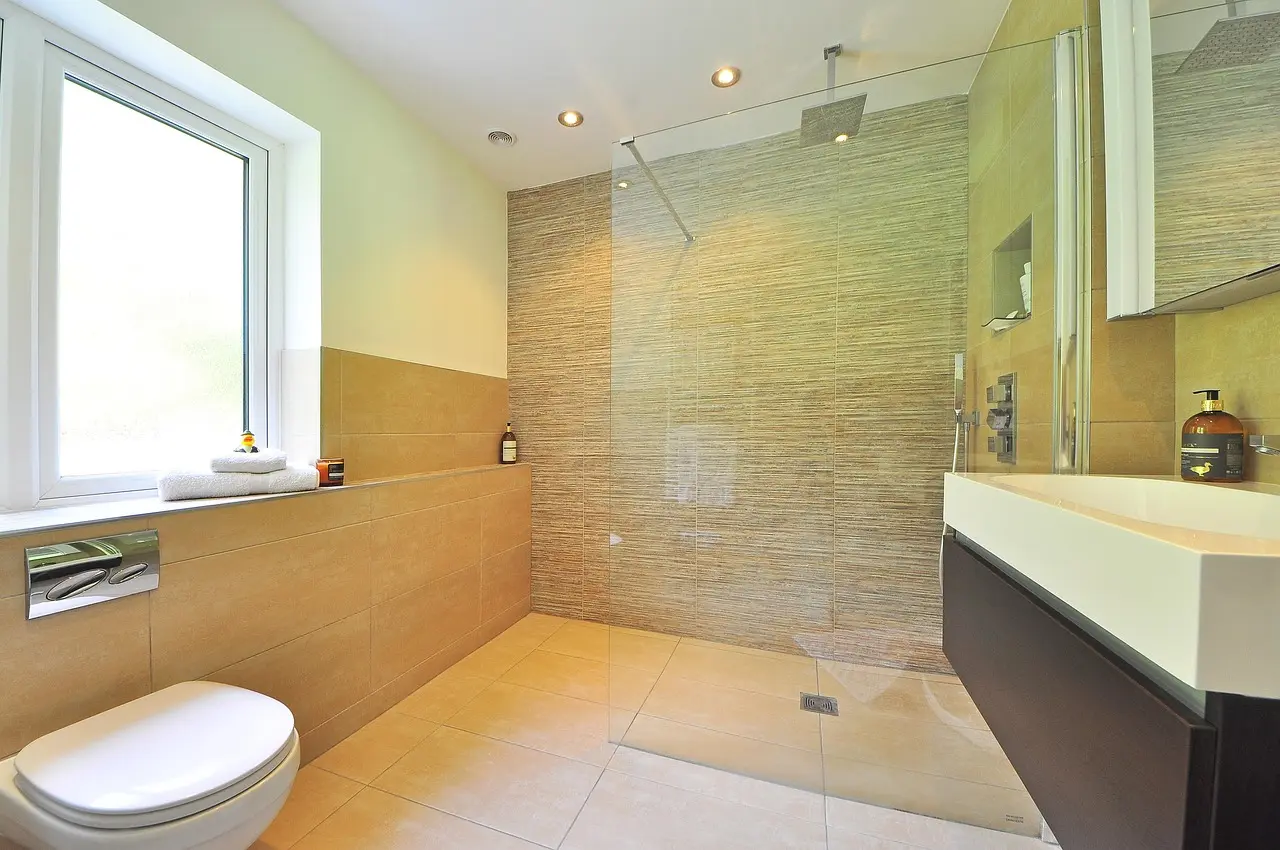
How to Clean Shower Doors Without Streaks or Haze
Clean shower doors by identifying the residue first: soap scum needs a surfactant cleaner, hard-water film needs a mild acid like vinegar or citric acid, and both should be rinsed well and dried with a squeegee, then a clean, dry microfiber cloth. If you guess wrong, the glass can stay cloudy, streaky, and harder to clean next time. This guide shows how to spot each deposit, choose the right cleaner, and dry the glass so haze and rebound spots do not return.
What you’ll need


- Spray bottle
- Distilled white vinegar
- Water
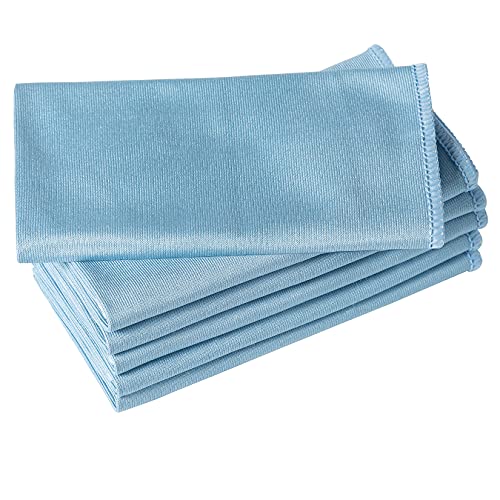
- Microfiber cloth, clean and dry
- Non-abrasive sponge
- Squeegee
- Baking soda
- Commercial glass cleaner for streak-free, glass-safe maintenance
- Isopropyl alcohol for a final polish
- Paper towels for track plugs, if needed
Why your shower door still looks cloudy
| Residue type | Fastest safe fix | What not to use |
|---|---|---|
| Hard-water scale | Spray equal parts distilled white vinegar and water, let it dwell, then scrub with a non-abrasive sponge and rinse | Dry wiping alone, abrasive pads, and harsh scouring powders |
| Soap scum | Use a baking soda paste with a non-abrasive sponge, then rinse and squeegee dry | Razor blades, abrasive pads, and repeated dry rubbing |
| Cleaner film | Wipe with a streak-free commercial glass cleaner, then finish with a dry microfiber cloth | More cleaner layered on top of residue |
| Coated glass | Use the gentlest cleaner the door allows, then rinse and dry right away | Acids, abrasive pads, and heavy scrubbing that can damage a factory finish |
| Stone-surround caution | Keep vinegar off marble, natural stone, and other acid-sensitive surfaces; use a stone-safe cleaner instead | Spraying vinegar across the threshold, curb, or surround |
What kind of film is on the glass?
Hard-water deposits usually look cloudy, white, or chalky and come from calcium and limescale buildup. Soap scum feels greasy or milky and often gathers where soap and body oils meet mineral residue. Cleaner film usually shows up as a smeared haze after wiping, which means the residue changed shape instead of coming off.
Spot hard-water deposits by the cloudy white look
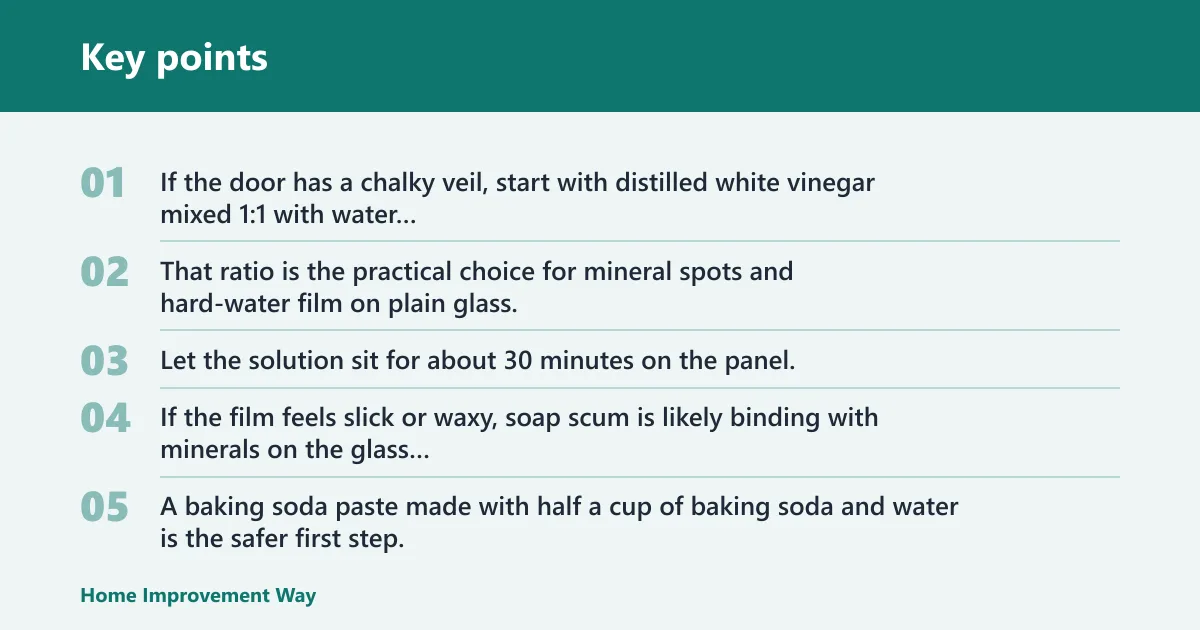
If the door has a chalky veil, start with distilled white vinegar mixed 1:1 with water in a spray bottle. That ratio is the practical choice for mineral spots and hard-water film on plain glass. Let the solution sit for about 30 minutes on the panel, then scrub with a non-abrasive sponge and rinse well.
Spot soap scum by the greasy or milky feel
If the film feels slick or waxy, soap scum is likely binding with minerals on the glass and in the tracks. A baking soda paste made with half a cup of baking soda and water is the safer first step. Work it in gently, then rinse and dry so the residue does not reattach.
Spot cleaner residue by the smeared haze after wiping
If the glass looked worse after a spray-and-wipe clean, the problem is often leftover cleaner film. Switch to a streak-free glass cleaner made for windows and shower glass, then follow with a dry microfiber cloth. A final wipe with isopropyl alcohol can clear the last residue because it evaporates quickly.
How do you clean shower doors without streaks?
Use the lightest method that matches the residue, then dry the panel in one pass before water spots form. For mineral spots, a 1:1 vinegar-and-water spray works well. For soap scum, use baking soda paste. Finish every cleanup with a squeegee, then a clean, dry microfiber cloth.
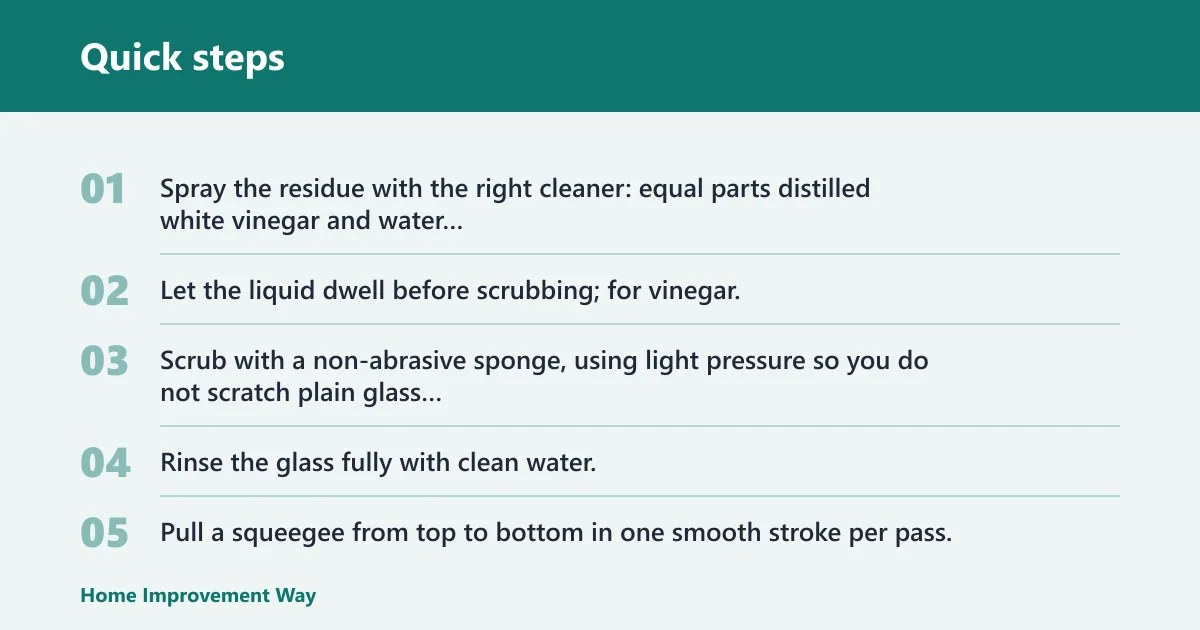
- Spray the residue with the right cleaner: equal parts distilled white vinegar and water for mineral deposits, or commercial glass cleaner for smudges.
- Let the liquid dwell before scrubbing; for vinegar, a 5–10 minute wait is a useful starting point for mineral deposits, and some guides allow about 30 minutes on stubborn film.
- Scrub with a non-abrasive sponge, using light pressure so you do not scratch plain glass or a factory-coated finish.
- Rinse the glass fully with clean water.
- Pull a squeegee from top to bottom in one smooth stroke per pass.
- Dry and polish with a clean, dry microfiber cloth, especially at the bottom edge and corners.
- Finish with a light wipe of isopropyl alcohol if a faint haze remains.
Say your shower door clears in the center but keeps a dull band near the bottom rail. That usually means the main panel is clean, but water is still sitting in the edge channel. Dry that lower edge with microfiber after squeegeeing, then check the track and corner seam.
If that didn’t work, try this next
Suppose the vinegar step leaves the same cloudy film in place. Move up to a baking soda paste for soap scum or a longer dwell on the vinegar mix for scale, then rinse and dry again. For extra-stubborn spots, a baking soda paste and vinegar can fizz on contact and loosen the bond before wiping.
- Mix half a cup of baking soda with water until it forms a spreadable paste.
- Apply the paste to the cloudy section with a non-abrasive sponge.
- For stubborn patches, add a light mist of vinegar so the paste fizzes.
- Let the fizz stop, then scrub gently and rinse thoroughly.
- Dry with microfiber and repeat only on the remaining spots, not the entire panel.
How do you clean tracks and edges?
Tracks and edges hold the deposits that make clean glass look cloudy again. They collect mineral residue, soap scum, and standing water, so the panel may streak again even after the center looks clear. Soak the track, wipe the seams, and dry every hidden drip zone before calling the job done.
- Stuff paper towel plugs into the track openings to hold liquid in place.
- Pour or spray vinegar into the track and let it sit overnight, which is a common approach for heavy buildup.
- Remove the plugs and wipe the loosened residue with a non-abrasive sponge or cloth.
- Clean the corners, seals, hardware edges, and the lower frame with fresh microfiber.
- Dry the track completely before closing the door.
Common mistakes
Using the wrong tool can leave the door cloudier than before. The fastest failures usually come from acid on stone, abrasive pads on glass, or leaving liquid in the edges where it dries into new spots.
- Using vinegar on stone: Avoid spraying marble, natural stone, or any acid-sensitive surround. Keep the solution on the glass and use a stone-safe cleaner nearby.
- Rubbing with abrasive pads: Use a non-abrasive sponge instead. Abrasive scrubbers can mark glass and factory coatings.
- Leaving water in corners and tracks: Wipe the lower rail, corners, and seams after the main panel so runoff does not re-soil the door.
- Drying with linty towels or newspaper: A clean microfiber cloth controls streaks better than paper towels, towels, or newspaper fibers.
- Using more cleaner on top of film: If the haze returns after wiping, switch methods instead of layering extra spray.
How to keep glass shower doors clean
The easiest habit is to remove water before it dries into spots. A quick squeegee pass after each shower does most of the work, and a dry microfiber cloth catches the last drops on the bottom edge and hardware. Weekly cleaning keeps buildup from turning into a longer job.
Use the right drying sequence
Start at the top and pull the squeegee straight down in smooth passes. Then follow with a clean microfiber cloth for the lower edge, frame, and corners. That order matters because a wet cloth can leave streaks if it is used before the loose water is already gone.
Match the cleaner to the glass type
Glass may handle vinegar, but coated, tinted, or hydrophobic glass may need gentler products and less scrubbing. If the door has a factory finish, check the care instructions before using acids or repeated paste scrubs. When in doubt, use a glass-safe commercial cleaner first.
Picture a frameless door with a factory coating and a natural-stone threshold. The coating may reject buildup better than plain glass, but the stone makes vinegar a bad choice near the curb. In that setup, keep the acid off the threshold, clean the panel with a gentler glass-safe formula, and dry every edge right away.
How often should you clean glass shower doors?
A practical schedule is weekly cleaning for the glass and monthly deep cleaning for the whole shower. Architectural Digest recommends cleaning shower glass once a week and deep cleaning the entire shower once a month. If your water is very hard, the tracks and lower corners may need attention more often.
For maintenance, a quick spray and squeegee after showering can reduce buildup between deeper cleanings. If a door starts to look cloudy before the week is up, do the residue check first rather than reaching for the same cleaner every time. That keeps you from polishing the wrong problem into a larger haze.
Frequently asked questions
How to keep glass shower doors clean: keep the door clear
Keep the door clear by stopping water spots before they dry. Use the squeegee every time, dry the bottom edge and track, and clean the full enclosure weekly. If the bathroom has stone surfaces, keep vinegar away from the threshold and use a stone-safe product nearby.
Sponsored / affiliate links. As an Amazon Associate I earn from qualifying purchases. I may earn additional commission from eligible campaigns.