Can a Washing Machine Freeze in an Unheated Garage?
If water is left in the supply hoses, inlet valves, pump, or tub, a washer can freeze in an unheated garage when temperatures drop to around freezing (32°F/0°C). Frozen water can split hoses, crack pumps and valves, and turn a small repair into a larger leak. This guide explains where washers freeze first, how to spot cold-weather risk, and how to protect or winterize one in a garage.
Where freeze damage actually begins

- Operates at 120V with 7W/ft power output
- Built-in thermostat activates at 37 °F automatically
- Easy DIY installation compatible with plastic and metal pipes
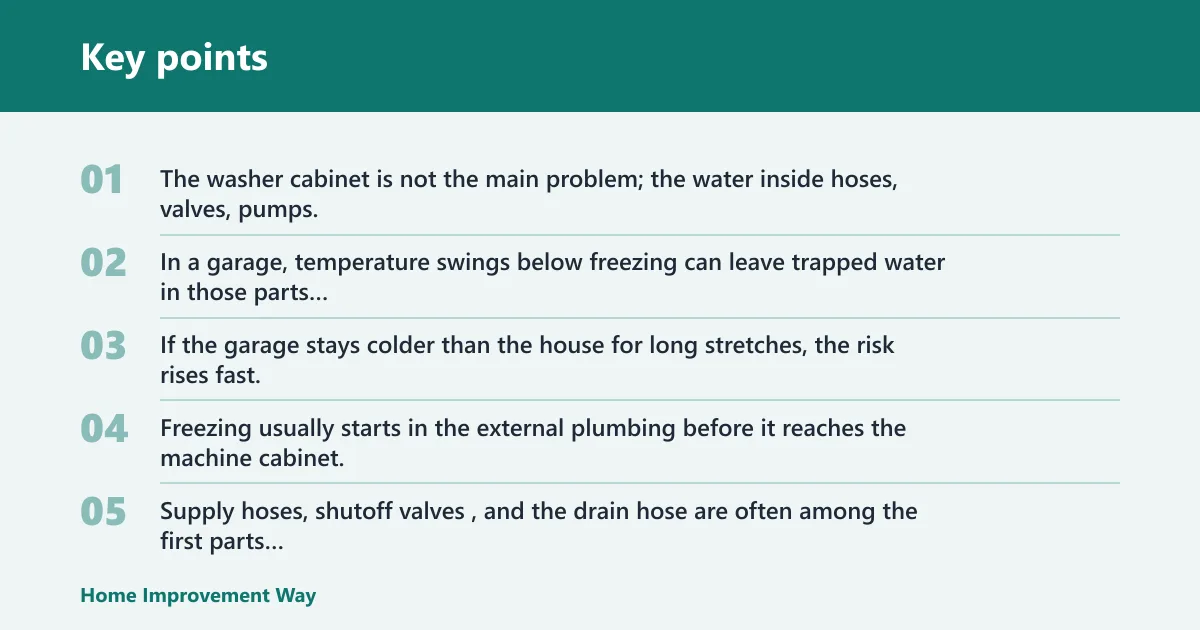
Yes. The washer cabinet is not the main problem; the water inside hoses, valves, pumps, and drain paths is. In a garage, temperature swings below freezing can leave trapped water in those parts long enough to freeze, expand, and damage components. If the garage stays colder than the house for long stretches, the risk rises fast.
Freezing usually starts in the external plumbing before it reaches the machine cabinet. Supply hoses, shutoff valves, and the drain hose are often among the first parts affected by the cold, so they are commonly the first failure points. A washer-dryer is even less forgiving because the washer side carries the same freeze risk, and the dryer side is not built for temperatures much lower than room temperature.
What freezes first in the setup
The first trouble spots are usually the supply hoses and the valve bodies behind the machine. Water sitting there has little thermal protection. Trapped water in the pump, filter housing, and drain hose can freeze, especially if the washer was left mid-cycle, drained poorly, or still contains water inside.
Why the garage temperature matters more than the cabinet
A metal or plastic cabinet can survive a cold room better than standing water can. What matters is whether liquid water remains in narrow spaces where it cannot move or drain away. Once that water freezes, it expands and can crack fittings, split hoses, or force water out when the thaw begins.
How freezing differs in a washer-dryer setup
Washer-dryers combine the washer freeze risk with dryer temperature sensitivity. That means the unit is not a good candidate for a space that gets much colder than the house. If the manual says the appliance must be installed only in a certain temperature range, that instruction controls the decision.
What temperature puts a washer at risk?
Freezing risk starts at 32°F (0°C), and it rises quickly below that point. A brief dip near freezing is a concern if water is trapped in hoses or valves. Sustained subfreezing temperatures are much worse because they give more time for exposed plumbing and internal water pockets to freeze solid.
There is no universal safe garage temperature that overrides the manual. Local conditions matter, too. A detached garage with poor insulation, little wind protection, or intermittent heat can hold colder pockets than a nearby outdoor temperature reading suggests. Even short cold snaps can leave hidden water lines frozen by morning.
Why short cold snaps are different from long freezes
A brief drop below freezing may only chill the machine, but repeated night after night freezing can do real damage. The longer the cold lasts, the more likely standing water is to freeze fully in the hose, valve, pump, or drain line. Long freezes also increase the chance that thawing reveals a split or leak.
When intermittent heat still leaves risk behind
Intermittent heat can create a false sense of safety. If the garage warms during the day but drops below freezing overnight, water can freeze in the same low spots every night. That cycle can stress fittings and seals even if the room never feels severely cold by human standards.
Washing machine freeze checklist
Use this checklist before the first hard freeze, or any time the washer will sit unused in a cold garage. The main goal is simple: remove standing water, protect the exposed lines, and decide whether the machine should be taken out of service until warmer weather returns.
| Component | Freeze risk | Exact homeowner action | Safe to use / do not use |
|---|---|---|---|
| Supply hoses | High if water stays in the hose or the hose is exposed to subfreezing air | Shut off the water supply, disconnect if the manual allows it, and drain each hose fully into a bucket before storage or winter shutdown | Do not use if the hoses are frozen, stiff, bulging, or cracked |
| Shutoff valves | High when valves sit against an exterior wall or in an unheated space | Close the valves, inspect for drips, and leave space so cold air does not press directly on exposed valve bodies | Do not use if a valve will not turn normally or shows seepage after thawing |
| Drain hose | Moderate to high if water remains trapped in a low loop or dip | Raise the hose to the recommended height, then drain it fully so no water stays in low spots | Do not use if the drain hose is frozen or the washer leaves standing water behind |
| Pump/filter area | High because water often stays in the pump housing or filter cavity | Check the owner’s manual for the drain-cleanout process, then empty the pump/filter area before freezing weather | Do not use if the pump area gurgles, leaks, or fails to drain after thawing |
| Detergent drawer | Moderate if water remains in the drawer or dispenser passages | Remove, dry, and reinstall the drawer so no liquid sits in the dispenser channels | Safe to use only after the drawer and passages are dry and moving freely |
| Rubber seals | Low for freeze damage, but moisture left behind can stay trapped | Wipe the door seal dry and leave the door slightly open if the manual allows it | Safe to use if the seal is pliable and free of cracks or heavy mildew |
| Power-off and storage steps | Important for winter shutdown and for any uncertain garage installation | Unplug the machine, shut off water, drain all accessible water, and store the washer out of service if freezing conditions are expected | Do not use if the manual forbids garage installation or if the room will remain below freezing |
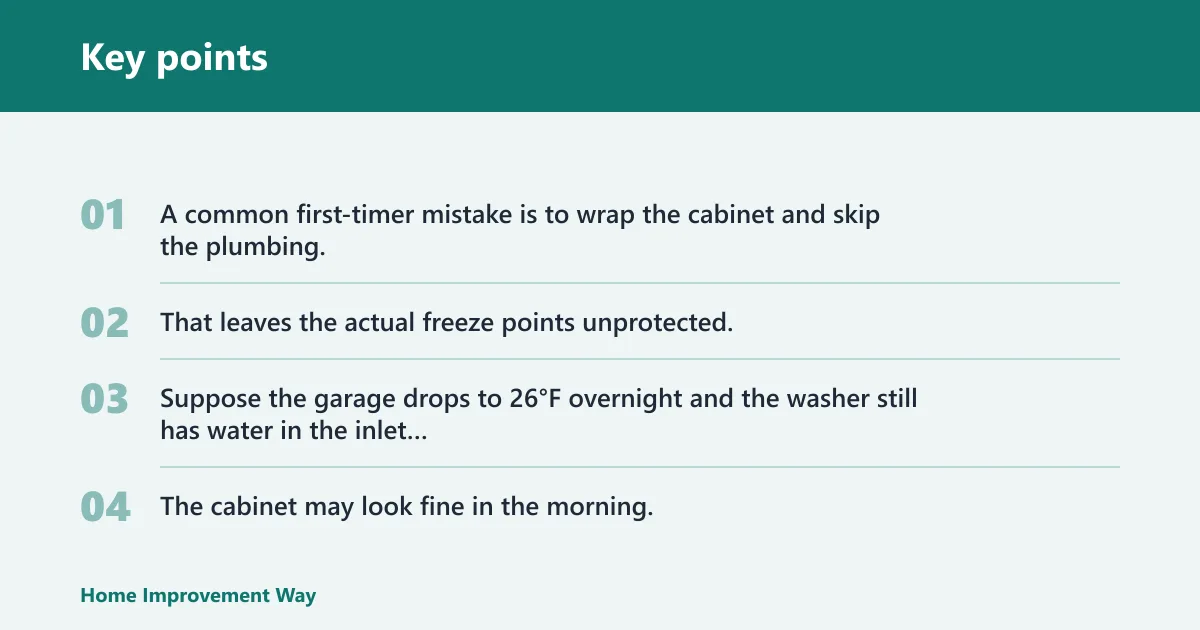
A common first-timer mistake is to wrap the cabinet and skip the plumbing. That leaves the actual freeze points unprotected. Suppose the garage drops to 26°F overnight and the washer still has water in the inlet valve and drain hose. The cabinet may look fine in the morning, but the first fill can reveal a cracked hose or a no-fill error.
What breaks when a washer freezes?
The first parts to fail are usually the hoses, valves, and pump-related water paths. Water expands as it freezes, so even a small trapped amount can crack plastic, split rubber, or distort a fitting. If the rupture opens fully, thawing can send water onto the garage floor and make flooding possible.
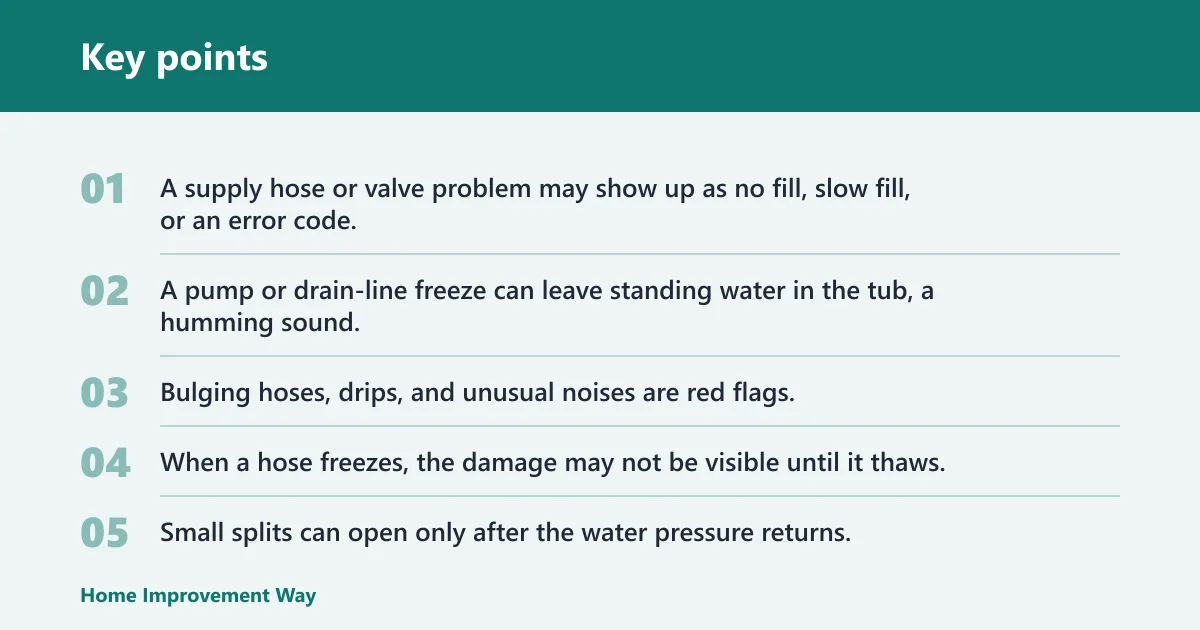
Symptoms depend on what froze first. A supply hose or valve problem may show up as no fill, slow fill, or an error code. A pump or drain-line freeze can leave standing water in the tub, a humming sound, or a wash that stops before draining. Bulging hoses, drips, and unusual noises are red flags.
Cracked hoses and valves
When a hose freezes, the damage may not be visible until it thaws. Small splits can open only after the water pressure returns. Valves can crack at the body or at the connection, especially if they sit near a cold exterior wall. That is one reason a leak may appear after the weather warms.
Pump damage and trapped water expansion
The pump and filter area often holds leftover water after a cycle. If that water freezes, the housing can crack or the impeller area can bind. You may notice the machine trying to drain, then stopping, or making an odd buzzing noise. Do not keep running it to see if it clears.
Leak and flood symptoms to watch
Watch for puddles under the front edge, water at the hose connections, or a damp electrical cord area. Flooding is a possible outcome if the machine is damaged by freezing. Even a small crack can turn into a large leak once water pressure returns during the next wash.
Will insulation keep a garage washer safe?
Insulation can help, but it does not make every cold garage safe. Insulating the machine and surrounding pipes may reduce heat loss and slow freezing, especially in a properly converted garage or outbuilding. That said, manufacturer instructions may explicitly reject garage use, and that rule controls the installation.
Pipe wrap is only part of the picture. If the room still drops below freezing, exposed valves, hose connections, and the pump area can still freeze. Insulation is support, not permission. A converted outbuilding with insulation, waterproofing, and a safe electrical connection is a different case from a raw unheated garage.
What insulation can help protect
Insulation can slow the rate at which cold reaches the water-filled parts of the system. It may help around supply lines, exposed shutoffs, and in spaces that only dip a little below freezing for short periods. It is most useful where the building is already close to indoor conditions.
Why pipe wrap is not enough by itself
Pipe wrap cannot protect water that is already trapped inside the pump, valve body, or hose. It also cannot fix poor drainage, a garage that repeatedly freezes, or a model that the manual says cannot be installed there. If the air stays below freezing long enough, the water can still freeze behind the wrap.
When a converted outbuilding is the better answer
A properly converted garage or outbuilding with insulation is the exception, not the default. It should have stable temperatures, adequate ventilation, waterproofing, and a safe electrical connection. If any of those are missing, or if the manual forbids garage use, moving the washer indoors is the safer call.
What should you do if a washer line is frozen?
Stop using the machine right away. If it is safe to do so, shut off the water supply before you thaw anything. Then warm the affected line slowly and inspect for cracks, wet fittings, or drips before you restore power or open the valves again. Never run the washer to test a frozen system.
If the washer will not fill, the valves will not turn normally, or water appears after thawing, pause and inspect further. A frozen line can hide damage until pressure returns. If you see cracked fittings, repeated leaks, or the machine still will not drain, call a plumber or appliance technician.
Thaw slowly and inspect for cracks or leaks
Use gradual heat, not open flame. Let the area warm naturally or use a safe low heat source aimed at the room, not the plastic parts. As the ice clears, check each hose connection, the valve body, and the floor beneath the machine for moisture.
When to call a plumber or appliance tech
Call for help if a shutoff valve is stuck, a hose has split, the pump area is leaking, or the washer shows repeated error codes after thawing. If the garage had a hard freeze and the machine was still connected to water, hidden damage is possible even when the outside looks dry.
Frequently asked questions
Can a washing machine freeze in an unheated garage?
Yes. The main freeze points are the hoses, shutoff valves, pump area, and any trapped water in the drain path. Once water freezes, it expands and can crack parts or cause leaks. The garage cabinet itself matters less than the water inside the connected plumbing.
What temperature will a washing machine freeze at?
Risk starts at 32°F (0°C). Below that, water in hoses, valves, and pumps can freeze if the cold lasts long enough. There is no single safe cutoff for every setup, because insulation, wind exposure, and how much water remains inside all change the result.
Can I leave my washing machine in the garage in winter?
Only if the manual allows garage installation and the space stays within the temperature range the manufacturer requires. A properly converted garage or outbuilding with insulation may be acceptable, but a raw unheated garage is often not. General advice does not override the installation instructions.
How do I keep pipes and hoses to a washing machine from freezing?
Drain the hoses, shut off the water, and empty any trapped water from the pump or filter area before deep cold arrives. Insulating the surrounding pipes can help, but it is not a substitute for a garage that stays within the maker’s limits. If the room freezes often, store the washer elsewhere.
Will a frozen washing machine crack or leak?
Yes. Frozen water can crack hoses, valve bodies, and pump parts, then leak when it thaws. Flooding is a possible outcome if the rupture opens under pressure. Look for bulging hoses, slow fill, no-fill errors, puddles, or standing water after a cycle.
Is it safe to run a washing machine when the garage is below freezing?
No, not unless the manufacturer specifically allows that temperature range and the machine’s water paths are protected from freezing. Running it in a below-freezing garage can move water into parts that are already cold enough to freeze again, which raises the chance of damage and leaks.
What should I do if my washing machine water line is frozen?
Stop use, shut off the water if it is safe to do so, and thaw the line slowly. After thawing, inspect the hose, valve, and floor for leaks before turning the washer back on. If anything is cracked, stuck, or still leaking, call a plumber or appliance tech.
Does insulation protect a washing machine in a garage?
Insulation can help reduce freeze risk around pipes and in a properly converted outbuilding, but it does not make an unsuitable garage safe on its own. If the machine manual forbids garage use, that instruction still controls. Insulation is support, not a guarantee.
My washer is in an unheated area. Will it be damaged by freezing?
It can be. The risk depends on whether water remains in the hoses, valves, pump, or drain line when temperatures fall below freezing. If the area gets cold enough often enough, winterizing the washer or moving it to a warmer space is the safer choice.
Sponsored / affiliate links. As an Amazon Associate I earn from qualifying purchases. I may earn additional commission from eligible campaigns.