What to Do If Your Washing Machine Drain Hose Freezes
If your washer won’t drain in freezing weather, check the drain hose and standpipe for ice before running another cycle. If they’re frozen, shut off power and water first, then thaw them slowly. Ignoring it can crack hoses, spill water, or damage the pump. This guide shows how to confirm the hose is frozen, thaw it safely, check for leaks, and keep it from freezing again in an unheated laundry space.
What you’ll need


- Bucket and towels
- Wet/dry vacuum set to wet mode, with the filter removed
- Plumbing snake
- Flashlight
- Pliers or an adjustable wrench
- Warm cloths or a space heater kept at a safe distance
- Work gloves
A frozen drain hose is commonly reported as no drain, slow drain, or water backing up into the washer or standpipe after the spin cycle starts. Check the gray drain hose, the standpipe or utility sink outlet, and the pump area together so you do not confuse ice with a kink or clog.
Say your washer sits in a garage at 28°F overnight and the tub still has water after a spin cycle. If the hose feels stiff, the standpipe has little or no flow, and the hose route has no sharp bend, freezing moves near the top of the list. A pump clog often changes the sound of the drain cycle first.
Frozen hose vs blockage matrix
| Problem | Common symptoms | Safest first step | Likely tools | When to call a pro |
|---|---|---|---|---|
| Frozen hose | No drain in cold weather; hose feels rigid; flow returns as the hose warms | Unplug the washer, shut off hot and cold valves, then warm the hose gradually | Towels, warm cloths, flashlight | Freeze returns after thawing or the hose splits |
| Clogged hose | Slow drain, gurgling, or water backs up at the standpipe | Snake the hose or standpipe opening | Plumbing snake, bucket | Overflow happens within 30 seconds to one minute |
| Kinked hose | Hose is flattened, bent sharply, or pinched behind the washer | Straighten the hose and restore a gentle curve | Flashlight, gloves | The hose is damaged or will not hold shape |
| Pump blockage | Water stays in the drum and the drain sound changes or stops | Open the drain pump cover, trap, or filter if your model has one | Towels, bucket, pliers or wrench | The pump housing leaks or the machine still will not drain |
What to do if the hose is frozen
Start with power off and water off. A frozen hose is a thawing problem first, not a force problem. Gentle heat, patient drainage, and a leak check afterward matter more than speed.
- Unplug the washer and turn off both the hot and cold supply valves.
- Pull the machine forward enough to reach the drain hose and inspect the route.
- Place towels and a bucket under the hose connection or the lower end of the hose.
- Lower the hose into the bucket if the layout allows it, or use a siphon method to drain standing water.
- Warm the hose with warm cloths or a space heater kept several feet away; keep heat moving and avoid one hot spot.
- Let the hose thaw in short intervals, then check for flow by lifting the end over the bucket or into the standpipe.
- If water still does not move, use a plumbing snake at the hose opening or standpipe.
- Reconnect the hose, restore water, and run a short drain-only cycle to confirm flow.
Suppose the hose runs along an exterior wall in a basement laundry room. A 5-minute warm-cloth cycle may loosen the ice enough for a slow drain, while a long blast of high heat can soften the plastic and stress the fitting. Keep checking the bucket so the thawed water has somewhere to go.
If that didn’t work, try this next
- Open the drain pump cover, trap, or filter if your model gives you access from the front or back panel.
- Pull out lint, coins, and any debris blocking the pump inlet or outlet.
- Clear the standpipe opening with a hand-operated snake if water is backing up there instead of draining away.
- If overflow happens within about 30 seconds to one minute, stop and call a plumber or appliance repair pro; that pattern can point to a deeper drainpipe problem.
Can a frozen drain hose leak or burst?
Yes. Ice can split a hose, loosen a clamp point, or stress a fitting enough to leak once the line thaws and pressure returns. Check the full hose length, the ends, and the pump connection for cracks, bulges, wet seams, or drips before you put the washer back into service.
Leak check after thawing
- Dry the hose, fittings, and the floor under the washer.
- Run a short drain or rinse cycle with the machine pulled out so you can see the hose and pump area.
- Watch for dripping at the clamp, hose barb, and any low point in the run.
- Feel the hose for soft spots, splits, or a bulge that was not obvious before.
- If any leak appears, stop the cycle and replace the damaged hose or fitting before the next load.
How do you keep it from freezing again?
Prevention comes down to warmer air, less exposed hose, and less water left sitting in the line. That matters most in unheated garages, basements, laundry rooms on exterior walls, and any setup where the drain hose or standpipe sits in a cold draft.
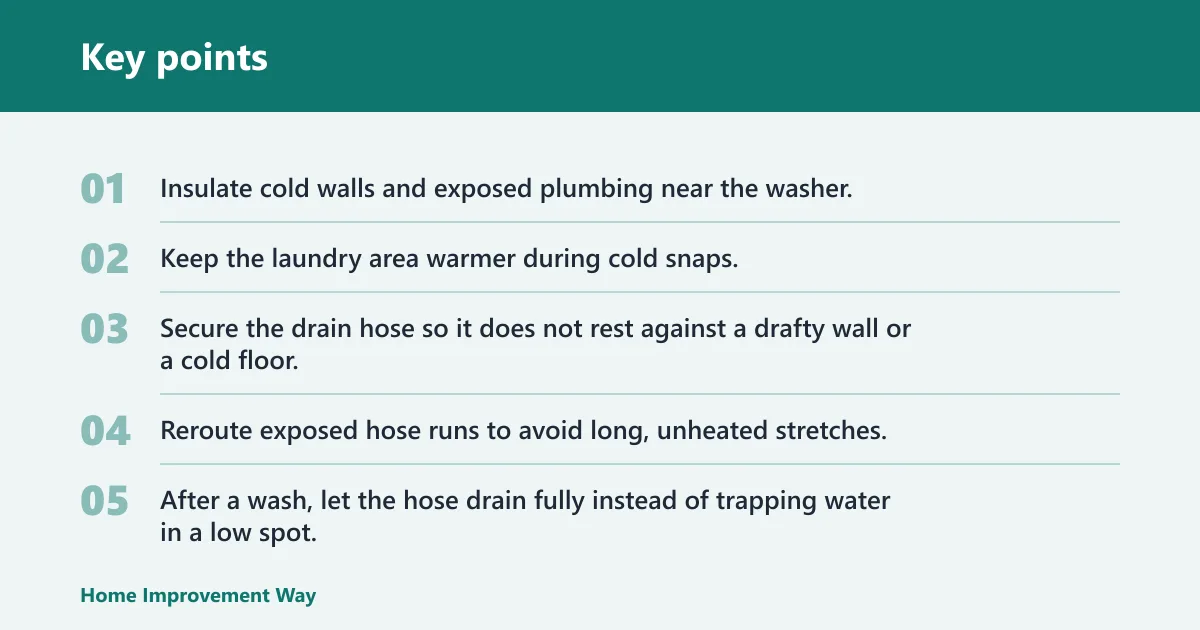
- Insulate cold walls and exposed plumbing near the washer.
- Keep the laundry area warmer during cold snaps.
- Secure the drain hose so it does not rest against a drafty wall or a cold floor.
- Reroute exposed hose runs to avoid long, unheated stretches.
- After a wash, let the hose drain fully instead of trapping water in a low spot.
- Use a washer drain pan that is connected to a drainpipe, especially upstairs, so any leak has a path away from the floor.
A common first-timer mistake is leaving a long hose loop behind the washer in an unheated garage. That loop holds cold water after each cycle, and repeated freeze-thaw cycles can make a weak spot show up fast.
Common mistakes
- Using boiling water, an open flame, or a high-heat gun on plastic hose sections.
- Forcing a frozen fitting loose before the ice has softened.
- Skipping the pump and filter check when the hose still will not drain.
- Using chemical drain cleaners in the washer drain path instead of clearing the blockage mechanically.
- Ignoring repeat freezing, which often points to insulation, routing, or drain-pipe problems beyond the hose itself.
- Leaving the washer unprotected on a drained line without checking for hidden leaks after reassembly.
Use a plumbing snake first for a washer drain that drains slowly or not at all, because a mechanical clear-out is less likely to damage the hose, pump, or standpipe. Chemical drain cleaner is another option on some drains, but sulfuric acid products should be avoided, and frozen ice will still need a thaw before any cleaner can help.
- Unplug the washer and turn off the water valves.
- Pull the hose free from the standpipe, utility sink, or drainpipe as needed.
- Use a hand-operated snake to clear the hose opening and the standpipe surface.
- If the hose drains into a utility sink, remove visible debris from the sink strainer and trap area if accessible.
- Reconnect the hose, run a short cycle, and verify that water moves through without backing up.
Frequently asked questions
Can my washing machine drain freeze?
Yes, the drain hose can freeze in unheated spaces, especially when it holds standing water after a cycle. Check the gray hose, the standpipe, and any exposed run near an outside wall first. If the hose feels stiff and there is no flow, thaw it before starting another load.
What happens if a washing machine freezes?
Freezing can stop drainage, crack plastic hose sections, loosen fittings, and strain the pump. The risk is not only a no-drain cycle. Once the ice thaws, hidden leaks can appear at the clamp points or where the hose bends behind the washer.
Do washing machines come with drain hose?
Many washers include a drain hose, and it is often gray. That hose carries wastewater out of the machine to a standpipe, drainpipe, or utility sink. If the hose is cracked, overly short, or badly routed, replacing or repositioning it is often the better fix.
Why is my washing machine drain hose frozen?
Cold air plus standing water is the usual combination. Long hose runs, exterior-wall laundry rooms, garages, and basements without enough heat make freezing more likely. A hose that slopes poorly can hold water between cycles, so the same cold spot freezes over and over.
How do I thaw a frozen washing machine drain hose?
Unplug the washer, shut off the red and blue valves, and thaw the hose with warm cloths or gentle room heat. Drain water into a bucket as it loosens. Avoid boiling water and open flame; plastic hoses can warp before the ice clears.
When should I call a plumber for a frozen washer drain hose?
Call a plumber or appliance repair pro if the freeze keeps returning, the hose is damaged, or water still will not move after you clear the hose and check the pump. If overflow happens within 30 seconds to one minute, the blockage is likely deeper in the drainpipe system.
Sponsored / affiliate links. As an Amazon Associate I earn from qualifying purchases. I may earn additional commission from eligible campaigns.