Should You Disconnect Garden Hoses in Winter?
Yes. Disconnect every garden hose before the first hard freeze, and leave the outdoor faucet empty. Water trapped in the hose can freeze and split the hose, and water left at the connection can damage the hose bib or spigot. Skip that step, and you can end up with a cracked faucet, a split hose, or hidden pipe damage that shows up in spring. This guide covers the winter shutoff order, when extra insulation makes sense, and when a heated hose is worth using. (Familyhandyman)
This guide is part of our Frozen Pipes: How to Prevent, Thaw and Fix Them series.
Garden hose winter decision table


| Scenario | What to do | What to inspect | Faucet insulation required? |
|---|---|---|---|
| Mild climate | Disconnect the hose before a hard freeze, drain it fully, and store it dry. | Check the hose ends, washers, and spigot threads for wear or drips. | Usually optional; add it if the tap is exposed or gets repeated freezes. |
| Hard-freeze climate | Disconnect, drain, and remove the hose before winter weather settles in. | Inspect the faucet body and connection for seepage after shutdown. | An insulated tap cover is often worth using after the hose comes off in hard-freeze climates. |
| Heated hose in use | Follow the manufacturer’s manual, keep the hose attached only as directed, and still protect the faucet. | Check the power cord, fittings, and any listed temperature or placement limits in the manual. | Usually, a heated hose does not protect the faucet by itself. |
| Hose already frozen | Bring it inside to thaw, then drain it later. | Look for splits, bulges, cracked couplings, or a damaged washer after thawing. | Yes, if the faucet is exposed and the season is still freezing. |
Should you disconnect a hose for winter?
Yes. Disconnect the hose before winter because trapped water can freeze, expand, and crack the hose or fittings. The outdoor faucet is the higher-priority risk point, because a hose left attached can trap water at the connection and damage the hose bib or spigot.
Why the hose is the first thing to remove
A garden hose can turn brittle in freezing temperatures, and expandable hoses are especially vulnerable. Once water stays inside, freeze expansion can split the hose wall or damage the end fittings. Leaving a hose outside all winter can also mean buying a new one in spring.
Why the faucet still matters after the hose comes off
The hose connection can hold water against the faucet. That is why the faucet itself needs attention, not just the hose. If your home has an indoor shutoff valve for the outdoor water supply, turn it off before winter so new water cannot enter the exposed line.
When a protected tap cover is worth adding
An insulated tap cover is extra protection after hose removal. It makes the most sense for exposed hose bibs, frost-prone spigots, or hard-freeze climates. It adds freeze protection, but it does not replace draining the hose or shutting off the outdoor supply when one exists.
What you’ll need
- Garden hose nozzle or spray nozzle
- Pliers for a stubborn connector, if the coupling will not hand-loosen
- Hose hanger or hose reel for kink-free storage
- Insulated tap cover for exposed outdoor faucets
- Dry storage spot such as a shed, garage, or other protected place
How to drain and store the hose
Drain the hose completely before storage. Use the nozzle to release pressure first, then disconnect the hose, let the water run out fully, coil it without kinks, and store it dry. If your home has an indoor shutoff valve for the outdoor supply, turn it off before you start.
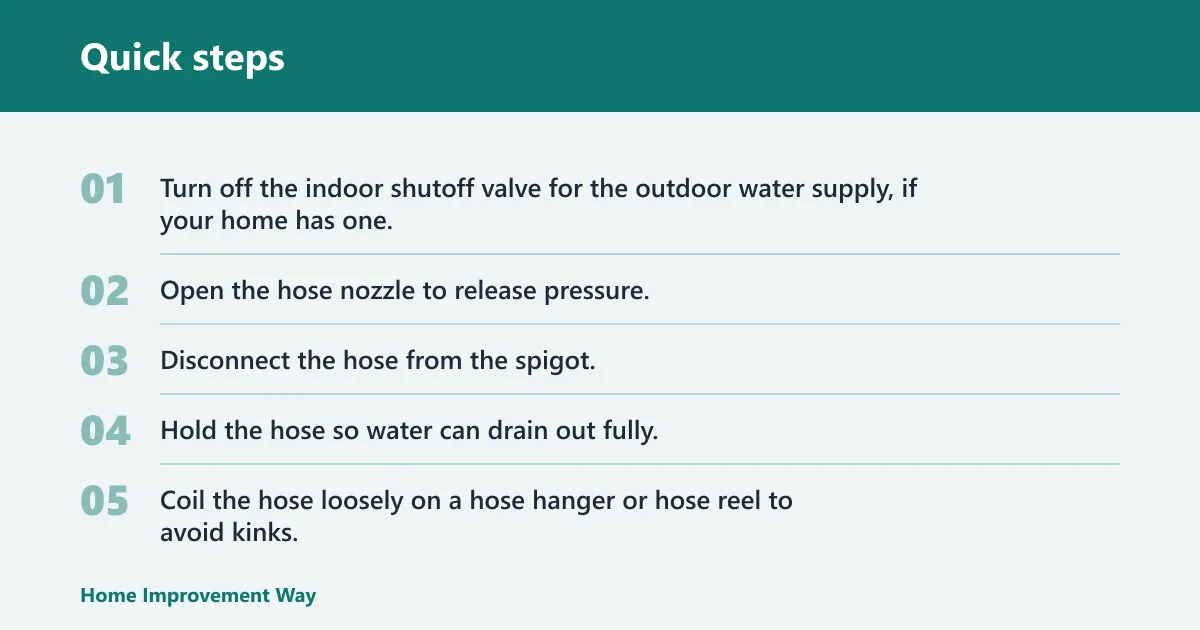
- Turn off the indoor shutoff valve for the outdoor water supply, if your home has one.
- Open the hose nozzle to release pressure. Some hoses have a lever-style valve that can trap pressure before removal.
- Disconnect the hose from the spigot. If the connector is stubborn, use pliers gently on the coupling, not on a stuck valve stem.
- Hold the hose so water can drain out fully. Lift one end, then the other, until no more water runs out.
- Coil the hose loosely on a hose hanger or hose reel to avoid kinks.
- Store it in a dry shed, garage, or other protected place. Keep the nozzle separate for spring use.
- If the hose has cracks, split couplings, or worn washers, set it aside for repair or replacement before next season.
Common mistakes
Do not leave the hose connected after turning off the outdoor supply. That can trap water at the faucet. Do not force a corroded shutoff valve with pliers; a damaged valve needs repair or replacement. Do not coil a wet hose and toss it in a corner, because leftover water can freeze inside the hose or fittings.
If a 50-foot hose still feels heavy after it is disconnected, it may still contain water in a low spot. That usually means water is still inside a low spot. Lift one end higher, then work down the length until it drains fully, instead of storing it that way.
Suppose the hose connector will not budge by hand. Use pliers on the hose coupling only, with a light grip. If the valve handle itself is stiff or corroded, stop there and plan for repair rather than forcing it.
What happens if you leave it connected?
Leaving the hose connected in winter can damage both the hose and the faucet. Water in the hose can freeze, expand, and split the hose. Water trapped at the connection can also crack the spigot or hose bib, and that damage may not be obvious until the thaw.
How trapped water can damage the hose
Freeze expansion is the main failure point. Water left in the hose can freeze inside the tube, and the hose may crack, split, or go brittle before spring. Expandable hoses are especially vulnerable, so they should not be left full of water outdoors.
How the connection can damage the spigot
The connection is the part people miss. A hose left attached can hold water against the faucet, which raises the risk of freeze damage at the threads, washer seat, or hose bib body. That is why disconnecting the hose comes before any optional cover.
Signs the faucet or hose may need repair
After winter, inspect for a drip at the spigot, seep around the connector, a split coupling, a worn washer, cracks in the hose jacket, or water that dribbles after the faucet is closed. A persistent drip usually means the seal is compromised and should be replaced before the next freeze season.
When is extra protection worth it?
Extra protection is worth it when freezes are common, the faucet is exposed, or the hose setup stays outdoors. A heated hose can help a specific setup, but it does not remove the need to protect the faucet. A cold-climate hose may stay more flexible, but water inside it can still freeze.
Mild winters and short freeze spells
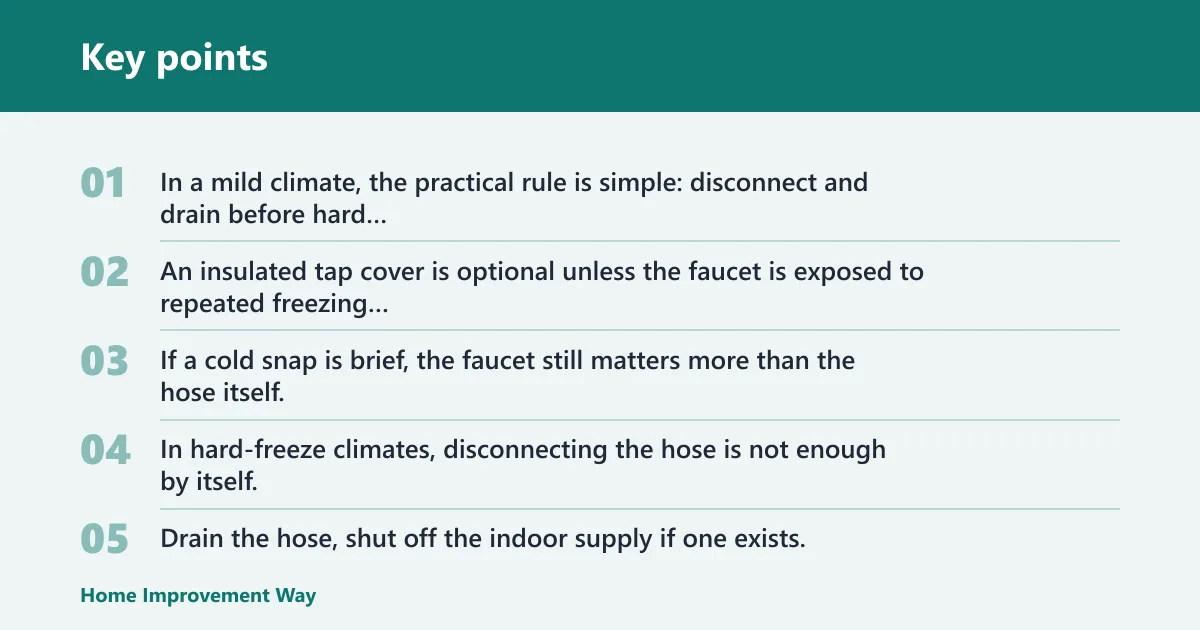
In a mild climate, the practical rule is simple: disconnect and drain before hard freezes, then store the hose dry. An insulated tap cover is optional unless the faucet is exposed to repeated freezing nights. If a cold snap is brief, the faucet still matters more than the hose itself.
Hard-freeze climates and exposed hose bibs
In hard-freeze climates, disconnecting the hose is not enough by itself. Drain the hose, shut off the indoor supply if one exists, and add an insulated tap cover to the outdoor faucet. That combination gives the faucet the best chance of staying dry through repeated freeze-thaw cycles.
Cold-climate hoses and heated hose setups
Swan lists its cold-weather hose as flexible down to -30 degrees Fahrenheit and at 400 PSI burst strength, but it also says the hose does not prevent water from freezing inside it. That means the hose may handle cold better, yet it still needs to be drained unless the manufacturer’s manual says otherwise. Heated hoses also need the manual followed closely.
A common first-timer mistake is assuming a cold-climate hose can stay outside full of water. It cannot. Flexibility is not the same as freeze protection, so the hose still needs to be drained and the faucet still needs attention.
Frequently asked questions
When should I disconnect my garden hose?
Disconnect it before the weather reaches sustained freezing risk at your location. Do not wait for a fixed calendar date. If your area is headed for hard freezes, remove the hose and protect the faucet first.
How do you drain a garden hose for winter?
Open the nozzle, disconnect the hose, then raise one end and let gravity empty it. Keep lifting along the length until no more water runs out. Store it only after the hose is dry.
How do you store a garden hose in winter?
Coil it loosely on a hose hanger or hose reel, keep it out of kinks, and put it in a dry shed or garage. Store the nozzle separately so it is ready for spring.
Can hoses be left outside during winter?
Only if the setup and manufacturer guidance specifically allow it, and even then the hose should not hold water. Leaving a standard garden hose outside all winter can damage it and may mean replacing it.
Do I need an insulated faucet cover if I disconnect the hose?
Not always, but it is a smart add-on for exposed faucets or hard-freeze climates. Disconnecting the hose is the first step; the cover adds another layer of protection for the outdoor tap itself.
Sponsored / affiliate links. As an Amazon Associate I earn from qualifying purchases. I may earn additional commission from eligible campaigns.
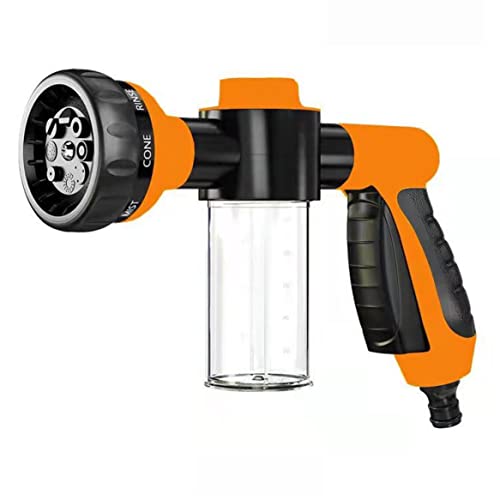 Foam Sprayer Gun Garden Hose Nozzle for Car Wash Pressure Nozzle for Watering plants Pet Shower 8 Watering Patterns and Soap Dispenser Orange US Plug Car Wash Nozzle Hose Soap Sprayer Car Wash Foam
 Foam Sprayer Gun Garden Hose Nozzle for Car Wash Pressure Nozzle for Watering plants, Pet Shower, 8 Watering Patterns and Soap Dispenser Green US Plug Car Wash Nozzle Pony Jet Washer for Horses Hose