What Temperature to Set the Thermostat When Away in Winter
Set an empty winter thermostat to about 50°F in milder, dry areas; choose about 55°F in colder homes with ordinary plumbing; go to about 60°F if pipes sit on exterior walls, the house drafts, or a stay-home person, plant, or pet needs warmer conditions. Set it too low and frozen pipes, burst lines, and avoidable water damage can turn a short trip into a major repair bill. This guide explains how climate, plumbing layout, occupancy, and heating system type change that target.
Winter thermostat decision table
Before you leave, run through a quick checklist: shut off the exterior water supply if possible, drain hoses and outdoor faucets, open sink cabinets so warm air can reach the pipes, confirm your away schedule or manual hold, change the HVAC filter if it is due, and set a warm-up schedule for the day before you return.
| Climate severity | Home and plumbing condition | Recommended away setpoint | Pre-departure actions | Why this tier fits |
|---|---|---|---|---|
| Mild winter, brief vacancy | Well-insulated home; pipes stay inside conditioned space; no crawlspace or exposed plumbing; no pets left behind | 50°F | Open cabinet doors under sinks, check the thermostat schedule, and keep HVAC on | This lower setting can work when the home stays warm enough to keep pipes out of danger and the forecast is not severe |
| Cold winter, ordinary vacancy | Average insulation; standard plumbing layout; basement or first-floor pipes, but not much exposed pipe route | 55°F | Open sink cabinet doors, set away mode, and leave the heat on | This middle range adds a margin of safety for an empty house when outdoor temperatures stay low for days |
| Snowy or freezing winter | Pipes on exterior walls; drafts; crawlspace or unconditioned basement; additions or rooms far from the thermostat | 60°F | Shut off exterior water, drain outdoor faucets, open sink cabinet doors, and use an away schedule or manual hold | This higher setting is better when the house has more freeze exposure and hidden pipe runs can get colder than the thermostat reading |
| Very mild winter only | Short vacancy; stable weather; compact home; low pipe exposure | 45°F | Keep the HVAC running, monitor for forecast drops, and verify no exposed plumbing is unprotected | This is only reasonable when freeze risk is genuinely low and the plumbing layout is forgiving |
This table is the quickest route to a safe setpoint. It ties the number to the risk in your home, not to one fixed target for every house.
Why you should not turn the heat off
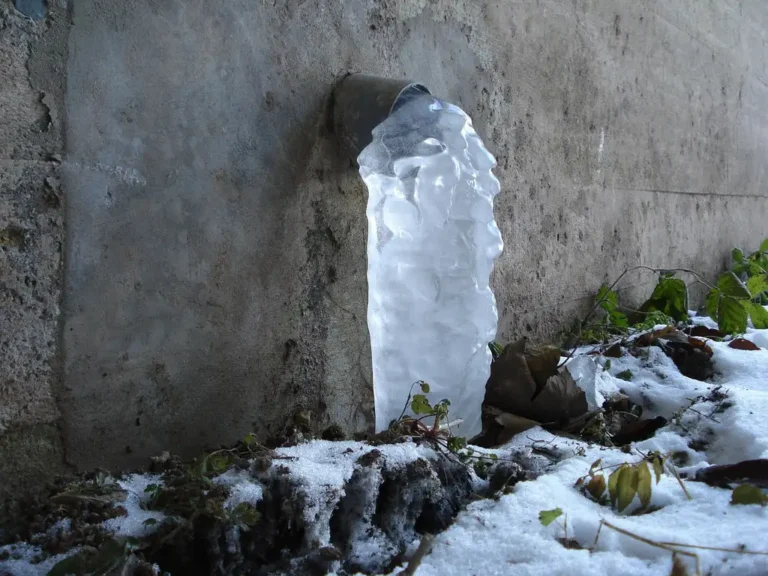
Do not shut the heat off completely when you leave for winter. Frozen pipes can happen fast during a cold snap, especially in spaces with exposed plumbing. A fully off system gives the house no buffer if outdoor temperatures fall suddenly or the wind drives heat out of the walls.
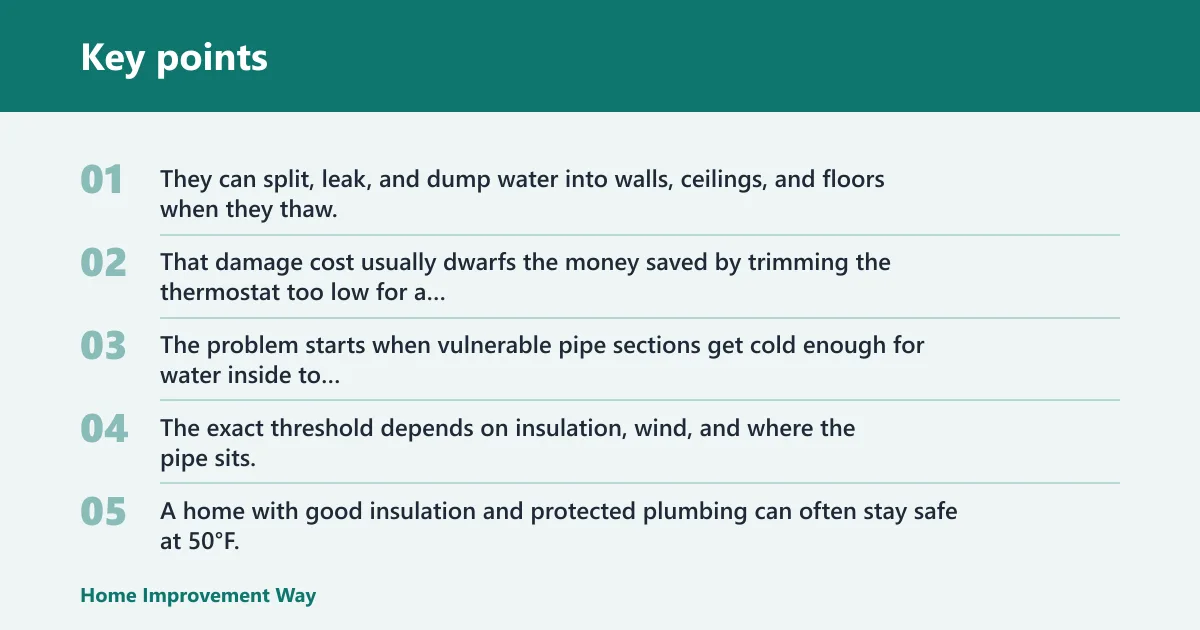
Frozen pipes are more than a nuisance. They can split, leak, and dump water into walls, ceilings, and floors when they thaw. That damage cost usually dwarfs the money saved by trimming the thermostat too low for a few days.
What is the freeze point for pipes?
The problem starts when vulnerable pipe sections get cold enough for water inside to freeze, expand, and stress the line. The exact threshold depends on insulation, wind, and where the pipe sits, which is why a room that feels fine can still hide a freezing pipe cavity.
How low is too low?
Do not chase the lowest possible setting. A home with good insulation and protected plumbing can often stay safe at 50°F, but the margin gets thin when walls, basements, or crawlspaces are colder than the main living area. Higher-risk homes need a warmer target.
Why unheated spaces cool fast
Basements, crawlspaces, and rooms far from the thermostat lose heat quickly because one sensor does not measure them well. Additions often fall behind the main house in temperature too. If those areas hold plumbing, the risk rises before the living room feels cold.
What temperature should you set it to?
For most empty homes in winter, a common rule of thumb is 50°F, 55°F, or 60°F depending on risk. Choose 50°F only when the climate is milder and the plumbing is well protected. Move to 55°F when the house is ordinary but the weather is colder. Use 60°F when the home has more freeze exposure.
When 50°F makes sense
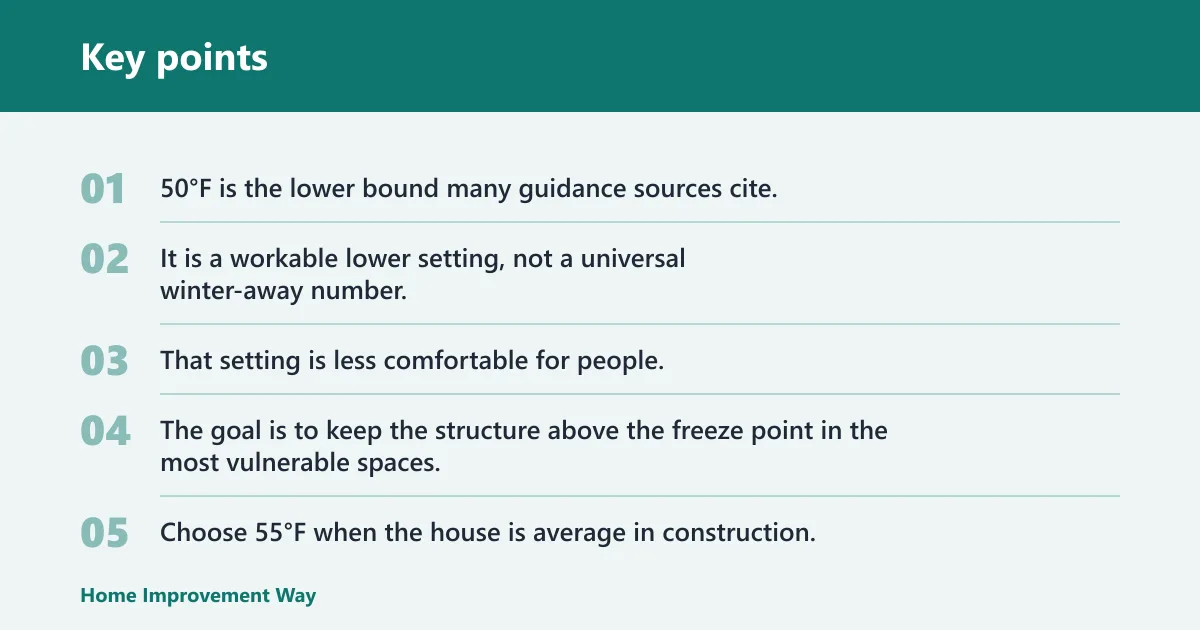
50°F is the lower bound many guidance sources cite, and it fits a short vacancy in a milder area, especially if the home is compact, insulated, and free of exposed piping. It is a workable lower setting, not a universal winter-away number.
That setting is less comfortable for people, but comfort is not the goal when nobody is home. The goal is to keep the structure above the freeze point in the most vulnerable spaces.
When 55°F is the safer choice
Choose 55°F when the house is average in construction, the pipes are not especially exposed, and the winter is reliably cold. This middle setting gives more buffer than 50°F without heating the house more than needed. It is often the better pick for a basement home or older windows.
That range is especially useful when you want a cushion against overnight drops without pushing the system to maintain full comfort heat. It is a practical compromise for many ordinary homes.
When 60°F is better
Use 60°F when the house is more exposed to freeze risk. That includes exterior-wall pipes, crawlspaces, drafty homes, and layouts where the thermostat is far from vulnerable plumbing. Higher exposure means the indoor reading can look safe while the pipe chase cools below it.
Say your thermostat sits in a warm hallway, but a bathroom sink backs onto an uninsulated outer wall. The hallway may hold 60°F while the pipe cavity drops below that. In that setup, the higher away setting gives more protection.
When 45°F may be acceptable
45°F is only a fit for mild winters and low-risk houses. It can save energy in the right conditions, but it is not a general winter-away target. If the forecast includes hard freezes, or if the home has exposed plumbing, move higher.
That lower number is for the rare home where the climate is gentle and the plumbing layout is forgiving. If you are unsure, do not use it.
How house layout changes the answer
House layout often decides whether 50°F is fine or too low. Home size, insulation level, and where pipes run matter as much as the thermostat number itself. A small, tight house warms more evenly than a big, leaky one with far-flung rooms.
Crawlspaces and basements
Unconditioned crawlspaces and basements raise the freeze risk because they can run colder than the rooms above them. If water lines pass through those areas, keep the setpoint higher, and do not rely on the thermostat reading alone.
Shut off exterior water if you can, drain outdoor faucets, and open the cabinet doors under kitchen and bathroom sinks. Opening those cabinets helps warm indoor air reach pipe runs under sinks and around plumbing chases.
Additions and exterior walls
Additions often lag behind the main house in temperature, especially if they have thin insulation or older windows. Pipes in those spaces can see more cold than the central thermostat suggests. That is one reason 60°F makes sense for riskier layouts.
Rooms far from the thermostat
A thermostat only measures one spot. If the hall near the thermostat stays warm while a spare room at the end of the house runs colder, the setpoint may look safe and still leave plumbing exposed. This is common in split layouts and larger homes.
Insulation and window losses
Heat loss through weak insulation, leaky windows, and drafty doors can pull indoor temperatures down during a long vacancy. The poorer the shell, the less forgiving a low away setpoint is for the plumbing. In that case, 55°F or 60°F is the better call.
How should smart thermostats be set?

Use vacation mode or an away schedule rather than guessing with a manual hold. Smart thermostats can keep the house at a steady winter away setpoint, then warm it before you return. Manual thermostats can do the same job, but you have to adjust them yourself.
Away mode or vacation schedule
Program the winter away target before you leave. A practical vacation range is 55°F to 60°F for many homes, with lower settings reserved for milder, lower-risk conditions. That is enough to protect many houses without heating them more than necessary.
For short trips, a lower hold may be enough. For longer absences, the schedule should stay steady so the house does not swing up and down with weather changes.
Manual versus smart control
A manual thermostat can work if you set it carefully before departure and leave it alone. A smart thermostat gives you more control if the weather changes, because you can check the indoor setpoint remotely and raise it if a cold snap arrives.
That extra control matters in homes with higher risk. If a forecast changes while you are away, a quick remote bump from 50°F to 55°F may be enough to protect the house.
Geofencing and remote access
Geofencing can switch the thermostat from home to away mode when everyone leaves a set area. Remote access helps if plans change and you need to warm the house earlier. Both features work best when the away temperature is already chosen with the house layout in mind.
Warm-up before you return
Warming the house before you get back gives the system time to recover without blasting heat all at once. It also helps the home feel drier and more stable when you walk in, especially after several days at a lower away setpoint.
Do not wait until you are at the door to raise the temperature. Start early enough that floors, walls, and hidden pipe chases have time to come back up.
Humidity control while away
Very low indoor temperatures can change how moisture behaves on cold surfaces. If the house stays too cool, condensation can form on windows, walls, and near vents when humidity and surface temperature meet at the wrong point. A modest, steady away setting helps reduce that risk.
When should you use exhaust fans sparingly?
Use bathroom and kitchen exhaust only as needed before leaving and after any moisture-heavy activity. Running them briefly helps clear excess damp air, but leaving them on for long periods can over-dry or over-cool the house, depending on the system and weather.
When is a humidistat helpful?
A humidistat is useful if your home tends to swing too dry or too damp in winter. It gives you a simple way to watch moisture levels while you are away, which can help prevent condensation in colder rooms and around windows.
Can a smart thermostat humidity alert help?
Yes, if your thermostat supports humidity alerts, they can be a useful early warning. A sudden moisture rise may point to poor ventilation, an unexpected leak, or a space cooling faster than planned. That is especially helpful in homes with basements or exterior-wall plumbing.
What if pets stay home?
If pets remain home, the setpoint usually needs to stay higher than it would for an empty house. The exact number depends on the animal, the trip length, and whether someone checks on the home. A short outing is different from leaving pets alone for several days.
Short trips with pets
For a few hours away, a small drop from the normal winter setting may be fine if the pet is healthy and the home stays within a comfortable indoor range. A modest setback can work for short absences, but skip it if the animal is sensitive to cold.
Multi-day absences with pets
For multi-day absences, keep the house warmer than a vacant home. The exact target depends on the pet, but 55°F to 60°F is a more cautious floor than 50°F when animals are still there. That is especially true if the pet spends time near tile floors or drafty rooms.
Dogs versus cats
Dogs and cats tolerate cold differently by breed, coat, age, and health. Short-haired animals, seniors, and pets with medical issues need more care. If a pet sitter is not staying overnight, use the higher end of the away range and do not let the house drift low.
A common first-timer mistake is to set 50°F because “the pipes are the concern” and forget that a cat or dog is living in the same air. The safer move is to raise the setpoint when the animal’s comfort becomes the limiting factor.
Frequently asked questions
What temperature to set thermostat when away in winter?
A practical answer is 50°F to 60°F, with 55°F often the middle ground. Use 50°F only in milder, lower-risk homes. Move to 60°F when pipes sit on exterior walls, the house is drafty, or the plumbing layout leaves hidden cold spots.
What temperature should I set my thermostat to in the winter?
When the house is occupied, winter comfort often sits much higher than away mode. When the house is empty, drop to the lower away range instead of using the same comfort setting all day. The right number depends on insulation, climate, and plumbing exposure.
What to set thermostat to in winter when away?
Set it based on risk, not habit. A low-risk home can use 50°F, many homes do well at 55°F, and higher-risk homes often need 60°F. Never turn the heat off completely, because frozen pipes can turn a cheap energy save into a costly repair.
What temperature should I set my thermostat to when on vacation in winter?
For vacation mode, many guidance sources place the range between 50°F and 65°F. The right choice depends on climate, pipe exposure, and whether pets or other occupants remain inside. A middle setting is often the best compromise for ordinary homes.
How low can I set the heat when I’m away in winter without freezing pipes?
Some guidance says not to go below 50°F because pipes may freeze. That does not mean 50°F is always safe. In homes with crawlspaces, exterior-wall plumbing, or long cold runs, 55°F or 60°F is the safer floor.
What temperature to set thermostat when away in winter uk
The same risk-based logic applies in the UK. A house with exposed pipes, a crawlspace, or poor insulation needs a higher winter away setting than a compact, well-sealed home. If you think in Celsius, the 50-60°F range works out to about 10-16°C.
Sponsored / affiliate links. As an Amazon Associate I earn from qualifying purchases. I may earn additional commission from eligible campaigns.