How to Winterize a Cabin’s Plumbing
Winterize a cabin’s plumbing by shutting off the water, draining the system, blowing out lines where appropriate, and adding non-toxic RV or propylene glycol antifreeze to traps and toilets before freezing weather hits. Skip it, and frozen pipe breaks, cracked fixtures, and a waterlogged cabin can turn a seasonal shutdown into a costly repair. This guide covers the full shutdown and spring restart, including well equipment, water heaters, fixtures, intermittent occupancy, and checklist steps for seasonal cabins and weekend-use properties. For general freeze-protection guidance, many utilities and extension programs recommend planning ahead for empty or partially heated buildings rather than relying on heat alone. U.S. Department of Energy and University of Minnesota Extension.
Why cabin plumbing needs a shutdown plan



A cabin is not a year-round house. It may sit empty for days or months, lose heat, lose power, or both. That makes a partial drain risky, because water can remain in low spots, valves, traps, appliance hoses, and the section between a well pump and the cabin. Seasonal-building guidance from extension services and manufacturers consistently treats full winterization as the safer choice when temperatures can drop below freezing and occupancy is uncertain. Penn State Extension, U.S. Department of Energy.
What freezes first is usually the water in exposed branches and low points, then the water left in fixture traps, toilet bowls, and appliance supply lines. A quick drain-down can miss those pockets. A full shutdown sequence lowers the chance that hidden water expands and cracks fittings after you leave.
Shutdown versus quick drain-down
Use a quick drain-down only when the cabin stays heated and occupied enough to keep plumbing above freezing. For an empty cabin in freezing weather, drain-down alone is often not enough. Add a blowout where the system layout and the manufacturer’s instructions allow it, then protect traps with RV or propylene glycol antifreeze. The EPA’s wastewater guidance also distinguishes non-toxic propylene glycol products from automotive antifreeze, which should not be used in plumbing systems. U.S. EPA septic guidance.
Suppose a cabin has a bathroom sink on an outside wall and a low-point drain under the kitchen. The sink can empty cleanly at the faucet, while the low point still holds water. That leftover pocket is enough to split a section of pipe if the heat goes off.
Cabin plumbing winterization checklist
| System/component | Winter shutdown step | Spring restart step | Verification: what failure looks like if missed |
|---|---|---|---|
| Main water shutoff valve | Close the main valve before draining. Confirm water is fully off at fixtures. | Open the main valve slowly and check every fixture for pressure and leaks. | Fixtures continue to run, pressure never drops, or a hidden branch stays pressurized. |
| Well pump and pressure tank | Turn off the well pump, relieve pressure, and drain supply lines from the pump to the cabin. | Restore power to the pump only after the system is closed and the lines are ready. | Pump short-cycles, pressure tank stays waterlogged, or water appears in low spots after shutdown. |
| Water heater | Shut off power or fuel, then drain the tank or follow the manufacturer’s winterizing steps. | Refill before energizing or relighting, then check the relief valve and drain valve for leaks. | Tank is energized dry, safety valves seep, or hot-water piping stays full of trapped water. |
| Toilets | Drain bowls and tanks as directed, then add non-toxic RV or propylene glycol antifreeze where needed. | Flush and refill with clean water until all antifreeze is gone and the fill valve works normally. | Bowl cracks, tank refills slowly, or pink liquid remains after restart. |
| Sink and shower traps | Drain standing water, then add the amount of non-toxic RV or propylene glycol antifreeze the fixture needs. | Run water long enough to flush out antifreeze and restore the trap seal. | Sewer gas odor, frozen trap body, or no water seal after the system is back on. |
| Faucets and fixture valves | Open hot and cold sides, starting with the highest fixture, to break vacuum and empty the lines. | Close all fixtures after water is back on and verify even flow at each outlet. | Air locks, sputtering faucets, or a branch that never drains fully. |
| Appliance supply lines | Disconnect and drain dishwasher, washing machine, and ice maker lines, plus any connected filters or softeners. | Reconnect, flush, and inspect hoses, fittings, and filters for leaks. | Leaking braided hose, cracked valve body, or a filter housing that splits on restart. |
| Exterior hose bibs and low-point drains | Drain hose bibs, open low-point drains, and empty the lowest parts of the system first. | Close drains, reinstall caps, and confirm the hose bibs do not weep under pressure. | Outdoor spigots drip, wall cavity moisture appears, or a buried branch refills and freezes. |
| Final verification | Check for pressure loss, remaining water in lines, and any place where antifreeze is still needed. | Flush all antifreeze out before normal use and recheck for hidden leaks after pressure returns. | A missed pocket leaks on thaw, a valve sticks, or a hidden crack shows up only after pressurizing. |
A common first-timer mistake is draining the kitchen sink and stopping there. The cabin still has water in the toilet, the appliance hose, and the trap under the tub. One missed branch is enough to leave a freeze point in place.
Should you shut off the main water first?
Close the main water shutoff valve before draining anything else, then confirm that water is off at the fixtures. That order matters because open faucets only relieve pressure if the supply has already been stopped.
Find the main shutoff
The main valve is usually where the cabin supply enters the building, near a meter, a crawlspace access, a utility room, or a well line connection. If you do not know its location, find it before the cold season starts. A shutdown day is the wrong time to search for it.
Open faucets in the right order
After the main is closed, open the highest fixture first, then work downward. Open both the hot and cold sides to break vacuum and let air in. Leave fixtures open long enough for the water to drain, then close them as needed once flow has stopped.
How do you handle a well system?
With a well system, winterizing often starts at the pump rather than at the sink. Turn off the well pump, relieve pressure, and drain the supply line from the pump to the cabin before relying on gravity drains or air to clear the rest of the system. Manufacturer and extension guidance for seasonal homes and well systems generally emphasizes draining the pump-side piping and pressure components before freeze-up. Penn State Extension, Minnesota Department of Health.
Turn off the well pump
Shut off the pump power at the proper disconnect or breaker, following the equipment manual. Do not leave the pump energized while the cabin plumbing is open to drain. A pump that cycles against an empty or partly drained system can add damage.
Relieve pressure safely
Open a faucet or drain point to release pressure after the pump is off. Then let the pressure tank and connected lines empty according to the system layout. If the tank or pump assembly has a drain, use it as directed by the manufacturer.
Drain lines from pump to cabin
Low spots between the pump and the cabin can hold water even after the fixtures are open. Drain those branches before moving on. If the line run is long or complicated, a controlled low-pressure air purge may help clear residual water, but do not exceed the system’s guidance. Where pressure instructions are not specified by the plumbing or appliance manufacturer, defer to the equipment manual rather than guessing.
How do you winterize the water heater?
Do not treat the water heater like a side task. Shut off power or fuel first, then drain the tank or follow the manufacturer’s winterizing steps. Use the relief valve and drain valve as directed so the tank empties without stressing the plumbing. Water-heater manufacturers generally require an empty or properly winterized tank before freezing conditions and before any restart after storage. Rheem, A. O. Smith.
Shut off power or fuel
Electric models need the correct electrical shutoff before draining. Fuel-fired models need the proper fuel shutdown and any steps the manual lists for winter storage. Do not assume a low setting is enough for a vacant cabin in an outage-prone area.
Drain the tank
Drain the tank fully if the manual allows it. Some models need additional steps for anode access, bypass valves, or internal draining. Check the manufacturer’s instructions for your model instead of guessing, because water left in the tank can freeze and damage the vessel.
Use the relief and drain valves as directed
The relief valve helps break vacuum and reduce pressure during draining. The drain valve empties the tank. If either valve sticks, stop and follow the manual rather than forcing it. Replacement is cheaper than a cracked tank or stripped fitting.
What needs antifreeze and what does not?
Use non-toxic RV or propylene glycol antifreeze in plumbing traps and toilet bowls where needed. Do not use automotive antifreeze anywhere in a cabin plumbing system. It is not the right product for potable plumbing, and it should not be left where someone may later use the water system. Government and manufacturer guidance consistently points to non-toxic RV/marine formulations for seasonal plumbing winterization. National Park Service, Camco.
Toilets and toilet bowls
After draining, add the recommended amount of non-toxic antifreeze to the bowl and any trap area the fixture retains. The goal is to keep a freeze-prone water seal from turning solid. If the toilet has a tank, follow the manufacturer’s winterizing steps for that model too.
Sink and shower traps
Each P-trap holds a water barrier that blocks sewer gas. That same water can freeze. After draining, add RV or propylene glycol antifreeze to each trap and any shower base trap that still holds water. Do not pour automotive antifreeze into the trap.
Avoid automotive antifreeze
Automotive antifreeze belongs in vehicles, not plumbing. Use only a product labeled for RV or marine plumbing use, and follow the label for trap or fixture use. If the cabin has a septic system, use only what the system and the product label allow.
Appliance and exterior line shutdown
Appliance supply lines are common freeze points because they hold water in small-bore tubing and valves. Disconnect and drain ice maker lines, dishwasher supplies, and washing machine hoses if present. Then handle exterior hose bibs and low-point drains before calling the cabin winter-ready.
Dishwasher and washing machine lines
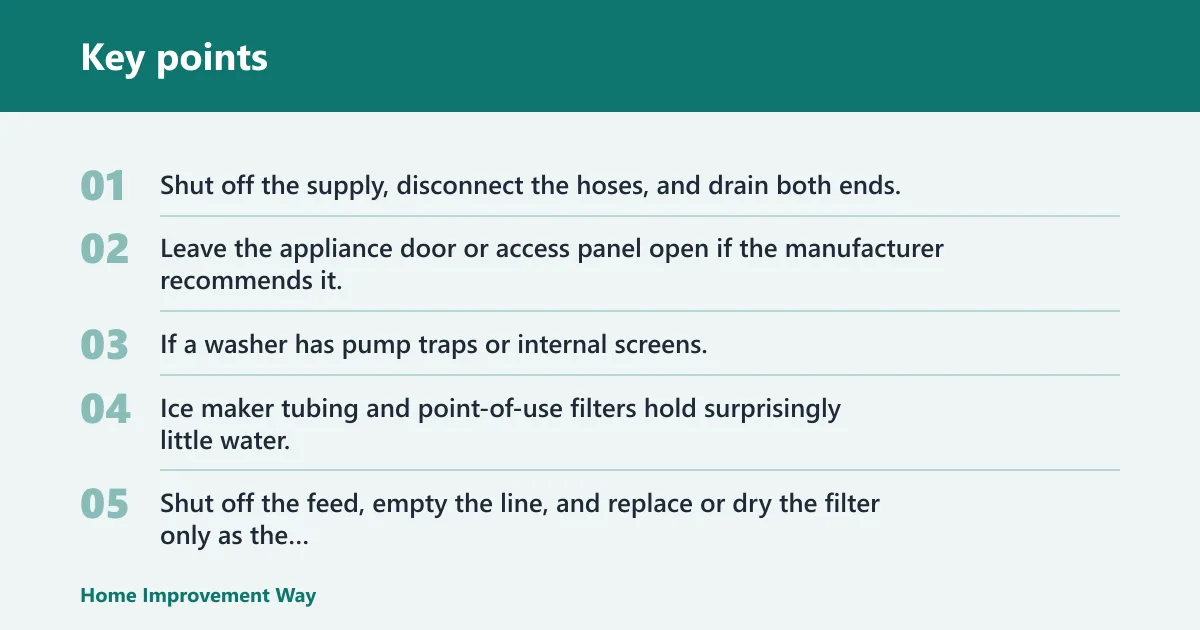
Shut off the supply, disconnect the hoses, and drain both ends. Leave the appliance door or access panel open if the manufacturer recommends it. If a washer has pump traps or internal screens, follow the owner’s manual for winter storage so water does not sit inside the unit.
Ice maker and filter lines
Ice maker tubing and point-of-use filters hold surprisingly little water, which is why they freeze so easily. Shut off the feed, empty the line, and replace or dry the filter only as the manufacturer allows. If a softener is installed, winterize it according to its manual before temperatures drop.
Hose bibs and low-point drains
Disconnect hoses, open exterior bibs, and drain the lowest points in the system first. Identify the low-point drains before shutdown day so you know where the trapped water can escape. If the plumbing has a branch with no drain, that line may need a controlled air purge or a different winter plan.
Blowing out lines with air
A compressed-air blowout can clear residual water, but only if the cabin plumbing and the fixture manuals allow it. Use a regulator, and set pressure only within the equipment manufacturer’s instructions; do not rely on vague “low pressure” estimates. Isolate or remove filters, cartridges, and any appliance components that should not be pressurized. Open fixtures by zone so the air path is clear through one branch at a time, and never force air into a closed system. Overpressure can damage valves, traps, and fixtures faster than freezing can.
Picture a cabin with a bathroom on one end and a kitchen on the other. The kitchen drain may empty cleanly, but a branch to the laundry closet still holds water behind a closed valve. A controlled air purge can help, yet it should follow the plumbing layout and the manual, not guesswork.
Intermittent occupancy and weekend-use cabins
Weekend cabins need a different plan than fully seasonal buildings because the plumbing may cycle between warm and cold conditions. The right procedure depends on whether the cabin stays heated, how long the gaps are, and whether outages are common. In all cases, if the cabin will be unoccupied during freezing weather, full winterization is safer than assuming you will get back before the pipes chill through.
Heated between visits
If the cabin stays reliably heated between visits, keep the thermostat at a conservative setback that still protects pipes. A common freeze-protection target is about 55°F, which many manufacturers and utilities use as a practical minimum for occupied or intermittently occupied spaces, though exact guidance varies by building and equipment. ENERGY STAR winter guidance, U.S. Department of Energy. Leave cabinet doors open under sinks, keep warm-air paths unobstructed, and inspect exterior hose bibs and vulnerable walls on each visit.
Heat off but short gaps
If the heat will be off for only a short gap, do not assume that means safe pipes. For a gap measured in hours or a very brief overnight stay, close the main if the cabin will be unattended, drain exposed fixtures if the forecast is severe, and reopen only when you are back on site. If the forecast drops hard or power reliability is uncertain, use the same shutdown sequence you would use for a longer absence.
Outage-prone remote cabins
For remote cabins where outages are common, the safest approach is to winterize as if heat could fail while you are away. That means thermostat setback alone is not enough: drain vulnerable branches, winterize the heater and well components, protect traps with RV antifreeze, and confirm that a power loss will not leave full water lines in freeze-prone spaces. Where a backup generator exists, do not treat it as a substitute for a proper winter shutdown unless it is sized and installed to keep plumbing above freezing for the full outage duration.
What temperature should a cabin be kept at to prevent frozen pipes?
The safe temperature depends on the cabin, its insulation, and the outage risk. For an occupied cabin, set the thermostat to the lowest temperature that keeps plumbing above freezing and allows the system to stay warm. For an unoccupied cabin, heat alone should not be the only freeze plan. Many manufacturers and utilities treat 55°F as a practical setback target for freeze protection in occupied homes, but a seasonal cabin can still freeze at that setting if pipes run through crawlspaces, outside walls, or unheated spaces. ENERGY STAR, U.S. Department of Energy.
Cabinet doors can be left open so warmer air reaches sinks and pipes, and interior airflow helps the space stay even. Insulate exposed piping where possible, and use heat tape or heat cable only where allowed by the product instructions and with clearance from combustibles. Heat tape is not universal: manufacturer instructions should govern installation, insulation coverage, and whether it is permitted on the specific pipe material. InterNACHI heat tape safety guidance, ENERGY STAR.
How do you winterize cabin plumbing?
Winterize cabin plumbing by shutting off the water, draining the system in sequence, clearing low spots, protecting traps, and handling the well, water heater, and appliances before freezing weather arrives. A cabin needs more than a quick drain because it may lose power or heat while empty. On restart, re-pressurize slowly, inspect hose bibs first, and check for leaks at every valve, drain, and appliance connection before normal use.
Spring restart
Restore water slowly, then check for pressure loss, hidden leaks, and any section that still holds water. Flush antifreeze out before normal use. Open each faucet, run the toilets, and verify that the water heater, traps, appliances, and exterior lines all return to normal operation. Repressurize in stages: close drains, confirm all winter plugs and caps are reinstalled, open the main slowly, then inspect exterior hose bibs, visible piping, and the pressure tank for seepage before bringing the water heater back online.
Frequently asked questions
How do you winterize cottage plumbing?
Winterize cottage plumbing the same way you would a seasonal cabin: close the main, drain the lines, empty the water heater, protect traps with non-toxic antifreeze, and handle any well equipment or appliance lines. The key difference is occupancy. If the cottage may sit empty, rely on full shutdown, not heat alone.
How do you winterize cabin pipes?
Start at the highest fixtures, open both hot and cold sides, then move downward through the cabin. Drain low-point branches, exterior lines, and appliance hoses after the main water is off. If water remains in long runs or dead-end branches, a low-pressure blowout may be needed.
Do you need to drain the water heater before winterizing a cabin?
Yes, in most seasonal-cabin shutdowns you should drain the water heater or follow the manufacturer’s winterizing steps. Shut off power or fuel first, then use the drain and relief valves as directed. A tank that stays full can freeze, split, or refill with stale water before spring.
Can you leave antifreeze in cabin drains all winter?
Yes, non-toxic RV or propylene glycol antifreeze is commonly left in traps and toilet bowls over winter because it helps protect the water seal from freezing or evaporating away. Do not use automotive antifreeze. Flush the system in spring until the water runs clear and no antifreeze remains.
How do you winterize house plumbing if you only visit on weekends?
Weekend use changes the plan only if you can keep the cabin heated between visits. If the place goes cold, treat it like a seasonal cabin: shut off the main when you leave, drain vulnerable lines, and protect traps and appliances. A partial drain is often not enough for long gaps. If the cabin is heated between visits, use a conservative setback, keep warm air moving to plumbing, and inspect exterior hose bibs and low spots each time you return.
Sponsored / affiliate links. As an Amazon Associate I earn from qualifying purchases. I may earn additional commission from eligible campaigns.