Signs Your Pipes Are About to Freeze
A pipe is likely freezing when water pressure drops, faucets slow to a trickle, or a section feels abnormally cold; if flow stops in subfreezing weather, treat it as burst-risk and act at once. Waiting can leave you with a burst line, soaked walls, and repair bills that climb fast. This guide shows the early signs, how to tell a partial freeze from an urgent situation, and what to do next.
How do you know a pipe is freezing?
A freezing pipe usually gives warning signs before it bursts. The first practical clue is reduced water flow from one faucet or several fixtures, followed by frost on exposed pipe, strange noises, or a pipe section that feels much colder than the rest. If flow stops during subfreezing weather, treat it as an emergency.
Frozen pipes are not always fully blocked at first. A partial freeze can let a little water through while ice keeps expanding inside the line, and that pressure can crack or burst the pipe later. That is why the first small change in flow matters.
Freeze-risk checklist
| Warning sign | What it usually means | Urgency level | Immediate next step |
|---|---|---|---|
| Faucet slows to a trickle or stops | Ice may be blocking part or all of the pipe | Act now | Open the faucet slightly and start gentle thawing on the exposed run |
| One fixture loses flow, but others still work | Freeze may be isolated to one branch or room | Act now | Check nearby exposed pipe and watch whether the slowdown spreads |
| Multiple fixtures lose pressure at once | The freeze may be on a main supply run | Call a plumber immediately | Keep water off if flow has stopped and get help fast |
| Visible frost on exposed pipes | The pipe is already in a cold danger zone | Act now | Warm the area gently and inspect the full exposed length |
| Banging, clanking, gurgling, whistling, or squealing | Ice, pressure changes, or restricted flow may be present | Act now | Check flow and nearby pipe sections, then thaw carefully |
| Drain odor or sewage smell during a cold snap | A frozen drain pipe or blocked airflow may be trapping gases | Call a plumber immediately | Limit use of that drain and get a plumber involved |
| Bulging, cracking, or a pipe that looks misshapen | Pressure is high and the pipe may be near failure | Call a plumber immediately | Stop using the line and seek urgent repair |
Suppose the kitchen sink on an exterior wall runs normally for a minute, then drops to a weak stream while the bathroom sink still works. That pattern usually points to a partial freeze in one branch, not a whole-house outage. It still needs attention right away.
Where pipes freeze first
Unheated, exposed pipe runs are the first places to worry about. Exterior walls, crawl spaces, attics, basements, garages, and under-sink cabinets often stay colder than the rest of the home, so they can reach freezing risk before the living space feels especially cold.
Look for pipe sections near drafty framing, vents, hose bibs, and corners where insulation is thin or missing. A pipe may freeze in one short run while the rest of the system stays usable.
What do pipe noises and drain smells mean?
Noise and odor are often later clues than low flow, but they matter. Banging or clanking can signal ice forming inside a pipe, while whistling, squealing, or gurgling can point to pressure changes and restricted flow. Drain odors point to a frozen drain line or blocked airflow, especially during a cold snap.
Banging and clanking
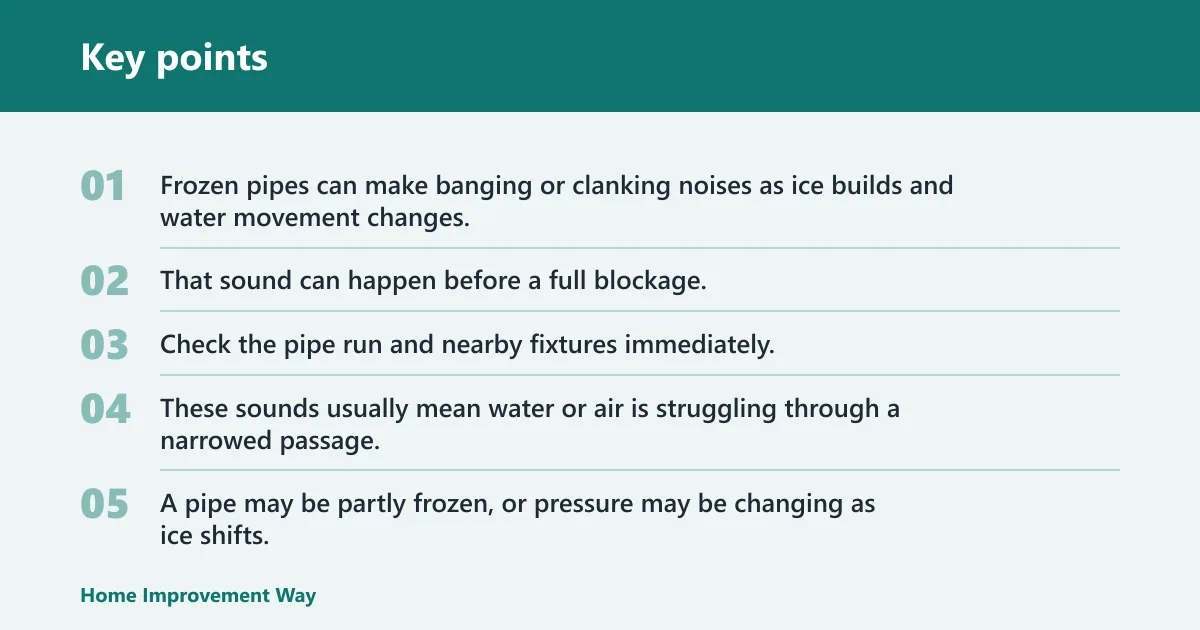
Frozen pipes can make banging or clanking noises as ice builds and water movement changes. That sound can happen before a full blockage, so do not wait for the faucet to stop completely. Check the pipe run and nearby fixtures immediately.
Gurgling, whistling, and squealing
These sounds usually mean water or air is struggling through a narrowed passage. A pipe may be partly frozen, or pressure may be changing as ice shifts. If the sound appears with reduced flow, treat it as an active freeze problem.
A common first-timer mistake is to assume a noisy pipe is only “settling” in the cold. If the sound appears during freezing weather and flow changes at the same time, treat the line as threatened.
Sewage smell during cold snaps
A sewage smell or other foul odor from a drain can mean a frozen drain pipe or blocked airflow. Ice can keep gases from moving normally through the drain system, and the smell becomes more noticeable when temperatures drop. That is a plumbing problem, not just a cleaning issue.
When odors suggest a frozen drain line
If the odor appears alongside slow drainage or gurgling, the drain line may be frozen or restricted. That is especially concerning in exposed runs under sinks, in basements, or in other unheated areas.
How cold is too cold for pipes?
Pipes typically start freezing when outdoor temperatures drop to 20°F or below, but that is a common warning point, not a hard line. Wind chill can speed heat loss and raise freeze risk, and pipes in unheated spaces can freeze sooner if insulation is poor or the cold lasts for hours.
Why 20°F is a common warning point
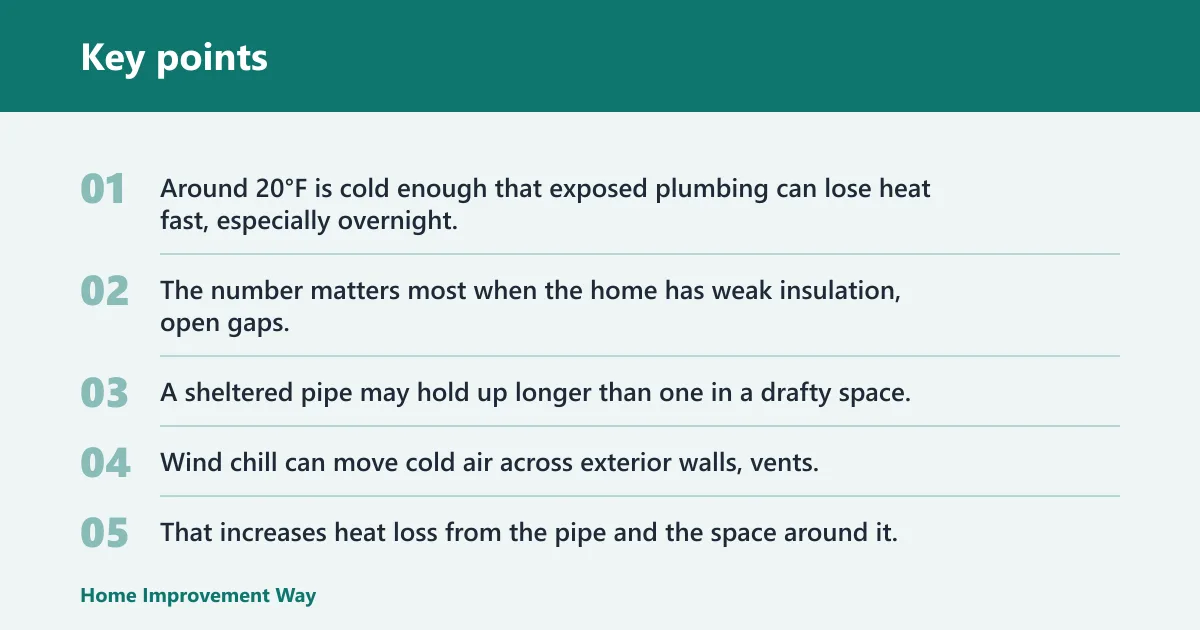
Around 20°F is cold enough that exposed plumbing can lose heat fast, especially overnight. The number matters most when the home has weak insulation, open gaps, or pipes near outside air. A sheltered pipe may hold up longer than one in a drafty space.
How wind chill and exposure raise risk
Wind chill can move cold air across exterior walls, vents, and openings that surround a pipe. That increases heat loss from the pipe and the space around it. A breezy garage or crawl space can be riskier than a calm but equally cold area.
Why duration matters as much as temperature
A short dip into the teens may not freeze a protected pipe, but a long stretch near 20°F can. The longer the cold lasts, the more time ice has to form and spread. That is why an overnight freeze can be more serious than a brief afternoon chill.
What should you do right now?
Start with the affected faucet. Open it slightly so pressure can relieve while you work on the pipe, then apply gentle heat to the cold section and nearby exposed runs. If water stops completely, the pipe bulges, or the problem spreads to more fixtures, call a plumber immediately.
- Open the affected faucet slightly.
- Find the coldest exposed pipe run.
- Check adjacent areas in basements, attics, garages, crawl spaces, and under sinks.
- Apply gentle heat to the pipe area.
- Watch for flow to return, bulging, cracking, or worsening noises.
- Call a plumber now if the line stops flowing or looks damaged.
What to do first if the freeze looks active
If the pipe is still flowing weakly, leave the faucet open a little and focus heat on the exposed section near the coldest spot. If more than one fixture slows at the same time, or if the pipe looks swollen, skip the waiting and get a plumber involved right away.
How to thaw a freezing pipe safely
Use slow, gentle heat. Good options include a hair dryer, a heating pad, warm towels, or a space heater placed nearby rather than against the pipe. Move slowly along the frozen section so the thaw is even and the pressure can release.
Hair dryer
A hair dryer works well on exposed pipe because it lets you control the heat. Keep it moving and hold it at a safe distance. Do not blast one spot for too long.
Heating pad or warm towels
A heating pad or warm towels can warm a small section without direct flame. Replace towels as they cool. This method is useful under sinks and around short exposed runs.
Space heater nearby, not against the pipe
A space heater can warm the surrounding air in a basement, garage, or utility room. Keep it nearby, not touching the pipe, and leave clearance around the unit. The goal is to warm the area, not cook one spot.
What not to use
Never use an open flame near frozen pipes. Do not use a torch, lighter, or other harsh heat source. Those methods can damage the pipe, ignite nearby materials, and turn a freezing problem into a fire risk.
Where pipes freeze first
Exterior walls, basements, crawl spaces, attics, garages, and under-sink cabinets deserve the most attention during a cold snap. Those spots are exposed to outside air, drafty framing, or weak insulation, so they often freeze before the rest of the home shows trouble.
Check the pipe path, not only the fixture. A sink may be in a warm room while the supply line behind the cabinet passes through a much colder cavity.
Prevention for future cold snaps
Once the immediate problem is handled, insulation and draft control matter. Insulate exposed lines, seal air leaks near pipe runs, and keep vulnerable areas warmer when a freeze is forecast. Letting faucets drip slightly during a hard freeze can also help reduce pressure on the line.
These steps do not replace a repair if a pipe is already frozen or damaged. They are for reducing future risk, especially in exterior walls and unheated spaces.
Frequently asked questions
How do I know if my pipes are about to freeze?
The clearest early signs are a drop in water flow, a faucet that begins to trickle, or frost on exposed pipe. If the affected run sits in a basement, attic, garage, crawl space, or exterior wall and temperatures are near 20°F, treat it as a freeze warning.
What are the first signs your pipes are starting to freeze?
Reduced water flow is often the earliest practical symptom. One fixture may slow first, or several fixtures may lose pressure at once. You may also notice a cold pipe section, faint banging or clanking, or frost on exposed plumbing before flow stops completely.
How long does it take for pipes to freeze in cold weather?
There is no exact timer. A pipe can freeze faster in a drafty, unheated space with wind exposure and thin insulation, especially during sustained cold. A better rule is to watch the warning signs, not wait for a set number of minutes.
Why is my water pressure suddenly low in winter?
Low winter water pressure can mean ice is narrowing the pipe and restricting flow. It may affect one fixture or the whole line. If the pressure drop appears during freezing weather, check exposed pipe runs right away and open the faucet slightly while you inspect.
Is frost on a pipe a warning sign or already a freeze?
Frost on exposed pipe is a warning sign that the line is in a cold danger zone and may already be freezing. It does not always mean the pipe is fully blocked, but it does mean the risk is high enough to act now.
What noises do frozen pipes make before bursting?
Banging, clanking, gurgling, whistling, or squealing noises can sometimes indicate frozen pipes. Those sounds can come from ice forming, pressure changes, or restricted flow. If the noise appears with low water or no water, treat the situation as urgent.
Why do drains smell when pipes freeze?
A frozen drain pipe can block sewage gases and cause a noticeable smell. The odor often shows up during a cold snap and may come with slow drainage or gurgling. That pattern points to a drain-line problem, not just a dirty sink trap.
What should I do first if I think a pipe is freezing?
Open the affected faucet slightly, then look for the coldest exposed pipe section and apply gentle heat. Check nearby runs in basements, attics, garages, crawl spaces, and under sinks. If flow stops or the pipe bulges, call a plumber immediately.
How do you know how to tell if your pipes are about to freeze?
Watch for the combination of cold exposure, reduced flow, frost, noises, or odor. A single cold pipe is not proof of a freeze. A cold pipe plus trickling water, especially in an unheated space near 20°F, is a stronger warning.
How long does it take for pipes to freeze?
It depends on temperature, wind, insulation, and how long the cold lasts. Pipes in unheated spaces can freeze much sooner than protected indoor runs. Instead of guessing by the clock, use the warning signs and act as soon as water flow changes.
Sponsored / affiliate links. As an Amazon Associate I earn from qualifying purchases. I may earn additional commission from eligible campaigns.