Faucet Squeaks When You Turn It on? Find the Friction Point
Trace the squeak to the exact moving contact point by turning the handle slowly, then stopping at the first noise. One friction point usually points to a worn washer, cartridge seal, or stem O-ring. Guessing wrong can waste parts, leave the noise, and let a small wear spot become a leaking valve. This guide shows how to isolate the squeak before you clean, lubricate, adjust, or replace anything.
A squeak often comes from dry friction at the handle interface, stem threads, packing nut, cartridge seals, or a bonnet nut that has been tightened too far. It can also come from a spout aerator that is partly blocked, which makes the noise seem like it is coming from the valve even when the handle parts are fine.
What the squeak usually means


Start by separating handle friction from internal valve friction. If the noise starts before water flow changes, the problem is usually in the handle, stem, or retaining hardware. If the noise begins only after the handle starts moving the valve open, the stem, cartridge, or seals are more likely.
Faucet type matters. Compression faucets use a stem and washer arrangement. Single-handle cartridge faucets use a cartridge that moves and seals as one part, and the exact internal parts can vary by brand and valve design. Ball and ceramic-disk faucets use different sliding and sealing surfaces, so the friction point is not the same as a compression stem.
Friction point finder
| Symptom | Likely source | Quick test | Safe action | Replace-if outcome |
|---|---|---|---|---|
| Squeak starts when your fingers touch the handle cap | Handle cap or trim rubbing on the handle | Move the handle with the cap removed or loosened if the model allows it | Clean the contact surfaces and reassemble to the original fit | The cap is cracked, warped, or still binds after cleaning |
| Squeak appears only when the set screw turns | Set screw or handle hub | Test handle play with the screw snug, then slightly backed off to the maker’s limit | Clean threads and tighten only to the original snugness | The screw is stripped or the handle no longer clamps securely |
| Squeak rises as the handle turns through its travel | Stem threads | Turn slowly and listen for the point where resistance climbs | Clean scale, then use a light coat of compatible plumber’s silicone grease if the design calls for it | Threads are pitted, rounded, or still bind after cleaning and grease |
| Squeak is strongest at the base of the stem | Packing nut | Check whether the nut is overtightened or corroded | Back it off slightly only if the faucet still seals, then retest | The stem drips, the nut is seized, or the adjustment does not stop the bind |
| Squeak happens with turning and the valve feels gritty | Cartridge seals | Remove the handle, then move the cartridge only as the model allows | Clean and lubricate only compatible seal surfaces | Lubrication does not stop binding or the seals are damaged |
| Squeak or stiffness appears after the bonnet area is disturbed | Bonnet nut | Compare the feel before and after slight re-tightening | Reassemble to the original snugness with an adjustable wrench | The nut is corroded, the stem binds, or the faucet still squeaks when snug |
| Noise seems to come from the spout, not the handle | Aerator | Run water and listen at the outlet after the handle test | Remove and clean mineral scale and debris from the screen | Flow stays uneven or the aerator is damaged |
Where is the squeak coming from?
The best first move is to isolate the sound before removing parts. Turn the handle slowly, stop at the first squeak, and note where your hand feels vibration: cap, screw, handle hub, base, or spout. That point usually narrows the repair to one friction surface instead of the whole faucet.
Say your single-handle kitchen faucet squeaks only at the first inch of travel, then turns smoothly. That usually points to handle hardware or the first movement of the cartridge, not the aerator. If the same faucet squeaks only when the spout is running and the handle feels smooth, the aerator is the better suspect.
Keep the faucet type in view. Compression faucets often squeak at stem threads, packing areas, or worn washers. Cartridge faucets often squeak from seal drag or a dry sliding surface inside the cartridge body. Ball and ceramic-disk faucets can squeak when mineral scale or worn internal parts create rough movement.
Hard water mineral scale can make the noise return after a temporary fix. It raises friction on stems, cartridges, and aerators, and high-mineral water speeds up friction wear on inner stem O-rings.
How do you inspect the right part?
Turn off the local shutoff valves under the sink, or close the main water supply if the fixture has no local valves. Confirm that the faucet will not run before you touch the handle or stem. For RV fixtures, shut off the 12V water pump, then disconnect city water pressure before servicing.
Use the faucet manual for the model-specific removal steps. Exact parts vary by brand and valve design, and many faucets use retaining clips, collars, bonnet nuts, or other hardware that must come off before a stem or cartridge can move. The handle retaining screw is often hidden under a hot/cold indicator cap.
- Close the local shutoff valves or the main supply.
- Test the handle again to confirm the squeak stops with water isolated.
- Remove the hot/cold indicator cap if your faucet uses one.
- Loosen the set screw or other handle retainer.
- Check for a retaining clip, collar, or bonnet nut before trying to remove the stem or cartridge.
- Inspect O-rings, visible seals, stem threads, and any corrosion or scale.
A common first-timer mistake is pulling on the stem or cartridge before checking for retaining hardware. That can bend parts, scar the seat, or hide the real friction point behind a bigger problem.
What should you clean or lubricate?
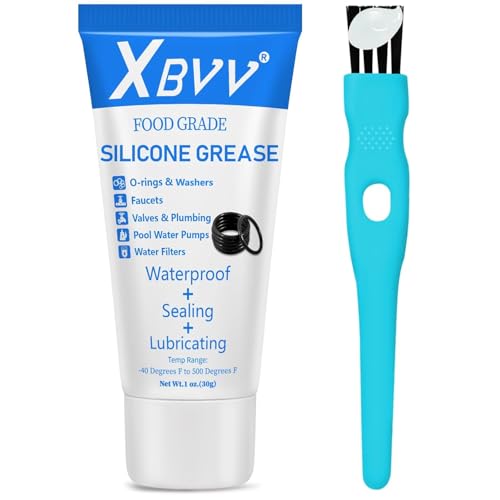
Use plumber’s silicone grease on compatible rubber faucet parts, especially O-rings and seals. A common safe choice here is food-grade, waterproof plumber’s silicone grease, applied lightly. Do not pack it heavily, and do not use a grease that the faucet maker does not approve for rubber parts.
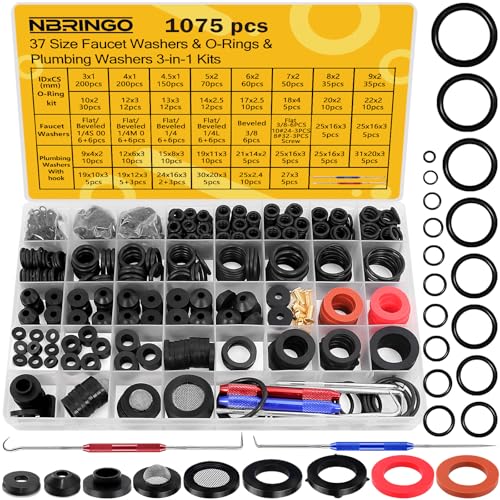
Use grease only where the design calls for it. O-rings are a common friction and wear point, and they should be checked for cracking, flattening, or dryness before you apply anything. Stem threads can also need a light film on some repairable faucets, but many threads are not the real friction point, so do not grease them by default.
Clean hard water mineral scale from moving parts if you see white buildup, roughness, or a gritty feel. Dirt, rust, and old grease can increase friction inside moving parts, so a clean surface matters as much as lubricant. Clean the aerator too if flow is restricted, but treat that as a separate check rather than the main fix for a handle squeak.
Apply only enough grease to leave a thin coat. If a part needs a heavy layer to move, the part may already be worn. Overpacking grease can also trap debris and make diagnosis harder the next time the faucet binds.
Suppose a bathroom faucet turns stiff and squeaks every morning, but the handle smooths out after a few turns. That pattern often fits dried lubricant or light scale on the stem or cartridge seals. If the squeak returns the next day, the buildup is probably still present, or the part is worn enough that cleaning only gives a temporary fix.
Is a squeaky faucet a sign the cartridge is bad?
Not always. A squeaky faucet can mean the cartridge is dry, but it can also mean the handle, stem threads, packing nut, or bonnet nut is creating the noise instead. A cartridge is more suspect when the handle feels gritty, stiff through most of its travel, or the squeak survives cleaning and a proper light lubrication.
Look for signs of internal wear beyond dryness. If the faucet drips, binds, grinds, or the seals are cracked or flattened, replacement is usually the better call than another grease cycle. On many single-handle faucets, a cartridge replacement is the right fix when lubrication does not stop the binding.
Do not assume every squeak means a full replacement. If the sound is isolated to a handle cap, set screw, or bonnet area, the fix may be as small as cleaning, adjusting, or reassembling to the original snugness.
Repair by faucet type
Compression faucets
Compression faucets commonly squeak at the stem, washer, packing area, or bonnet nut. Remove the handle hardware first, then the bonnet nut with an adjustable wrench if the model uses one. Inspect the stem threads, O-rings, and washer seat for wear, scale, or corrosion, then clean and lightly grease only the parts that the design calls for.
If the stem is pitted, the threads are rough, or the faucet still binds after cleaning, replace the stem or the worn internal parts rather than forcing the assembly back together.
Single-handle cartridge faucets
Cartridge faucets use a brand-specific control part that can include internal seals and sliding surfaces. If the handle squeak comes from the cartridge and the noise remains after light lubrication, the cartridge may be worn out. Stop at the retaining clip, collar, or bonnet hardware before trying to remove the cartridge, because the removal method varies by model.
Replace the cartridge when the handle still sticks, squeaks, or feels gritty after cleaning and compatible grease. That is the point where lubrication has failed as a fix.
Ball and ceramic-disk faucets
Ball and ceramic-disk faucets can squeak when scale or worn seals creates drag inside the valve body. The surface contact is different from a compression stem, so the fix depends on the exact valve design. Clean visible mineral buildup, inspect seals, and confirm that the squeak is not actually coming from the handle hardware or aerator.
If the motion remains rough after cleaning and correct reassembly, check the maker’s repair parts for that valve type. These faucets often need model-specific parts rather than a generic stem fix.
When does a squeak mean I need a plumber?
Call a plumber when the faucet squeaks and also leaks, grinds, or will not turn without force. A seized bonnet nut, damaged cartridge, stripped stem, or corroded shutoff valve can turn a small repair into a broken fitting. If you cannot isolate the squeak to one part, a pro can separate the valve body issue from the handle hardware.
Use extra caution if the shutoff valves are stuck or will not close fully. You should not proceed with disassembly until the water is isolated, and a failed shutoff changes the repair plan. If the faucet is a brand-specific cartridge model and the removal path is unclear, stopping early is better than cracking the body.
Frequently asked questions
Why does my faucet squeak when I turn it on?
A faucet squeaks when two moving parts rub with too much friction. The usual sources are a dry stem, worn O-rings, a tight packing nut, cartridge seals, or a handle part rubbing the trim. Mineral scale and old grease can make the noise worse, especially in homes with hard water.
What should I lubricate on a stiff faucet handle?
Lubricate only compatible O-rings, seals, and any manufacturer-approved sliding contact points. Use food-grade, waterproof plumber’s silicone grease, and apply it lightly. Do not pack it heavily into the faucet body, and do not grease a thread or surface unless the faucet design calls for that contact point.
Can mineral buildup make a faucet squeak?
Yes. Hard water mineral scale raises friction on stems, cartridges, and aerators, and high-mineral water speeds up friction wear on inner stem O-rings. A faucet may quiet down after cleaning, then squeak again if the scale remains or the part is already worn.
Should I replace the stem or just clean and grease it?
Clean and grease it first if the stem is intact and the noise looks like dryness or light scale. Replace the stem when the threads are pitted, the O-rings are cracked or flattened, or the faucet still binds after cleaning. If the stem leaks while turning, replacement is usually the safer choice.
When does a squeaky faucet mean I need a plumber?
Bring in a plumber if the squeak comes with leaking, grinding, a seized bonnet nut, or shutoff valves that will not close. Those signs suggest more than simple dryness. If the faucet brand or valve design makes cartridge removal unclear, a pro can avoid breaking a part that still had repair value.
Sponsored / affiliate links. As an Amazon Associate I earn from qualifying purchases. I may earn additional commission from eligible campaigns.
 Water Flow Control Shut Off Valve with Brass Adjustable Hand Level Water Pressure Regulator for Hand Held Shower Head & Bidet Sprayer, Brushed Nickel Water Saver G1/2
 Faucet Hose Connector, 39 Inch Length Faucet Water Supply Lines 2 PCS Braided Stainless Steel 3/8" Comp x 1/2" Comp for Bathroom Kitchen Sink Faucet (1 Pair)