Can You Use a Hair Dryer to Thaw Frozen Pipes?
Use a hair dryer only on exposed, accessible pipes, and keep it moving on low or medium heat; stop if the pipe stays cold, is hidden, or shows damage. Plumber-reviewed safety guidance from the American Red Cross, FEMA, and extension/plumbing sources is consistent on the key steps: shut off the water, open a faucet, thaw from the faucet end back toward the supply, and avoid torches near combustible materials. If a frozen pipe splits, water can soak a wall, cabinet, or ceiling fast.
This guide is part of our Frozen Pipes: How to Prevent, Thaw and Fix Them series.
What to know first

A hair dryer can thaw frozen pipes, but it is slow. It works best on a short, visible section where you can reach the full pipe surface. Start with safety steps first: shut off the main water supply, open the nearest faucet, then warm the pipe gently from the faucet end back toward the water source. That direction is the standard safety approach in Red Cross, FEMA, and extension guidance.
Ice blocks flow because frozen water expands. Your goal is to melt the plug without overheating the pipe or the materials around it. That is why a hair dryer is a gentler choice than a heat gun, and why a propane torch is a poor fit near wood framing, insulation, or other combustible materials.
What you’ll need
- Hair dryer with low and medium heat settings
- Towel or drop cloth to catch drips
- Access to the main water shutoff
- Clear path to the nearest faucet
- Flashlight for checking the frozen section
- Dry cloth for wiping melted water
Can you use a hair dryer to thaw frozen pipes?
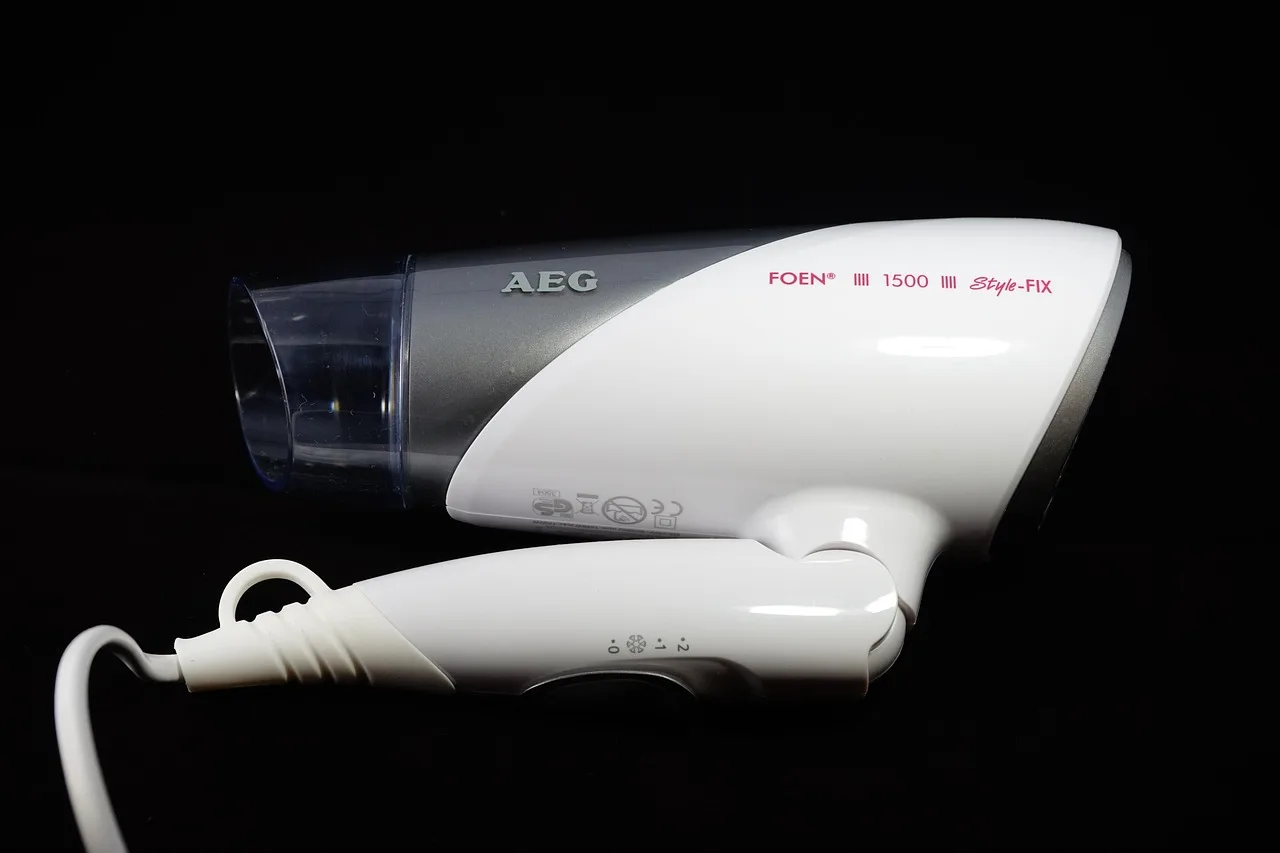
Yes, but only for an exposed pipe you can reach safely. A hair dryer gives low, steady heat, and it can thaw frozen pipes over time if you keep the airflow moving. It is generally slower than a heat gun, so it suits small, accessible freezes rather than deep or hidden ones.
If the freeze is visible, accessible, and the pipe material is intact, DIY thawing can be reasonable. If the frozen section disappears into a wall, ceiling, or cabinet chase, stop there. Hidden lines can split before you ever see a leak.
How to thaw a frozen pipe with a hair dryer
Start with the water off and the faucet open. Then warm the pipe in the right direction, using slow, repeated passes. Do not park the nozzle in one place. The pipe should warm gradually, and the heat should move with you across the frozen section.
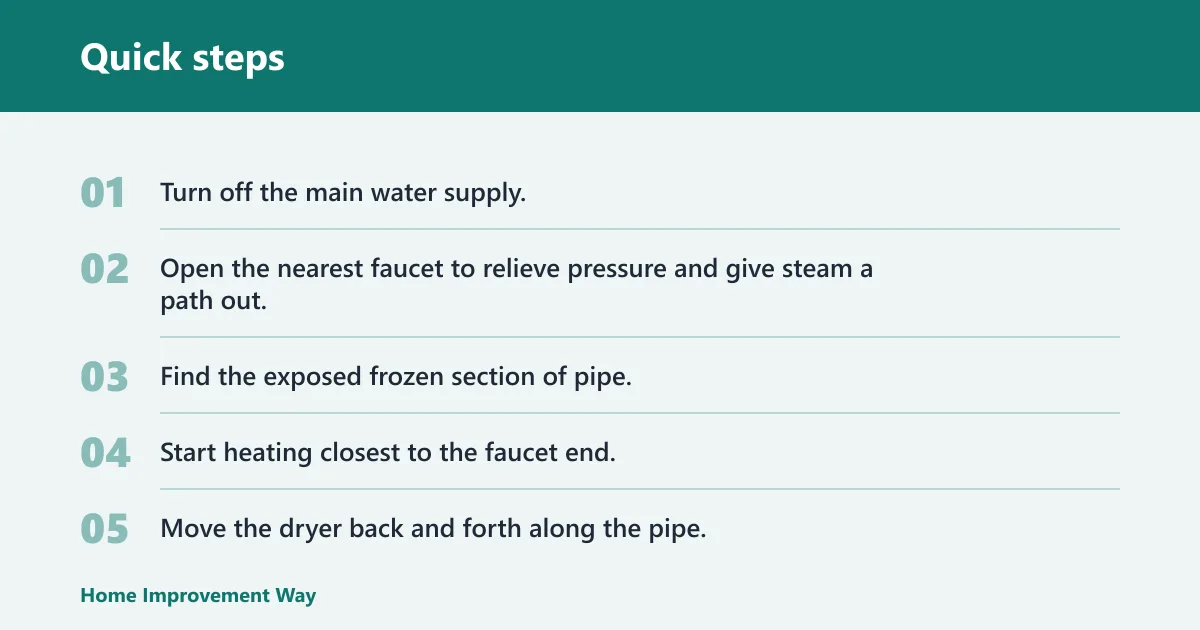
- Turn off the main water supply.
- Open the nearest faucet to relieve pressure and give steam a path out.
- Find the exposed frozen section of pipe.
- Start heating closest to the faucet end.
- Move the dryer back and forth along the pipe.
- Work back toward the water source until water starts to flow.
- Keep going a bit longer after flow returns, then check for leaks.
A common first-timer mistake is aiming heat at the middle of the frozen section first. That can trap meltwater behind the ice plug. Another mistake is turning the dryer to full heat and holding it still. A better approach is steady motion and patient rechecks.
How long does it take to thaw a pipe with a hair dryer?
There is no fixed minute count. A hair dryer thaw can take a long time because pipe size, material, access, and freeze length all matter. A heat gun works faster, but it also carries more overheating risk. If the pipe stays cold after a reasonable stretch of gentle heat, stop and change tactics.
Compare a short exposed line under a sink with a longer run in an unheated crawlspace. The sink line may respond in one careful session. The crawlspace run may need a different tool, or a plumber, because the dryer cannot deliver enough heat fast enough.
Is a hair dryer safe for frozen PVC pipes?
Yes, with extra caution. PVC pipe can be warmed, but it should not get too hot while thawing. Keep the dryer on low or medium heat and keep it moving. If the pipe starts to soften, smell hot, or feel too warm to the touch, stop at once and let it cool.
Visible damage on PVC often looks like slight sagging, whitening stress marks, or a glossy soft spot. Copper can show a bulge, a kink, or a split seam. If you see those signs, stop DIY heat immediately and call a plumber.
Common mistakes
These mistakes slow the thaw or make it unsafe. Most come from using too much heat, too soon, or in the wrong place.
- Heating one spot too long: move the dryer back and forth so the pipe warms evenly.
- Starting in the wrong direction: begin near the faucet end, then work back toward the water source.
- Using a torch too soon: a propane torch is much hotter and raises fire risk near framing and insulation.
- Pouring boiling water on the pipe: this is messy, scalding, and hard to control.
- Ignoring hidden pipe runs: if the freeze is inside a wall or ceiling, stop the DIY thaw.
American Red Cross, FEMA, and extension-style winterization guidance all point to the same control points: open a faucet, thaw from the faucet side, and avoid open flames. If the pipe is exposed but slow to respond, the next step is often a higher-output tool rather than more time in one spot.
When should you call a plumber?
Call a plumber if the frozen section is inside a wall, ceiling, or another inaccessible cavity, if the pipe shows cracking or bulging, or if you cannot find the freeze after opening the faucet and warming the exposed sections. Hidden freezes are too risky for a hair dryer because you cannot see the pipe condition or the leak point.
Also call for help if several fixtures are frozen, if the pipe has stayed cold after a long, careful thaw, or if the line is part of a system you cannot isolate cleanly. Stop DIY immediately if you smell burning insulation, see condensation building inside a wall, or notice water staining that suggests a split pipe.
Frozen pipe checklist
Use this as a yes/no flow, not a long checklist. If you answer no at any step, stop and move to the safer next option.
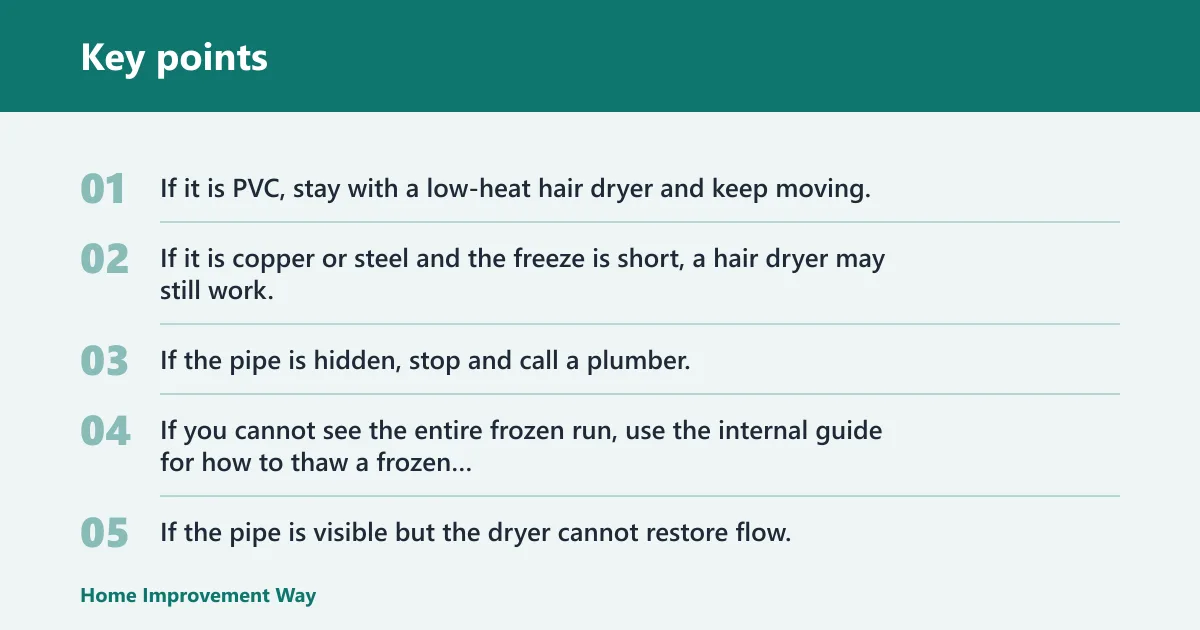
Visible pipe? If yes, identify the material. If it is PVC, stay with a low-heat hair dryer and keep moving. If it is copper or steel and the freeze is short, a hair dryer may still work, but a heat gun is the next step only if you can control the heat carefully. If the pipe is hidden, stop and call a plumber.
Hidden or partly hidden pipe? Do not keep heating blindly. If you cannot see the entire frozen run, use the internal guide for how to thaw a frozen pipe inside a wall and treat the job as a plumber call if access is limited. If the pipe is visible but the dryer cannot restore flow, move up to heat tape for prevention or a plumber for diagnosis rather than forcing more heat.
| Hair dryer | Heat gun | Heat tape | Plumber |
|---|---|---|---|
| Best for exposed, reachable pipe and slow, gentle thawing | Faster on exposed pipe, but higher overheating risk | Best as prevention and long-term freeze protection | Best for hidden, cracked, bulging, or stubborn freezes |
| Use low or medium heat and keep moving | Use with caution; avoid scorching nearby materials | Wraps around the pipe and plugs into an outlet | Can locate the freeze and inspect for damage |
| Stop if the pipe remains cold or is concealed | Stop if the pipe softens or smells hot | Does not solve an active freeze quickly by itself | Should be the first call for hidden wall or ceiling runs |
What if the dryer is too weak?
Move up one level carefully. A heat gun is a common tool for thawing pipes and works faster than a hair dryer, but it can overheat pipe or nearby materials if you rush. If you still cannot thaw the pipe with controlled heat, stop and call a plumber instead of moving to an open flame.
What if you are tempted to use boiling water?
Do not pour boiling water directly on a frozen pipe. A towel or cloth wrap can hold hot water against the pipe, but the method is messy and can scald you or nearby surfaces. It is also harder to control than a dryer, which makes it a weaker choice for tight spaces.
What is better than a hair dryer for thawing pipes?
For exposed pipes, a heat gun is faster than a hair dryer, but it needs careful handling to avoid overheating. For long-term help, heat tape and pipe insulation matter more as prevention than as immediate fixes. Heat tape wraps around the pipe cylinder, plugs into an outlet, and can warm frozen water over time; some products include a built-in thermostat.
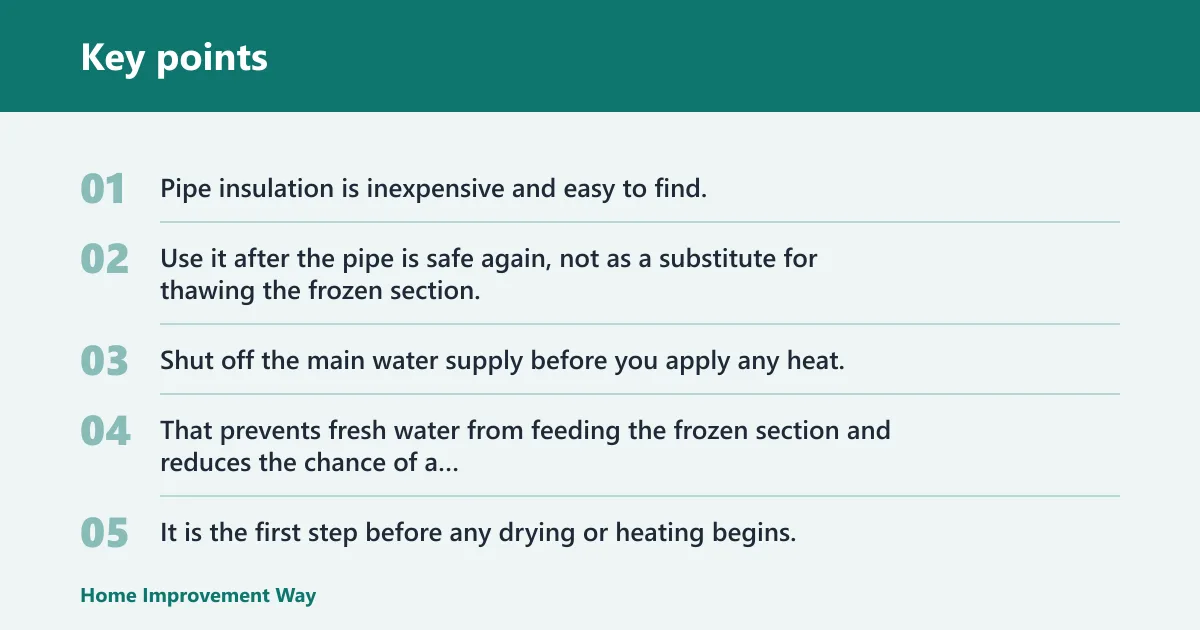
Pipe insulation is inexpensive and easy to find, and it helps keep pipe temperature more stable in cold areas. It does not thaw an active freeze quickly. Use it after the pipe is safe again, not as a substitute for thawing the frozen section.
Should you turn off the water before thawing a frozen pipe?
Yes. Shut off the main water supply before you apply any heat. That prevents fresh water from feeding the frozen section and reduces the chance of a burst pipe if the ice plug gives way suddenly. It is the first step before any drying or heating begins.
Where should you start heating a frozen pipe?
Start closest to the faucet end of the frozen section. Then move back toward the water source. That direction helps melt a path for water and steam to escape through the open faucet, rather than trapping pressure behind the ice plug.
Can you use a hair dryer on a frozen pipe inside a wall?
No, not as a DIY thawing method. A hair dryer is only reasonable on exposed, accessible pipe. Inside a wall, ceiling, or other hidden cavity, you cannot see whether the pipe is damaged, how far the freeze runs, or whether meltwater is leaking into framing or insulation.
If you suspect a freeze in a concealed run, shut off the main water supply, open the nearest faucet, and call a plumber. Hidden spaces need inspection, not more heat from a household dryer.
Frequently asked questions
When should you call a plumber for a frozen pipe?
Call a plumber if the frozen section is hidden, if the pipe is cracked or bulging, if multiple fixtures are affected, or if gentle heat does not restore flow. A hidden freeze in a wall or ceiling is especially urgent because damage can spread before you see it.
Sources
American Red Cross winter storm and frozen pipe safety guidance; FEMA winter weather and home protection guidance; state extension publications on frozen pipe prevention and thawing; plumber association guidance on thawing direction, open faucets, and when to stop DIY and call a professional.
Sponsored / affiliate links. As an Amazon Associate I earn from qualifying purchases. I may earn additional commission from eligible campaigns.