How to Thaw Frozen PVC Pipes Safely
Thaw frozen PVC pipes with gentle room-temperature air, warm towels, or a space heater kept several feet away. Do not use an open flame, boiling water, or very high heat to thaw PVC pipes. Bad thawing can crack PVC, loosen solvent-welded joints, and leave a hidden leak inside a wall or cabinet. This guide gives a safe DIY thaw sequence, stop-or-continue checks, and the signs that mean you should call a plumber.
Confirm PVC and shut off valves before starting the thaw
Start by confirming the pipe is PVC, not CPVC or PEX, because those materials may have different heat tolerance and repair rules. The first signs are no flow, weak flow, a cold section, frost, or an ice plug. PVC needs slow thawing to avoid cracking and joint failure.
If the frozen section is hidden in a wall, crawlspace, cabinet, or other inaccessible area, shut off the main water shutoff valve before you thaw it. If only one branch line is frozen and you can isolate that branch valve, shut off just that branch instead of the whole house. Open the faucet connected to the frozen pipe so pressure can escape and meltwater has a path out.
What you’ll need
- Hair dryer for gradual thawing
- Warm towels
- Bucket or pan for meltwater
- Flashlight for checking fittings and wet spots
- Closed-cell foam pipe insulation for after thaw
- Self-regulating heat cable only if the pipe and listing allow it
- Gloves
- Dry rags
Stop or continue: continue only if the pipe is visible, not bulging, not softening, and you can keep heat moving. Stop if you see discoloration, a split, dripping, or any smell of overheated plastic. If the frozen section is hidden and you cannot watch it, shut off the main water shutoff valve or the relevant branch valve before continuing.
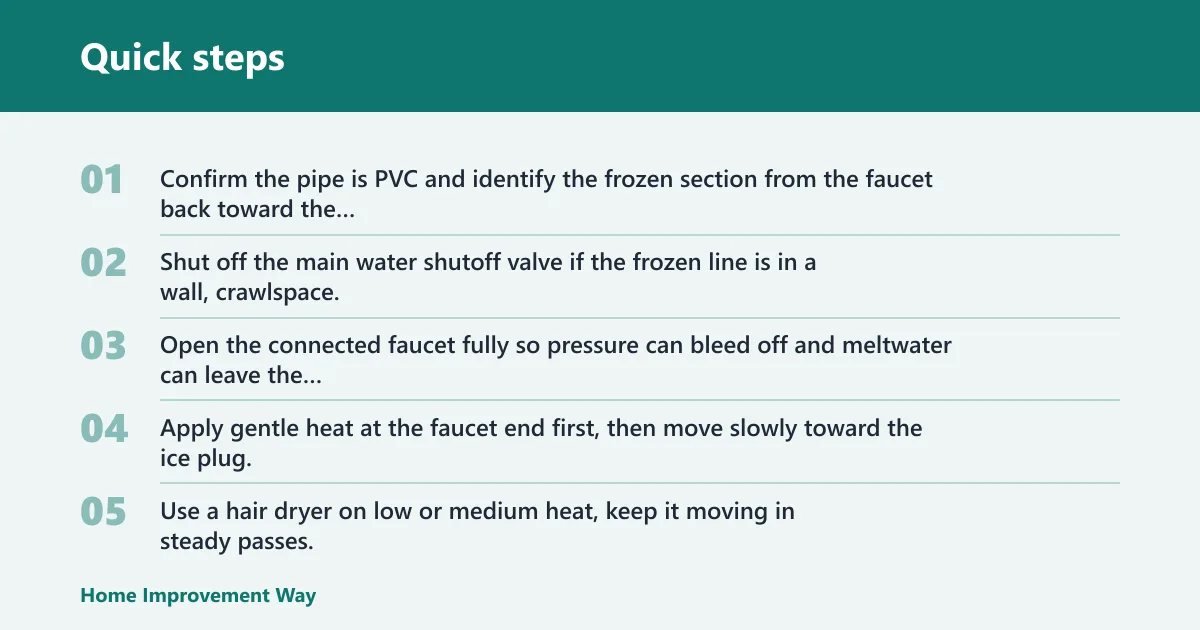
- Confirm the pipe is PVC and identify the frozen section from the faucet back toward the blockage.
- Shut off the main water shutoff valve if the frozen line is in a wall, crawlspace, cabinet, or another area you cannot watch directly; use a branch valve instead if it isolates only that line.
- Open the connected faucet fully so pressure can bleed off and meltwater can leave the line.
- Apply gentle heat at the faucet end first, then move slowly toward the ice plug.
- Use a hair dryer on low or medium heat, keep it moving in steady passes, and hold it a safe distance from the pipe; do not park it in one spot.
- Use warm towels for exposed runs if you need softer, indirect heat.
- For harder-to-reach areas, use a space heater placed safely away from combustibles and aimed at the room or wall area, not directly against the pipe; never place it so close that it can overheat PVC or nearby materials.
- Watch for the first trickle of water, then keep heating until flow is steady.
- After flow returns, leave the faucet open and re-pressurize slowly.
- Inspect every visible fitting and joint for drips before restoring full use.
A frozen pipe thaw may take at least 30 to 60 minutes, and a severely frozen section can take 6–12 hours to fully flow. That range is normal when the ice plug is long or the pipe runs through a cold, drafty space. Keep the heat moving. Do not concentrate it in one spot.
Suppose a 1/2-inch PVC line under a kitchen sink has frost on one short section and a cold cabinet wall behind it. Warm towels and a hair dryer on low or medium heat work better than a space heater blasting into the cabinet, because direct hot air can overheat nearby wood, insulation, or stored items.
Check your thaw progress before you raise pressure
Once water starts moving, keep the faucet open and let the line clear at low pressure first. If the stream pulses, slows again, or stops, continue gentle heat instead of forcing the system back to full pressure. A hidden split can leak only after the pipe warms and expands.
If that did not work, stop and reassess the pipe location. Hidden wall cavities, ceilings, and boxed-in chases are not good DIY heating targets when the pipe cannot be seen from end to end.
Use only gentle heat. A hair dryer on low or medium heat, warm towels, or indirect room heat are the right tools for PVC. Keep heat moving and stop if the pipe shows bulging, discoloration, or softening. If the line is still frozen after careful warming, or if you suspect a crack, call a plumber.
If that didn’t work
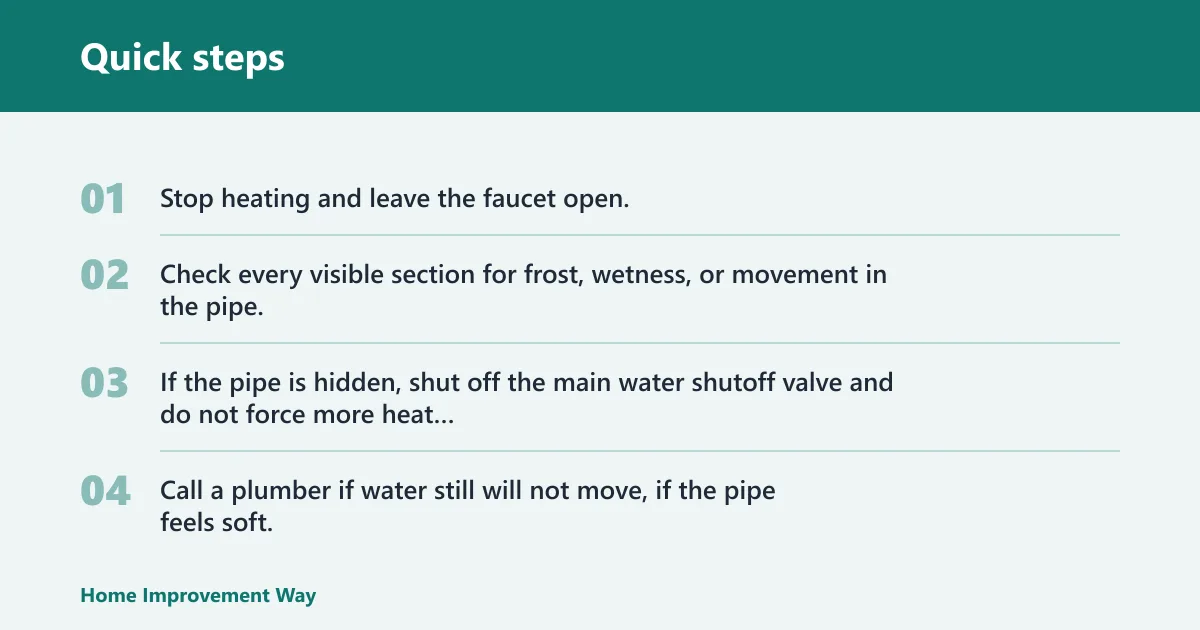
- Stop heating and leave the faucet open.
- Check every visible section for frost, wetness, or movement in the pipe.
- If the pipe is hidden, shut off the main water shutoff valve and do not force more heat into the wall or cabinet; use a branch valve instead if it isolates the frozen line.
- Call a plumber if water still will not move, if the pipe feels soft, or if a fitting starts to seep.
There is no safe fast-track that skips gradual heat on PVC. The quickest safe DIY method is steady heat at the exposed, accessible end of the line with the faucet open and the main water shutoff valve closed if the section is hidden. Fast heat risks cracking the pipe before the ice plug clears.
Inside a house, the goal is to warm the pipe without overheating the room or damaging nearby finishes. Open the faucet, shut off the main water shutoff valve if the line is hidden, and heat the exposed section slowly. Cabinets, walls, and ceiling chases need indirect heat, not direct blasting.
After thawing, keep the faucet open and restore pressure slowly. Check every visible joint and fitting for leaks before normal use. If the pipe runs through an area that freezes often, add prevention now: closed-cell foam pipe insulation, sealing draft paths, and compatible self-regulating heat cable where the manufacturer allows it for plastic pipe.
How do you thaw a pipe in a wall?
Thaw a pipe in a wall with indirect heat from the room side, not by driving heat into the cavity. If the pipe is inaccessible or you cannot confirm whether it has split, shut off the main water shutoff valve first, or the branch valve if only one branch is affected. Keep nearby finishes and stored items clear of heat.
Use a space heater in the room, aimed toward the wall area, or a hair dryer on the exposed portions of the line if any are visible. Do not cut into the wall unless you are prepared to repair it and confirm the pipe condition. If the wall stays cold or you see damage, call a plumber now.
When warming a hidden pipe area, a space heater placed several feet away can warm the room gradually, but a torch or other high-intensity heat source can risk softening the PVC and the nearby wall surface at the same time.
PVC thaw checklist
| Pipe location and access level | Safe heat method | Stop signs that mean call a plumber now |
|---|---|---|
| Open basement, exposed run | Hair dryer on low or medium heat, moved steadily along the pipe | Bulge, discoloration, softening, leak, or no temperature rise after 30 minutes |
| Cabinet or vanity with visible pipe | Warm towels, then hair dryer in moving passes | Bulge, discoloration, softening, leak, or no temperature rise after 30 minutes |
| Crawlspace with partial access | Controlled indirect heat from a space heater placed safely away from combustibles | Bulge, discoloration, softening, leak, inaccessible wall cavity, or no temperature rise after 30 minutes |
| Wall cavity, ceiling, or boxed-in chase | Indirect room heat only; do not heat aggressively through the finish surface | Bulge, discoloration, softening, leak, inaccessible wall cavity, or no temperature rise after 30 minutes |
Use this checklist as a stop-or-continue guide. Any bulge or softening means the pipe has likely taken heat damage. Discoloration can also point to stress. A hidden wall cavity is a call-plumber-now condition because you cannot confirm the line’s condition while you heat it.
Common mistakes
- Heating the middle first. That can trap pressure between ice and a closed section. Start at the faucet end and work back toward the ice plug.
- Using a torch or open flame. Never use an open flame, such as a propane torch, to thaw pipes. PVC can crack or soften fast.
- Turning the water back on too fast. Re-pressurize slowly and inspect every visible fitting before full use.
- Ignoring a hidden split. A pipe can thaw and still leak inside a wall, cabinet, or ceiling.
- Using heat cable as a quick thaw tool. Self-regulating cable is commonly used for freeze protection on compatible plastic pipe, not a substitute for careful thawing.
A common first-timer mistake is to warm only the coldest-looking spot and then rush the main back on. That can send pressure into a stressed joint. Slow heating, then slow re-pressurizing, gives you a better chance to catch a leak before it causes damage.
Frequently asked questions
How to thaw a frozen pipe
Start by confirming the pipe material and location. For PVC, use gradual heat only, keep the faucet open, and work from the faucet end toward the blockage. If the pipe is in a wall or other inaccessible space, shut off the main water shutoff valve first and call a plumber if damage is suspected.
Sponsored / affiliate links. As an Amazon Associate I earn from qualifying purchases. I may earn additional commission from eligible campaigns.