How to Thaw a Frozen Underground Water Line
Thaw a frozen underground water line only after you confirm whether the blockage is on your side, the utility side, or a burst pipe; if you cannot access the line or find a split, call a plumber or utility contractor first. Guessing wrong can waste time, flood soil, and turn a thaw job into a leak repair.
What to do first


Start by deciding whether you have no water, partial flow, or signs of a burst. If the line may be broken, shut off the main shutoff valve before any thaw attempt so you can limit flooding while you wait for service.
Then figure out whether the frozen underground water service line is likely private-side or utility-side. Ownership matters because utility-side exterior line problems often need utility coordination, while private-side plumbing is usually a plumber’s job. Many municipalities draw that line at the water meter or curb stop, and the exact responsibility split is spelled out in the local water utility’s service rules; for example, check your city or utility’s customer service policy before you dig.
What you’ll need
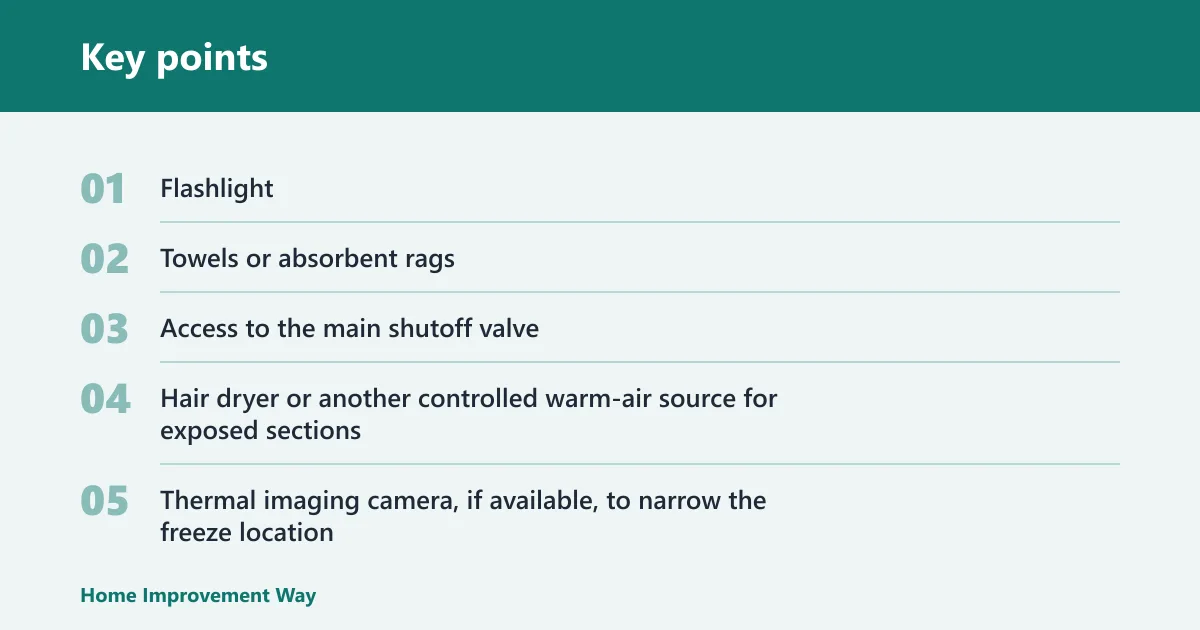
- Flashlight
- Towels or absorbent rags
- Access to the main shutoff valve
- Hair dryer or another controlled warm-air source for exposed sections
- Thermal imaging camera, if available, to narrow the freeze location
- Heat tape for later prevention, only if the manufacturer allows that pipe use
- Pipe insulation or foam sleeves for post-repair winterization
How can you tell where the freeze is?
Check other fixtures first. If every tap is out, the freeze is likely near the service line or main feed. If one fixture still has weak flow, the blockage is more likely a partial freeze on a shallow or exposed section, not a complete outage.
Look for wet soil above the line, water that returns and then drops, or a line that thaws briefly and freezes again. A thermal imaging camera can help on accessible sections by showing temperature differences without tearing open walls or ceilings you do not need to disturb.
Frozen underground water line triage
| Symptom | Likely freeze location | Safest homeowner action | When to stop DIY | Who to call next |
|---|---|---|---|---|
| No water at all | Service line, meter area, or main feed | Check the main shutoff valve and inspect accessible fixtures for signs of burst or backing water | Stop if the line is buried, utility-side, or you cannot confirm a safe thaw path, and seek professional help if needed. | Utility contractor or plumber |
| Partial flow | Shallow freeze or partial blockage | Use controlled heat only on exposed indoor or accessible sections | Stop if flow does not improve as the pipe warms | Plumber |
| Water returns then drops | Partial thaw, hidden crack, or pressure loss | Shut off water if wetness appears, then check for visible damage | Stop at the first sign of leaking, rattling, or another pressure drop | Plumber or utility contractor |
| Wet soil above the line | Leak or burst in the buried section | Shut off the main water valve | Stop all thawing | Emergency plumber or utility-side specialist |
| Repeated re-freezing | Shallow burial, air leak, or missing insulation | Thaw only if the line is accessible, then plan repair and winterization | Stop if the same section keeps freezing after warming | Plumber, then winterization contractor if needed |
How do you thaw a frozen underground water line?
Use controlled heat only on accessible sections, and a common rule of thumb is to start at the faucet or open end before moving back toward the suspected freeze point. That direction lets water and steam escape safely instead of trapping pressure behind the ice blockage. For pipe-warming safety, use the same kind of controlled-heat approach recommended in manufacturer instructions for electric heat cables and in plumbing guidance that avoids open flame; the International Plumbing Code also emphasizes protecting piping from damage and unsafe heat exposure.
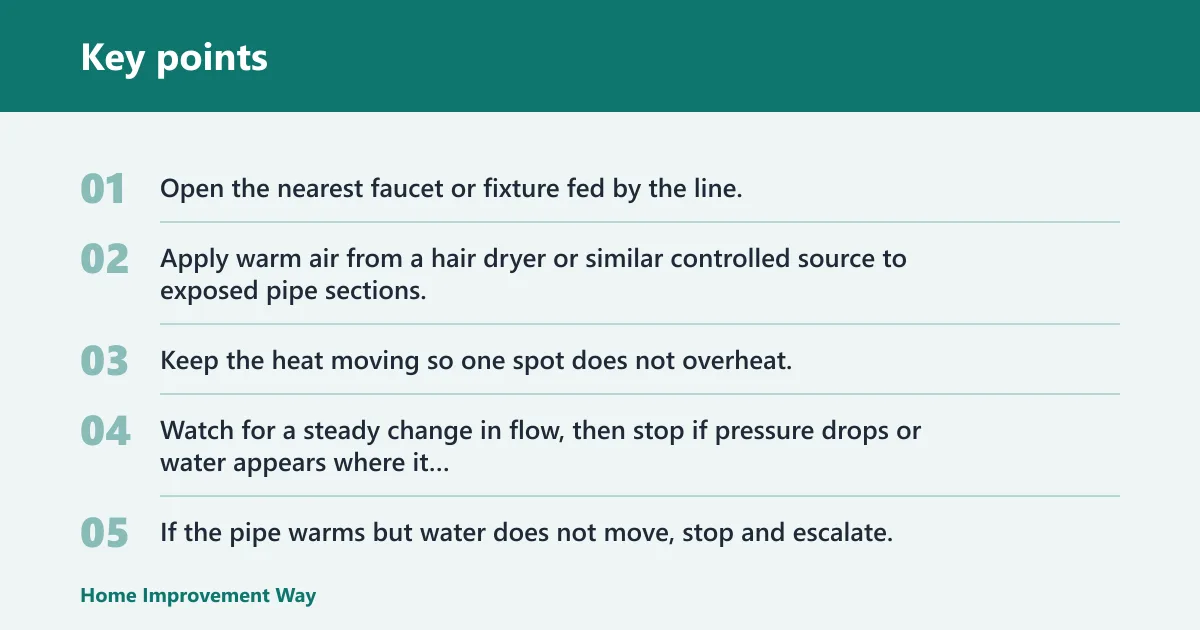
- Open the nearest faucet or fixture fed by the line.
- Apply warm air from a hair dryer or similar controlled source to exposed pipe sections.
- Keep the heat moving so one spot does not overheat.
- Watch for a steady change in flow, then stop if pressure drops or water appears where it should not.
- If the pipe warms but water does not move, stop and escalate.
Do not use open flame, a torch, or boiling water on a buried or uncertain section. Pipe material matters too: copper and PEX can react differently to freeze stress, and PVC needs gentler warming because cracking risk varies. For a more authoritative comparison of pipe performance and installation limits, review the applicable ASTM material standard for the pipe type installed, along with the manufacturer’s published temperature and heating limits.
How long does it take to thaw a frozen underground pipe?
There is no fixed clock for every line. A service call may take 30 to 90 minutes to thaw depending on pipe length and ice thickness, but a deep or hidden freeze can take longer or require excavation. Stop if there is no movement after a reasonable warming period.
Suppose a shallow, accessible section under a basement rim joist starts to recover after warm air is applied from the faucet side. That is a better candidate for homeowner-safe thawing than a buried freeze below frozen ground, where excavation or utility-side response may be needed.
When should you call a plumber or utility contractor?
Call as soon as the freeze point looks deep, hidden, or under frozen ground. Call sooner if you cannot tell whether the line is private-side or utility-side, because exterior water line emergencies may need utility coordination and emergency digging.
Also call if wet soil appears, if the line thaws and then leaks, or if the line re-freezes after partial warming. A pressure test after thawing can reveal hidden damage, and many plumbing and utility leak-check procedures use a test pressure up to 80 psi only where the piping, fittings, and code-approved test method allow it; see the IPC pressure testing requirements and the pipe manufacturer’s instructions before applying any specific test pressure.
How to separate utility-side from private-side problems
- Check whether all fixtures are affected, including the lowest fixture near the service entry.
- Look at the meter area and exterior service route for frost, wet soil, or obvious damage.
- Confirm whether the issue sits before or after the point where your private plumbing begins.
- If the freeze is outside and buried, stop digging by hand and ask about hydro excavation or emergency digging.
For utility-side responsibility, do not rely on a vague contractor reference. Instead, use your local water utility’s service rules or customer handbook, which typically states whether the utility stops at the meter, curb stop, or property line. If you cannot find that policy online, call the utility’s service line and ask for the written service responsibility boundary.
What signs show an underground water line is frozen or burst?
No water at all, a sudden pressure drop, or a fixture that goes dry after warming are the biggest warning signs. Wet soil above the line is more concerning, because that can point to a leak or burst rather than a simple freeze.
Use the main shutoff valve first if a burst is suspected. A frozen underground water line can burst during thaw, and any damage may only become apparent after pressure returns to the pipe.
In one field case, a plumber traced a “no water” call to a hidden freeze in the yard by comparing the meter box temperature with the line entering the foundation, then found damp soil where the service line made a shallow turn; the line thawed unevenly and showed a split only after the flow came back. That kind of pattern is why wet ground plus intermittent recovery should be treated as a leak, not just a freeze.
Common mistakes
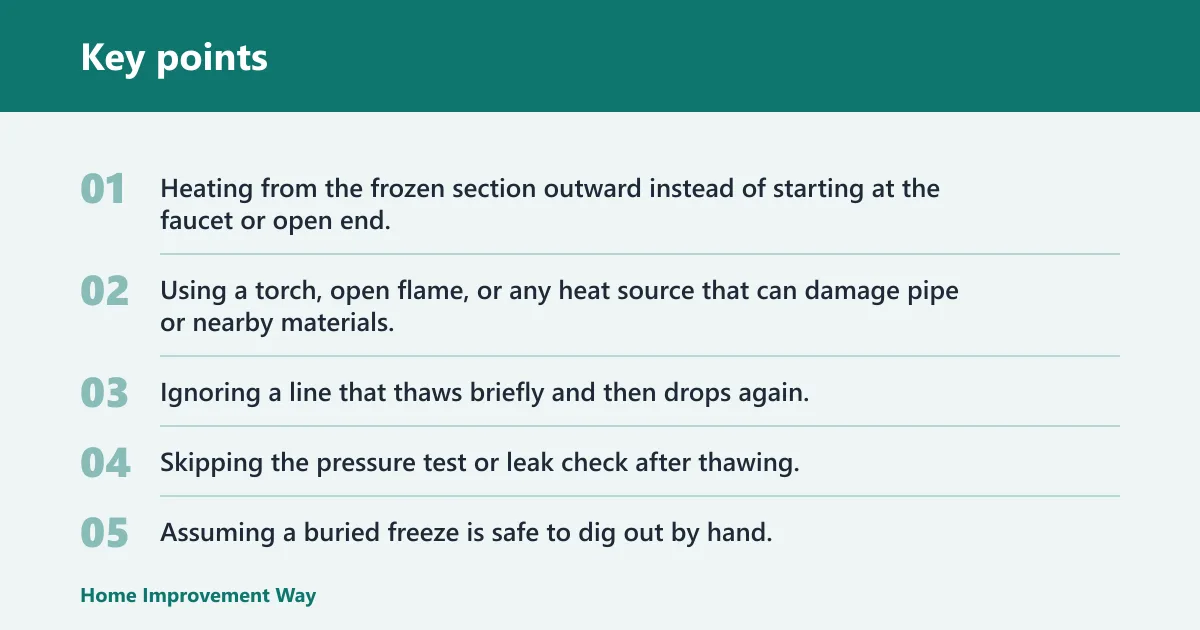
- Heating from the frozen section outward instead of starting at the faucet or open end.
- Using a torch, open flame, or any heat source that can damage pipe or nearby materials.
- Ignoring a line that thaws briefly and then drops again.
- Skipping the pressure test or leak check after thawing.
- Assuming a buried freeze is safe to dig out by hand.
- Leaving exposed sections uninsulated after the repair.
A common first-timer mistake is to keep heating a dry wall cavity because the faucet sputters once. If flow drops again after a minute or two, that usually means the blockage is not fully cleared or the pipe has already been damaged.
How to prevent the same line from freezing again
After the line is safe, add insulation and winterization right away. Foam sleeves, pipe insulation, sealed cracks, and protection for exposed lines can reduce repeat freezing, especially where the pipe runs through cold crawl spaces, shallow trench sections, or air leaks near the entry point.
Heat tape can help after thawing or as part of prevention, but only if the manufacturer lists that pipe type and installation method. Follow the manufacturer’s instructions exactly. Keep it for prevention, not as a fast fix for an active underground freeze.
If the line froze because a shallow section is exposed, repair the exposure before the next cold snap. Re-freezing usually means the root problem was never fixed. For broader seasonal prep, see how to winterize exposed water pipes, how to find your main water shutoff valve, and signs of a burst water pipe.
How to thaw frozen underground water pipes
Use the same sequence: confirm the freeze pattern, check the shutoff, and warm only accessible sections from the faucet or open end back toward the blockage. If the freeze is buried, utility-side, or hidden behind frozen ground, stop and call for professional help instead of trying to force a thaw.
How to thaw a frozen water line in the ground
Often, the safest first move is to avoid digging. Start with the fixture symptoms, identify whether the problem is private-side or utility-side, and use thermal imaging if you need to narrow the route without demolition. If the likely freeze point is underground, hydro excavation or emergency digging may be the next step.
How to thaw out a frozen water line underground
Use controlled heat only where the pipe is accessible, and watch for signs of a burst while the line warms. If water begins to return and then falls off again, stop. That pattern can mean a partial thaw, a hidden split, or a pressure problem that needs repair, not more heat.
Will a frozen underground water line thaw on its own?
Sometimes a shallow freeze may loosen when temperatures rise, but waiting can be risky. A frozen underground water line can stay blocked long enough to burst when pressure returns, and a hidden leak may only become obvious after the thaw starts. If the line stays dead, call for help.
Frequently asked questions
Use this quick reference if you need the shortest safe path: confirm whether the line is private-side or utility-side, shut off water if you suspect a burst, use controlled heat only on accessible pipe, and stop if wet soil or erratic pressure appears. For buried or utility-side freezes, call a plumber or utility contractor.
Can I use hot water, a heat gun, or a torch on a frozen underground line?
No torch or open flame. Hot water is also a poor choice on buried or uncertain sections because it can damage pipe or nearby materials. Use controlled warm air on accessible areas, and follow the manufacturer’s instructions for any heat tape or electrical warming product.
When should I call a plumber or utility contractor for a frozen underground line?
Call when the freeze is deep, hidden, or under frozen ground, or when you suspect the line is utility-side. Call immediately if you see wet soil, a leak after thawing, or repeated re-freezing. Exterior water line emergencies may need hydro excavation or utility coordination.
Written by a home-services editor with plumbing-industry reporting and jobsite research experience, including review of plumber field practices, code guidance, and utility service procedures. Sources consulted for this update include the International Plumbing Code, local water-utility service responsibility policies, and manufacturer installation instructions for pipe-warming products.
Sources
Sponsored / affiliate links. As an Amazon Associate I earn from qualifying purchases. I may earn additional commission from eligible campaigns.