Do Frozen Pipes Always Burst?
No, frozen pipes do not always burst. They usually split when ice blocks flow and pressure builds before or during thawing, especially if both ends are blocked. If you guess wrong, a thaw job can turn into a flood and expensive drywall, flooring, and plumbing repairs. This guide shows how to tell a frozen pipe from a cracked or burst one, and what to do next based on whether pressure can still escape.
Do frozen pipes always burst?
No. Many frozen pipes thaw intact, especially after a brief or partial freeze. The ice blocks flow, but the split usually comes from pressure that cannot escape. That is why a pipe can look fine while frozen and still fail as it warms.
The biggest risk is a solid ice plug with a closed faucet downstream. Water expands as it freezes, but the more damaging force is trapped liquid water squeezed between the blockage and a closed valve or faucet. That pressure can crack the pipe before, during, or after thawing.
Why thawing is often the dangerous moment
A split frozen pipe often does not leak until it thaws. When the ice begins to melt, pressure returns to the pipe wall and the damaged spot can open up. Burst discoveries often spike when temperatures rise, which is why a pipe that seemed safe at daybreak can start leaking later the same day.
📊 Indoor pipes typically require 20 F or lower to freeze. Source: Familyhandyman.
Why a frozen pipe can split
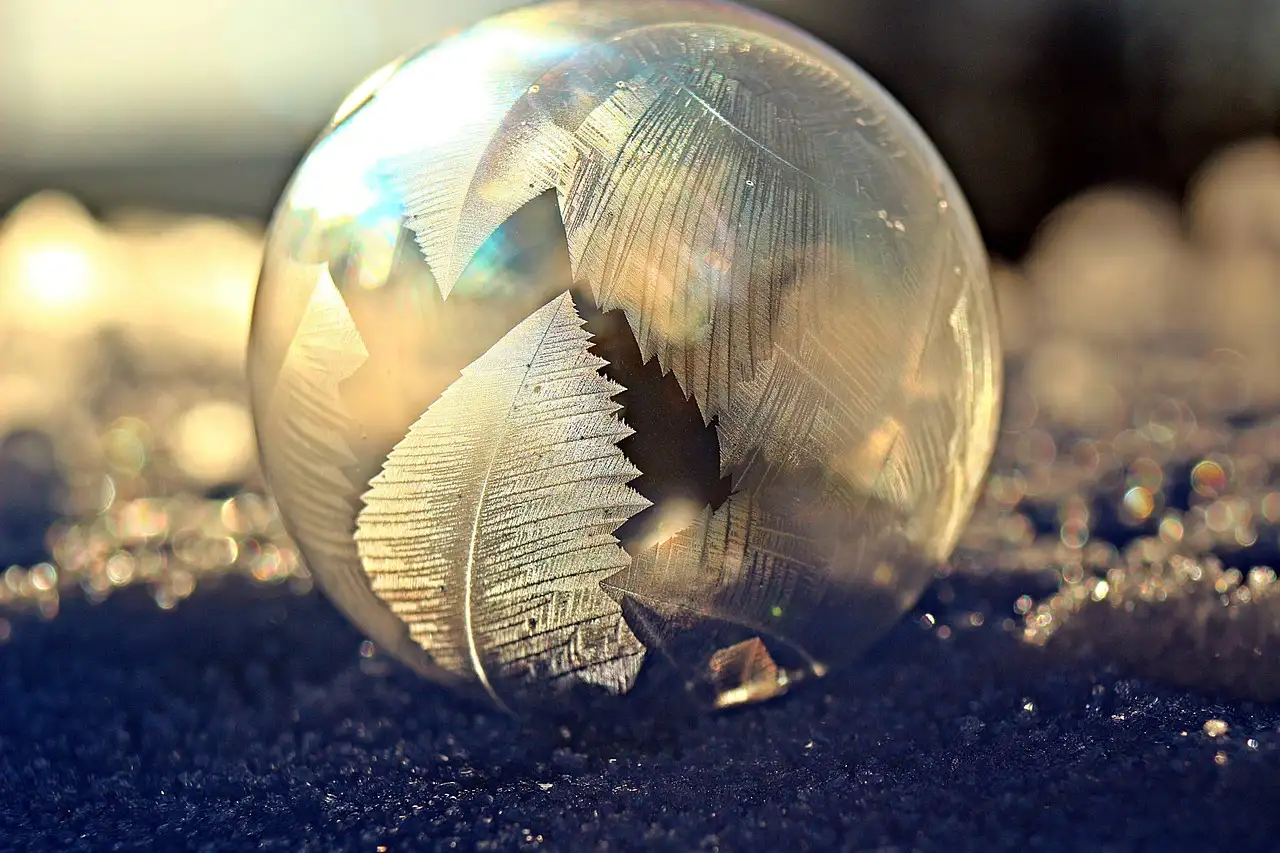
An ice plug does two jobs at once: it blocks flow and traps pressure between the blockage and a faucet or valve. If that pressure has nowhere to go, the pipe can rupture at a weak point. The failure may stay hidden until water starts moving again.
How the crack forms before the leak
Damage may begin while the pipe is still frozen. As pressure rises, a seam, joint, or thin section can split. Once thaw starts, water reaches that split and escapes into wall cavities, cabinets, crawl spaces, or insulation. That is why a pipe can look dry during the freeze and wet later.
Closed faucets increase risk because they trap the pressure. Open or dripping faucets can help reduce pressure buildup by giving the water a place to move. If a thaw is coming and the main shutoff is unknown, find it before heating starts.
Pipe material and burst risk
Pipe material changes the odds. Copper is the most vulnerable to ruptures when frozen. PEX and other plastic pipes can freeze and may flex more than rigid pipe. Rigid materials fail more readily than flexible ones, which can deform slightly under stress instead of splitting at once. (Familyhandyman)
Copper
Copper is the most vulnerable to ruptures when frozen. It is rigid, so it has less room to flex when pressure rises. Older copper runs, tight bends, soldered joints, and thin or corroded sections are more likely to fail than straight, well-supported pipe.
PEX
PEX is more forgiving than copper because it can flex as ice expands inside it. That does not make it safe from freezing, but it does mean a frozen PEX line will not always burst. Crimp rings, fittings, and transitions to rigid pipe are still weak points.
PVC and CPVC
PVC and CPVC are plastics, so they can freeze without always bursting. They still become a problem if pressure is trapped or if the pipe is already brittle, poorly supported, or exposed in a cold spot. Sudden thawing can reveal cracks near fittings or joints.
Galvanized pipe
Older galvanized or poorly insulated pipes are at higher risk for damage. Galvanized steel is rigid, and older lines may already have internal corrosion that leaves less wall thickness to resist pressure. If an older galvanized run freezes, treat it as higher risk than a newer flexible line.
| Pipe material | Freeze behavior | Burst risk |
|---|---|---|
| Copper | Freezes and can split under pressure | Highest among common residential materials |
| PEX | Can freeze and flex more than rigid pipe | Lower, but not zero |
| PVC / CPVC | Can freeze; cracks may show later | Lower, but fittings and cold spots still fail |
| Galvanized | Rigid and often age-weakened | Higher, especially in older systems |
Where frozen pipes are most likely to fail
Exterior walls are often colder and may have less insulation around the pipe, so they can fail more often. Unheated areas like attics, basements, crawl spaces, and garages are also common freeze points. Outdoor or exposed lines freeze faster and may crack first.
Location matters as much as material
A pipe in a warm interior wall may freeze later than the same material in an outside wall, but both can be damaged if the cold lasts long enough. Frozen pipes can freeze in as little as six to eight hours. Indoor pipes typically require 20 F or lower to freeze, and a pipe can freeze overnight if temperatures are below 32 degrees F and unprotected.
Say your laundry sink line runs through a garage wall and the faucet is shut tight. The pipe may freeze without any sign inside the house. If that line has a hidden crack, the first leak may appear only after the garage warms and water pressure returns.
Frozen pipe: frozen, cracked, or burst?
Use this checklist to judge whether pressure can still escape and whether you should monitor, thaw gently, or shut off the main and call a plumber. The key clues are water flow, pipe material, visible damage, and whether the shutoff is already off.
| Check | Yes | No | What it suggests |
|---|---|---|---|
| Water flow at one or more faucets is reduced or stopped | Likely frozen | Less likely frozen | No flow can mean an ice plug is blocking the line |
| Pipe is in an exterior wall, attic, basement, crawl space, garage, or outdoor exposure | Higher risk | Lower risk | Cold exposure raises freeze and split risk |
| Pipe is copper or older galvanized metal | Higher burst risk | Lower burst risk | Rigid pipe fails more readily than flexible pipe |
| Visible bulge or deformation | Possible damage | Less obvious damage | Bulging can signal a stressed wall or failed section |
| Visible crack, split, drip, or damp seam | Likely cracked or burst | No obvious failure | Even a small crack can worsen during thaw |
| Hissing sounds, spraying, or a new odor of wet drywall or sewer gas | Possible active leak | No clear leak sign | Noise or odor can point to water escaping behind a surface |
| Staining, puddles, or wet insulation after thaw | Failure likely | Still uncertain | A split frozen pipe often does not leak until it thaws |
| Faucets were left open or dripping during the freeze | Lower pressure risk | Higher pressure risk | Open faucets can relieve pressure buildup |
| Main water shutoff has already been turned off | Damage limited | Damage can continue | Shutoff limits flow if the pipe has burst |
| Any combination of crack, bulge, stain, hissing, or no water return after thaw | Call a plumber | Monitor or thaw carefully | More than one warning sign points to a damaged pipe |
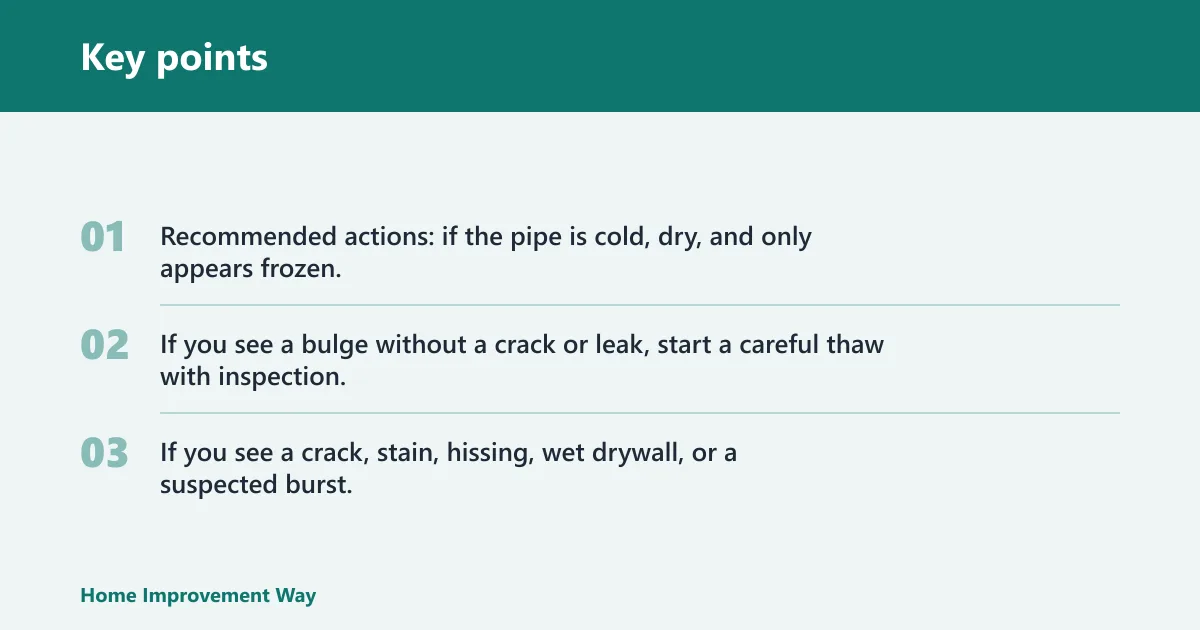
Recommended actions: if the pipe is cold, dry, and only appears frozen, monitor it and prepare to thaw gently. If you see a bulge without a crack or leak, start a careful thaw with inspection. If you see a crack, stain, hissing, wet drywall, or a suspected burst, shut off the main and call a plumber.
What should you do first if a pipe freezes?
First, decide whether pressure can still escape. If one faucet on that line can be opened and there are no signs of leakage, you can often monitor and thaw gently. If the pipe is in a high-risk location, or if a leak is already visible, shut off the main and stop the damage before thawing.
When to keep watching
Keep watching if the pipe is exposed to cold, the flow is only slowed, there is no visible bulge or crack, and the faucet was left open. That is the best case. Many frozen pipes thaw intact, especially after brief, partial freezes.
When to start a gentle thaw
Start a gentle thaw if there is no evidence of a crack, the main shutoff is known, and the pipe appears frozen but intact. Open the affected faucet slightly so pressure can escape as the ice melts. Check the pipe frequently for moisture, staining, or a change in sound.
When to shut off the main right away
Shut off the main water shutoff if you suspect a burst or if the pipe already shows a crack, bulge, wet spot, stain, or hissing. The main water shutoff limits damage and should be turned off before or during thaw if a burst is suspected. Do not wait for a leak to get worse.
Suppose a copper supply line in a basement ceiling is frozen solid and the faucet was closed overnight. If a small bulge appears near a joint, that is not a cosmetic issue to ignore. The safest move is to shut off the main, then inspect before any heat is applied.
How to thaw a frozen pipe safely
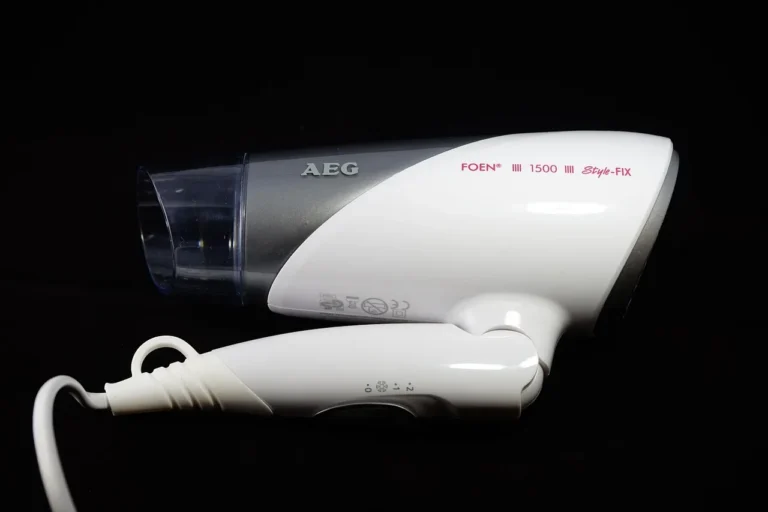
Use gentle heat only. Common methods include using a hair dryer, heating pad, warm towels, a portable heater, or heating cable. Work slowly from the faucet end back toward the frozen section so melted water can move out of the pipe instead of being trapped behind more ice.
What not to use
Avoid open flame and blowtorches when thawing pipes. They can damage the pipe, ignite nearby materials, or heat the wrong spot too fast. Direct flame on copper, PVC, CPVC, wood framing, or insulation is a fire risk and can create a second repair problem while the pipe is already vulnerable.
How to watch for trouble while thawing
As the ice melts, keep checking for drips, spraying, new wet spots, and changes in pressure. The dangerous scenario is a solid ice plug with a closed faucet downstream, because pressure can build until flow returns. If water appears where none was before, stop heating and shut off the main.
Frequently asked questions
Do frozen pipes always burst when they thaw?
No. Thawing is the dangerous moment, but it does not guarantee failure. Some pipes remain intact. Others split before the thaw finishes because pressure builds while ice still blocks flow. If you see staining, hissing, or moisture as the pipe warms, treat it as damaged.
Do pipes always burst if frozen?
No. Brief freezes can leave a pipe intact, especially if the material is flexible and the faucet was open. Copper and older galvanized pipe are more likely to fail, while PEX and PVC can freeze without always bursting. The pressure pattern matters more than the ice alone.
Why do frozen pipes burst?
Frozen pipes burst because trapped water pressure rises between the ice plug and a valve or faucet. The ice blocks movement, and the pressure has nowhere to go. When thaw starts, that pressure returns to the pipe wall and can split a weak section or joint.
Do frozen copper pipes always burst?
No, but copper is the most vulnerable to ruptures when frozen. Its rigid wall gives little room to flex under pressure. If a copper pipe is in an exterior wall or an unheated space, treat it as higher risk, especially if the faucet was closed during the freeze.
Do frozen PEX pipes always burst?
No. PEX is more flexible than copper, so it can often freeze without bursting. That said, fittings, crimp rings, and transitions to metal or rigid plastic can still fail. If a PEX line shows a bulge, damp spot, or delayed leak after thaw, inspect it closely.
Sponsored / affiliate links. As an Amazon Associate I earn from qualifying purchases. I may earn additional commission from eligible campaigns.