How to Clean a Bathroom Floor Fast Without Missing Spots
A common quick-clean path is to start at the far corner, move clockwise, and finish with a quick edge check in about 10 minutes. Skip that system and you miss hair, dust, and grime along baseboards, behind the toilet, and in tight corners. This guide gives the exact zone-by-zone routine so you clean once and catch the spots most people leave behind.
Zone-based cleaning route and checklist


Use a fixed route, not a loose “clean as you go” pass. Most bathroom floors can be handled in 20 to 30 minutes for a fuller clean, while a quick method can come in under 15 minutes; a 10-minute floor sweep works best for weekly upkeep when you stay on the route and avoid backtracking.
What you’ll need
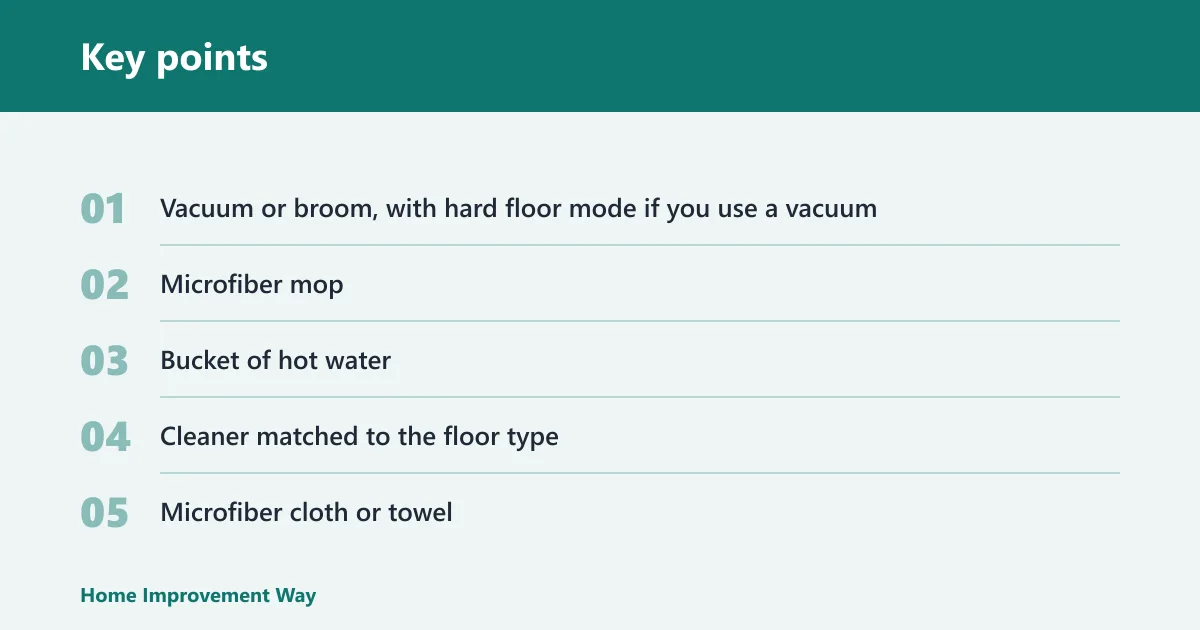
- Vacuum or broom, with hard floor mode if you use a vacuum
- Microfiber mop
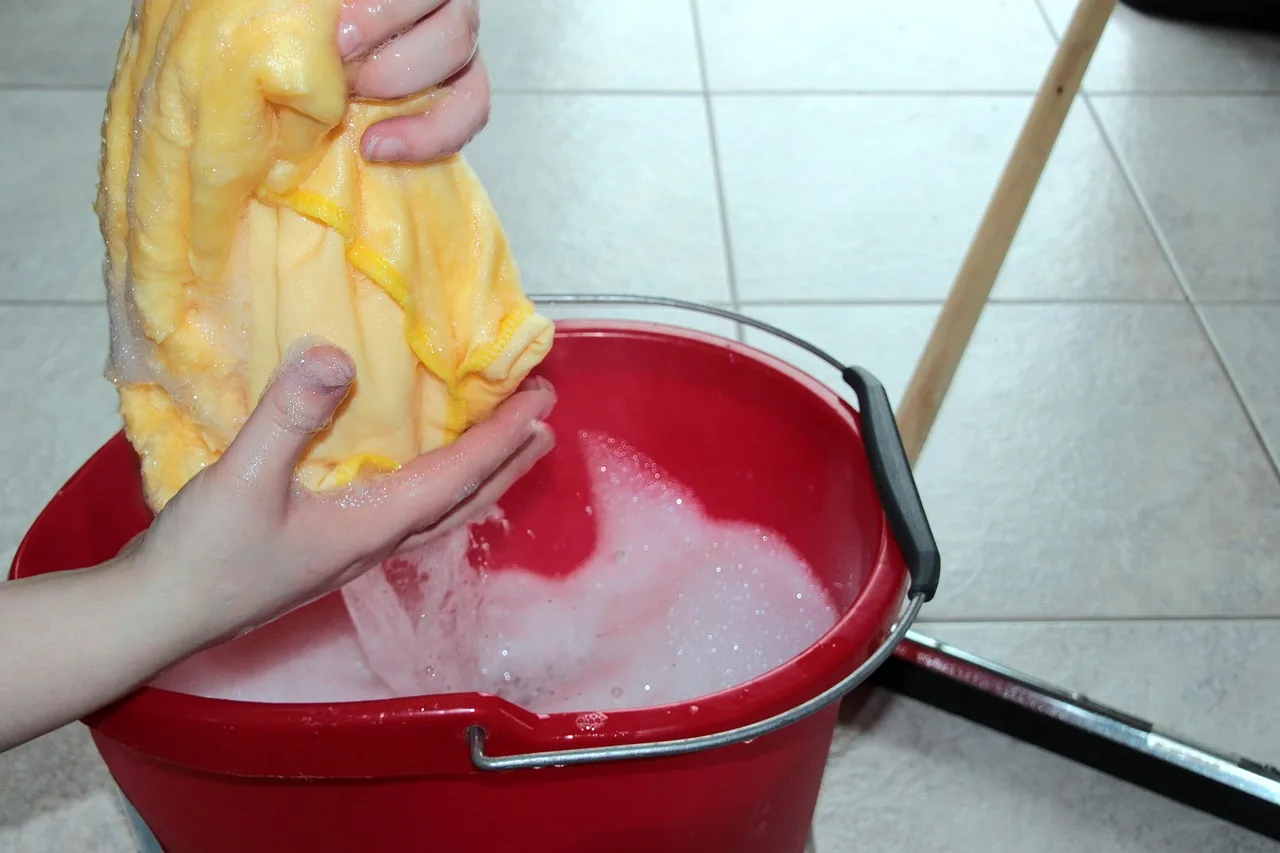
- Bucket of hot water
- Cleaner matched to the floor type
- Microfiber cloth or towel
- Brush for grout lines and edges, such as an old toothbrush
Bathroom floor coverage checklist
| Zone | Pass | Fail | Time target |
|---|---|---|---|
| Behind the door | [ ] | [ ] | 1 minute |
| Along baseboards | [ ] | [ ] | 1 minute |
| Toilet base | [ ] | [ ] | 2 minutes |
| Vanity edge | [ ] | [ ] | 1 minute |
| Shower entry | [ ] | [ ] | 1 minute |
| Corners | [ ] | [ ] | 1 minute |
| Grout lines | [ ] | [ ] | 1 minute |
| Floor drain | [ ] | [ ] | 1 minute |
10-minute timing guide
- Minute 1: remove dry debris.
- Minute 2: mix cleaner for the floor type.
- About minutes 3-6: mop the route in fixed zones.
- About minutes 7-8: scrub grout, corners, and the toilet base.
- About minutes 9-10: dry the floor and do the edge check.
How do you clean a bathroom floor fast without missing spots?
Start with dry debris, then follow the same route every time: farthest corner, baseboards, toilet base, vanity edge, shower entry, corners, grout, and drain. That fixed path keeps you from doubling back and helps you see what is left. The goal is coverage first, not scrubbing every inch equally.
Step-by-step route
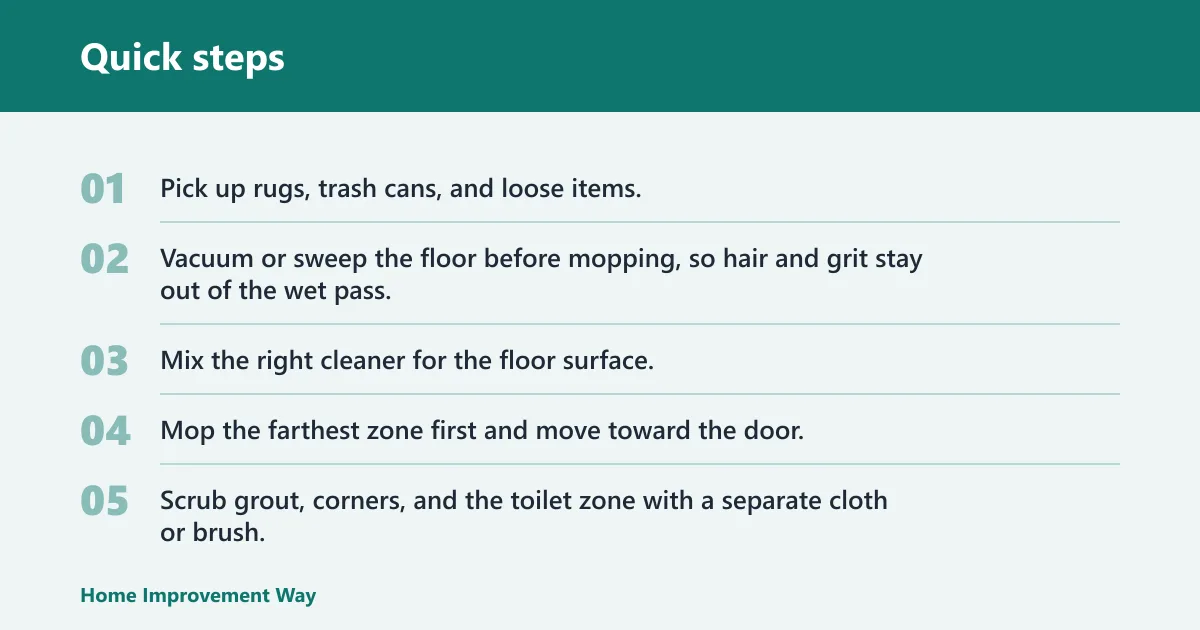
- Pick up rugs, trash cans, and loose items.
- Vacuum or sweep the floor before mopping, so hair and grit stay out of the wet pass.
- Mix the right cleaner for the floor surface.
- Mop the farthest zone first and move toward the door.
- Scrub grout, corners, and the toilet zone with a separate cloth or brush.
- Dry the floor and do a final edge check.
Vacuuming is often better than sweeping for hair, especially on a hard floor setting, because hair can cling to broom bristles. A microfiber mop works best when it is wrung out until damp, not dripping. Too much solution leaves streaks and makes you miss wet patches near the edge.
Say your bathroom is about 5 by 8 feet and the toilet sits close to the vanity. A fixed path still works: start behind the door, move to the far corner by the shower, then follow the wall line to the toilet base, vanity edge, and drain. The room stays covered without a second pass through already-cleaned space.
What should you clean first on a bathroom floor?
Clean dry debris first, then the dirtiest floor zones. Rugs, bins, and mats go out before anything else. After that, vacuum or sweep the whole room so hair and grit do not turn into muddy streaks when the mop hits the floor.
Behind the door often gets skipped because it is awkward to reach, but it is part of the first pass. Once dry debris is gone, start near the farthest corner and work toward the exit. That keeps your feet off the cleaned floor and stops you from stepping into wet areas.
A common first-timer mistake is mopping the open center first, then realizing the toilet base and the wall edge are still dirty. The fixed path prevents that. If the floor has heavy buildup, this is the point to slow down and treat it as a deeper reset rather than a speed clean.
What cleaner is safe for ceramic or porcelain bathroom tile?
Ceramic and porcelain tile can usually be cleaned with a diluted neutral or mild cleaner, and for routine care a damp microfiber mop is often enough. If you use soap, keep the solution light and rinse away residue. For specific bleach or disinfectant use, follow the product label and manufacturer directions rather than guessing.
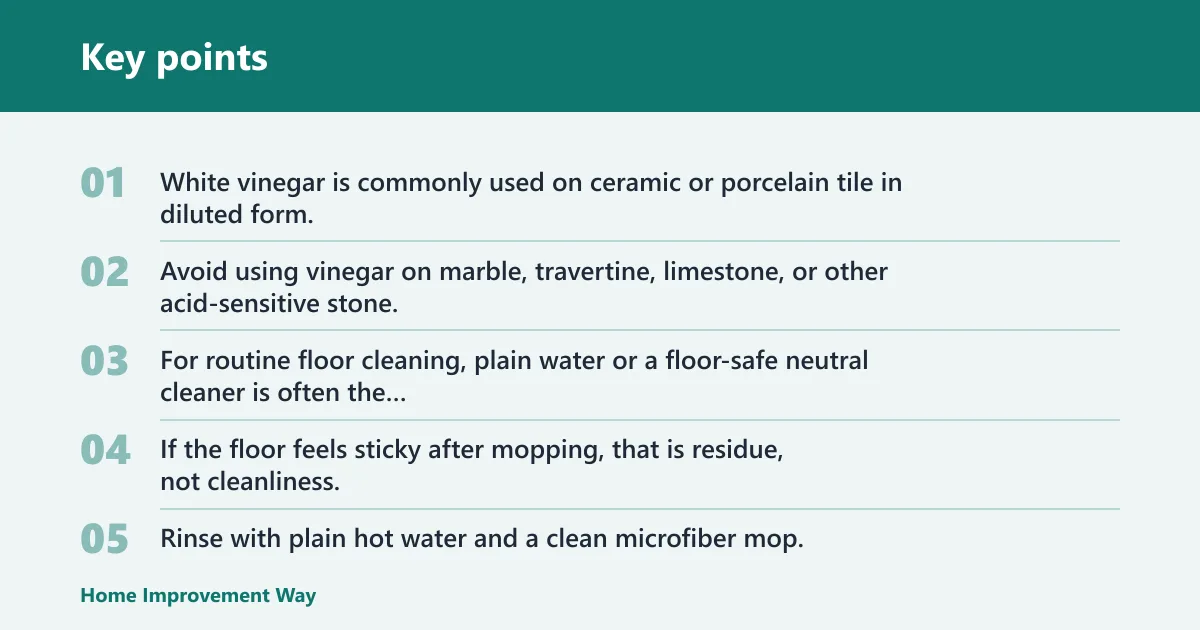
White vinegar is commonly used on ceramic or porcelain tile in diluted form, but it is not appropriate for natural stone. Avoid using vinegar on marble, travertine, limestone, or other acid-sensitive stone, because acids can etch the surface. For routine floor cleaning, plain water or a floor-safe neutral cleaner is often the safest choice.
If the floor feels sticky after mopping, that is residue, not cleanliness. Rinse with plain hot water and a clean microfiber mop. If you want a deeper clean on ceramic or porcelain, use an all-purpose cleaner that is labeled safe for the surface, then remove the film afterward.
Match the cleaner to the surface
| Floor type | Safe routine cleaner | What to avoid |
|---|---|---|
| Ceramic tile | Diluted white vinegar, dish soap, or all-purpose cleaner | Too much soap, standing water |
| Porcelain tile | Diluted white vinegar, dish soap, or all-purpose cleaner | Too much soap, standing water |
| Natural stone tile | pH-neutral cleaner | Vinegar, lemon, bleach |
| Vinyl | Damp mop with a gentle cleaner | Soaking-wet mop |
How do I clean grout lines on a bathroom floor quickly?
Use a brush on grout lines after the main mop pass, then wipe the loosened soil away with a microfiber cloth. Grout is porous and traps dirt and moisture, so a mop alone often leaves it dull or gray. The fast version is targeted scrubbing, not soaking the whole floor.
For grout between ceramic or porcelain tiles, a vinegar-and-water mix is sometimes used for deeper cleaning, but any dwell time should follow the cleaner label and the surface instructions. For weekly upkeep, you usually do not need a long soak. A quick scrub with a brush or old toothbrush is enough to lift the surface soil before you dry the area.
Do not forget the grout at the vanity toe-kick and near the toilet base. Those strips collect splash and dust. If a stain remains after the quick pass, treat it as a separate spot-cleaning job rather than extending the whole-floor routine.
How do I keep bathroom floor corners and around the toilet from being missed?
Give corners and the toilet zone their own pass. They are where hair, lint, and splash soil build up fastest, and they are the easiest places to skip when you clean in a hurry. Use a dedicated cloth or towel for the toilet area so you do not spread soil to the rest of the floor.
Corner and toilet-zone steps
- Angle the mop head into the corner, then wipe out along both walls.
- Use the cloth edge to catch the thin line where the floor meets the baseboard.
- Clean the toilet base in a tight circle, then discard or isolate that cloth.
- Repeat at the shower entry and vanity edge.
Suppose the toilet sits in a narrow alcove and the floor has a visible dust line behind the base. A single front-to-back mop pass will miss it. The fix is a short side-to-side wipe with the microfiber cloth, then a final look at the edge before you move on.
How do I dry a bathroom floor so it does not get streaky or slippery?
Dry the floor with a microfiber cloth or towel as soon as the mop pass is done. This reduces water spots, helps prevent mildew, and lowers slip risk. If you used a soapy cleaner and still see a film, rinse once with plain hot water first, then dry again.
Use the cloth to hit the corners, the base of the toilet, and the line beside the vanity. Those are the last places to dry, and they hold moisture longest. A damp mop is enough for cleaning; a dripping mop is what causes streaks and puddles.
One quick way to check your result is the heel test: if you can walk the route without feeling tacky patches or seeing footprints, the floor is dry enough. If any zone feels slick, spot-dry it before you put the rugs back.
Common mistakes
Most missed spots come from a few repeat errors. Too much water leaves streaks and can push grime into grout. Too much soap leaves residue that looks like dirt. Skipping the dry step leaves hair in corners. Using vinegar on natural stone can damage marble, travertine, or limestone.
- Using too much water: wring the microfiber mop until damp, not dripping.
- Leaving cleaner residue: rinse with plain hot water if the floor feels sticky.
- Using vinegar on natural stone: switch to a pH-neutral cleaner only.
- Skipping the final dry pass: dry the edge line, toilet base, and corners last.
- Missing fixed spots: use the same 8-zone route every time.
For a weekly speed-clean, stop after the about 10-minute route if the floor passes the checklist. For heavy buildup, soap film, or stained grout, do a deeper reset instead of trying to force the same fast method to do both jobs.
Frequently asked questions
Do I need to vacuum or sweep bathroom floors before mopping?
Yes. Vacuuming is often better for hair, especially on a hard floor setting, because hair can stick to broom bristles. If you sweep, make sure you collect the edges and corners first, or the mop will turn loose debris into streaks.
Can I use vinegar on bathroom floor tile?
Yes on ceramic or porcelain, when it is diluted with water and the surface manufacturer allows it. No on natural stone like marble, travertine, or limestone. Those surfaces need a pH-neutral cleaner only. If you are unsure what the tile is, check the flooring specs before using vinegar.
How long does it take to clean a bathroom floor?
A fuller bathroom floor clean can take 20 to 30 minutes, while a quick method can be under 15 minutes. A 10-minute path works best for a regular upkeep clean if you follow the same zone order and do not stop to re-clean already covered areas.
What is the fastest way to disinfect a bathroom floor?
Disinfection is not the same as routine cleaning. Use only a product labeled for the floor surface and follow its directions exactly, including contact time and ventilation guidance. Clean the floor first, because disinfectant works best on a soil-free surface, and do not improvise bleach strength or dwell time.
Sponsored / affiliate links. As an Amazon Associate I earn from qualifying purchases. I may earn additional commission from eligible campaigns.