How to Identify an Outdoor Hose Bib Shutoff Valve
Identify an outdoor hose bib shutoff valve by tracing the pipe from the faucet to the nearest interior valve, then confirming a quarter-turn ball valve or stop-and-waste valve on that branch. Picking the wrong valve can leave the line pressurized, risk freeze damage, or create a hidden leak. This guide shows how to trace the pipe path, verify the correct valve type, and test that you found the right shutoff.
What is an outdoor hose bib?
An outdoor hose bib is the wall-mounted water outlet you use for hoses, garden watering, washing surfaces, and filling buckets outside the house. Homeowners may also call it an outdoor faucet, spigot, or sillcock. Those names usually mean the same fixture type, even if the body shape or valve style differs.
The fixture itself is the exterior outlet. The shutoff that controls it may be nearby, or it may sit inside the house on the branch that feeds that outlet. Start with the pipe path, not with a random room search.
Common names and what they usually mean
| Term | What it usually refers to | Practical clue |
|---|---|---|
| Hose bib | Outdoor water outlet for a hose | Often a threaded spout on an exterior wall |
| Outdoor faucet | Same fixture, broader everyday term | Common in homeowner language |
| Spigot | Another common name for the exterior outlet | May be used loosely for any outside faucet |
| Sillcock | Plumbing term often used for a wall-mounted exterior faucet | May be frost-free or standard |
Where is the shutoff usually located?
The dedicated shutoff for an outdoor faucet is often inside the house, not beside the spout. Common locations include a basement, crawlspace, utility room, mechanical closet, or under a sink on the wall closest to the exterior hose bib. It controls only that branch when present.
That indoor valve may be a quarter-turn ball valve or a multi-turn stop or gate-style valve. A frost-free hose bib can also have its shutoff deeper in the wall, so an inside valve may still matter for service and winter draining.
Places to check first
- Basement walls near the exterior faucet location
- Crawlspace access points along the same exterior wall
- Utility rooms and mechanical closets
- Under-sink cabinets near the same side of the house
- Water piping bundles that turn toward an outside wall
Trace the pipe back to the valve
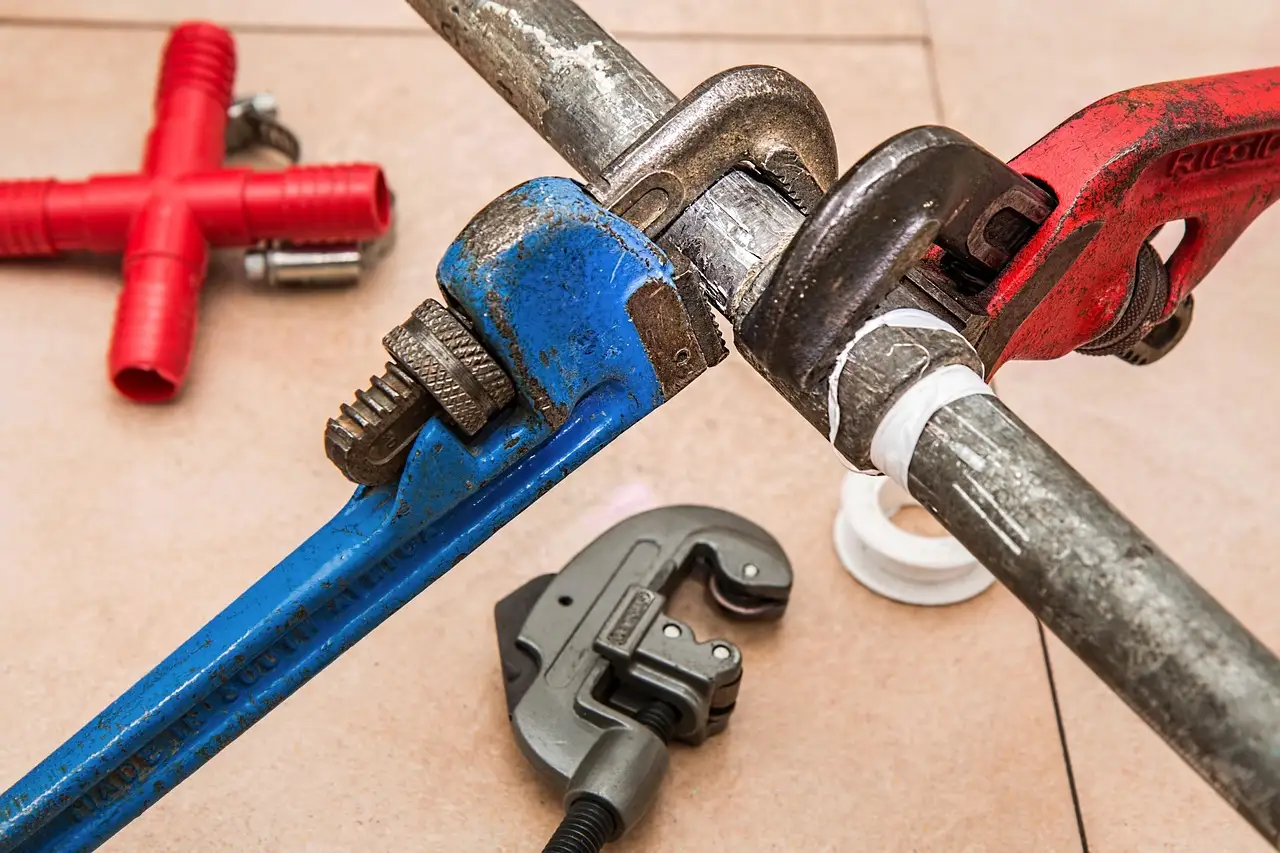
To find the right shutoff, follow the water line from the exterior faucet back to the nearest interior valve. Look for the pipe entering the wall behind the hose bib, then track that branch as it turns into the basement, crawlspace, or utility area. The correct valve usually sits on that same branch, not on a nearby unrelated line.
This matters when multiple exterior faucets exist. A front hose bib and a rear hose bib may have separate branches, or they may share a section before splitting. If the piping is concealed, use the room layout and wall location to narrow the branch before touching any valve.
Pipe-tracing clues that help
- Follow the line from the same exterior wall section, not from the nearest visible valve.
- Check whether the pipe drops or runs horizontally toward the basement wall below the fixture.
- Look for a branch that serves only one outside wall or one group of exterior fixtures.
- Use labels, tags, or paint marks if they are already on the pipe.
- If the piping is hidden in finished walls, ask a plumber to map the branch before you force any valve.
Say your house has two exterior spigots on opposite sides. The rear one works from a basement valve near the laundry area, while the front one has no label at all. In that case, tracing the pipe to each wall location is more reliable than opening every valve that seems close enough.
What does the shutoff valve look like?
The valve controlling an outdoor spigot is usually easier to identify by its handle style than by its location. A quarter-turn shutoff has a lever handle that typically turns 90 degrees. A multi-turn shutoff uses a round handwheel that takes several rotations to open or close.
Handle position also gives a clue. On a quarter-turn valve, the handle is commonly parallel to the pipe when open and perpendicular when closed. On a multi-turn valve, you cannot rely on a single handle angle alone, because it may take many turns to stop flow fully.
Quarter-turn valve clues
- Lever-style handle
- Turns about 90 degrees
- Often found on newer plumbing
- Typically open when the handle lines up with the pipe
- Typically closed when the handle crosses the pipe
Multi-turn valve clues
- Round handwheel or small knob
- Requires multiple rotations
- Common in older homes
- May throttle flow before it fully shuts off
- Can seize if left untouched for long periods
Find the right hose bib shutoff in 7 checks
Use this checklist before you turn anything. It helps you confirm the branch, the valve style, and whether the line actually belongs to the outdoor faucet you want to isolate.
- Start at the exterior faucet. Identify which hose bib, spigot, or sillcock needs service.
- Trace the pipe inward. Follow the branch through the wall, basement, crawlspace, or utility area.
- Match the valve style. Look for a quarter-turn lever or a multi-turn handwheel on that same branch.
- Check fixture grouping. If there are several exterior faucets, confirm you are on the branch for the correct wall or side of the house.
- Look for labels or tags. Any note that says hose bib, outside faucet, patio, front, or rear can help confirm the line.
- Look for frost-free clues. A long stem through the wall may mean the shutoff is deeper in the wall, with a separate drain point nearby.
- Stop if the valve is absent, concealed, or stuck. Use the main shutoff only if needed, or call a plumber if the branch cannot be verified safely.
How do you confirm you found the right valve?
Turn the suspected branch valve off, then briefly test the outdoor faucet. If the correct valve is closed, flow at the hose bib should stop after the line drains. A few seconds of residual water is normal. Continuous flow means you likely found the wrong branch or a valve that is not shutting fully.
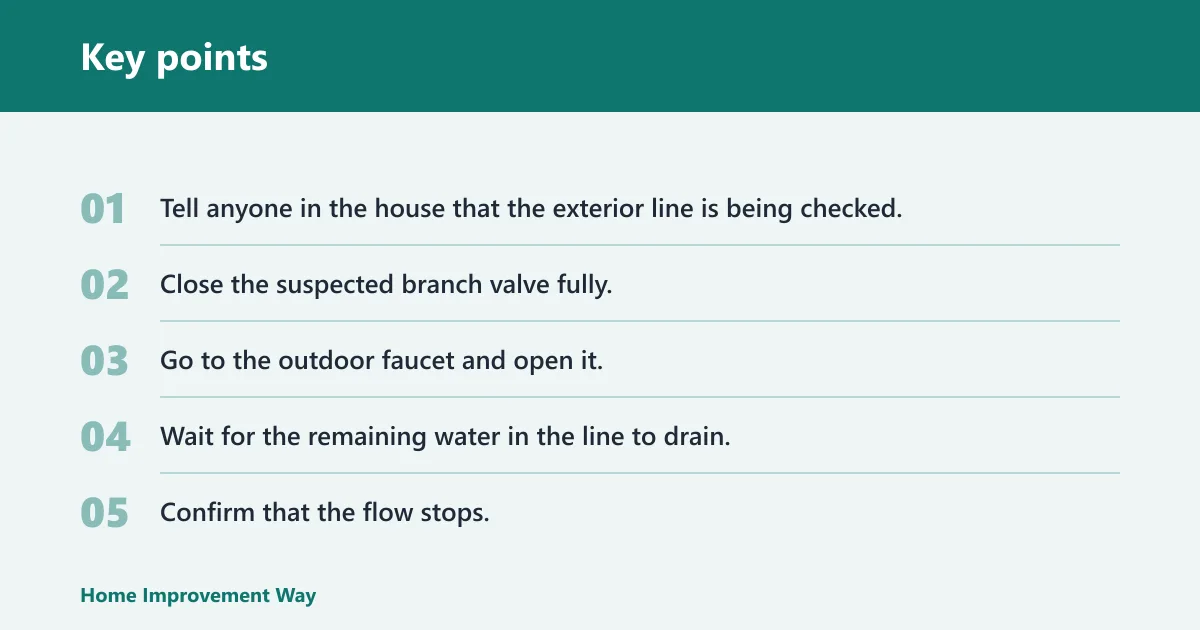
After shutoff, open the hose bib fully and watch for dripping, sputtering, or a slow stream. That confirms whether the exterior line is actually isolated, not just whether the handle moved.
How to test without causing extra disruption
- Tell anyone in the house that the exterior line is being checked.
- Close the suspected branch valve fully.
- Go to the outdoor faucet and open it.
- Wait for the remaining water in the line to drain.
- Confirm that the flow stops.
- If water keeps running, reopen the valve and trace again.
Picture a rear hose bib that still dribbles after the basement lever is closed. If the dribble continues for more than a short drain-down period, the wrong valve may have been selected, or the shutoff may be worn and not closing cleanly. Label the correct valve after you confirm it.
Frost-free hose bibs and winter drains
A frost-free hose bib typically has a longer stem that places the shutoff deeper inside the wall, where it is less exposed to cold. That design reduces freeze damage, but it does not remove the need for winter care. If a hose stays attached in freezing weather, water can still be trapped and damage the body or pipe.
Some systems also include a drain or bleed screw near the interior shutoff. After closing the valve, that drain lets trapped water empty from the line. Not every setup has one, and it should be reopened only after the hose bib is ready for service again.
Winterizing steps when a drain point is present
- Shut off the dedicated indoor branch valve.
- Remove the hose from the exterior faucet.
- Open the outdoor spout to relieve pressure.
- Open the drain or bleed screw if the system has one.
- Let the line empty completely.
- Close the drain again before restoring service.
What if there is no dedicated shutoff?
If no branch valve controls the hose bib, the fallback is the main water shutoff for the house. That stops all water service, so use it only when the repair requires it or when no separate outdoor valve can be found. Many homes, especially older ones or finished homes with concealed piping, do not have an obvious hose bib shutoff.
If the branch is hidden, the valve is seized, or the line appears to feed multiple exterior fixtures in an unclear way, stop and call a plumber. Forcing a stuck valve can snap a stem or create a leak behind the wall. A frozen or immobile valve needs careful handling, not more torque.
When the main shutoff is the right fallback
- No dedicated branch valve is visible after tracing the pipe
- The outdoor line is part of a concealed run you cannot verify
- The repair needs full pressure loss in the house
- The existing shutoff will not move without force
Frequently asked questions
How do I find the shutoff valve for my outside faucet?
Start at the exterior faucet, then trace the pipe back through the wall to the nearest interior branch valve. Look in the basement, crawlspace, utility room, or under a sink on that side of the house. Confirm the valve by briefly shutting it and checking whether flow stops at the hose bib.
Is the hose bib shutoff inside the house or outside?
It is often inside the house on the branch feeding the exterior faucet. Some homes also have a frost-free body with the actual shutoff deeper in the wall. Exterior-only shutoffs exist in some setups, but the indoor branch valve is a very common place to find it.
What does a hose bib shutoff valve look like?
It usually looks like a quarter-turn lever valve or a multi-turn handwheel valve on the pipe feeding the outdoor faucet. A lever that turns 90 degrees is common on newer plumbing. A handwheel that takes several turns is more common on older plumbing and may be harder to judge by handle position alone.
How do I know which valve controls the outdoor spigot?
Follow the pipe path from the spigot back to the interior branch, then confirm by testing flow at the hose bib after closing the valve. The right valve will stop water to that exterior branch after the line drains. Labels, wall location, and pipe direction help when several exterior fixtures are present.
What if my outdoor faucet has no separate shutoff valve?
Use the main water shutoff if you need to stop the outdoor faucet and no dedicated branch valve exists. That shuts off the whole house, so it is a last resort for service or freeze protection. If the piping is concealed or the valve cannot be found safely, a plumber can trace the branch and identify the control point.
How do I tell if the outdoor shutoff valve is frozen or stuck?
A frozen or stuck valve often has a handle that will not move normally, feels immobile, or turns without actually stopping flow. You may also notice dripping, split piping, frost damage, or water inside the wall after a freeze. Do not force the handle; that can break the valve or the pipe.
Sponsored / affiliate links. As an Amazon Associate I earn from qualifying purchases. I may earn additional commission from eligible campaigns.