Frozen Sewer Line: Signs and What to Do
A frozen sewer line often shows up as multiple slow drains, gurgling fixtures, or a backup after cold weather; if several fixtures fail at once, treat it as a line problem, not one clogged sink. Ignoring it can send sewage into tubs, floors, or a basement and can crack pipe or damage fittings if ice pressure builds. This guide explains how to tell ice, a clog, and a damaged sewer line apart and what to do next.
Frozen sewer line signs
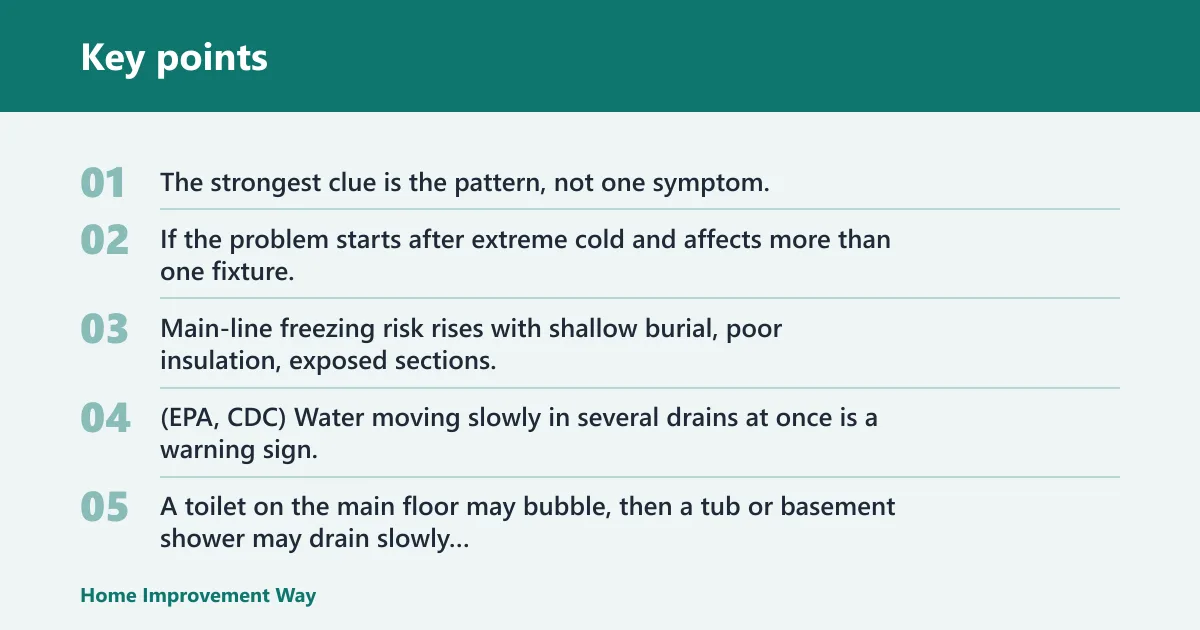


The strongest clue is the pattern, not one symptom. If the problem starts after extreme cold and affects more than one fixture, a frozen or partially frozen main sewer line is more likely than a single sink clog. Main-line freezing risk rises with shallow burial, poor insulation, exposed sections, and standing water in the pipe; those conditions let ice form faster than the soil can buffer the line. (EPA, CDC)
Slow drains and repeated backups
Water moving slowly in several drains at once is a warning sign, especially if the lowest fixtures act up first. A toilet on the main floor may bubble, then a tub or basement shower may drain slowly next. If the blockage were only in one branch line, the rest of the home would usually drain normally.
Repeated backups after a cold snap point more toward ice in the main line, a belly, or a partial blockage from grease, sludge, or roots. Winter and freezing temperatures make plumbing problems worse because standing water chills faster in exposed piping, and cold soil gives the pipe less buffer.
Gurgling toilets and fixture noise
Gurgling noises from toilets and drains are listed as a sewer-line warning sign. That sound often means air is trapped because water cannot move freely through the line. It can also point to venting issues, so gurgling alone does not prove freezing.
Suppose the toilet gurgles only when a nearby sink drains, but the rest of the house works normally. That pattern leans more toward a branch-line or venting problem than a frozen sewer lateral. If several fixtures gurgle together after a hard freeze, the main line moves higher on the list.
Sewage odor inside or outside
Bad smells can include a rotten egg smell from the kitchen sink, and sewer odor outside can point to a damaged or backed-up line. Odor by itself does not identify ice. It may also come from a dry trap, vent issue, or a cracked pipe leaking gas or wastewater.
Pooling water in the yard during winter may indicate a sewer line leak. A sudden infestation of rats or cockroaches can also point to sewer damage. Those clues deserve prompt attention because they suggest the line may be broken, not merely frozen. A leak or seepage pattern is a strong reason to inspect sooner rather than later. (EPA)
Frozen sewer line triage
Use this triage to sort ice from a clog or damage before you choose a fix. The goal is simple: protect the pipe, reduce sewage exposure, and decide whether the problem needs immediate service. Do not pour chemicals, salt, or antifreeze into sewer or septic lines.
| Symptom pattern | Yes: likely cause | No: likely cause | First response | Escalate when |
|---|---|---|---|---|
| Did the problem start right after extreme cold? | Ice in a shallow, exposed, or poorly insulated section | Grease, roots, venting issue, or pipe damage | Stop heavy water use and check the cleanout if accessible | More than one fixture backs up or sewage appears |
| Do the lowest fixtures fail first? | Restriction in the main sewer line or a low spot that traps water | Single-fixture branch clog or localized issue | Watch whether the basement shower, first-floor tub, or lowest toilet fails first | The pattern repeats after cold weather or higher water use |
| Is there sewage odor with slow drains or gurgling? | Backed-up line, cracked pipe, or a venting issue | Dry trap or unrelated odor source | Limit water use and check for visible leaks around fixtures and the cleanout | Odor comes with slow drains, gurgling, or seepage |
| Has the same spot frozen before? | Shallow burial, poor insulation, bellied line, or structural damage | One-time freeze caused only by weather | Arrange a camera inspection after the line is opened | The section freezes again or flow remains unreliable |
| Is there yard or basement seepage? | Leak, crack, offset, or collapse | Temporary freeze without pipe failure | Reduce water use and document where moisture appears | Pool water or floor seepage shows up; same-day service is warranted |
Can sewer lines freeze?
Yes. Sewer lines can freeze when water sits in a cold section long enough for ice to form, especially in shallow, exposed, or poorly insulated sections. The main sewer line and sewer lateral are the usual concern because they carry all wastewater away from the home.
Where freezing happens first
Freezing tends to start where the pipe is shallow, exposed to cold air, or loses heat quickly. Crawl spaces, uninsulated runs, lines under driveways, and sections near exterior walls are common trouble spots. Cabins and mobile homes can be especially vulnerable because their lines may have more exposure.
Why shallow laterals are vulnerable
A sewer lateral that sits closer to the surface can chill faster than a deeper buried line. A sagging or bellied sewer line is also vulnerable because it creates a low spot where water sits and freezes first. That same low spot can trap grease and sludge, which makes winter freezing more likely.
How weather and soil conditions matter
Long cold spells, thin snow cover, and frozen ground all reduce the soil’s ability to buffer the pipe. If the line already has roots, grease, or a partial blockage, winter can turn a minor restriction into a full backup. A frozen line is often the symptom that exposes a bigger problem. (CDC, EPA)
What should you do first?
Start with the lowest drain and the cleanout, then decide whether to stop water use or keep it minimal. If multiple fixtures are backing up, or if sewage is already appearing, treat the situation as urgent. A cleanout is commonly the main access point for inspection and thawing.
When to stop using water immediately
Stop using water immediately if sewage backs up into a tub, floor drain, basement fixture, or toilet. Also stop if multiple fixtures fail at once, the cleanout overflows, or wastewater appears outdoors. Continued water use can worsen the backup and spread contamination.
Check the lowest drain first
The lowest drain gives useful information about where the restriction may be. If the lowest drain backs up first, the problem is often in the main line rather than a single branch. If only one sink or tub is affected, the issue may be local instead of in the sewer lateral.
Find and inspect the cleanout
The cleanout can reveal whether the blockage is in the house drain or the buried line. Its cap should be intact and sealed. If the cap is damaged, loose, or leaking, that is another sign the system needs professional attention rather than more water or chemicals.
Picture a house where the basement toilet and shower both back up after a freeze, but the kitchen sink is still draining slowly. That pattern suggests the problem is lower in the system. A plumber can use the cleanout to check whether the blockage sits inside the house drain or beyond it.
Decide whether to pause water use
If several fixtures are slow, reducing water use can limit overflow while you wait for service. A small steady flow can help some lines, but a slow drip may build ice if the line is already partly plugged. Do not treat running water as a cure without knowing what is causing the restriction.
Ice, clog, or damage?
Frozen line symptoms overlap with clog and pipe failure symptoms, so the next step is pattern matching. Ice usually tracks with extreme cold and a sudden change in several fixtures. Grease, roots, and damaged pipe leave different clues and often need different repairs.
What points to a frozen line
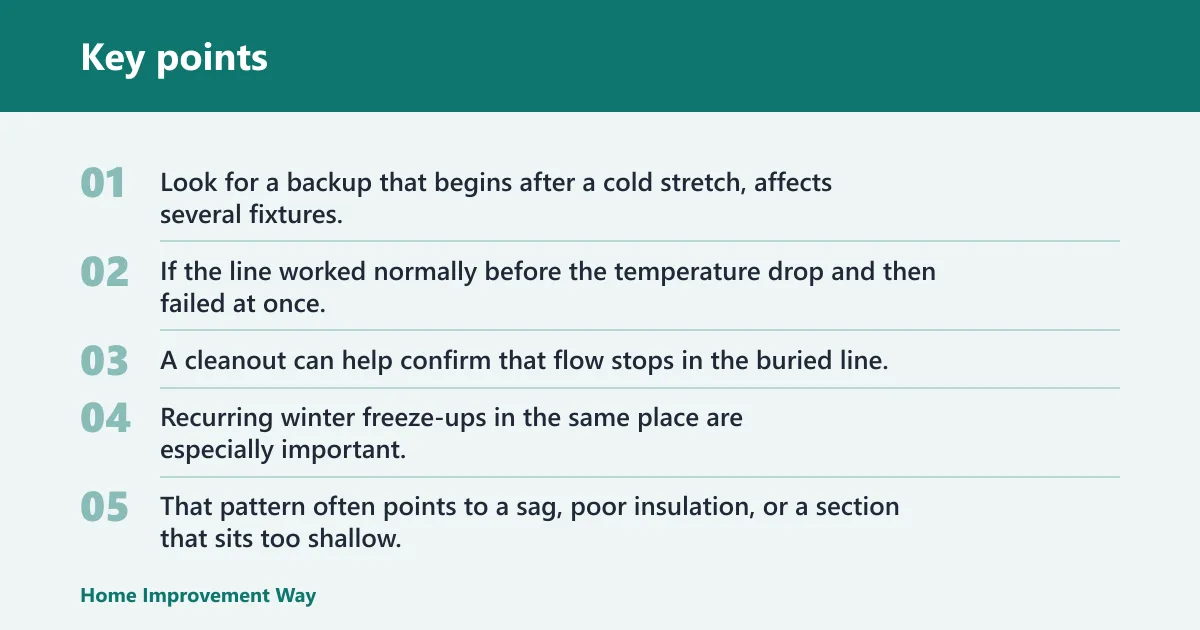
Look for a backup that begins after a cold stretch, affects several fixtures, and appears in a shallow or exposed section. If the line worked normally before the temperature drop and then failed at once, ice is a strong suspect. A cleanout can help confirm that flow stops in the buried line.
Recurring winter freeze-ups in the same place are especially important. That pattern often points to a sag, poor insulation, or a section that sits too shallow. Without a fix to the weak spot, the line can freeze again even after a successful thaw.
What points to grease or roots
Grease, sludge, and roots often cause gradual trouble. Drains may slow over days or weeks, then freeze more easily because the narrowed pipe holds more standing water. Hydro jetting may be used after thawing when grease, sludge, or roots contribute to a partial blockage; pricing varies by access, line condition, and local labor.
Hydro jetting should be done by a professional when access is available. It uses high-pressure water cleaning to restore flow after thawing if the pipe is partially obstructed. It is not the right move if the pipe may be cracked or collapsed.
What points to a bellied or broken pipe
A bellied or sagging sewer line creates a low spot where water sits and freezes first. It often requires camera inspection to confirm. If the line has offsets, cracks, or collapse, freezing may be a secondary symptom of structural failure rather than the main problem.
Seepage in the yard or basement is a stronger damage clue than a simple freeze. When the pipe leaks, water can escape before it backs up indoors. That is why pooling water in winter deserves the same attention as a toilet backup.
How plumbers diagnose it
Diagnosis should separate a frozen line from roots, grease, venting issues, or collapse. The cleanout usually comes first, because it is the safest access point for checking flow and for thawing. From there, a plumber can decide whether the problem is in the house drain or farther out in the buried line.
Cleanout access and flow checks
A cleanout opening lets a plumber see whether wastewater is moving toward the street or septic tank. If flow stops close to the house, the issue may be in the interior drain or the first buried section. If the line is blocked farther out, the main sewer line likely needs more work.
Video camera inspection
A video camera inspection is used to assess sewer line condition before repair. It can locate cracks, root intrusion, offsets, bellies, or collapse, and it helps distinguish a frozen line from a structural failure. It also supports repair planning and exact location mapping. Camera inspection is valuable because it turns guesswork into a visible diagnosis before the next repair step. (EPA)
This step matters because a thaw alone does not fix a broken pipe. If the camera shows a sag or collapse, the correct solution may be repair, not another thaw attempt.
How sewer lines are fixed
Fixes depend on whether the line is frozen, partially blocked, or damaged. A plumber may thaw the line, clear a partial blockage, or recommend repair if the pipe cannot reliably carry wastewater. The goal is to solve the cause, not just the symptom.
Professional thawing and line cleaning
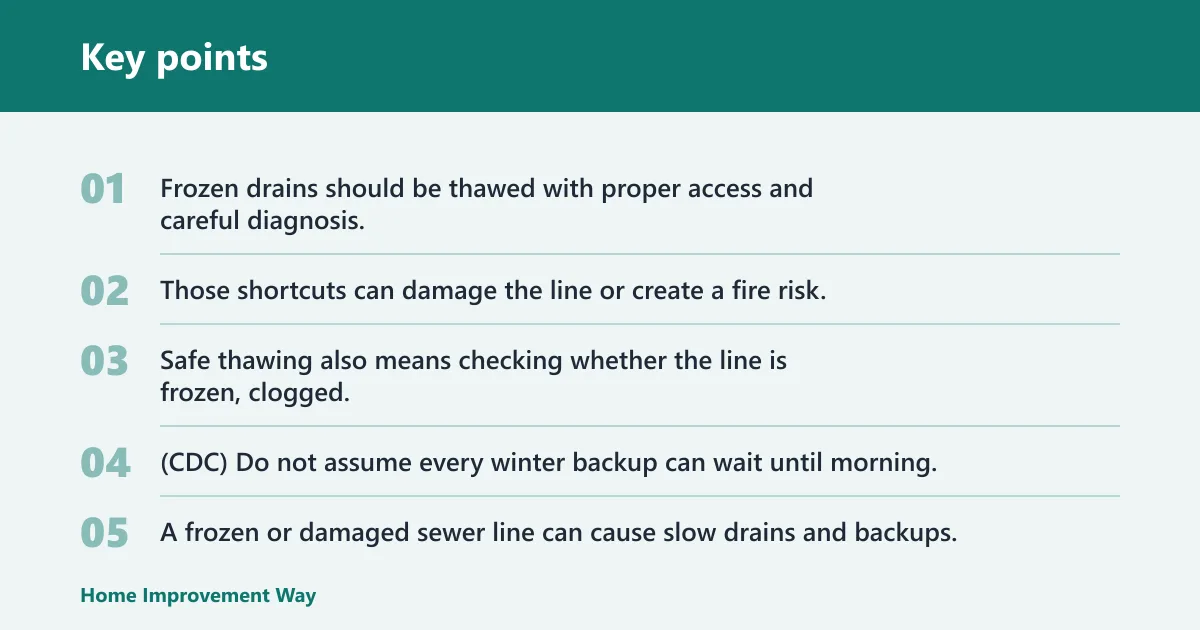
Frozen drains should be thawed with proper access and careful diagnosis, not by pouring chemicals or using an open flame on plastic pipe. Those shortcuts can damage the line or create a fire risk, and they may not reach the frozen section anyway. Safe thawing also means checking whether the line is frozen, clogged, or damaged before more water is added. (CDC)
Do not assume every winter backup can wait until morning. A frozen or damaged sewer line can cause slow drains and backups, and sewage can reach tubs, floors, or a basement fast once the line loses capacity. Same-day emergency service is warranted when sewage is present, multiple fixtures are backing up, or the home cannot safely keep using water.
Hydro jetting after thawing
If thawing restores some flow but the line still drains poorly, hydro jetting may be the next step. It can clear grease, sludge, or roots that contributed to the freeze in the first place. That is why diagnosis matters: ice may be the trigger, while buildup is the underlying restriction.
Trenchless repair or excavation
Trenchless sewer repair may be used when frozen-line symptoms reveal deeper pipe damage and the line still has enough structural integrity for lining or pipe bursting. Trenchless sewer relining creates a new pipe inside the existing line, and many manufacturers and installers describe the relined pipe as a long-term repair measured in decades rather than a short-term patch.
If the pipe has collapsed or lost too much structure, excavation may be necessary. That is more disruptive, but it may be the only way to replace a failed section that will not hold a liner or accept a burst replacement.
How can you keep sewer lines clear?
Prevention starts with exposure control and early diagnosis. Keep the line insulated where possible, watch for repeat winter slowdowns, and pay attention to any spot that freezes more than once. A recurring pattern is often the first sign of a sag, root intrusion, or damage.
- Limit grease, sludge, and other buildup that narrow the pipe.
- Watch for repeated slow drains after cold snaps.
- Keep the cleanout cap intact and sealed.
- Arrange a camera inspection if the same section freezes again.
- Address shallow runs, exposed sections, and insulation gaps before the next freeze.
Cabins, mobile homes, lines under driveways, and uninsulated crawl spaces deserve extra attention because they cool faster than protected buried pipe. Septic inlet and outlet lines can also freeze in cold climates and cabins, and they should not be treated with antifreeze, salt, or drain chemicals. If the tank is full, separate tank-pumping support may be needed.
Frequently asked questions
Can sewer lines freeze in winter?
Yes. Sewer lines can freeze in winter when the line is shallow, exposed, poorly insulated, or partly blocked with standing water. Long cold spells, crawl spaces, cabins, and lines under driveways raise the risk. A freeze is more likely where water can sit in the pipe.
What are the signs a sewer line is frozen?
Common signs include multiple slow drains, gurgling toilets, foul odors, and a backup that appears after extreme cold. If the lowest drain fails first, the main line is more suspect. Yard seepage or a basement backup can mean the problem is more serious than ice alone.
How to thaw a sewer pipe
Do not try to thaw a sewer pipe with an open flame or by pouring chemicals into it. The safer route is professional thawing through the cleanout, followed by inspection. If the pipe is partly obstructed, cleaning may be needed after thawing to keep it moving.
Sponsored / affiliate links. As an Amazon Associate I earn from qualifying purchases. I may earn additional commission from eligible campaigns.
 Waterless EverPrime® 1514 Floor Drain Trap Seal Liquid, 1 Quart, Sewer Gas Odor Control, Dry Floor Drains, HVAC Traps, Biodegradable, Non-Evaporating, Freeze-Resistant to -20°F (1 Quart (Pack of 1))
 Fuller Brush Drain Line & Septic Tank Cleaner – 32 oz Enzyme-Based Drain Cleaner for Slow Drains, Grease & Food Buildup, Safe for PVC/Metal Pipes & Septic Systems (Pack of 1)