How to Tell If a Frozen Pipe Has Burst
Check whether water still flows and whether your meter moves with all fixtures off: no flow plus meter movement usually means a burst pipe, while a frozen-only pipe often restores flow after thawing. Ignoring it can turn a small crack into hidden wall, floor, and mold damage within hours. This article shows the fastest clues, the meter test, and the next step to take.
Frozen pipe burst signs
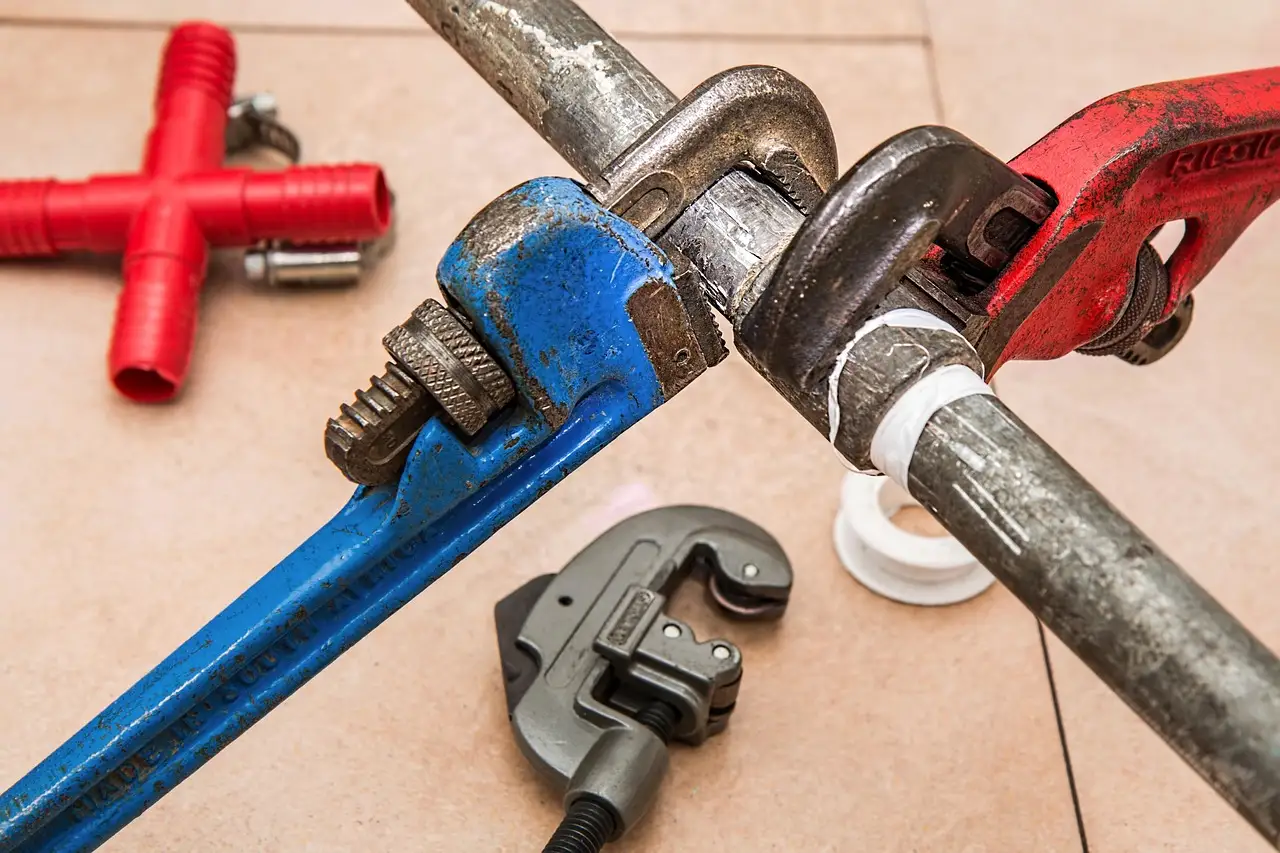
The first question is where the problem shows up. A frozen supply pipe usually shows itself at one branch or one fixture, while a burst pipe adds water damage clues, pressure loss, or meter movement even when everything is off.
No water, but only at one fixture
If one faucet has no flow and nearby fixtures still work, that points to a frozen section on that branch or line. A supply pipe that freezes can stop flow without leaking yet, especially in exposed or unheated areas.
No water anywhere in the home
If every faucet is dry, the main supply may be frozen solid or shut off, or a main line break may be involved. Assured Comfort notes that no water from faucets or fixtures can mean a supply pipe is frozen solid, but you still need to check the meter and visible damage before you assume it is only frozen.
Partial flow and pressure loss
Weak flow, uneven pressure, or hot water losing pressure by itself can narrow the location. If hot-only pressure drops, the issue may sit on the line after the water heater. If only one floor or one bathroom is affected, the break is likely closer to that branch.
Water returns, then new staining appears
A thawed pipe can start flowing again and still be cracked. That is why restored water does not clear the case. New staining, damp drywall, or a musty smell after flow returns often means the pipe split during the freeze and leaked once pressure came back.
Freeze vs Burst decision matrix
Use this as a quick sorting tool. Start with the symptom you can verify right now, then follow the next action. If more than one row fits, follow the more serious one.
| Symptom | What it usually means | Next action |
|---|---|---|
| No water at one faucet | Likely frozen supply line on that branch, often in an exposed run or cold wall | Check nearby fixtures, then thaw gently from the faucet end backward |
| No water at all | Main supply freeze, shutoff issue, or a larger break affecting the system | Check the main shutoff and the meter; if split pipe is suspected, close the main valve |
| Meter still moving with all fixtures off | Water is escaping on your side of the system | Close the main water shut-off valve and call for repair |
| Wet ceiling near lights | Hidden burst above the ceiling or in an upper-floor line | Turn off electricity to the affected area if needed, then shut off water |
| Frost on exposed pipe | Pipe is freezing or at high risk of freezing | Warm the area gently and add pipe wrap after the immediate issue is resolved |
| Flow returns after thaw | Pipe may have been frozen only, or it may have cracked and not leaked yet | Keep watching for staining, meter movement, or pressure loss |
| New staining appears later | Delayed leak from a crack that opened during freezing | Shut off water and arrange repair |
| Musty smell or bubbling paint | Hidden moisture in a wall, ceiling, or cabinet | Inspect carefully without cutting into electrical or structural hazards; call for help if the source is unclear |
| Wet wall with no obvious puddle | Leak may be inside the wall cavity | Check the meter and nearby fixtures; stop water if movement continues |
| Hot-only pressure loss | Likely issue on the hot side, often after the water heater | Compare hot and cold at several fixtures before opening walls |
How to tell if a pipe is frozen or burst
Start by checking fixtures in a set order: the sink closest to the cold area, then another fixture on the same floor, then a hot and cold tap on a different level if you have one. That pattern helps separate a frozen branch from a larger supply break.
Check fixtures in a set order
Open each fixture one at a time. No water at one faucet with normal flow elsewhere usually points to a frozen branch line. No water anywhere, or strong flow in one spot and none in another, needs a closer look at the main supply and the meter.
Look for pressure patterns by location
Pressure loss at fixtures matters because location gives clues. If upstairs fixtures are weak but downstairs fixtures work, the issue may sit higher in the system. If only hot water drops out, the line after the water heater deserves attention.
Use the water meter as confirmation
Close every fixture, then watch the water meter for about 30 minutes. Movement during that time suggests water escaping on your side of the system. A low-flow dial or a star or triangle indicator can reveal small movement that the main numbers may miss.
Say your kitchen sink is dry, the bathroom sink still runs, and the meter’s low-flow triangle moves after every tap is closed. That pattern points away from a simple frozen branch and toward a leak somewhere on the supply side.
What to do first
If you suspect a split pipe or an active leak, close the main water shut-off valve right away. That stops pressurized supply water and limits damage while you sort out whether the problem is frozen, cracked, or already burst.
- Close the main water shut-off valve if you suspect a split or active leak.
- Check the water meter with all fixtures closed.
- Look for visible wet spots, staining, or frost on exposed lines.
- Turn off electricity near wet areas if water is near lights, outlets, or equipment.
- Document visible damage before opening a wall, ceiling, or cabinet.
Be careful around ceilings, slabs, and concealed wall cavities. If water is near electrical fixtures or you hear dripping inside a ceiling, avoid cutting or probing blindly. A hidden burst can sit above you, beside wiring, or under flooring.
Can a frozen pipe burst without visible water damage?
Yes. A frozen pipe can crack and still leave no obvious puddle at first, especially if the break is inside a wall, ceiling, slab, or underground. Hidden leaks often show up later as staining, bubbling paint, a musty smell, or a damp spot that grows over time.
Hidden leaks in walls and ceilings
What does a burst pipe look like in a wall or ceiling? Often it does not look like a pipe at all. You may see a brown ring, sagging drywall, bubbling paint, or wetness around a light fixture. Those are signs to stop using water and inspect carefully.
Why slabs and underground runs are harder to spot
Bursts in slab or underground lines can move water out of sight. The floor may stay dry while the meter keeps moving. That is why the meter test matters so much when you cannot find a puddle.
Delayed staining after thaw
A common first-timer mistake is to relax once the faucet starts running again. Flow returning after thaw does not prove the pipe is fine. If a crack opens only when pressure comes back, new staining may appear hours or weeks later.
Suppose a basement faucet starts flowing again after a warm air cycle, but by evening you notice a yellow stain near the joist above it. That is not a frozen-only pattern anymore. It fits a pipe that cracked and then leaked after thaw.
Safe thawing and next steps
Use controlled heat only. A hairdryer or other gentle heat source can thaw a frozen section from the faucet end backward, which helps release pressure toward the outlet. Open flame, blowtorch, and heat gun use are unsafe on plumbing pipes.
Thaw from the faucet end backward
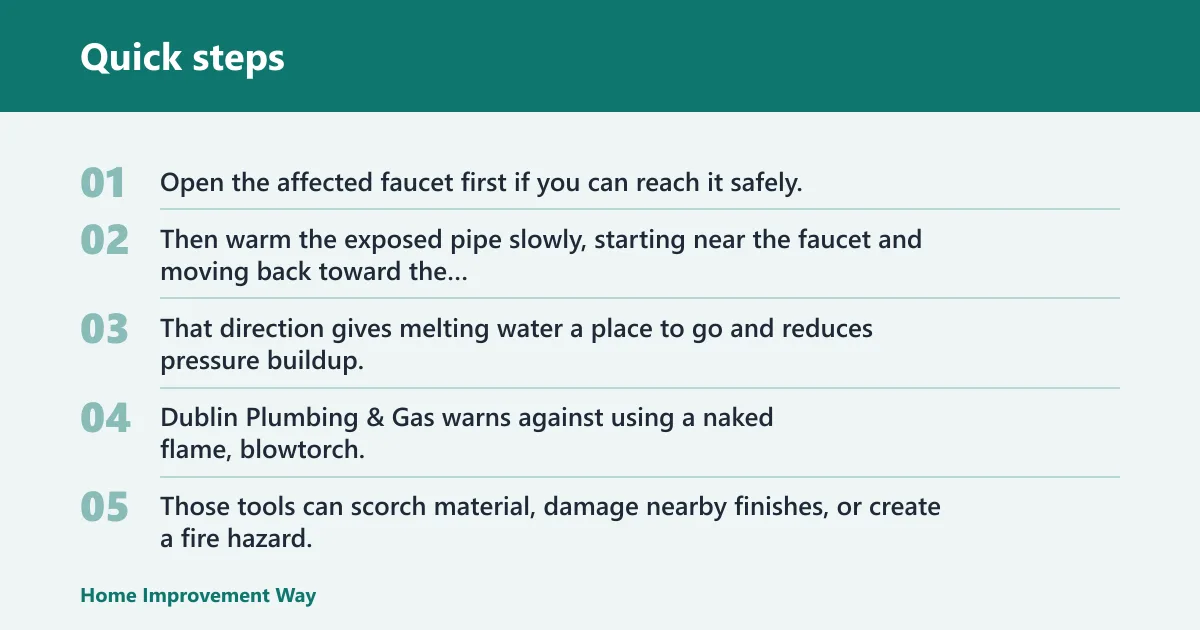
Open the affected faucet first if you can reach it safely. Then warm the exposed pipe slowly, starting near the faucet and moving back toward the colder section. That direction gives melting water a place to go and reduces pressure buildup.
Avoid open flame and blowtorch use
Dublin Plumbing & Gas warns against using a naked flame, blowtorch, or heat gun on plumbing pipes. Those tools can scorch material, damage nearby finishes, or create a fire hazard. Keep the heat source moving and stop if the pipe surface becomes too hot to touch briefly.
When to stop and shut off water
If the pipe starts leaking, if the meter keeps moving, or if you find wet drywall, shut off the main valve and switch from thawing to damage control. A thawed pipe that leaks is no longer a freeze-only problem.
Hidden bursts need a different approach because you may not be able to see the pipe itself. The goal is to confirm the leak with meter movement and surface clues, then stop the water before opening a wall or ceiling.
Signs in walls, ceilings, and floors
Look for a wet wall with no visible puddle, soft drywall, bubbling paint, ceiling stains, or a musty smell. Around light fixtures, take extra care. Water near electricity is a shutoff-and-call situation, not a place for deeper inspection.
Why meter movement matters here
If every fixture is closed and the meter still moves after about 30 minutes, something on your side may be using water. That can be a hidden burst in a wall, slab, or underground line. The meter does not identify the exact spot, but it confirms the leak is real.
When to call a plumber right away
Call for help if you have meter movement, active dripping from a ceiling, loss of hot-only pressure with no clear cause, or water staining that keeps spreading. If the damaged area is near wiring, fixtures, or a ceiling cavity, do not keep opening it yourself.
Frozen pipe safety and prevention
Exposed pipe insulation helps most on vulnerable runs in basements, crawl spaces, garages, exterior walls, and under sinks on cold walls. Foam lagging or closed-cell foam is commonly used because it wraps exposed pipe and slows heat loss.
Where exposed pipe insulation helps most
Focus on the pipe sections most likely to freeze first: unheated spaces, drafty cabinets, and pipe runs with airflow around them. Insulation works best when it covers the weak spot fully and does not leave gaps at elbows or joints.
Why foam lagging or closed-cell foam is used
These materials are simple to fit around common pipe sizes. They do not stop every freeze, but they reduce the chance that a cold snap turns into a cracked supply line. For winter prep, they belong on the short list.
Winter prep before the next freeze
When away from home, Dublin Plumbing & Gas recommends a background temperature of 13°C to 15°C. A slow drip of one drop every second or two may matter when outdoor temperatures stay below freezing for several hours. That small flow can help keep water moving in vulnerable lines.
The same source says pipes can freeze and burst in about four to five hours at 20°F or below. Frost on exposed water supply lines is one warning sign. That is the time to act, not wait for a ceiling stain.
Frequently asked questions
How do you know if a frozen pipe burst?
Check flow, then check the meter. No water plus meter movement with all fixtures closed usually means a burst or hidden leak on your side. If water returns after thawing but stains, damp walls, or a musty smell appear later, treat it as a cracked pipe until proven otherwise.
How to tell if a pipe is frozen or burst: frozen pipes can stop flow
Frozen pipes can stop flow at one branch or one fixture, then restore flow after gentle thawing. Burst pipes more often create meter movement, pressure loss, staining, or hidden moisture. Compare several fixtures, then confirm with the meter before assuming the line is only frozen.
What are the signs a frozen pipe has burst?
Look for wet drywall, ceiling stains, bubbling paint, musty odors, new puddles after thaw, or a meter that moves with every fixture closed. A pipe can freeze first and burst later, so restored flow does not clear it if damage keeps showing up.
How can I tell if a pipe is frozen versus burst?
A frozen pipe often gives no water or a trickle at one fixture. A burst pipe may also show pressure loss, water damage, or meter movement when the home is shut down. If hot water alone is weak, the line after the water heater may be part of the problem.
What should I check first if water stops flowing in winter?
Check whether the problem is at one faucet or every fixture, then look at the meter with all fixtures closed. That tells you whether you are dealing with a frozen branch, a main supply freeze, or a leak. If a split is suspected, close the main valve.
Should I shut off the water if I think a frozen pipe burst?
Yes. If you suspect a split pipe or see active leakage, close the main water shut-off valve at once. That stops pressurized supply water and limits damage while you confirm the source. If the area is wet near electricity, turn off power to that zone too.
Sponsored / affiliate links. As an Amazon Associate I earn from qualifying purchases. I may earn additional commission from eligible campaigns.