
How to Stop a Faucet Handle From Wobbling at the Base
If the handle wobbles at the base, check the handle screw or set screw first, then the retaining nut or cartridge stem. If those are tight and the wobble remains, the internal splines or stem are stripped and the part needs replacement. Ignoring it can crack trim, damage the stem, or leave you with a faucet that leaks or fails to turn smoothly. This guide shows how to tell handle wobble from base wobble, tighten the correct fastener, and replace worn parts without damaging the faucet.
What you’ll need
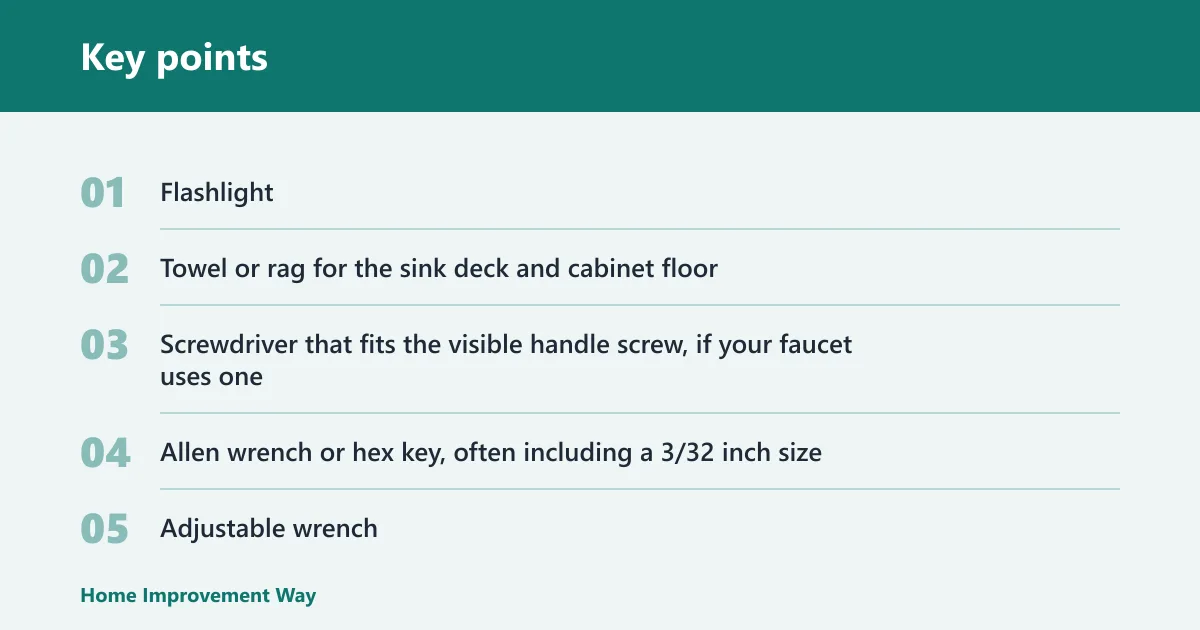


- Flashlight
- Towel or rag for the sink deck and cabinet floor
- Screwdriver that fits the visible handle screw, if your faucet uses one
- Allen wrench or hex key, often including a 3/32 inch size
- Adjustable wrench
- Basin wrench for tight under-sink mounting nuts
- Plumber’s grease for reassembly, if parts come apart cleanly
- Small container for screws, cap, and trim parts
Tool choices by faucet style
| Faucet style | Tool to start with | What you are trying to reach |
|---|---|---|
| Visible screw | Screwdriver or matching hex key | Handle screw on the outside of the trim |
| Hidden cap | Plastic pick or fingernail, then screwdriver or Allen wrench | Decorative cap that hides the set screw |
| Under-sink nut | Basin wrench | Mounting nut that secures the faucet body |
Diagnosis
Why is my faucet handle wobbling at the base?
A wobble at the base usually points to loose handle hardware, a loose faucet body at the sink deck, or a worn internal stem or cartridge. The right fix depends on where the movement starts. That distinction matters because tightening the wrong fastener wastes time and can damage trim.
How do I tell whether the problem is the handle, the cartridge, or the base?
Move the handle side to side with the water off. If the handle moves while the body stays put, the problem is usually above the sink. If the whole faucet body rocks, look under the sink next. If the handle feels tight but still twists or skips, suspect the stem, cartridge, or splines.
What does a rough or loose-feeling handle usually mean?
Rough movement often points to mineral buildup or a worn cartridge, while a loose feel can indicate rounded splines, a tired O-ring, or a backing-off packing nut. If the handle binds in one spot, clean deposits first. If it still slips or rocks, the wear is likely internal.
Tools
Faucet handle diagnostic table
| Symptom | Likely failure point | Best first fix |
|---|---|---|
| Handle wobbles, but faucet body stays still | Loose set screw or visible handle screw | Remove the cap if present and tighten the screw clockwise |
| Whole faucet shifts at the sink deck | Loose mounting nut or loose base hardware | Tighten the under-sink mounting nut with a basin wrench |
| Handle spins or slips after tightening | Stripped stem, worn cartridge, or damaged splines | Stop tightening and inspect the cartridge or stem for replacement |
| Handle feels rough or loose with a drip near the stem | Worn O-ring or packing nut issue | Inspect the seal, then lubricate or replace the worn part |
Step-by-step fix
How do I tighten a loose faucet handle without breaking it?
Shut off the water at the shutoff valves under the sink before tightening the handle, then open the faucet to relieve any remaining pressure. Remove the decorative cap if the screw is hidden, use the right driver, and turn the fastener clockwise only until the wobble stops. If the base moves, switch to the mounting nut under the sink instead of forcing the handle.
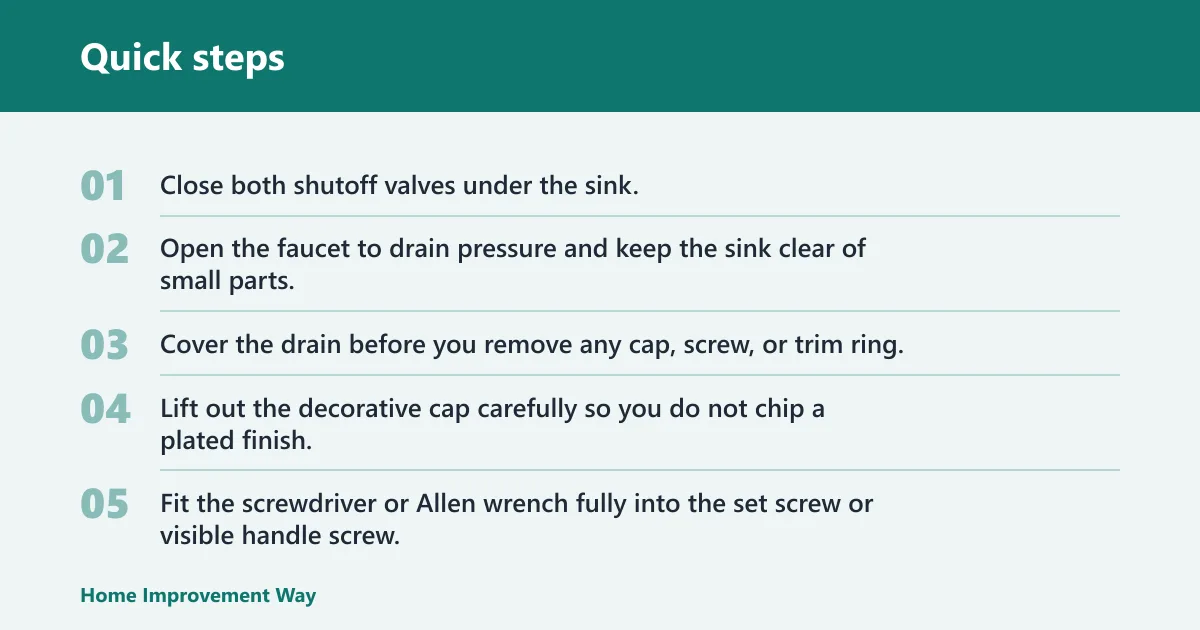
- Close both shutoff valves under the sink; use the main shutoff if the local valves are missing or stuck.
- Open the faucet to drain pressure and keep the sink clear of small parts.
- Cover the drain before you remove any cap, screw, or trim ring.
- Lift out the decorative cap carefully so you do not chip a plated finish.
- Fit the screwdriver or Allen wrench fully into the set screw or visible handle screw, then turn clockwise until the handle stops wobbling.
- If the faucet body moves, go under the sink and tighten the mounting nut with a basin wrench until it stops moving, not beyond that.
- Reassemble the handle, add a thin film of plumber’s grease only where parts slide together, then test the handle for smooth movement and leaks.
Picture a single-handle kitchen faucet with a hidden cap and a 3/32 inch Allen wrench. If the handle wiggles but the base stays fixed, the cap and set screw are the first stop. If the whole faucet rocks when you push the spout, the under-sink nut is the better target.
Base wobble
What if the base still moves?
If the base still moves after tightening, the mounting hardware may be corroded, the nut may be stripped, or the sink mount itself may be cracked. A loose kitchen faucet base can lead to leaks, water damage, and mold, so stop once the nut no longer bites. Replace damaged hardware instead.
- Check the underside for green corrosion, rounded threads, or a nut that spins without clamping down.
- Compare the faucet body at the deck to the sink opening; a cracked deck plate or sink hole will not hold torque.
- Replace the mounting nut if it will not tighten cleanly or if corrosion has eaten into the threads.
- If the faucet uses screws instead of nuts to secure the base, replace the damaged screw or bracket set.
- Retest the body by moving the spout gently; stop if the mount still shifts.
How do I handle mineral buildup around a loose or rough faucet?
Mineral buildup can make the handle feel gritty, sticky, or oddly loose because deposits interfere with the cartridge and trim fit. Wipe the visible area first, then inspect for white crust or green corrosion around the stem and base. If cleaning improves motion but wobble remains, the wear is likely still in the hardware.
Stripped parts
Common mistakes
Overtightening is a common cause. A set screw can strip, and overtightening can make the handle too stiff to operate. Forcing a handle onto a bent stem or damaged cartridge can make the problem worse. Plumber’s grease helps reassembly, but it does not fix worn hardware.
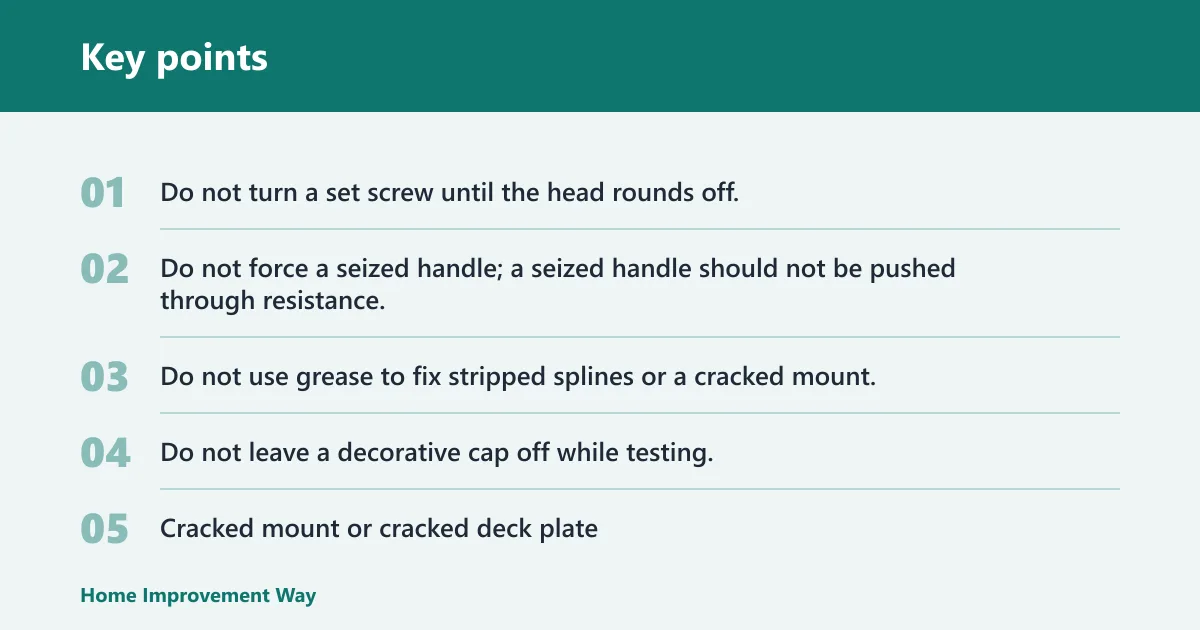
- Do not turn a set screw until the head rounds off.
- Do not force a seized handle; a seized handle should not be pushed through resistance.
- Do not use grease to fix stripped splines or a cracked mount.
- Do not leave a decorative cap off while testing; it can hide a loose screw that needs one more turn.
When should I replace the cartridge instead of tightening parts?
Replace the cartridge when the handle remains loose, spins oddly, or feels seized after the visible fasteners are snug. A damaged cartridge will not respond to more tightening. If the handle binds or the stem will not seat cleanly, replacement is the better fix.
What should I do if the handle still wobbles after I tighten it?
Move from tightening to inspection. A handle that still wobbles after the screw, set screw, and mounting nut are snug usually points to worn internal parts, not a missing turn of the wrench. Check the cartridge, stem, and splines for damage, and replace the part if it is stripped, seized, or visibly bent.
If the handle feels snug, but it still rocks a little every time you open the faucet, the fastening point is no longer the weak link. The stem or cartridge has lost its grip, and more torque will not restore it.
Stop now if you see
- Cracked mount or cracked deck plate
- Stripped set screw or rounded screw head
- Seized stem or seized handle that will not move freely
- Mounting nut spinning without clamping down
- Resistance rising enough that more torque could break the part
Leak prevention
How do I keep the faucet from leaking after tightening the base?
After you tighten the base, dry the sink deck and the cabinet floor, then run water for a minute while watching the underside. A leak after tightening usually means the seal, cartridge seat, or mounting parts were already worn. Stop as soon as you see seepage and inspect the exact joint that is wet.
- Open the shutoff valves fully after reassembly.
- Run cold and hot water separately while checking the body, spout base, and underside for drips.
- Wipe the faucet dry, wait one minute, and look again for fresh moisture.
- If the leak starts at the stem, inspect the O-ring or packing nut.
- If the leak comes from the deck, recheck the mounting nut or base screws before calling the job done.
FAQ
Do I need to tighten the set screw or the mounting nut?
Tighten the set screw when the handle is loose but the faucet body stays still. Tighten the mounting nut when the whole faucet shifts at the sink deck. A flashlight helps you trace where the movement begins before you touch a wrench.
What tools do I need to fix a wobbly faucet handle?
Most repairs need a flashlight, screwdriver, Allen wrench or hex key, adjustable wrench, towel, and basin wrench. A 3/32 inch Allen wrench fits many single-handle models. Add plumber’s grease only for reassembly, not as a cure for worn hardware.
How do I tell if the handle is loose because of a stripped stem?
If the screw is tight but the handle still spins, slips, or fails to move the valve smoothly, the stem or internal splines may be stripped. At that point, stop tightening and inspect the cartridge or stem for wear. Replacement is usually the right fix.
What if the faucet base is loose and the handle still wobbles?
Treat that as two separate problems. Tighten the mounting nut first so the faucet body stops moving, then check the handle screw or set screw. If both are tight and the wobble remains, the cartridge or stem is likely worn.
Sponsored / affiliate links. As an Amazon Associate I earn from qualifying purchases. I may earn additional commission from eligible campaigns.