How to Tell If Your Water Meter Is Frozen
If your water meter or meter box is frozen, the clue is often no water at every fixture plus a hard, cold meter lid; if the meter is wet, split, or the box has standing water, call the utility before thawing. Forcing heat on the wrong part can crack plastic parts, flood the box, or leave you without water longer. This guide shows a simple winter check to tell a frozen meter, frozen service line, meter leak, or shutoff problem apart.
Frozen meter diagnosis
Start with the symptom. If every tap is dead, the issue may be at the meter, the service line, or the main shutoff. If only one faucet or one floor is affected, the freeze is more likely inside the home. A frozen meter can stop water to the whole house.
What you’ll need
- Flashlight or headlamp
- Gloves and shoes with good traction
- A wrench only if your local meter lid or valve design requires one
- A phone to call the utility or a plumber if the meter pit is frozen or unsafe
Say your kitchen sink, laundry tub, and shower all quit at the same time after an overnight cold snap. That pattern points away from a single frozen branch line and toward the meter area, the service line, or the main shutoff.
Frozen meter or frozen line?
Use these yes/no checks in order. A single answer rarely proves the cause by itself, but the pattern usually separates a frozen meter from a frozen service line, an indoor branch-line freeze, a leak, or a street-side outage. If the pit is unsafe, wet, split, or full of ice, stop and call the utility or a plumber.
- Do all fixtures have no water? If yes, continue. If no, an indoor freeze is more likely than a meter or service-line freeze.
- Do nearby homes still have water? If yes, the problem is more likely on your property. If no, the street main may be out.
- Is the meter lid, box, or pit hard and very cold? If yes, a frozen meter or service line moves higher on the list.
- Is there frost, ice, or standing water in the pit? If yes, call the utility; the meter area may be unsafe or damaged.
- Is the meter dial or register moving when all taps are off? If yes, water is still flowing and a leak or open fixture is more likely than a frozen meter.
- Is the small leak indicator spinning? If yes, that points to movement through the meter, not a dead meter, and often to a leak or open fixture.
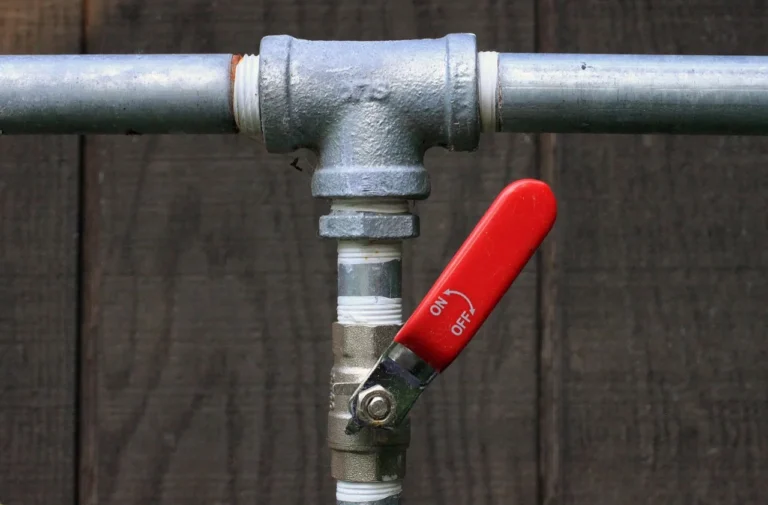
- Is the main shutoff valve fully open? If no, the symptom may be a partly closed valve rather than a freeze.
- Is only one fixture or one floor affected? If yes, a frozen branch line is more likely indoors; if the whole house is dry, call the utility or a plumber for the meter/service line.
| Frozen meter or frozen line checklist | Yes / no check |
|---|---|
| House-wide no-water test | Do all fixtures have no water? |
| Neighbor water check | Do nearby homes still have water? |
| Meter box temperature | Is the lid, box, or pit hard and very cold? |
| Meter dial movement | Does the dial or register move when all taps are off? |
| Low-flow indicator behavior | Is the small blue triangle or other indicator spinning? |
| Frost or ice in the box | Is there frost, ice, or standing water in the pit? |
| Shutoff valve position | Is the main valve fully open? |
| Call point | Is the box unsafe, the meter wet or split, or the line likely frozen? |
What should I check before calling the water utility?
Check the house-wide water supply first, then check whether nearby homes still have water. If your neighbors also have no service, the problem may be in the street main, not your meter. If your home is the only one affected, inspect the meter area next and check the main shutoff position.
Quick checks before you call
- Close every fixture valve in the home, including tubs, showers, outdoor spigots, and appliance valves.
- Check the house-wide no-water test at a sink on the lowest level.
- Ask a neighbor whether water is working there.
- Look at the main shutoff valve and confirm it is fully open.
- Inspect the meter box for cold, ice, or standing water before you call.
Do not skip the shutoff valve check. A partly closed valve can look like a freeze because pressure drops across the house. If the meter pit has a cast iron lid, lift it carefully; it can be heavy and may hide insects, rodents, or other animals.
How do I safely inspect a water meter pit in winter?
Open the lid slowly, keep your hands clear of the edge, and look before reaching down. A meter pit may contain insects or other animals, sharp edges, or hidden water. If the lid is frozen in place, warped, or too heavy to move safely, stop and call the utility or a plumber.
Water meters are usually near the curb in front of a home. In cold climates, a meter may be inside the home, usually in the basement. A meter box may have a cast iron lid.
Safety steps before touching the lid
- Stand to the side and lift slowly so you can see into the pit first.
- Keep gloves on and avoid reaching into water you cannot see through.
- Stop if the cover is cracked, stuck, or unusually heavy.
- Call the utility if the box is wet, icy, or clearly damaged.
Meter styles you may see
A straight-reading meter may look similar to an odometer. It looks like an odometer, and the reading is taken from figures under CUBIC FEET. A round-reading meter has several separate dials. Those dials are marked off in divisions of 10, and every other dial turns counterclockwise.
Water meters in the U.S. typically measure volume in gallons or cubic feet. One cubic foot equals 7.48 gallons, and 100 cubic feet equals 748 gallons. Billing and leak checks use those readings later, so a stuck or damaged meter can create confusion even after the freeze clears. Utility and standards guidance commonly uses this conversion when translating cubic-foot meter readings into gallons.
How do I tell whether the problem is the meter, the service line, or a leak?
Use the symptom pattern. If no water reaches the whole house and the meter box is very cold or iced up, the meter or the service line may be frozen. If the meter dial or low-flow indicator keeps moving while every tap is off, water is still passing through the meter and a leak or open fixture is more likely.
Frozen meter vs frozen service line vs leak
| Condition | Symptoms | Meter indicator behavior | Box/pit condition | Neighbors have water? | Likely freeze location | Who to call |
|---|---|---|---|---|---|---|
| Frozen meter | No water everywhere | No movement or only brief movement after taps are closed | Very cold, frosted, or iced up | Usually yes | At the meter | Utility first |
| Frozen service line | No water everywhere | Little or no movement | Meter area may be less icy than the buried line run | Usually yes | Between meter and house | Utility or plumber |
| Leak or open fixture | Water pressure may be low, or only some fixtures fail | Indicator spins or dial moves with all taps off | May be normal or damp, not necessarily frozen | Usually yes | Not a freeze pattern | Plumber |
| Street-side outage | No water in multiple homes | May be still or unavailable | May be normal | No | Street main | Utility |
A common first-timer mistake is assuming any dead faucet means the meter is frozen. If only the upstairs bath has no water, the freeze is more likely in a branch line inside the home. If the whole house is dry and the meter box is frosted, the meter area moves higher on the list.
What a spinning low-flow indicator means
Some meters have a small blue triangle or similar low-flow indicator. It spins when any water is flowing through the meter. That can help with leak detection, but it does not prove the meter itself is frozen. If it spins while all fixtures are closed, look for a leak or a fixture that is still open.
Utility guidance also treats a moving leak indicator as evidence that water is passing through the meter, which is why a spinning triangle is a stronger leak clue than a freeze clue. If the dial moves and no one is using water, the problem is usually on the house side of the meter, not inside the meter body itself.
How can I tell if my water meter is frozen?
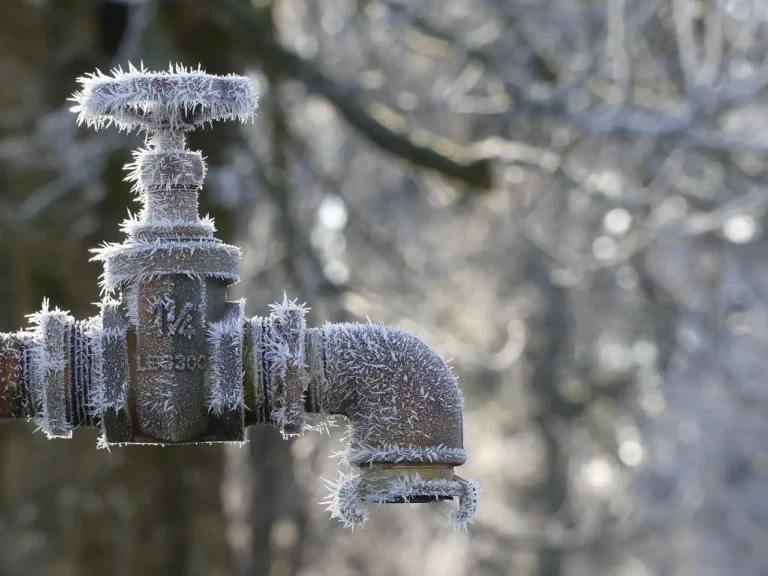
A frozen meter usually shows up as no water at every fixture, a meter box that feels hard and cold, and visible frost or ice near the lid or inside the pit. If the meter is wet, split, or surrounded by standing water, call the utility first and do not try to thaw it yourself.
If that didn’t work, try this next
- Confirm that all taps, hose bibs, and appliance valves are shut.
- Check the meter reading or low-flow indicator for motion.
- Open the meter box lid only as far as needed to inspect safely.
- If the meter is cold but not iced, call the utility and report a suspected freeze.
- If the meter is wet, cracked, or the pit is unsafe, stop and wait for the utility or a plumber.
Never use open flame or high heat on the meter box or pit. A torch, heat gun, or other strong heat source can damage plastic parts, crack fittings, or make a wet pit more dangerous. If thawing is handled by the utility, let them decide where heat can be used.
Common mistakes
Trying to thaw the meter with open flame or high heat can make a small problem worse fast. Skipping the shutoff valve check can send you in the wrong direction. Forcing a stuck lid can bend the cover or injure hands. A spinning indicator should not be read as proof that the meter is frozen.
Another mistake is ignoring the box itself. If the lid is loose, warped, or not sealing well, cold air can enter the pit and make freezing more likely. If the box looks thin on insulation or the cover is not sitting flush, note that when you call the utility.
Frequently asked questions
What are the signs a water meter box is frozen?
Look for no water at every fixture, a lid or pit that feels unusually cold, visible frost or ice, and a meter that does not seem to move. If the box has standing water or a split meter body, stop and call the utility before trying to thaw anything.
Can a frozen meter stop all water in the house?
Yes. A freeze at the meter can block service to the whole house, which is why the symptom often shows up at every tap at once. If only one fixture is affected, the freeze is more likely inside the home than at the meter or the service line.
What does a spinning low-flow indicator mean if the meter is frozen?
A spinning indicator means water is moving through the meter. That usually points to a leak, an open fixture, or another path of flow, not a dead meter. If every tap is off and the triangle still spins, shut off fixture valves and call for leak checks.
How do I know if the meter or the pipe before it is frozen?
Check whether neighbors still have water, then check the meter box temperature and the shutoff valve position. If the meter area is very cold and the whole house is dry, either the meter or the buried service line may be frozen. A plumber or utility can separate those two points.
Safety notes
Keep this short list in mind before you try anything else. Do not use open flame. Do not force a stuck or frozen lid. Do not reach into standing water. Do call the utility if the meter is wet, cracked, or unsafe, and call a plumber when the pattern points to an indoor branch-line freeze.
Sources
- EPA WaterSense: Fix a Leak Week
- NIST: SI Units of Volume
- CDC: Winter weather and water safety
- Denver Water: Meter reading and leaks
Sponsored / affiliate links. As an Amazon Associate I earn from qualifying purchases. I may earn additional commission from eligible campaigns.
 Water Flow Control Shut Off Valve with Brass Adjustable Hand Level Water Pressure Regulator for Hand Held Shower Head & Bidet Sprayer, Brushed Nickel Water Saver G1/2
 Moisture Meter for House, Water Meter, Tester Hygrometer for Indoor Outdoor Garden Lawn Farm, No Batteries Needed, Accurate Sensor for Gardening(White)