Why Is My Water Pressure Low in Winter?
Winter water pressure usually drops because a pipe is partly frozen, a fixture screen is clogged, a shutoff valve is only partly open, or the utility supply is weak. If every fixture is weak and a pipe feels cold or frosty, treat it as a freeze problem first. Ignoring it can lead to burst pipes, water damage, and higher repair bills. This guide shows you how to separate freeze-related restriction from fixture, valve, and utility-side causes.
Why water pressure drops in winter
Cold weather can narrow flow before a pipe freezes solid. A partly frozen line may still move some water, though not enough for normal pressure. Winter also exposes weak points that can stay hidden the rest of the year, including a dirty aerator, a tired pressure reducing valve, or a valve that was never fully opened.
Partial freezing before a full blockage
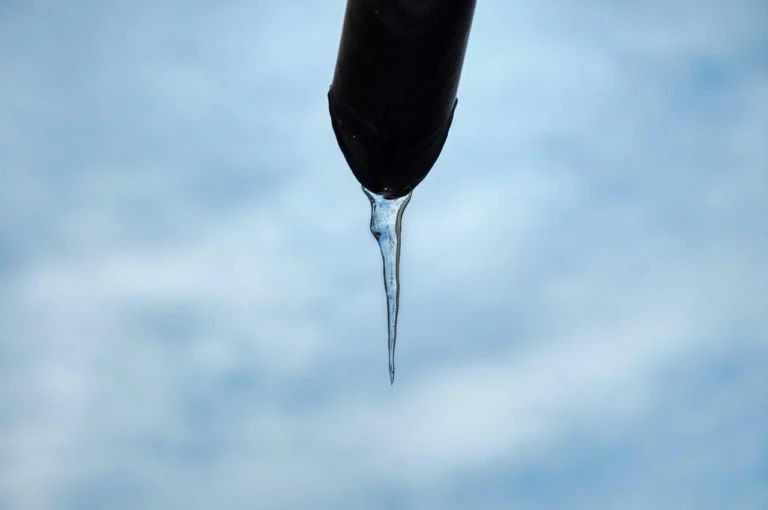
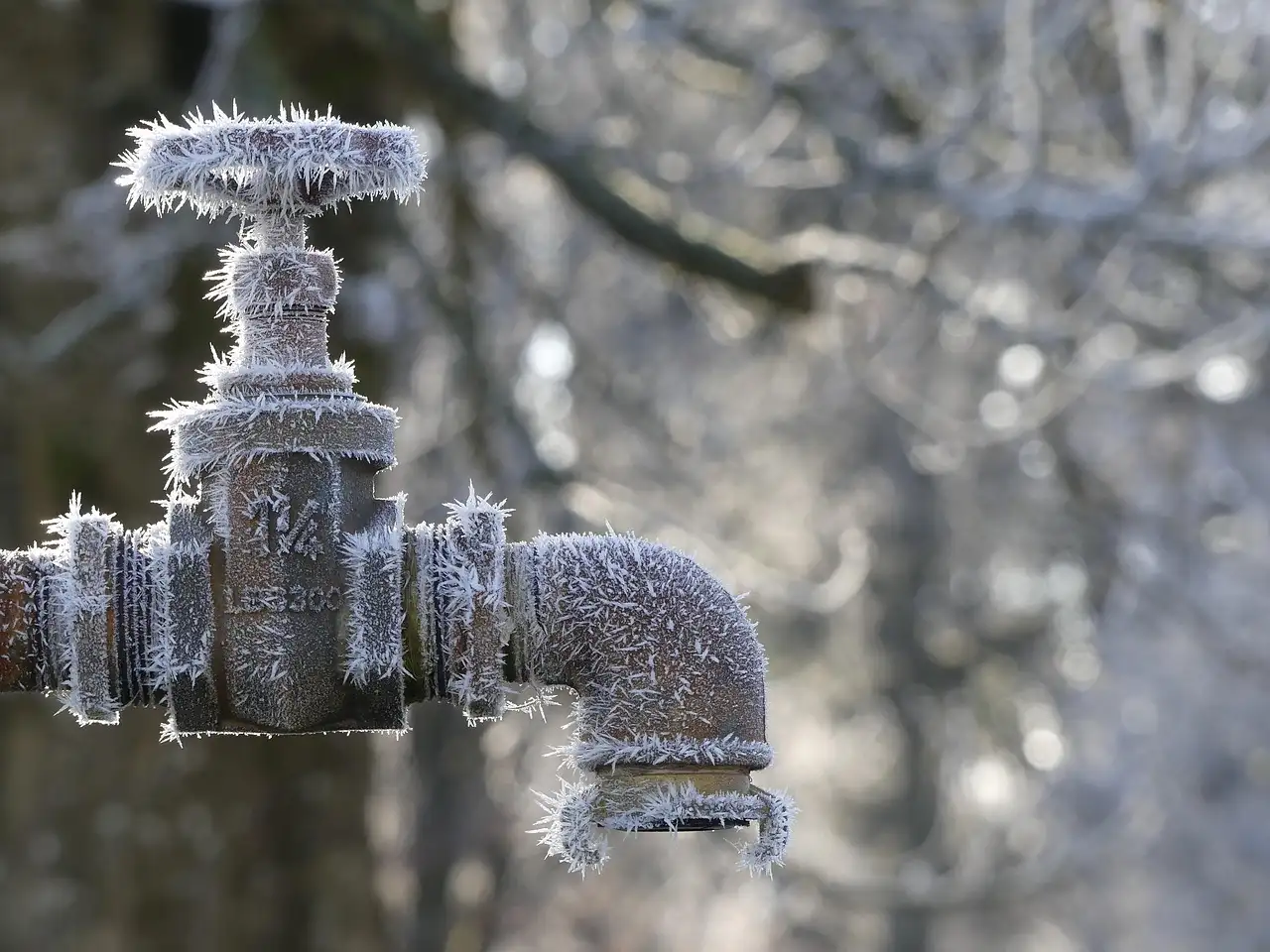
A frozen or partly frozen supply pipe can restrict flow before it becomes a full blockage. That is most common in unheated spaces, exterior walls, crawl spaces, attics, and garages. The restriction may show up at one fixture, one branch of the plumbing system, or the whole house if the main line is affected.
Cold-weather pressure loss versus leak warning signs
Do not assume every winter pressure drop is freezing. A hidden leak can also lower pressure, and a sudden drop deserves attention if you hear running water, see damp spots, or find frost on a pipe that should be dry. If pressure falls quickly during a hard freeze, treat that as a risk of both freezing and pipe damage.
Why hot and cold fixtures can act differently
Hot and cold water do not always fail together. A cold-water branch line may be affected first because it often runs through colder cavities, while hot water may still seem normal for a while. A water heater can also have its own flow issue, so check supply-side causes first before blaming the heater.
Winter low-pressure diagnostic checklist
Use this checklist to sort the problem by scope. Start with the smallest pattern you can confirm, then work outward. The goal is to decide whether you are dealing with one fixture, one branch or zone, or pressure loss throughout the house.
| Pattern | Exact checks | Likely causes | Escalation threshold |
|---|---|---|---|
| One fixture only | Test hot and cold separately; remove the aerator or showerhead screen; compare a nearby sink or shower | Clogged aerator, blocked showerhead screen, localized debris, freeze in a short run near that fixture | If cleaning does not restore flow, or the pipe behind the wall feels very cold, call a plumber |
| One branch or zone | Check several fixtures on the same side of the house; look at hose bibs on that side; note whether only cold water is weak | Partly frozen cold-water branch line, freeze in an exterior wall or crawl space, local valve restriction | If more than one fixture on the same branch is weak, stop forcing use and get help before the line bursts |
| Whole-house pressure loss | Compare all fixtures; inspect the main shutoff valve; check the pressure reducing valve; read the meter for movement when no water is on | Main shutoff partly closed, failing PRV, utility-side pressure drop, leak between meter and house | If the whole house is weak during a hard freeze, or the meter moves with all fixtures off, call a plumber or the utility |
One fixture only
When only one tap is weak, the cause is usually local. Remove the faucet aerator or showerhead screen and inspect it for mineral scale, grit, or tape fragments. If the cold side is weak but the hot side is normal, that points more toward a cold-water branch issue than a utility-wide problem.
Say your kitchen faucet has normal hot water but a weak cold stream, while the bathroom sink nearby works fine. That pattern points to a clogged aerator or a short cold-side restriction at the kitchen fixture, not a whole-house pressure failure.
One branch or zone
If several fixtures on the same side of the house are weak, suspect a cold-water branch line. That line may run through colder building cavities and can partly freeze before other parts of the system. Outdoor hose bibs and exposed spigots often freeze first, so weak outside flow can be a warning sign for nearby branch lines.
Whole-house pressure loss
When every fixture is weak, look at the main shutoff valve, the pressure reducing valve, and the meter before you chase individual faucets. The main shutoff should be fully open. A failing PRV can lower pressure throughout the house. The meter and meter box can help separate a house-side problem from a utility-side problem.
Suppose the upstairs shower, the kitchen sink, and the laundry tub all drop at once during a hard freeze. That is not a single-aerator problem. It is a whole-house pattern, so the main valve, PRV, meter, and possible freeze in a supply line move to the top of the list.
When to stop and call for help
Stop troubleshooting if pressure drops suddenly during a hard freeze, if you hear water moving when fixtures are off, or if you see wet walls, ceiling stains, or frost on exposed plumbing. Those are leak or burst-pipe warning signs. A plumber should handle any repair that requires opening walls, thawing a hidden line, or replacing a PRV.
Is it just one faucet or shower?
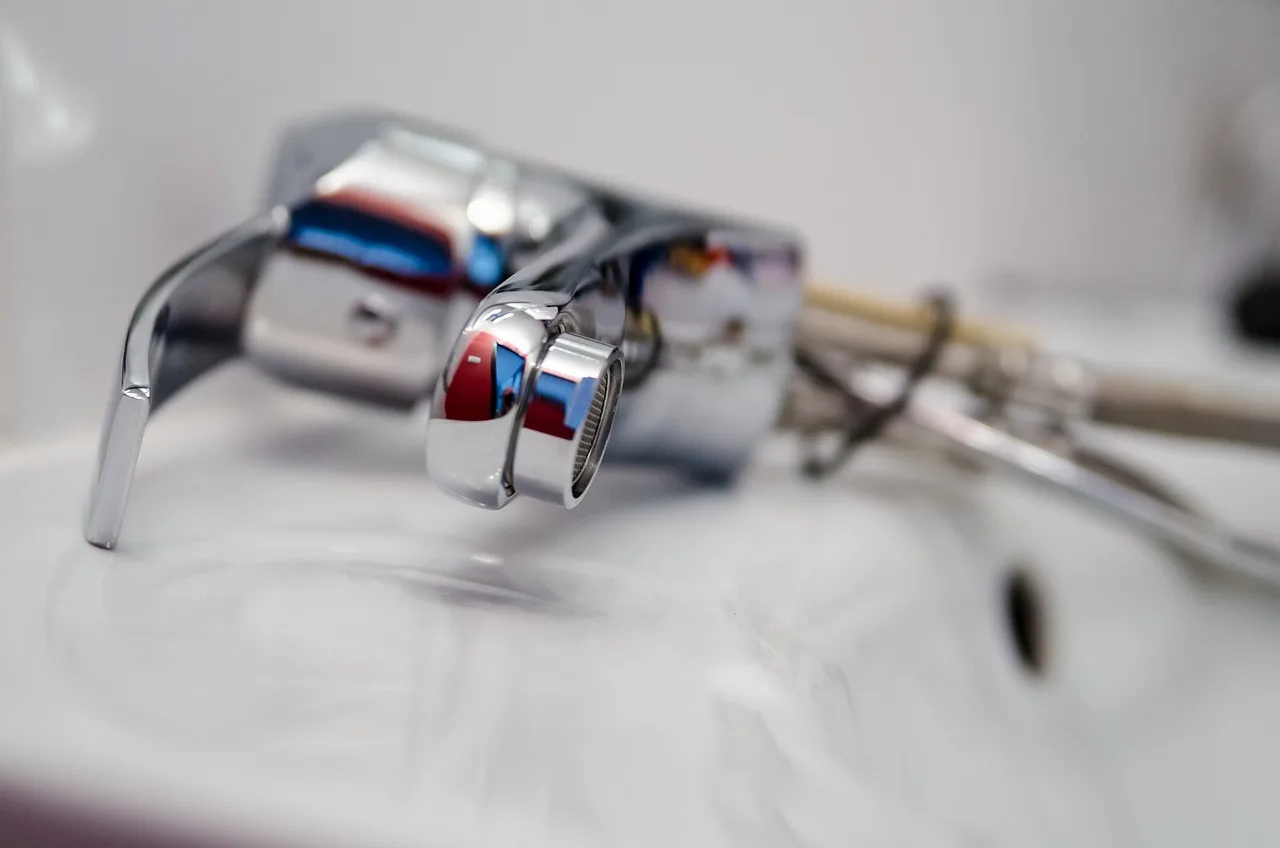
If the problem is limited to one faucet or shower, the cause is often local and simple to verify. Remove the aerator or showerhead screen, clean out debris, and test again. If only the cold side is weak, or if the same fixture improves after cleaning, you have likely found the source.
Remove and inspect the aerator or showerhead screen
Unscrew the aerator or showerhead screen and check for mineral scale, sand, or flakes of debris. Rinse the part, reinstall it, and test the flow again. If the fixture still performs poorly after cleaning, the problem may be farther back in the line or inside the wall.
Check whether only the cold side is weak
Cold-only weakness points toward the cold-water branch line or a local restriction on that side of the fixture. Hot water can stay normal because it follows a different path through the house. If both sides are weak at one fixture, the clog may be in the faucet body or supply stops.
Compare nearby fixtures to confirm a local clog
Check a nearby sink, another shower, or a tub spout on the same floor. If those fixtures are normal, the issue is local to the first fixture. If neighboring fixtures also weaken, the problem is no longer confined to one outlet and you should move to branch-line and valve checks.
Could a pipe be freezing?
Yes. A frozen or partly frozen supply pipe can lower pressure before it blocks completely, and that happens most often in unheated spaces, exterior walls, crawl spaces, attics, and garages. Outdoor hose bibs and exposed spigots often freeze first, which makes them useful warning points for nearby branch lines.
Exposed pipes and outdoor hose bibs
Look first at any pipe that sits in unheated air. Exposed runs in a basement, garage, or attic can cool fast when the temperature drops overnight. If an outdoor hose bib is weak or dead while indoor fixtures still work, nearby piping may be freezing.
Exterior walls, crawl spaces, attics, and garages
Pipes in these areas are exposed to colder air, drafty framing cavities, and fast nighttime temperature swings. A line in an exterior wall may lose flow before the rest of the house shows a problem. That is why winter pressure loss often appears in only one bathroom or on one side of the house first.
Signs that a branch line is starting to freeze
Watch for a faucet that starts normal and slows over time, a weak cold side only, or an outdoor hose bib that goes from low to nearly no flow after a cold night. Those patterns can mean ice is narrowing the pipe instead of fully blocking it.
First 10 minutes during a hard freeze
- Open the cabinet under the affected sink, if it is safe and accessible.
- Feel exposed supply lines for unusual cold or frost.
- Check whether nearby fixtures on the same side of the house are also weak.
- Do not force open a stuck valve or bang on the pipe.
- If multiple fixtures weaken at once, prepare to shut off the main water if you see leakage.
Main valve, PRV, and meter checks
When the problem is house-wide, the main shutoff valve, the pressure reducing valve, and the meter are the next places to check. These are the common points that separate a simple fixture issue from a supply-side problem. If you know where the main shutoff is before an emergency, you can act faster if a pipe bursts.
Confirm the main shutoff valve is fully open
The main shutoff valve should be fully open for normal flow. A valve left partly closed can throttle pressure throughout the house and mimic a broader supply problem. Know the location of this valve before winter, because it is the first valve you may need in an emergency.
Check the pressure reducing valve for house-wide loss
Many homes with high street pressure have a PRV. If that valve fails, pressure can drop throughout the house. Winter changes may reveal the problem because cold conditions can make an already weak valve more obvious. A failing PRV is not a homeowner repair in most cases.
Use the meter box to separate house-side from utility-side trouble
The water meter and meter box can help separate your side of the system from the utility side. If the meter shows water movement when all fixtures are off, the house side may have a leak. If the meter box and nearby utility service look normal but pressure is weak everywhere, call the utility to ask whether there is a neighborhood pressure issue.
Short version: one fixture points you to a local clog, one branch points you to a freeze or branch problem, and the whole house points you to the main valve, PRV, meter, or utility supply. That order keeps you from tearing into the wrong part of the system.
Water pressure winter checklist
- Check whether the problem affects one fixture, one branch, or the whole house.
- Remove and clean the aerator or showerhead screen on a weak fixture.
- Compare hot and cold flow at the same tap.
- Inspect exposed pipes, hose bibs, and spigots for cold spots or frost.
- Look at the main shutoff valve and confirm it is fully open.
- Check whether the PRV could be causing house-wide low pressure.
- Use the meter to see whether water is moving when all fixtures are off.
- Stop and call for help if pressure drops suddenly during a hard freeze or if you see leak signs.
Pipe insulation and heat tape
Pipe insulation can reduce freeze risk in vulnerable areas, and heat tape can help when it is installed correctly and used according to the manufacturer’s instructions. Neither one fixes an existing pressure loss. They are prevention tools for exposed pipes, not a repair for a frozen line, a bad valve, or a utility-side issue.
When to call the utility or a plumber
Call the utility if pressure is weak across the house and nearby homes may be affected too, or if the meter box suggests the issue is outside your home. Call a plumber if you suspect a frozen or burst pipe, a failing PRV, a partially closed main valve that will not correct normally, or a hidden leak inside the structure.
Sudden pressure loss during a hard freeze
A sudden drop during a hard freeze deserves fast action. Shut off water if you see evidence of a leak or hear water where it should not be. If the pressure loss is widespread and no fixture check explains it, do not keep running water to “test” the system.
Wet drywall, ceiling stains, dripping sounds, or a meter that moves with all fixtures off can point to a burst pipe or hidden leak. Those are repair-now problems. Waiting can turn a restricted line into a flooded room once the ice thaws or the split opens wider.
Persistent low pressure after basic checks
If the aerator is clear, the shower screen is clean, the main valve is fully open, and the issue still affects the house, the problem is beyond basic homeowner checks. Persistent low pressure after those steps is a plumber call, especially if winter temperatures are staying below freezing.
Frequently asked questions
Why is my water pressure low in winter?
Winter pressure loss usually comes from partial freezing, a clogged aerator or shower screen, a main shutoff that is not fully open, or a failing PRV. If the problem is house-wide and follows a hard freeze, treat freezing or a supply-side problem as the first likely cause.
Why is my water pressure lower in the winter?
Cold temperatures can narrow flow before a pipe fully freezes, especially in unheated spaces, exterior walls, crawl spaces, attics, and garages. Winter also exposes valve problems and utility-side pressure drops that may be less noticeable in warmer weather.
What causes low cold water pressure in house?
Low cold water pressure in a house often comes from a restricted cold-water branch line, a partially closed main shutoff, a failing PRV, or a clogged fixture screen. If only cold water is weak at several fixtures, the cold side and its branch line deserve attention first.
Can frozen pipes cause low water pressure before they burst?
Yes. A pipe can freeze partly and still pass some water, which lowers pressure before a full blockage or burst occurs. That is why weak flow during freezing weather should be treated as a warning, especially in unheated or exposed areas.
How do I tell if low pressure is from freezing or a municipal issue?
Check whether the problem affects one fixture, one branch, or the whole house. Then look at the meter and meter box, compare hot and cold flow, and inspect exposed pipes and hose bibs. If the whole house is weak and the meter behavior is unclear, call the utility.
Will letting faucets drip fix low winter water pressure?
No. Letting faucets drip may help reduce freeze risk, but it does not fix existing low pressure. If pressure has already dropped, the cause still needs to be found, because a partly frozen line, valve issue, or leak can worsen while the tap is left running.
Sponsored / affiliate links. As an Amazon Associate I earn from qualifying purchases. I may earn additional commission from eligible campaigns.
 Water Flow Control Shut Off Valve with Brass Adjustable Hand Level Water Pressure Regulator for Hand Held Shower Head & Bidet Sprayer, Brushed Nickel Water Saver G1/2
 Smart Toilet with Bidet Built-In, One-Piece Elongated Toilet with Tank Pump, Manual Lid, Foot Flush, Heated Seat, Warm Water, Air Dryer, Night Light, No Remote