How to Choose the Right Toilet for Your Bathroom
Choose the right toilet by matching rough-in, bowl shape, height, and flush type to your bathroom first. If the fit is wrong, even a good toilet can leak, crowd the room, or need costly return and reinstallation. This guide shows how to check measurements, compare toilet types, and avoid the most common replacement mistakes.
Will it fit your bathroom?
Fit comes first. Measure the rough-in, check side and front clearance, and make sure the door can open without hitting the bowl. A toilet that looks right online can still fail in a tight room, especially if the bowl projects too far or the drain position does not match the flange.
Measure the rough-in first
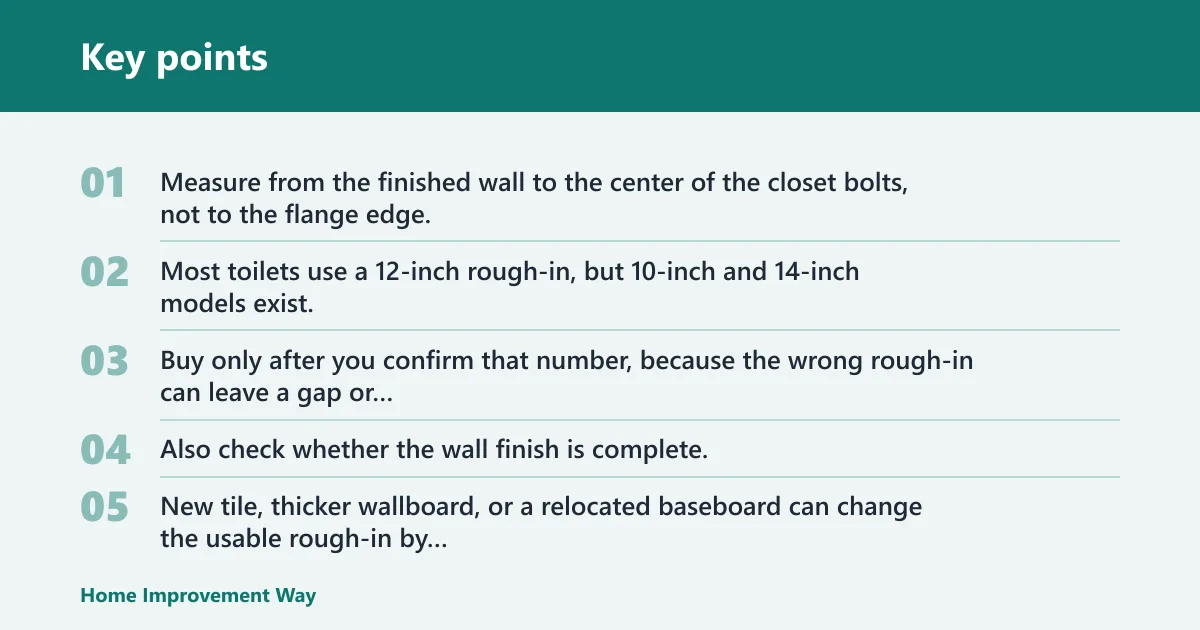
Measure from the finished wall to the center of the closet bolts, not to the flange edge. Most toilets use a 12-inch rough-in, but 10-inch and 14-inch models exist. Buy only after you confirm that number, because the wrong rough-in can leave a gap or block installation.
Also check whether the wall finish is complete. New tile, thicker wallboard, or a relocated baseboard can change the usable rough-in by enough to matter. If the closet bolts are set for 12 inches and the room only accepts 10-inch models, the toilet choice narrows fast.
Check side clearance, front clearance, and door swing
Leave enough room on both sides for cleaning and use. A common code-aware target is at least 15 inches from the toilet centerline to each side wall or obstacle, and at least 21 inches of clear space in front, though local rules can differ. Door swing should not strike the bowl or block access.
Say your powder room has a 24-inch-deep alcove and a door that swings inward. A round bowl can preserve a few inches at the front edge, while an elongated model may make the door feel cramped even if the rough-in is correct.
Account for nearby fixtures
Check vanity drawers, tub edges, radiator covers, and shower doors. A toilet can fit the rough-in and still make the room awkward if the tank lid cannot lift or if the seat hits a nearby cabinet. Measure the full path from wall to door stop, not only the floor footprint.
Toilet selection checklist
Use this checklist before you compare finishes or brand names. Score the room and the users first, then match the toilet type to the result. The best model is the one that fits the room, clears the door, and meets the household’s needs without forcing plumbing changes.
| Check item | What to measure or judge | Score 1 | Score 2 | Score 3 | Best match |
|---|---|---|---|---|---|
| Rough-in | Finished wall to closet bolt center | Mismatch or unknown | 10-inch or 14-inch standard room | 12-inch rough-in with broad model choice | Correct rough-in first |
| Clearance | Side space, front space, door swing | Very tight | Moderate | Open layout | Round or wall-hung in tighter rooms |
| User height or mobility | Sitting and standing comfort | Low-seat preference | Mixed users | Needs easier rise | Standard or comfort height as needed |
| Cleaning priority | How often you want to wipe around base, bowl, and seam | Low | Medium | High | One-piece or wall-hung |
| Noise tolerance | How much flush sound the room can absorb | Low tolerance | Medium | High tolerance | Gravity-feed for quieter use |
| Flush power need | Long drain run, frequent heavy use, clog concern | Low | Medium | High | Pressure-assisted or stronger gravity system |
Score rough-in and clearance
If the rough-in is wrong, stop there. If the room is tight, choose the smallest shape that still gives acceptable use and cleaning access. Round-front bowls and wall-hung designs help most when every inch matters.
Score user height and mobility
If the household includes taller adults or people who need easier sitting and standing, add points to comfort height. If children use the room often, a standard height can feel easier for short legs, though a shared bathroom may still benefit from the taller seat for adults.
Score cleaning priority, noise tolerance, and flush power
One-piece and wall-hung toilets usually score well for cleaning. Gravity-feed toilets usually score better for noise. Pressure-assisted and some dual-flush designs can score higher for flush power, but they may sound sharper or need more care in setup.
Match the score to the toilet type
- Very tight room with modest use: round bowl, two-piece, gravity-feed, 12-inch rough-in if available.
- Small shared bath with easier cleaning priority: one-piece or wall-hung if the wall can support it.
- Main bath with mobility needs: comfort-height, elongated bowl, strong gravity-feed or dual-flush.
- Long drain path or clog concern: pressure-assisted or a strong gravity model with a well-shaped trapway.
How do I choose the right toilet for my bathroom?
Start with fit, then rank the rest. Rough-in, clearance, door swing, and drain alignment decide what can physically go in the room. After that, choose bowl shape, height, flush system, and cleaning details based on who uses the bathroom and how much space you have left.
Use the room before the brochure
A toilet that looks sleek can still be wrong if the supply line sits where the tank needs space or if the bowl projects into the door path. In a small bath, a shorter front projection often matters more than a decorative tank profile.
Choose features in this order
Pick the correct rough-in first. Then decide whether you need a round or elongated bowl, standard or comfort height, and a flush system that matches the home’s drain layout and noise limits. Finish with cleaning features, seat shape, and style.
Round or elongated bowl?
Round bowls save space at the front of the room. Elongated bowls usually feel more comfortable for many adults and are common in shared baths. If the room is tight, bowl shape can decide whether the door clears or the vanity feels too close.
Space impact in small bathrooms
Round-front bowls generally take up less floor projection, which helps in narrow rooms and older baths with short clearances. They also leave a little more walking room near the door and vanity. That can matter more than the small difference in seat comfort.
Elongated bowls usually feel more supportive for adult users, especially in a main bath or shared household. The tradeoff is room. In a compact bath, choosing elongated too early can create a cramped layout or reduce front clearance below a comfortable level.
Seat compatibility and replacement fit
Round and elongated bowls need matching seats. The hinge spacing and lid shape must match the bowl, or the seat will sit poorly and may shift. Before buying, confirm whether the existing seat hardware can be reused or whether a matching seat must be ordered.
Should I buy a one-piece or two-piece toilet?
Choose one-piece for easier cleaning and fewer seam lines. Choose two-piece if you want more model choices and a lower upfront cost. The better answer depends on access, service needs, and whether you need a design that is simpler to wipe around.
Cleaning access and seam count
One-piece toilets have fewer seams, so dust and grime have fewer places to settle. Two-piece models have a joint between tank and bowl, which can collect dirt and take a little more wiping. That difference matters most in bathrooms you clean often.
Upfront cost and replacement ease
Two-piece toilets usually cost less at purchase and can be easier to move into the room because the parts are lighter. One-piece toilets are often heavier and more awkward to handle. If the staircase is tight or the bathroom is on an upper floor, handling matters.
When wall-hung or floor-mounted makes more sense
Wall-hung toilets free up floor space and make cleaning under the bowl easier, but they require a wall carrier and proper framing. Floor-mounted toilets are simpler and fit more homes. If the wall structure is uncertain, floor-mounted is usually the safer path.
What toilet height is most comfortable?
Comfort depends on the users. Standard height usually sits lower and can feel easier for children and some shorter adults. Comfort height, often around chair height, is easier for many adults to sit down on and stand up from. ADA-style height ranges are useful for accessibility planning.
Standard height vs comfort height
Standard-height toilets typically have a lower seat, while comfort-height models place the seat higher off the floor. That higher seat can reduce bending at the knees and hips. It can also feel too tall for smaller users, so shared bathrooms need more thought.
ADA-style height range and accessibility
ADA-style toilet height generally falls in a range that supports easier transfer, often around 17 to 19 inches to the top of the seat, though exact needs vary by user and installation. For a bathroom used by an older adult, the higher seat can make daily use easier.
How seat height changes the feel
Seat height is what the user feels, not just the bowl spec. A comfort-height bowl with a thin seat can feel different from the same bowl with a thicker seat. Always think in terms of the finished seat height, not the porcelain alone.
Which flush system works best?
Gravity-feed toilets are usually quieter and common in homes. Pressure-assisted toilets can deliver stronger flush force and may help in problem-prone drains, but they often sound louder. Dual-flush models save water by offering a lighter flush for liquid waste and a fuller flush when needed.
Gravity-feed basics
Gravity-feed systems use tank water and bowl design to move waste through the trapway. They are the default in many homes because they are familiar, generally quieter, and easier to match with standard replacement needs. Flush strength depends on the quality of the internal design.
Pressure-assisted flushes
Pressure-assisted toilets store water under air pressure, which can produce a forceful flush. They suit some homes with stubborn clog issues or long drain runs. The tradeoff is usually more noise and a different service profile, so they are not the best fit for every bathroom.
Dual-flush and water use
Dual-flush toilets let you choose between a reduced flush and a full flush. That can lower daily water use in a household that uses the lighter option often. The choice matters most when the toilet gets frequent liquid-only use and the drain path is clean and well aligned.
Balancing 1.28 GPF with flush performance
WaterSense labeled toilets often use 1.28 gallons per flush, a common high-efficiency threshold. That does not guarantee the strongest flush in every room. A good 1.28 GPF toilet should balance lower water use with enough trapway and bowl design to avoid repeat flushing.
What installation details can stop a sale?
Several small details can block a replacement, even when the shape and style look right. Check flange condition, wax ring or seal type, supply line placement, and venting or drain alignment before purchase. These are the details that turn a quick swap into a return.
Floor flange condition
The flange must be solid, level enough for a seal, and securely fastened. If it is cracked, corroded, or below finished floor height in a way that is not corrected, the toilet may rock or leak. Inspect it before buying the new unit.
Wax ring or alternative seal
Most floor-mounted toilets seal with a wax ring or a wax-free alternative. The toilet must sit at the right height above the flange for the seal to work properly. If the floor has been raised or the flange is sunken, the seal choice matters even more.
Supply line placement
Check where the shutoff valve sits and how high the supply line rises. A tall tank or a shaped side cover can conflict with a valve that sticks out too far. A mislocated line can force a tight bend, an awkward install, or a return.
Venting and drain alignment
If the drain or vent path has been altered, the new toilet still needs to match the room’s plumbing layout. A toilet that seems to fit above the floor can still perform poorly if the drain alignment is off. That is one reason rough-in is only the first check.
Trapway style and clog risk
Visible trapways can be easier to inspect, while concealed trapways often look cleaner and wipe down more easily. The design inside the trapway affects clog resistance and flush path. A smooth-looking bowl is not enough; the internal shape matters for performance.
Our picks by need
These picks are based on published specs, product details, and buyer feedback. Each has a tradeoff, so the best choice depends on your room and the users. Check rough-in, clearance, seat shape, and installation conditions before ordering.
Best for a small bathroom: Garvee round-front two-piece

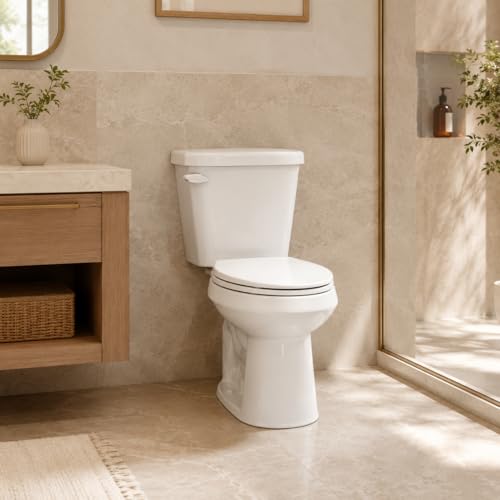
Garvee’s round-front two-piece toilet is the strongest fit-first choice here for tighter layouts. The 15-inch height, compact round front, and 12-inch rough-in help in small baths, and the 1.28 GPF siphonic flush keeps water use in check. The tradeoff is that a round bowl offers less seated room than elongated options.
Best for easier cleaning: CASTA DIVA one-piece elongated

CASTA DIVA’s one-piece design is the cleaner-maintenance pick. The single-body construction cuts down on seam cleaning, and the dual-flush setup gives you a lighter option for everyday use. The drawback is that the elongated shape and comfort-height seat need a little more room than a round-front model.
Best for older adults or taller users: TOTO Drake universal height
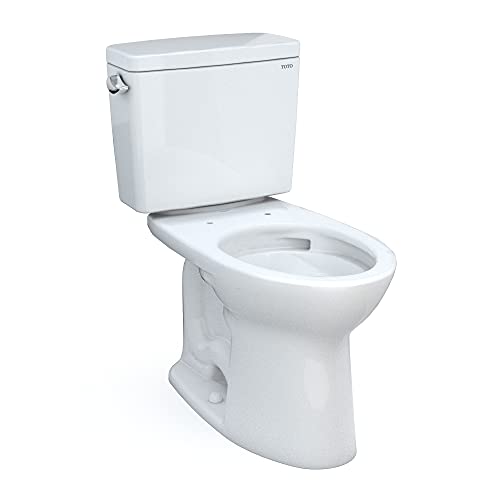
TOTO’s Drake in universal height is the strongest fit for easier sitting and standing among these options. The elongated bowl and 1.6 GPF flush suit many main bathrooms, and the CEFIONTECT surface is designed to help waste and residue move off the bowl more easily. The tradeoff is higher water use than a 1.28 GPF model.
Best for water savings: Garvee round-front two-piece
If water use is the main goal, Garvee’s 1.28 GPF rating makes it the most efficient of the group. That said, the right balance depends on drain conditions and household demand. High efficiency is useful only if the flush is still strong enough for the room’s plumbing and use pattern.
Best for higher flush power: TOTO Drake universal height
For homes that want a stronger, more forceful flush, the TOTO Drake’s 1.6 GPF design is the better fit. The higher flush volume can help in rooms where clog resistance matters more than water reduction. The drawback is that it uses more water per flush than high-efficiency options.
Mistakes to avoid
Most replacement problems come from skipping measurements or ignoring the room’s limits. A toilet that fits the price target but misses the rough-in or clearance can create leak risk, return fees, and a second installation day. Measure first, then compare features.
A common first-timer mistake is choosing an elongated bowl for a tight half bath because it sounds more comfortable. If the door swings inward and the vanity sits close, the front projection can make the room feel blocked. Round-front models are often the better fit in that exact layout.
Another common miss is buying a seat later without checking bowl shape and hinge spacing. Round and elongated seats do not interchange cleanly. If the wrong seat is paired with the bowl, the lid may overhang, shift, or leave an awkward gap.
Do not ignore flange condition, shutoff valve placement, or venting and drain alignment. These are the hidden reasons a toilet can fail at install even when the showroom specs look right. A slightly damaged flange or a badly placed supply line can stop a clean replacement.
Frequently asked questions
What toilet shape is best for a small bathroom?
Round-front bowls are usually the better choice in small bathrooms because they project less into the room. They leave more front clearance and can make a narrow layout feel less crowded. Elongated bowls are more comfortable for many adults, but they need more space.
How much clearance do I need around a toilet?
A practical target is about 15 inches from the toilet centerline to each side wall or obstacle and at least 21 inches of clear space in front, with door swing kept clear. Local codes can vary, so verify the room before buying. Tight rooms may need a round bowl.
How do I know if a toilet will fit my rough-in?
Measure from the finished wall to the center of the closet bolts. Common rough-ins are 10, 12, and 14 inches. Match that number to the toilet listing before you buy, because the wrong rough-in can leave a gap or prevent the bowl from seating properly.
Sponsored / affiliate links. As an Amazon Associate I earn from qualifying purchases. I may earn additional commission from eligible campaigns.
 15 Inch Round Front Two Piece Toilet, Compact Side Flush Toilet for Small Bathroom, 1.28 GPF Siphonic Flush, White Ceramic Commode with Soft Close Seat, cUPC Certified, 12 Inch Rough-In
 Compact 15.4 Inch Elongated Two Piece Toilet, Side Flush White Ceramic Bathroom Toilet with Soft Close Seat, 1.28 GPF Siphonic Flush, cUPC Certified, 12 Inch Rough-In