Best Toilets for Small Bathrooms: Based on Specs and Reviews
For a small bathroom, choose a 10-inch rough-in toilet only if the wall-to-bolt distance is about 10 inches. Otherwise, match the rough-in exactly and keep bowl depth near 26 inches or less. A bad fit can block the door, crowd the floor, or force a costly return or reroute. This guide shows how to measure rough-in, side clearance, front clearance, and bowl depth so you can pick the right toilet type first.
Compact elongated toilet: best overall
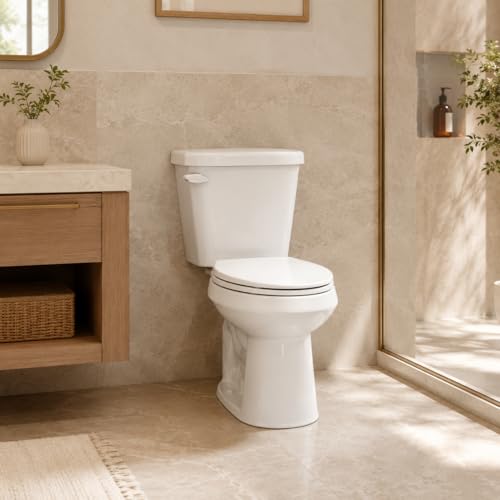
A compact elongated toilet is the best starting point for many small bathrooms because it usually gives you the more comfortable bowl shape without jumping into the 28 to 30 inch depth common to standard elongated models. It fits best when you need a balanced mix of comfort, code-aware spacing, and easier installation than a wall-hung unit.
It still fails when the room is extremely tight. If your door swing, vanity corner, or linen cabinet cuts into the usable floor area, even a compact elongated bowl can feel oversized.
Quick comparison
| Product | Badge | Best for | Price | ||
|---|---|---|---|---|---|
 |
HOROW T0338W10 One Piece Toilet with ADA Chair HeightHOROW | Our pick | 10" Rough-In · ADA Height · One Piece | $299.00
Price as of 17 Oct 2026
|
View |
 |
DeerValley Compact One Piece Toilet Standard Seat HeightDeerValley | Budget pick | Compact Size · Dual Flush · Skirted | $215.10
Price as of 17 Oct 2026
|
View |
Use the table below to compare fit first, then shop by style. Check rough-in, front clearance, side clearance, and whether the toilet’s total projection leaves room for the door to open and for daily use.
Toilet fit table
| Bathroom scenario | Rough-in | Minimum room depth | Minimum side clearance | Maximum projection | Best toilet category |
|---|---|---|---|---|---|
| Powder room with very tight front depth | 10, 12, or 14 inches as measured | Projected depth plus 21 inches | 15 inches each side minimum | Under 27 inches | Round bowl or wall-hung |
| Small full bath with standard rough-in | 12 inches | Projected depth plus 21 inches | 15 inches each side minimum | About 24 to 27 inches | Compact one-piece or compact elongated |
| Older home with shallow wall-to-bolt distance | 10 inches | Projected depth plus 21 inches | 15 inches each side minimum | Varies by model, must match rough-in | 10-inch rough-in toilet |
| Bathroom where floor space is the main concern | 12-inch rough-in with in-wall setup | Projected depth plus 21 inches | 15 inches each side minimum | Often the shortest visible footprint | Wall-hung |
| Room that looks small because the toilet projects too far | 12 inches or exact match to layout | Projected depth plus 21 inches | 18 inches each side for comfort | Under 27 inches preferred | Compact one-piece or round bowl |
How we chose
Fit came first. The main screen was rough-in, then total projection, then the room math around front clearance and side clearance. Style only mattered after the toilet could fit the space.
We also weighed installation and service access. A toilet that looks smaller on paper can still cause trouble if it blocks a door, lands too close to a vanity, or needs in-wall support the bathroom was not built for.
Code minimums and comfort needs are not the same thing. The IPC minimums give a legal baseline in many places, but local code requirements can vary, and a layout that passes code may still feel cramped in daily use.
HOROW T0338W10: best for 10-inch rough-in layouts
The HOROW T0338W10 is the right fit when your layout is built around a 10-inch rough-in and you need a one-piece toilet made for that spacing. Based on the published specs, it also brings a compact skirted form, dual flush, and chair-height seating.
This is the one to consider for older homes where the rough-in is not standard. It is also useful if you want a cleaner look than a two-piece toilet while keeping the installation category tied to the room’s existing measurement.
The drawback is simple: a 10-inch rough-in model only works in a 10-inch rough-in bathroom. Do not buy it as a general compact option if your wall-to-bolt distance is 12 inches or another size.
DeerValley compact one-piece toilet: best for small full baths
The DeerValley compact one-piece toilet is the better fit for a small full bath where you want a 12-inch rough-in model with a smaller footprint and easier cleaning around the base. Its skirted design is a practical choice when dust-catching edges are a concern.
Based on the manufacturer’s specs and published details, the dual-flush setup makes it a sensible pick for homeowners who want a compact toilet without moving to a wall-hung installation. It is the more flexible choice for standard small-bath layouts.
The tradeoff is that it still needs enough front room and side room to work well. Compact does not mean tiny enough to ignore door swing, vanity corners, or the 21-inch front-clearance minimum.
What size toilet fits in a small bathroom?
A small bathroom usually fits a round bowl, a compact elongated bowl, a compact one-piece toilet, or a wall-hung unit if the room is very tight. The right size is not just the bowl shape. It is the rough-in, total projection, side clearance, and the space left after the door swings open.
Round bowl versus elongated bowl
Round bowl toilets are usually the safer choice when the room is tight front to back because they project less than elongated bowls. Elongated bowls often feel more comfortable, but standard elongated toilets are usually 28 to 30 inches deep, which can be too much for a compact room.
When compact one-piece models make sense
Compact one-piece toilets make sense in small full baths where you want a shorter projection without giving up the cleaner look of a skirted base. Bathify’s fit guidance points to compact one-piece toilets for small full baths, and that is the right fit when the room has enough width but limited depth.
Round bowl toilet: best for powder rooms
A round bowl toilet is often the smartest buy for a powder room or tight half-bath because it gives you more breathing room in front of the bowl. That shorter front-to-back shape can be the difference between a layout that feels usable and one that feels cramped every time the door opens.
Shorter projection in tight half-baths
Compact toilets usually target a 24 to 27 inch total depth range, while standard elongated toilets are usually 28 to 30 inches deep. In a small half-bath, that difference matters more than flush style or trim details because the usable floor area is so limited.
When a round bowl is the smarter buy
Choose a round bowl when the door swing is close to the toilet, when the vanity corner sits opposite the bowl, or when the room depth leaves very little margin after you subtract front clearance. A common first-timer mistake is buying an elongated bowl for comfort, then discovering the door barely clears it.
Wall-hung toilet: best for maximum space recovery
A wall-hung toilet can recover the most visible floor space because the tank and bowl mount away from the floor. That open floor area can make a cramped bathroom feel less crowded, especially in narrow layouts where every inch on the floor matters.
What you gain in floor space
The main gain is visual and practical clearance at the floor. The bowl appears to occupy less room, and cleaning around it is easier because there is no base touching the floor in the usual way.
What to plan for before ordering
A wall-hung toilet requires in-wall installation, hidden support, and service access planning. That means you need to know where the wall can accept framing changes, carrier support, and future repair access before you commit. It is the best space saver, but it is also the most complex option.
10-inch rough-in toilet: best for older homes
A 10-inch rough-in toilet is the correct choice only when the wall-to-bolt distance measures 10 inches. Bathify notes that 10-inch rough-ins are found in millions of older US homes, so this is a real category, not a niche exception.
How to confirm the rough-in
Measure from the finished wall to the center of the floor drain bolts, not to the baseboard or trim edge. Standard US rough-in is 12 inches, but older homes may use 10-inch or 14-inch layouts, and the model must match the measured rough-in before you buy.
Why standard toilets will not fit
A standard 12-inch toilet can sit too far from the wall in a 10-inch bathroom, which can leave an awkward gap or push the bowl into the room more than expected. The reverse is also a problem. A 10-inch model in a 12-inch rough-in bathroom can leave an unusable fit.
Which one should you buy?
If your bathroom has a standard 12-inch rough-in and the room is tight, start with a compact elongated or compact one-piece toilet. If the room is especially short front to back, pick a round bowl. If the goal is maximum space recovery and you can support the installation work, choose wall-hung.
If your bathroom has a 10-inch rough-in, buy a toilet built for 10-inch rough-in only. The HOROW T0338W10 fits that use case. If you have a small full bath and want a simpler install, the DeerValley compact one-piece is the more practical category.
Budget matters too, but fit comes first. A less expensive toilet that fits correctly is better than a premium toilet that blocks the door, crowds the vanity, or creates a service problem later.
How much clearance do you need in front of a toilet?
Use 21 inches as the minimum front clearance from the bowl rim to any wall or obstacle. That number is the code baseline in current IPC guidance, and it is the figure that determines maximum allowable projection once the rest of the room is measured.
Front clearance math
Bathify’s example shows how the math works: a 52-inch room depth allows a 31-inch maximum toilet projection after subtracting 21 inches. That calculation is useful because it turns room depth into a simple limit on the toilet’s front-to-back size.
Measure to the obstacle that actually matters, not just to the wall. A baseboard, trim board, vanity corner, or door casing can shrink the usable depth. In small bathrooms, those details often decide the fit.
Side clearance math
Side clearance should be at least 15 inches on each side from the toilet centerline to a wall or fixture. The same source recommends 18 inches per side for comfort. That extra room is worth targeting when the bathroom has room width to spare.
Door swing and vanity interference
Door swing clearance must be checked against total room depth because the door can block the toilet even when the wall-to-front math works. A vanity edge can create the same problem. Picture a 28-inch-deep toilet that passes the clearance math but still stops the door from opening fully; that layout fails in real life.
Frequently asked questions
Is a round bowl better for a small bathroom than an elongated bowl?
Yes, when space is tight. A round bowl usually projects less front to back than an elongated bowl, so it is easier to fit in powder rooms and narrow half-baths. Elongated bowls feel roomier, but they often need more depth than a cramped layout can spare.
What rough-in size should I measure before buying a toilet?
Measure the distance from the finished wall to the center of the floor drain bolts. Standard US rough-in is 12 inches, but older homes may have 10-inch or 14-inch rough-ins. That number must match the toilet model before purchase, or the fit can be wrong.
How do I know if a toilet will fit next to a wall or vanity?
Start with side clearance, which should be at least 15 inches from the toilet centerline to a wall or fixture. Then check the bowl projection and the door swing. A vanity corner or casing can reduce usable space more than the wall itself, so measure both.
What is the shortest toilet projection for a small bathroom?
For small bathrooms, compact toilets usually target about 24 to 27 inches of total depth. Round bowl models are often shorter than elongated ones, and wall-hung toilets can save the most visible floor space. Standard elongated toilets usually run 28 to 30 inches deep.
Should I choose a wall-hung toilet to save space?
Choose wall-hung if maximum space recovery matters and you can handle the added installation planning. It opens up the floor visually, but it needs hidden support and service access. For many small bathrooms, a compact one-piece toilet is easier to install and still saves meaningful space.
What should I do if my bathroom has a 10-inch rough-in?
Buy a toilet built specifically for a 10-inch rough-in. Do not assume a standard 12-inch model will work. The same source notes that 10-inch rough-ins are common in older US homes, and models like the HOROW T0338W10 are designed for that exact layout.
Sponsored / affiliate links. As an Amazon Associate I earn from qualifying purchases. I may earn additional commission from eligible campaigns.