What Color Hardwood Floor Goes Best With Dark Cabinets?
Finding the right hardwood floor color to match dark cabinets is key to a beautiful home. This guide explores popular wood tones, how they interact with different dark cabinet shades, and tips for creating a harmonious look. You’ll get ideas for light, medium, and even darker floor choices.
Understanding How Colors Work Together
When you pick out your cabinets, you’re setting a tone. Dark cabinets bring a sense of depth. They can also feel a bit heavy if not balanced.
This is where your floor plays a big role. The floor color needs to talk to the cabinet color. They should feel like they belong together.
Think of it like choosing clothes. You don’t want colors that fight. You want colors that make each other pop or blend smoothly.
Light floors can make a dark kitchen feel brighter. Dark floors can make it feel more cozy and rich. It’s all about contrast and harmony.
Understanding these basic color ideas helps a lot. It guides your choice away from mistakes.
Wood itself has many natural colors. Oak can be light or quite red. Walnut is deep brown.
Maple is very pale. Each wood species has its own personality. Then, you have finishes.
A natural finish looks like the wood’s true color. A stained finish changes that. Stains can make wood lighter or darker.
They can also add hints of red, yellow, or even gray. These small details matter a lot. They affect how the floor looks next to your dark cabinets.
Consider the overall style you want. Do you love a modern, clean look? Or perhaps a rustic, farmhouse feel?
Maybe you dream of a classic, elegant home. Your floor color can help achieve any of these. A light, gray-toned floor might feel very modern.
A warm, reddish-brown floor could lean more traditional. We’ll explore how different colors can achieve these feelings.
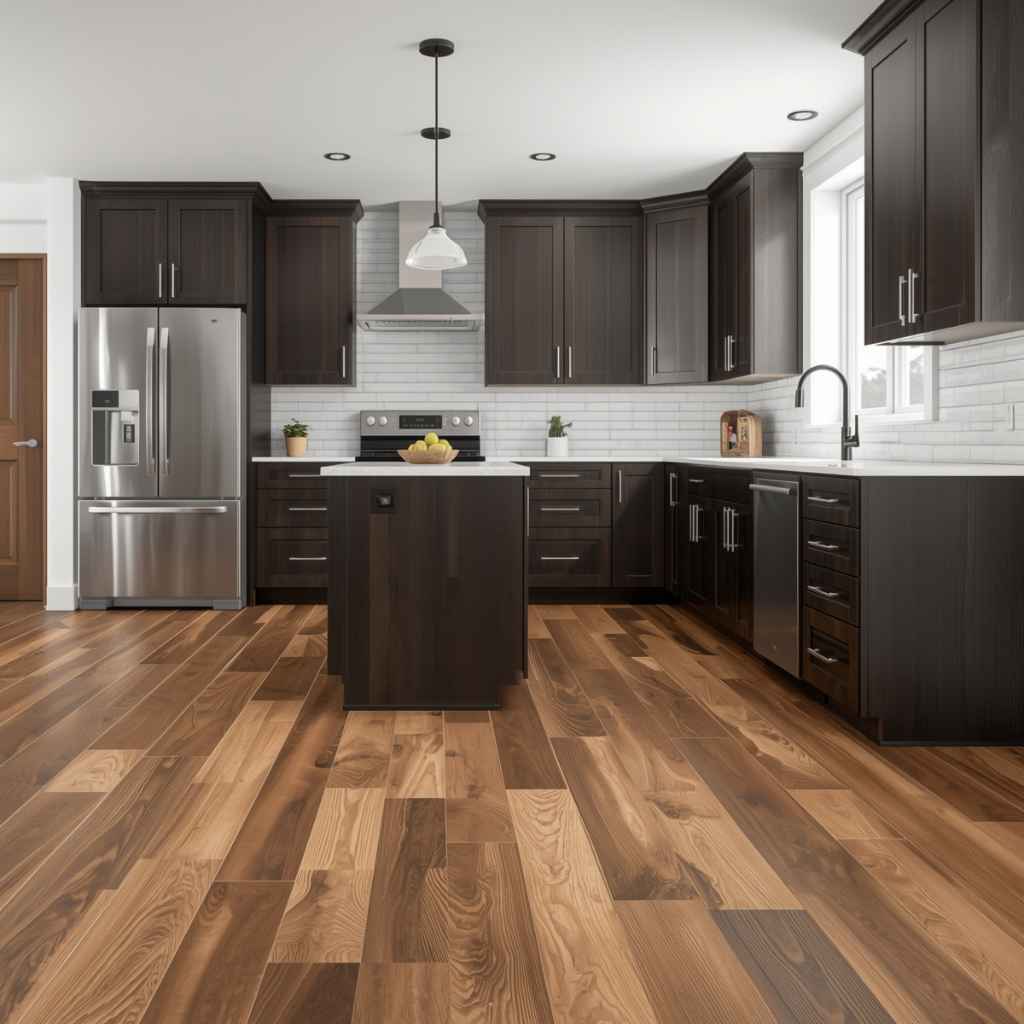
My Own Cabinet and Floor Adventure
I remember when we bought our first house. It had these beautiful, dark cherry cabinets. They were the main reason I fell in love with the place.
But the floor? It was this old, orangey-pine stuff. It just didn’t feel right.
The kitchen felt dingy, even with good lighting. I spent weeks looking at floor samples. I felt overwhelmed.
Every light wood made it too yellow. Every dark wood made it too much. One afternoon, I was at a friend’s house.
She had a similar kitchen, but her floors were a medium, natural oak. It looked perfect. The warmth of the oak balanced the deep red of her cabinets.
It was like a light bulb went off. That day, I learned that the “opposite” isn’t always the answer. Sometimes, a balanced middle ground is best.
I ended up choosing a natural-toned hickory floor. It had variations that picked up the red in the cabinets but also had creamy tones. It totally transformed the space.
It felt welcoming and brightened up the whole room. That experience taught me so much about how floors and cabinets really interact.
Key Takeaways for Your Space
Your Goal: Balance the depth of dark cabinets with your floor choice.
Contrast: Light floors make dark cabinets pop and brighten the room.
Harmony: Medium or slightly darker floors can create a warm, unified feel.
Style Matters: Consider your home’s overall design.
Popular Hardwood Floor Colors for Dark Cabinets
Let’s dive into specific colors that tend to work well. We’ll look at why they are good choices. It’s not just about the color itself, but also the undertones.
Undertones are subtle hints of other colors within the main color. For example, a “cool” brown has hints of gray or blue. A “warm” brown has hints of red or yellow.
Light & Bright Options
These are often the first thing people think of. They offer a strong contrast. This can make a kitchen feel much larger and airier.
Light floors can really highlight the richness of dark cabinets.
Natural Oak
This is a classic for a reason. Natural oak has warm, golden undertones. It’s not too yellow and not too gray.
It’s just a comfortable, familiar brown. It works well with almost any dark cabinet, from espresso to deep cherry. The subtle grain of oak also adds texture without being busy.
Think of it as a neutral best friend to your cabinets.
Why it works: Its natural warmth complements the deep tones of dark cabinets. It adds a touch of brightness.
White Oak (Natural or Lightly Stained)
White oak tends to be a bit cooler than red oak. It has grayish or sometimes slightly beige undertones. When left natural, it has a soft, elegant look.
Light white washes or subtle gray stains are very popular. These finishes can create a modern feel. They provide a clean contrast.
They don’t compete with the cabinets.
Why it works: Its cooler or neutral tones offer a chic contrast. It feels very current and clean.
Maple (Natural)
Maple is known for its very light color and smooth, subtle grain. When left in its natural state, it’s almost creamy white or pale beige. This extreme lightness provides a dramatic contrast to dark cabinets.
It’s a great choice if you want to maximize brightness and a minimalist feel. The fine grain keeps it from looking too plain.
Why it works: Its pale, almost white color creates a sharp, modern contrast. It maximizes light.
Ash (Natural or Light Stains)
Ash is similar to oak in its hardness. Its grain pattern is often straighter. Natural ash is light with a slightly gray or beige tone.
It can take stains well. Light gray or even white washes look fantastic on ash. This gives you a very modern, almost Scandinavian vibe.
It offers a cool, bright backdrop.
Why it works: Its straight grain and light color give a clean, modern look. It’s a good neutral base.
Quick Scan: Light Floor Picks
| Wood Type | Finish Recommendation | Best For. |
| Oak (Red or White) | Natural, Light Beige, Subtle Gray | Warm, classic, or modern looks |
| Maple | Natural, Light White Wash | Bright, minimalist, modern spaces |
| Ash | Natural, Light Gray, White Wash | Cool, modern, Scandinavian style |
Medium Tones: The Balanced Approach
Medium-toned floors offer a beautiful middle ground. They aren’t as starkly contrasting as light floors. But they are also not as dark as deep, rich woods.
This can create a very inviting and sophisticated feel. They often have warm undertones that can play nicely with dark cabinets.
Hickory (Natural or Medium Stain)
Hickory is known for its beautiful color variations. It can range from light cream to darker browns, all within the same plank. This natural character is stunning.
A natural or medium stain on hickory can be perfect. It picks up on the depth of dark cabinets while adding its own lively pattern. This is great for homes that are cozy and inviting.
Why it works: Its natural variations add interest. Medium tones create a warm, balanced look without being too dark.
Walnut (Lighter Stains or Natural)
Walnut is naturally a rich, deep brown. If you love the idea of a darker wood but want some contrast, consider lighter walnut stains. Or, go for a natural finish on a lighter grade of walnut.
This will still have that luxurious feel. But it won’t absorb all the light. It can create a very elegant, almost dramatic space.
Be sure to see samples in your actual light.
Why it works: Offers a touch of luxury. Lighter walnut provides a subtle richness that pairs well.
Brazilian Cherry (with a twist)
Brazilian Cherry is naturally a warm, reddish-brown. It deepens with age. If you have dark cabinets with red undertones (like mahogany or dark cherry), this can work.
However, if you want more contrast, look for slightly lighter stains or a more natural finish. Avoid very dark stains on this wood if you want to keep some brightness.
Why it works: Its natural warmth can complement certain dark cabinets. It adds a rich, deep feel.
Pecan or Pecan-like Stains
Pecan wood itself has a lovely light to medium brown color. It often has hints of pink or red. Stains that mimic pecan can offer a beautiful balance.
They are warm, inviting, and have just enough color to feel grounded. This is a good choice if you find natural oak a little too plain. It adds a bit more personality.
Why it works: Offers a warm, mid-tone color. It can have subtle pink or red undertones that complement certain dark woods.
Contrast Matrix: Medium Tones
Normal Medium Tone: A balanced, warm, and inviting look. Creates a cozy feel. Offers good light reflection without being too bright.
Concerning Medium Tone: If the medium tone has undertones that clash with your cabinets. For example, a greenish medium tone with red cabinets might look off. Or if the stain is too close in value, making the room feel flat.
Darker Floors: The Bold and Cozy Choice
Some people love the idea of a darker floor with dark cabinets. This creates a very enveloping and luxurious feel. It’s a more dramatic choice.
It works best in well-lit spaces or when you want a very moody, sophisticated ambiance. The key here is to ensure there’s enough light. You also need enough variation in tone to prevent it from looking like one big dark blob.
Dark Walnut
For a truly luxurious feel, dark walnut is stunning. It’s a deep, rich chocolate brown. It has undertones that can range from subtle red to almost black.
When paired with very dark espresso or black cabinets, it creates a seamless, high-end look. This requires good lighting to avoid making the room feel too cave-like.
Why it works: Creates a luxurious, enveloping feel. Offers a sophisticated, monochromatic look.
Exotic Woods (like Wenge or Dark Mahogany stains)
Woods like Wenge are naturally very dark, almost black. Stains that mimic these can achieve a similar effect. Dark mahogany stains offer a deep, reddish-brown.
These can be stunning with lighter dark cabinets, like a deep cherry or a dark oak. The rich color can feel very opulent. Again, lighting is critical.
Why it works: Provides a dramatic, high-end look. Great for creating a moody, sophisticated atmosphere.
Distressed or Textured Dark Finishes
Sometimes, a dark floor can feel too uniform. Opting for a distressed or heavily textured dark finish can add visual interest. Wire-brushed or hand-scraped textures catch the light.
This prevents a flat appearance. Even a dark floor can have subtle variations that make it come alive. This works well with rustic or farmhouse styles.
Why it works: Adds depth and character to a dark color. Prevents a flat, monolithic look.
Observational Flow: Dark on Dark
Step 1: Assess Your Light. Do you have large windows? Excellent overhead lighting?
If not, proceed with caution.
Step 2: Consider Cabinet Undertones. Are your dark cabinets more red, brown, or black? This affects the floor choice.
Step 3: Look for Variations. A floor that is all one dark shade might be too much. Aim for subtle shifts in tone.
Step 4: Samples are Crucial. See how the floor looks next to your cabinets in your home’s light at different times of day.
Undertones: The Hidden Heroes (or Villains)
This is where things can get tricky. Undertones are the subtle colors that lie beneath the main color. They are super important.
They determine if two colors will clash or harmonize.
Warm Undertones
These floors have hints of red, orange, or yellow. Think of a natural oak, a light cherry, or a warm pecan. These often pair well with dark cabinets that have a similar warmth.
For example, dark cherry cabinets with a medium, warm oak floor. Or espresso cabinets with a floor that has subtle reddish tones.
Cool Undertones
These floors have hints of blue, gray, or green. Think of a weathered gray floor, a very pale, almost white wood, or some cooler-toned walnuts. Cool undertones can work well with dark cabinets that are very deep, almost black, or have cool gray undertones themselves.
A cool, gray-washed floor with dark gray or black cabinets can look very sleek and modern.
Neutral Undertones
These are hard to define. They are neither distinctly warm nor cool. Think of a very natural, mid-toned wood without strong red or gray casts.
These are often the easiest to work with. They act as a beautiful bridge. They can complement a wide range of dark cabinet colors.
Natural hickory or some lighter, well-balanced oak finishes can fall into this category.
The Rule of Thumb: Try to match undertones. If your dark cabinets are warm (like a deep cherry), a floor with warm undertones will likely feel harmonious. If your cabinets are cool (like a very dark gray or black), a floor with cool undertones can create a cohesive look.
When in doubt, a neutral undertone floor is often a safe bet.
Split Insight Panel: Undertone Check
Cabinet Undertones: Look at your dark cabinets in natural light. Do you see hints of red, brown, or black? Are they leaning warm or cool?
Floor Undertones: Examine your potential floor samples. Where does the color lean? Warm (red/yellow/orange) or cool (blue/gray/green)?
The Match: Aim for similar undertones for harmony. Or, use a stark contrast (light vs. dark) to make them stand out.
Considering Your Cabinet Color Specifically
The exact shade of your dark cabinets matters. Not all “dark” cabinets are the same.
Dark Espresso or Black Cabinets
These are the deepest shades. They offer the most dramatic contrast potential. Light floors: This is a classic pairing.
Think of white oak, natural maple, or a very light gray-washed floor. This makes the cabinets the star. It keeps the space bright.
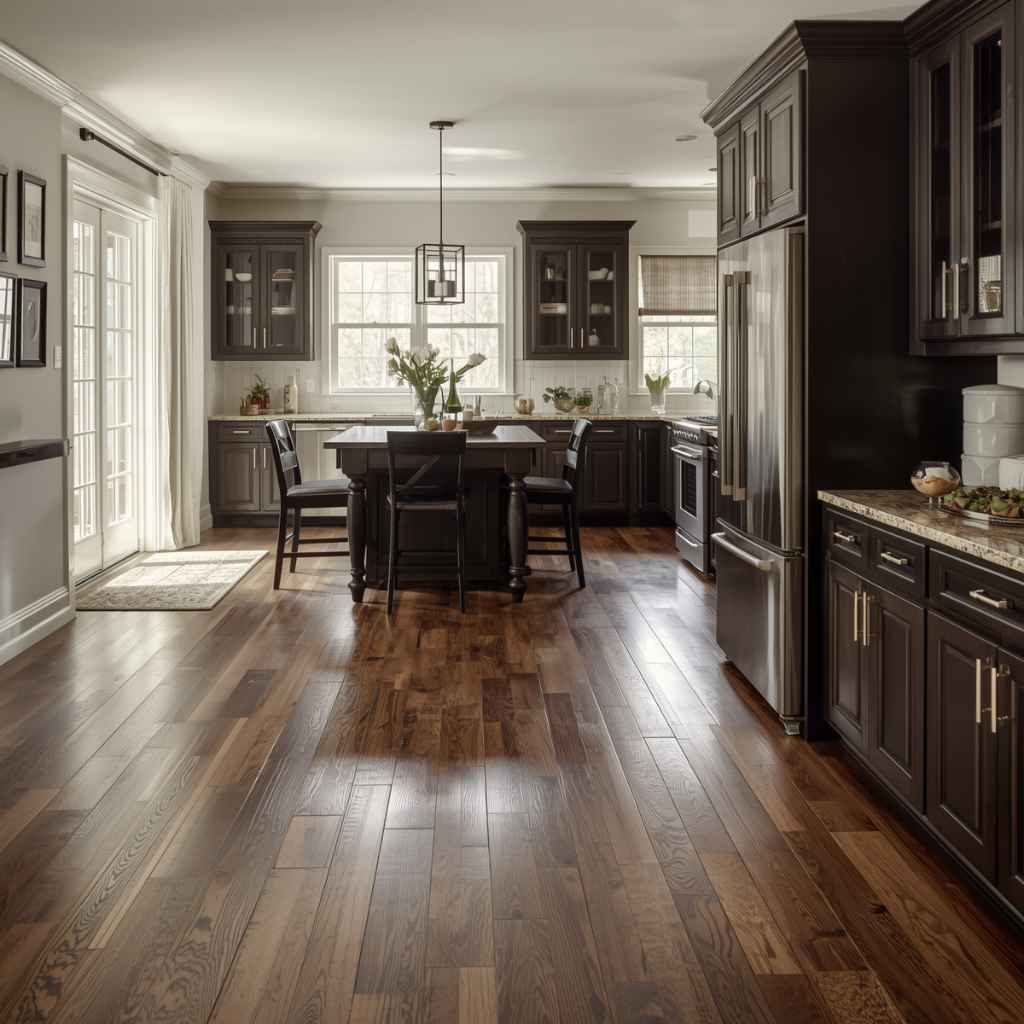
Medium floors: A warm medium oak or a natural hickory can provide a beautiful, softer contrast. It feels grounded and inviting. Dark floors: This creates a very sleek, moody, and luxurious look.
A dark walnut or a dark stained oak can work. Ensure ample lighting. The floor and cabinets should have some* slight difference in tone or sheen to avoid looking like one mass.
Dark Cherry or Reddish-Brown Cabinets
These cabinets have warm, red undertones. Light floors: A natural oak or a light, warm-toned wood works well. Avoid floors with strong yellow or orange undertones, as they can sometimes clash with the red.
Gray-toned floors can offer a nice contrast but choose them carefully so they don’t fight the red. Medium floors: A natural hickory or a medium oak with subtle warmth is a great choice. It echoes the warmth of the cabinets.
A medium walnut can also work, offering a deeper contrast. * Dark floors: A dark walnut or a deep, rich brown floor can be stunning. It creates an opulent, cozy atmosphere.
Ensure there’s enough light to keep it from feeling too somber.
Dark Chocolate or Deep Brown Cabinets
These are rich browns, often with more neutral or slightly warm undertones than cherry. Light floors: Almost any light floor will work. White oak, maple, or a light ash provide a clean, bright contrast.
Medium floors: This is a sweet spot. A natural oak, a medium walnut, or a warm hickory will create a balanced, inviting space. * Dark floors: A dark walnut or a deep, rich oak can create a sophisticated, enveloping room.
Again, ensure enough light and slight variation in tone.
Stacked Micro-Sections: Cabinet Color Impact
Espresso/Black: Maximum contrast potential. Light floors brighten, dark floors go moody/luxe.
Cherry/Reddish-Brown: Warm undertones are key. Echo warmth with medium, warm floors. Cool floors offer contrast but need careful selection.
Chocolate/Deep Brown: Versatile. Light floors offer brightness, medium floors offer balance, dark floors create sophistication.
Beyond Color: Other Factors to Consider
It’s not just about the hue. Several other elements influence your final decision.
Wood Species and Grain
The natural pattern of the wood matters. Oak has a prominent, wavy grain. Maple has a much finer, straighter grain.
Hickory has a lot of natural color variation and a bolder grain. These natural characteristics affect how a color looks and feels. A busy grain on a light floor can make a space feel more dynamic.
A subtle grain on a dark floor can feel more refined.
Finish and Sheen
The finish on your hardwood can change its appearance. A matte finish absorbs light. It can make a color look softer and more natural.
A satin or semi-gloss finish reflects light. This can make colors appear brighter and richer. For dark floors, a matte or low-sheen finish is often preferred.
It hides minor scratches better. It can also prevent glare. For light floors, any sheen can work, depending on the style.
Your Home’s Overall Style
Think about the rest of your house. Is it modern, traditional, farmhouse, or eclectic? A light, gray-toned floor with dark cabinets screams modern.
A warm, medium-toned oak floor with dark cherry cabinets feels more traditional. A distressed, darker wood floor can fit a farmhouse vibe. Ensure your floor choice complements your furniture and decor.
Lighting
This cannot be stressed enough. How much natural light does your space get? Do you have ample artificial lighting?
If your space is naturally dim, a very dark floor with dark cabinets can make it feel even darker. If you have bright, abundant light, you have more freedom to go with deeper tones. Always test samples in your home’s actual lighting conditions.
Quick-Scan Table: Important Considerations
| Factor | Impact on Choice | When to Consider |
| Wood Grain | Adds texture and visual interest. | Busy grain for dynamic feel; subtle grain for refined look. |
| Finish Sheen | Affects light reflection and perceived color. | Matte for soft look, gloss for brighter feel. |
| Home Style | Ensures cohesion with decor. | Match floor to modern, traditional, or rustic themes. |
| Lighting | Determines if dark colors will feel oppressive. | Bright light allows darker choices; dim light favors lighter floors. |
What This Means for Your Home
Choosing the right floor is more than just aesthetics. It affects how your space feels and functions.
When is a Light Floor the Right Choice?
If you want to maximize brightness. If your kitchen or living area is on the smaller side. If your dark cabinets feel a bit heavy.
A light floor creates a visual lift. It makes the room feel open and airy. This is especially true if your cabinets are a deep espresso or black.
It’s a classic choice for a reason.
When is a Medium Tone Floor the Right Choice?
If you want a balanced, harmonious look. If you like a warm and inviting atmosphere. Medium tones offer the best of both worlds.
They provide enough contrast to define the cabinets. But they also blend in a way that feels cozy. This is often a very safe and pleasing choice for many homes.
It works well with most dark cabinet colors.
When is a Darker Floor the Right Choice?
If you’re aiming for a dramatic, luxurious, or sophisticated feel. If your room has plenty of natural light. If you love a cozy, enveloping ambiance.
A dark floor with dark cabinets can feel very high-end. It’s best suited for larger spaces or rooms with good lighting. Otherwise, it can make the room feel too dark.
Simple Checks Before You Buy
Before you commit, do a few simple checks. These can save you a lot of headaches later.
Get Samples
This is non-negotiable. Bring home large samples of your top choices. Place them in your room.
Look at them at different times of day. See them next to your cabinets, your wall color, and your countertops.
Consider the Undertones Again
Hold the floor sample up to your cabinets. Do the undertones clash? Do they harmonize?
Look for subtle hints of color. The contrast between the floor and cabinets should feel intentional.
Think About Maintenance
Lighter floors can show dirt and dust more easily. Darker floors can show scratches and scuffs more prominently, especially if they have a high sheen. Textured finishes can hide daily wear better.
Consider how much cleaning you’re willing to do.
The goal is a cohesive look that feels right for you and your home. It should be a space you love to spend time in.
Frequently Asked Questions About Hardwood Floors and Dark Cabinets
What is the most popular hardwood floor color with dark cabinets?
Light to medium natural oak is consistently popular. It offers a versatile and timeless look. White oak with a light stain is also a strong contender for a modern feel.
Can I use a gray hardwood floor with dark cabinets?
Yes, absolutely. Gray hardwood floors offer a modern contrast. They pair especially well with black, charcoal, or deep brown cabinets.
Ensure the gray undertones of the floor complement the undertones of your cabinets.
What about engineered wood vs. solid hardwood for this choice?
Both can work. Engineered wood can offer more stability in areas with moisture changes. Solid hardwood offers classic beauty and can be refinished more times.
The color and finish options are vast for both types. Your choice depends more on budget, location in the house, and longevity needs.
Should my hardwood floor match my dark cabinets exactly?
No, it’s generally best if they don’t match exactly. A slight difference in color or tone provides visual interest. If they match too closely, the space can look flat.
Aim for contrast or complementary tones.
What flooring should I avoid with dark cabinets?
Be cautious with overly busy or extremely dark, untextured floors in low-light rooms. Also, avoid floor colors that have clashing undertones with your cabinets. For instance, a very yellow-toned floor with red cabinets might not be ideal.
How do I choose between red oak and white oak for my floor?
Red oak has warmer, pinkish-red undertones and a more prominent grain. White oak has cooler, grayish-brown undertones and a straighter, finer grain. White oak is also more resistant to moisture.
Your choice often comes down to the specific look you prefer and its compatibility with your dark cabinets’ undertones.
Final Thoughts on Pairing Floors and Cabinets
Choosing a hardwood floor color to go with dark cabinets is about creating balance. Think about contrast, harmony, and undertones. Light floors brighten and highlight.
Medium floors offer warmth and balance. Dark floors create a luxurious, enveloping feel. Always consider your home’s lighting and overall style.
Get samples and see them in your space. This decision can truly transform your home. It’s about making your kitchen or living area feel just right.
You’ve got this!
Sponsored / affiliate links. As an Amazon Associate I earn from qualifying purchases. I may earn additional commission from eligible campaigns.