4 Best Door Hardware for Cold Weather (2026): We Compared
For cold climates, a Grade 1 deadbolt is a strong choice, along with a reinforced full-length strike plate, stainless or coated exterior hardware, and adjustable hinges; skip parts that tend to bind in low temperatures or corrode. Weak hardware can stick, drift out of line, or fail when the door shrinks and swells, leaving gaps and weaker security. This guide covers cold-weather door security hardware, which parts matter most in winter, and which parts to avoid.
Quick comparison

| Product | Badge | Best for | Price | ||
|---|---|---|---|---|---|
 |
Schlage Single Cylinder Front Door Deadbolt, Satin Nickel |SCHLAGE | Our pick | Single cylinder · Satin Nickel · Front door deadbolt | $32.68
Price as of 27 Oct 2026
|
View |
 |
Prime-Line Door Reinforcement Lock, Matte Black | 3 in. StopPRIME-LINE | Upgrade pick | 3 in. stop · Matte Black · Reinforcement lock | $16.39
Price as of 27 Oct 2026
|
View |
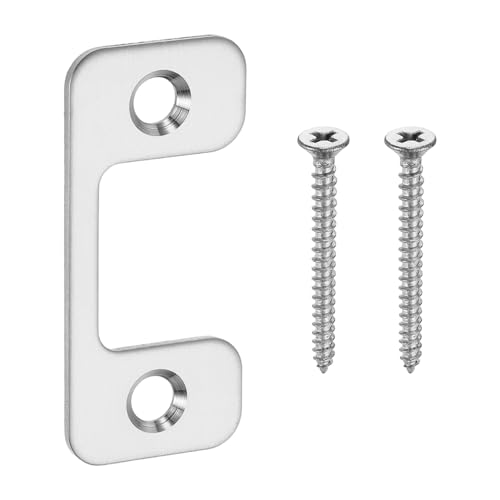 |
uxcell Adjustable Strike Plate, 2-1/4" x 1" Stainless Steeluxcell | Budget pick | 2-1/4 x 1 in. · Stainless steel · Adjustable strike plate | $8.69
Price as of 27 Oct 2026
|
View |
 |
304 Stainless Steel Door Hinges 4 Inch Heavy Duty Ballqtanber | Also great | 4 in. · 304 stainless steel · Ball bearing hinges | $27.99
Price as of 27 Oct 2026
|
View |
 |
Kwikset 660 Deadbolt Lock, Satin Chrome Round ExteriorKwikset | Pair with it | Standard doors · Satin Chrome · SmartKey deadbolt | $21.00
Price as of 27 Oct 2026
|
View |
The best choice depends on exposure. A sheltered entry can support a keypad deadbolt, while an exposed porch usually works better with a simple deadbolt plus reinforced hardware that keeps working when moisture, salt, and temperature swings pile up.
How we chose
The priority was winter operability first, then security. We favored hardware with clear security grades, weather resistance ratings such as IP54 or better, and designs that avoid common cold-weather failures like sticking cylinders, drained batteries, and frozen keypads.
We also separated convenience from security. A backlit keypad may help gloved access, but it does not replace a stronger deadbolt, a solid strike plate, or a reinforced frame.
Finally, we looked at exposure. Sheltered doors, partially exposed porches, and fully exposed entries do not face the same mix of snow, condensation, wind-driven moisture, and freeze-thaw movement.
Keypad deadbolt: best for glove-friendly access
A keypad deadbolt is the best fit when you want fast access with gloves and you still want a real deadbolt on the door. It is especially useful on a front entry that sees regular use, because a backlit keypad is easier to enter in low light than a metal key that is cold and hard to grip.
Look for a weather-resistant housing, a backup key option, and clear battery information. One cold-weather guide that evaluated over 30 models used IP54+ as a weather-resistance threshold, and the featured TEEHO lock combines PIN, temporary code, and key access with an IP54 rating and an auto-lock range listed as 10-99 seconds.
Its drawback is simple: keypad convenience does not erase winter maintenance. Batteries still age faster in cold weather, and a keypad still needs a dry, protected location if your door takes direct snow or sleet.
Cold weather can also make a lock feel worse without making it less secure. Standard exterior lock materials can become icy to the touch, so a keypad may solve the glove problem while leaving the touch-comfort problem to the rest of the hardware stack.
Can smart locks work in freezing temperatures?
Yes, but only within limits. Smart locks can work in freezing temperatures, and some models are listed for use as low as -30°F to -40°F, but cold can still reduce battery life by up to 50% in extreme cold and can make connectivity less dependable when Wi-Fi or Bluetooth is weak.
That means the question is not simply whether the lock turns. It is whether the lock stays usable after repeated cold nights, condensation, and door movement. A smart lock with remote access can be convenient for package drop-offs or shared access, but it should not be the only layer of security on an exposed door.
Battery care matters more in winter. For AA-powered locks, plan on shorter intervals between checks once temperatures stay below freezing, and keep spare batteries indoors so you are not swapping weak cells in the cold.
Say your porch sits under a roof but the door still catches cold wind every evening. A smart lock may be fine there if you want app control and a backup code, but the same lock on a fully exposed entry is more likely to face battery strain and moisture issues that make a mechanical deadbolt the better baseline.
Mechanical deadbolt: best for reliability
A mechanical deadbolt is the safest default when winter reliability matters more than app control. It has no battery to drain, no Wi-Fi handshake to fail, and fewer parts that can become temperamental when temperatures swing below freezing.
The main risk is the cylinder itself. Moisture can enter the keyway, freeze, and make the key hard to turn, especially on an exposed door or after repeated freeze-thaw cycles. A good deadbolt still needs a protected cylinder, a tight strike alignment, and a door that closes squarely.
Anti-pick and anti-tamper features matter here. A tamper-resistant deadbolt with stronger internal parts and quality pins is a better winter choice than a light-duty unit that binds when the frame shifts. The Schlage deadbolt listed here is the strongest security-first option in the group, with keyed exterior access, a thumbturn inside, and a certified highest-security residential build.
Do not stop at the deadbolt. If the strike plate, hinges, or frame flex under cold-weather movement, even a strong lock can fail to latch cleanly. That is why the rest of the door hardware matters as much as the cylinder.
Weather resistance and corrosion resistance
Weather resistance is about more than a label. For exterior doors, moisture, snow, road salt, and freeze-thaw cycles attack moving parts and finishes over time, so stainless steel, coated metal, and documented ingress resistance are worth more than decorative trim.
A weather resistance rating such as IP54 means the housing is designed to resist limited dust ingress and splashing water, which is useful for doors that face windblown snow or condensation. It is not the same as full submersion protection, and it does not mean the mechanism can live unprotected in a wet opening.
That is why exposed entries should prioritize materials first, then electronics. One guide’s cold-weather criteria used IP54+ as a selection filter, which makes sense for exterior doors where moisture and melting snow can work into seams and around keypads.
Materials matter too. Stainless steel resists rust better than plain steel, and 304 stainless hinges are a practical choice for a door that sees winter moisture. Solid brass and coated steel also help, but finish quality is just as important as base metal.
Battery life and power reliability in winter
Battery performance is a real winter issue, but only for locks that rely on power. AA-powered smart locks and keypad locks can lose runtime in cold weather, and one cold-weather smart-lock guide says battery life can be reduced by up to 50% in extreme cold.
That makes battery planning part of the security plan. Check batteries before the first sustained freeze, replace them sooner than you would in summer, and keep a spare set indoors. If a lock is rated for up to 3 years under ideal conditions, cold exposure can shorten that in practice.
Connectivity also matters. If the lock uses Wi-Fi or Bluetooth for remote access, weak signal and cold batteries can combine into a lockout problem even when the deadbolt itself is fine. Remote access is convenient, but it is not a substitute for a mechanical way to get in.
For fully exposed doors, a simpler deadbolt often wins because it removes one failure mode. For sheltered doors, a keypad or smart lock can still make sense if you are willing to maintain batteries and keep a backup key available.
What features should I look for in a cold-weather door lock?
Look for a real security grade, weather resistance, and winter-friendly operation. The best cold-weather door lock combines a strong deadbolt, an accurate strike fit, corrosion-resistant materials, and a way to enter with gloved hands without depending on a phone app.
ANSI/BHMA grade is the security and durability standard to check first. Grade 1 is commonly described as the highest residential classification, Grade 2 as a strong midrange option, and Grade 3 as the lightest residential level. A Grade 1 deadbolt is the better pick for a front door that faces harsh weather or higher wear.
Also look for anti-pick and anti-peep features. Anti-pick pins improve resistance to basic lock manipulation, anti-tamper construction slows forced entry, and a concealed or poorly lit keypad can be a problem if winter gloves make you slower at the door.
Comfort features should stay in their lane. A warmer grip, insulated cover, or less conductive finish makes the hardware easier to touch in cold weather, but that does not change how strong the lock is.
Door security decision matrix
This matrix compares common cold-weather failure modes, not just brand names. Use it to decide which hardware matters most at your door.
| Hardware choice | Freezing risk | Battery drain | Corrosion resistance | Glove usability | Installation difficulty | Security impact |
|---|---|---|---|---|---|---|
| Mechanical deadbolt | Low to moderate; the cylinder can freeze if moisture enters | None | High if stainless or coated | Moderate; keys are harder with gloves | Moderate | High, especially at Grade 1 |
| Keypad deadbolt | Moderate; keypad and latch still need dry alignment | Moderate; cold shortens AA runtime | Good when housing is weather-rated | High; backlit keypad helps | Moderate | High when paired with a strong deadbolt |
| Smart lock | Moderate to high on exposed doors | High; cold can cut battery life by up to 50% | Depends on rating and finish | High if app or keypad is reliable | Moderate to high | High only if the mechanical base is strong |
| Reinforcement plate and strike upgrade | Low | None | High with stainless steel | Neutral | Moderate | High; improves latch and frame strength |
| Hinge upgrade | Low | None | High with stainless steel | Neutral | Moderate | Moderate to high; helps alignment and resistance |
A common first-timer mistake is buying an app-heavy lock for a windy front porch and leaving the stock strike plate in place. The app may work on day one, but the door can still shift enough in a cold snap to make the latch rub, the deadbolt miss the strike, or the lock feel sticky.
Schlage deadbolt: best for winter reliability
This is the strongest pick if you want a straightforward winter deadbolt with no battery dependency. Based on the published product details, it is a single-cylinder deadbolt with keyed outside access and a thumbturn inside, which keeps operation simple when the door is cold and your hands are covered.
It stands out for its certified highest security and metal construction, which makes it a better match for homeowners who care more about a sturdy winter baseline than about app control or code management.
The drawback is convenience. You give up keypad entry, remote access, and the easier glove-friendly experience that a backlit keypad provides, so it is less comfortable on a door that gets frequent use in bad weather.
Prime-Line reinforcement lock: best for frame strength
This is the right add-on when the door itself is not the only weak point. It reinforces inward-swinging entry doors and includes three-inch hardened security screws, which helps address a common cold-climate problem: the lock may be fine, but the frame and stop are not.
It is a good choice for homeowners who want to improve forced-entry resistance without replacing the whole lockset. In winter, that extra frame strength matters because expansion, contraction, and repeated slamming can make a marginal door easier to push or pry.
The drawback is that it is not a standalone lock. It strengthens the opening, but you still need a good deadbolt and proper latch alignment to get the full benefit.
Uxcell adjustable strike plate: best for alignment fixes
This is the practical choice when winter movement causes the bolt to catch or rub. A stainless steel adjustable strike plate can help guide the deadbolt into place and can help address loose bolts and gaps, which is useful when a door shifts after a temperature drop.
It is also one of the simplest ways to improve cold-weather reliability without changing the whole lock. Stainless steel resists deformation better than thin, soft plate material, so it is a sensible upgrade for an exterior door that sees seasonal movement.
The drawback is that it fixes fit more than it fixes security by itself. It should be treated as a support part, not as a substitute for a stronger deadbolt or frame reinforcement.
Qtanber stainless steel hinges: best for door movement
These hinges fit the part of winter security that is easy to overlook. 304 stainless steel resists rust and corrosion, and ball bearings help the door open and close more smoothly, which matters when cold, damp conditions make an entry feel stiff.
The non-removable pin adds another security benefit. That makes them useful on exterior doors where hinge-side resistance matters and where winter moisture could otherwise shorten the life of lesser hardware.
The drawback is that hinge upgrades do not fix a weak deadbolt. They help the door stay aligned and usable, but they need to be part of a full stack that includes the lock and strike.
Kwikset deadbolt: best for budget rekeying
This is the budget-minded option for homeowners who want a simple deadbolt with flexible rekeying. The adjustable latch fits common backsets, and the SmartKey feature lets you re-key the lock without replacing the whole cylinder, which can be useful after a move or key change.
It is a practical fit for standard doors where the main goal is to keep costs down while still upgrading from a weak or worn exterior lock. It also keeps the winter setup mechanical, which avoids battery drain and app dependence.
The drawback is that it is not the best fit for the most demanding winter exposure. If your front door is heavily exposed, a higher-grade deadbolt and stronger frame reinforcement are the safer long-term bet.
Which one should you buy?
For a sheltered entry, a keypad deadbolt is usually the best balance of winter convenience and security. The Schlage-style mechanical deadbolt still wins if you want the fewest failure points and do not need code entry.
For a partially exposed porch, start with the deadbolt and then add a stainless strike plate or frame reinforcement. That combination handles latch alignment, winter movement, and forced-entry resistance better than a smart lock alone.
For a fully exposed exterior door, choose a Grade 1 mechanical deadbolt, stainless or coated hardware, and reinforcement at the strike and hinges. If you add a smart lock there, treat it as a convenience layer, not the main security layer.
Budget also matters. If you need the lowest-cost improvement, the strike plate and hinge upgrades can make an existing door more reliable in winter. If you want the most comfort with gloves, the keypad deadbolt is the better user experience. If you want the least winter maintenance, the plain mechanical deadbolt is still the most dependable answer.
Do not ignore the rest of the door. A strong lock on a weak frame is still a weak opening.
How do I keep my front door hardware from freezing?
Keep moisture out, keep the parts aligned, and reduce exposed metal where possible. A dry keyway, tight strike fit, stainless or coated hardware, and a protected entrance all lower the chance that freezing temperatures will make the lock stick or the latch miss its mark.
Winter maintenance should be routine, not reactive. Check the latch and deadbolt for smooth engagement before deep cold arrives, clear snow from the threshold, and watch for condensation after thaw events that can refreeze overnight.
If a lock starts feeling stiff, treat it as a warning, not a nuisance. A sticking bolt is often a sign of alignment drift, moisture intrusion, or hardware that is wearing out faster in the cold.
Suppose a front door closes fine at 40°F but starts rubbing after a 20-degree drop. That usually points to seasonal movement in the door or frame, which means the fix is often an adjusted strike, hinge tuning, or reinforcement rather than a different lock style.
Frequently asked questions
What is the best door security hardware for cold weather?
The best setup is a Grade 1 deadbolt with a reinforced strike plate, stainless or coated exterior hardware, and hinges that keep the door aligned. If you want code entry, add a weather-rated keypad deadbolt rather than relying on a smart lock alone. The goal is a system that still works when the temperature drops and the door shifts.
Do smart locks work in freezing temperatures?
Yes, many do, but winter reduces their margin for error. Battery life can drop sharply in extreme cold, and connectivity can become less reliable if the door is far from the hub or router. A smart lock is best when the entry is somewhat sheltered and you still have a mechanical backup plan.
Which door lock is best for winter weather?
A mechanical deadbolt is the most reliable winter choice because it avoids battery drain and app dependence. If you want easier access with gloves, a keypad deadbolt is the better convenience pick. For harsh exposure, choose the simplest strong lock you can pair with a reinforced strike and frame.
Can cold weather cause a door lock to fail?
Yes. Cold weather can make mechanisms stick, freeze, or fail, and it can also make exterior hardware icy to the touch. The problem is often a mix of moisture, metal contraction, and door movement from freeze-thaw cycles, which is why alignment and corrosion resistance matter as much as the lock body itself.
Are keypad locks better than key locks in winter?
Keypad locks are better for glove-friendly access and low-light entry, but they are not always better for reliability. A key lock has fewer power-related failures, while a keypad can be easier to use in bad weather. For exposed doors, the best answer is often a strong deadbolt with a keypad only when the convenience is worth the maintenance.
Sponsored / affiliate links. As an Amazon Associate I earn from qualifying purchases. I may earn additional commission from eligible campaigns.
 Finsbury Hardware Black Heavy Duty Door Hinge Matte Black Ball Bearing 4x4 Inch Heavy Duty - Set of 6 Solid Brass Matte Black Door Hinges (Flat Black)
 5 Inch Stainless Steel Door Hinges, Heavy Duty Commercial Door Hinges Ball Bearing Hinges for Exterior & Interior Doors, 5" (127mm) x 5" (127mm) Door Hinge with Square Corners, 4 Pack - Black