Best Solar Lights for Backyard Dining (2026): We Compared
The best solar lights for backyard entertaining combine 1 low-glare table light, perimeter path or post lights, and 1 to 2 accent fixtures. That mix gives even patio dining light without harsh shadows. Bad placement leaves guests squinting, washes out food, and makes walkways harder to read after dark. This guide shows which solar fixtures fit each hosting job and how to combine them for atmosphere without glare.
Quick comparison
| Product | Badge | Best for | Price | ||
|---|---|---|---|---|---|
 |
plosim 50FT Solar String Lights Outdoor, Dimmable Patioplosim | Our pick | 50FT · 18+1 LED · 3 Modes | $17.99
Price as of 21 Oct 2026
|
View |
 |
ZOOHAR Solar Outdoor Lights,Extra-Tall Solar Torches withZOOHAR | Upgrade pick | 4-Pack · Stainless Steel · Flame Effect | $156.99
Price as of 21 Oct 2026
|
View |
 |
JOIEDOMI 2 Pack Outdoor Solar Hanging Lantern Lights,Joiedomi | Budget pick | 2-Pack · Metal · Flower Pattern | $22.79
Price as of 21 Oct 2026
|
View |
 |
voona Solar LED Outdoor Lights 8-Pack Stainless Steelvoona | Also great | 8-Pack · Stainless Steel · Star Pattern | $40.99
Price as of 21 Oct 2026
|
View |
 |
ABCCANOPY Solar Led Patio Umbrella with 32 Lights 9FT(Tan)ABCCANOPY | Our pick | $58.95
Price as of 30 Oct 2026
|
View |
Use this section as the fast filter for your patio. The best choice depends less on the label on the box and more on where the light has to work: over the table, along the edge, or on a backdrop feature.
Consumer Reports groups solar outdoor lights into garden, deck, and string categories, and that split is useful here because each type does a different entertaining job.
How we chose
This guide favors fixtures that solve a specific hosting problem, not generic “outdoor lighting” picks. The comparison rests on four criteria.
- Job fit: whether the light works for dining, movement, accenting, or all three.
- Brightness control: whether the published output and beam style support use around people and food.
- Charging and runtime logic: whether the product design fits dusk-to-night entertaining, not only a short display window.
- Weather resistance: whether the product is built for rain, splash, and repeated outdoor exposure.
Consumer Reports notes that solar lights draw power from batteries housed inside the lights, and some come on automatically at dusk. BBC Gardeners’ World also notes that solar lights run from internal rechargeable batteries charged through the day by a solar panel. (Consumerreports)
Solar string lights: best for dining areas
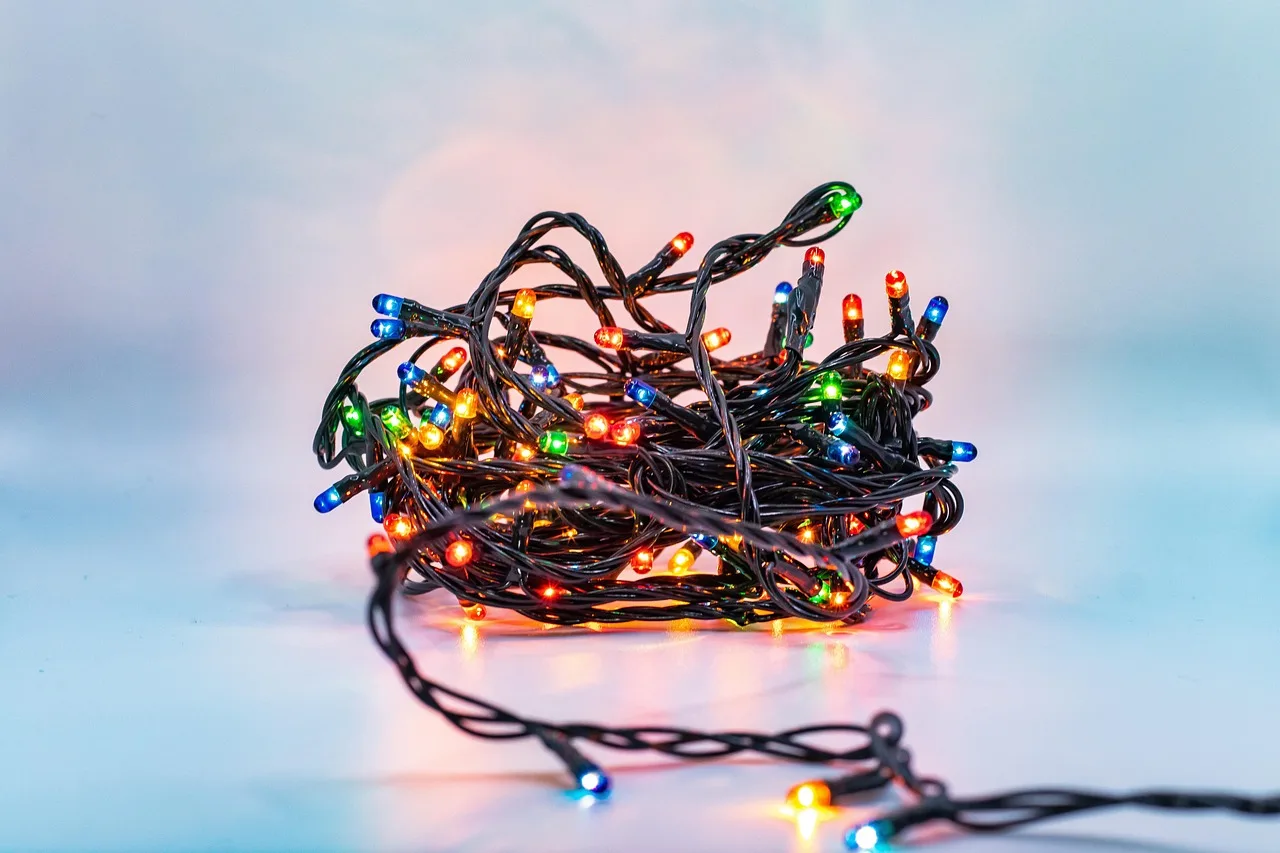
Solar string lights are the strongest starting point for a dining zone because they spread light across a broad area without concentrating glare in one spot. The same source says they can brighten a patio long after sunset, and festoon-style strings are often the cleanest fit for pergolas, fences, and gazebos.
This plosim 50FT set fits a simple overhead layer for a table, deck, or covered seating area. The 50FT length gives room for a perimeter run or a center span, and the dimmable remote helps keep the table from feeling overlit. The dual solar and USB charging is useful when a cloudy afternoon threatens evening runtime.
The main drawback is that string lights are still a wash, not a task lamp. They help food look inviting and faces read clearly, but they usually need support from a lantern or path light if you want stronger light on serving dishes or steps.
Bulb spacing and total length
For backyard dining, total length matters as much as brightness. A short run leaves dark gaps, while a longer span can cover a pergola edge, a fence line, or a canopy frame with fewer hot spots. Bulb spacing controls the visual rhythm; tighter spacing reads brighter and more festive, while wider spacing feels softer and more open.
Use string lights when you want a visible overhead plane. The same source notes that string lights can mount with clips onto hooks, nails, screws, or branches, which makes them flexible for pergolas, trellises, and umbrella ribs.
Warm white vs cool white
For dining, warm white is usually the better choice. It flatters food and skin tones, and it keeps the patio from looking clinical. Cool white can make a space feel harsher and is harder to use comfortably over a table unless you are aiming for a brighter, more functional look.
Keep one visible zone to one bulb color. Mixed color temperatures in the same seating area make the setup feel uneven, even if the light output is similar.
Mounting options and automatic dusk operation
Look for clips, hooks, or screws if you need a secure overhead run. That is especially helpful on pergolas and fences where wind movement can tug a loose line out of shape. The same source says some solar lights come on automatically at dusk, which is the right behavior for dinner hosting because you do not want to chase switches when guests arrive.
Say your patio has a 12-foot table under a pergola with one shaded side. A string light set can cover the long edge, but the shaded side may need a separate accent or a better-charged solar panel setup to hold output through dessert.
Solar lanterns: best for movable ambience
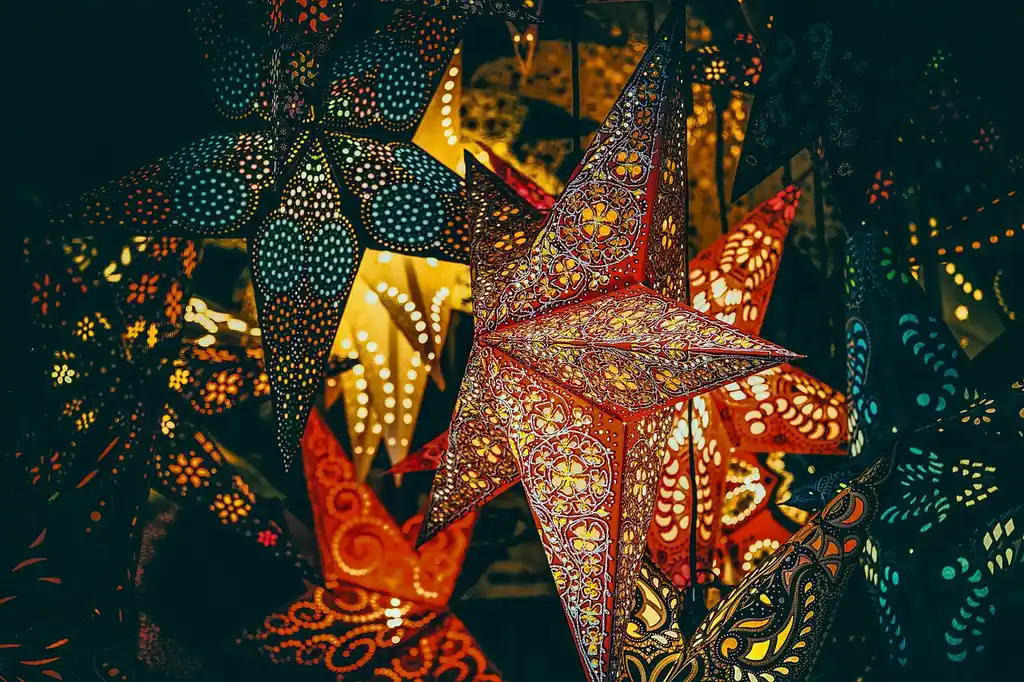
Solar lanterns are best when you need light that can move with the party. They work well on a side table, near a serving station, or hanging from a hook at the edge of a seating area. Telegraph notes that solar lanterns can add magic to the lawn, and that effect is strongest when you use them as a layer, not the whole plan.
The Joiedomi 2-pack gives you both tabletop and hanging use, which is useful for mixed backyard layouts. The metal shell and IP65 weatherproof rating make them a more credible outdoor option than purely decorative indoor-style lanterns. The patterned projection adds visual texture without needing a bright bulb.
The drawback is runtime limits. Lanterns are usually for ambient decorative output, not for lighting a whole dining table alone. If you place them far from the group, their effect can disappear into the dark instead of helping the table read clearly.
Tabletop vs hanging placement
On a table, lanterns work best at the edge or on a side console so they do not block sightlines or crowd plates. Hanging placement is better when you want a glow above a serving area or along a fence corner. Portable placement matters because a solar lantern can be moved as the party shifts from dinner to conversation.
Runtime limits and battery capacity
Solar lantern runtime depends on daytime charging, battery capacity, and how much sunlight the panel gets. A shaded porch or a cloudy day can cut output enough that a lantern looks fine at dusk but fades before the end of the evening. For dinner use, prioritize models with clear runtime claims and a charging setup that gets real sun.
Do not assume every lantern will hold the same brightness all night. The battery is the limiter, not the idea of the light itself.
Weather resistance for outdoor use
For lanterns, weather resistance matters because they often sit in exposed spots or get carried in and out. Look for an IP rating or equivalent waterproof language that clearly covers rain and splash. A pretty shell is not enough if you plan to leave it on a porch or patio through the season.
Solar spotlights: best for focal features
Solar spotlights are best for trees, walls, planters, and corner features that should read after dark. They are not the main answer for a dinner table because a spotlight gives directional emphasis, not even shared light. That makes them useful as accents and weak as the only dining source.
The ZOOHAR 4-pack is built around a flickering flame effect, which works for decorative perimeter or feature lighting. The extra-tall stainless steel construction and waterproof, windproof design fit a backyard display that has to survive weather while still looking intentional.
The drawback is that this type of light can be too theatrical if you use it everywhere. A spotlight or torch effect should support the scene, not compete with food, faces, or conversation.
Narrow beam vs broader wash
A narrow beam puts light on a tree trunk, statue, or wall detail with more drama. A broader wash is gentler and can cover a larger surface, but it still does not replace a table light. Around a patio, use a narrow beam when you want a clear focal point and a broader wash when you want soft depth behind the seating area.
Where to aim them around a backyard
Place spotlights at the backdrop, not in diners’ sightlines. Good targets include a hedge corner, a textured wall, a tree canopy, or the far edge of the yard. Avoid aiming them across the table, where the beam can create glare on glasses and plates.
Why they should not be the only dining light
One spotlight can make a backyard feel finished, but it does not solve the table problem. Food needs even illumination. Faces need gentle light from the front or side. A spotlight alone often leaves the dining surface too dark and the brightest point too far away from where people are sitting.
Solar path lights: best for edges and steps
Solar path lights are the safest way to define movement around a patio, deck, or garden edge. The same source describes solar outdoor lights as stake-mounted fixtures for walkways, garden beds, or a patio perimeter, which is exactly why they belong in entertaining plans where guests move between seating, serving, and steps.
The voona 8-pack gives you a straightforward perimeter set with a decorative star pattern and up to 8 hours runtime on charge. That kind of layout is useful when you want low-level guidance light that marks the edge without turning the yard into a bright stage.
The drawback is that path lights are intentionally restrained. They help people see where to step, but they will not light a serving table or hold the center of a conversation area by themselves.
Low-level illumination for movement
Path lights should lead people, not stop them in their tracks. Aim for enough light to read the edge of a step, the border of a path, or the corner of a patio. Too much brightness at ground level can produce glare and flatten the look of the space.
Stake and border installation
Stake-mounted lights are the normal fit for soil, mulch, or narrow beds beside a patio. Border placement works well when you want to outline the entertaining zone without adding overhead clutter. Keep spacing even so the edge reads as a line, not a dotted mess.
Defining entertaining zones without glare
Use perimeter lights to separate the dining area from the yard beyond it. That helps guests read the space at a glance. If the patio edge drops to a lawn or a step, place the light lower and slightly offset so the bulb is not pointed directly toward seated guests.
Backyard entertaining lighting map
This table gives you a zone-by-zone plan. It maps the common patio areas to the fixture type, brightness band, color temperature, and placement rule that best fits hosting use.
| Patio zone | Recommended solar light type | Target brightness band | Color temperature | Placement rule |
|---|---|---|---|---|
| Dining table | Solar string lights, or a low-glare lantern as a helper | 100 to 300 lumens total for ambient dining | Warm white | Hang above or just behind the table edge so light falls across plates, not into eyes |
| Serving area | Lantern or brighter string-light section | 200 to 400 lumens | Warm white | Place near the serving surface, with enough spread to show bowls and labels without glare |
| Steps | Solar path or deck lights | 50 to 100 lumens per fixture | Warm white | Set at step level or riser height so the tread reads clearly from above |
| Perimeter | Solar path lights or deck lights | 50 to 150 lumens per fixture | Warm white | Mark edges evenly, with light aimed down or across the border rather than toward seating |
| Focal feature | Solar spotlight or uplight | 100 to 300 lumens | Warm white or neutral white, used consistently | Aim at a tree, wall, or planter from a side angle, away from diners’ direct line of sight |
The same source says solar deck lights come as stair-riser lights or post-cap lights, which makes them useful for step edges and rail posts. BBC Gardeners’ World says solar lights can be used for ambience, decoration, paths, or security, and those categories line up neatly with the zones above.
How many lumens do you need?
For patio entertaining, the right lumen range depends on the job, not the whole yard. Ambient dining often works in the 100 to 300 lumen total range when the light is spread out overhead, while serving areas and movement zones usually need more concentrated light. Anything much brighter starts to feel harsh if it lands directly on faces or plates.
Ambient dining light ranges
For a calm dinner table, start with a softer band. A spread-out overhead string light setup can work in the 100 to 300 lumen total range because the light is distributed over space instead of dumped into one spot. That is enough for atmosphere and basic visibility without turning the table into a spotlight stage.
Task light ranges for serving and movement
Serving counters and step edges need clearer reading, so a 200 to 400 lumen range for a serving area and 50 to 100 lumens per step light are practical targets. Those figures help guests find food, see labels, and move safely without overlighting the whole patio.
When brighter output starts to feel harsh
Brighter output can still fail if the beam is narrow or the color is cool. The same source notes that brightness is hard to capture with lumens because projection, reflection, and color temperature affect perceived brightness. A 200-lumen light aimed into someone’s line of sight can feel harsher than a dimmer, warmer light spread over a broader area.
A common first-timer mistake is putting one bright solar torch beside the table and assuming that counts as dining light. It usually creates one hot spot and several dark seats.
Should you choose warm white or cool white?
Warm white is usually the better choice for backyard entertaining because it flatters people and food, and it keeps the scene relaxed. Cool white can work for utility or a very modern look, but it often feels less inviting over a meal. The best result comes from using one color temperature per visible zone.
How color temperature affects food and skin tones
Warm white makes grilled food, salads, and drinks look more natural. It also softens faces in photos and keeps shadows from feeling severe. Cool white tends to sharpen contrast, which can be useful for reading steps or checking a serving tray, but it is less forgiving at a dinner table.
Why one visible zone should use one bulb color
Mixing warm and cool bulbs in the same seating area creates visual noise. Even if each light is good on its own, the zone can look mismatched. Pick one temperature for the dining area and keep the perimeter in a related tone so the backyard reads as one plan.
When cool white makes sense outdoors
Cool white has a place on a deck or near a task area where you need a cleaner, more functional look. It can also make architectural lines stand out. Still, if you are hosting dinner, keep cool white out of the main table zone unless the whole design is built around that look.
Do solar lights turn on automatically?
Many solar lights do turn on automatically at dusk, and that is one of the most useful features for entertaining. Automatic dusk operation means you do not need to walk around turning on multiple fixtures when the sun goes down. The catch is that automatic operation depends on the light having enough charge to run well through the night.
Dusk sensors and switch behavior
The same source says some solar lights come on automatically at dusk. That behavior is ideal for parties because the lighting sequence stays consistent without extra steps. Some models still include a switch or mode button, so check whether the light has a manual override if you want to control when it runs.
How daytime charging affects night runtime
Solar lights need daytime sun to charge the internal rechargeable battery. If a pergola, tree canopy, or awning shades the panel, the night runtime can shrink. Battery capacity also matters, so two lights with similar looks may behave very differently once the sun goes down.
What to expect in cloudy weather and winter
Cloudy weather and winter both reduce charging quality. That means shorter runtime, dimmer output, or both. For a planned dinner, it is smart to charge the lights in full sun the day before and avoid relying on a shaded installation if the event runs late.
Which one should you buy?
For dinner parties, start with solar string lights. They are the best single fixture type for putting useful light over a table while keeping the mood soft. The same source says string lights can mount with clips onto hooks, nails, screws, or branches, which makes them the most adaptable overhead option.
Best pick for dinner parties
Choose the plosim 50FT Solar String Lights if the main goal is a dining table or pergola. The dimmable modes and USB backup charging make it the most directly useful of the group for hosted meals, though it still needs careful mounting to avoid glare.
Best pick for mixed-use backyards
Choose a layered mix: string lights for the table, voona path lights for edges, and the Joiedomi lanterns for movable accent light. The same source recommends using a mixture of lights to create different effects, and that advice fits mixed-use backyards better than any single fixture type.
Best pick when shade limits charging
Choose the plosim string light set if you need the USB backup, or look for any solar light with a clear secondary charging option. A shaded pergola, cloudy weather, or winter use can cut solar runtime enough that backup charging becomes the difference between a complete dinner setup and a dim one.
Suppose your patio gets late-afternoon shade from a two-story wall. In that case, a string light over the dining table plus perimeter path lights is safer than relying on a single bright accent fixture, because the table still gets usable light even if the panel charges less fully.
How to choose
- Start with the dining job. Decide whether the table needs overhead glow, a serving light, or both.
- Pick one color temperature. Use warm white for the main seating area and keep nearby fixtures in the same family.
- Set the brightness by zone. Use lower output for ambience, higher output for serving and steps.
- Check the charging path. Shade, cloud cover, and winter all reduce runtime, so do not oversize your expectations.
- Look for outdoor protection. An IP rating or equivalent waterproof claim matters if the lights will stay out in rain.
- Use each fixture for its own job. String lights for the table, lanterns for movable ambience, path lights for edges, and spotlights for backdrop features.
The same source notes that solar lights are powered by internal rechargeable batteries charged through the day by a solar panel. That basic system is simple, but the details of beam spread, runtime, and placement decide whether it works for a party.
What to look for in weather-resistant solar lights
For entertaining, weather resistance is not a bonus feature. It is part of the buying decision. Look for IP language or equivalent waterproof wording that clearly covers outdoor exposure, rain, and splash. Stainless steel, sealed housings, and weather-rated construction all matter more when the lights stay outside through the season.
Do not treat weather resistance as the same as durability in use. A light can be rain-ready and still be poorly suited to a dining table if the beam is too narrow, too harsh, or too dim.
Frequently asked questions
What are the best solar lights for backyard entertaining?
The best solar lights for backyard entertaining are a layered mix: solar string lights for the dining area, path lights for movement, and one or two accent fixtures for a feature or backdrop. That combination covers table visibility, safe footing, and atmosphere without pushing all the light into one place.
Are solar string lights bright enough for an outdoor dinner?
Yes, if you use them as the main ambient layer and not as a task lamp. The same source says solar string lights can brighten a patio long after sunset. They work best when hung overhead and paired with a lantern or path lights for serving areas and steps.
How many lumens do I need for patio entertaining lights?
For ambient dining, a 100 to 300 lumen total range is a practical target when the light is spread out. For serving areas, 200 to 400 lumens is more useful. Steps and perimeter lights often work well at 50 to 100 lumens per fixture, depending on spacing.
Should I choose warm white or cool white solar lights for a backyard?
Warm white is usually the better choice for entertaining because it flatters food and skin tones and feels more relaxed. Cool white can work for steps, edges, or a more modern look, but one visible zone should stay on one color temperature so the space looks coherent.
How do I keep solar lights on long enough for a dinner party?
Give them full sun before the event, avoid shaded panel placement when possible, and choose lights with enough battery capacity for the evening length you need. Cloudy weather and winter can shorten runtime, so a backup charging option or a second light layer is worth having.
Do solar lights need a switch or do they turn on automatically?
Many solar lights turn on automatically at dusk, which is ideal for hosting because you do not have to manage each fixture manually. Some still include a switch or mode control, so check the product details. Automatic operation only helps if the light has charged well during the day.
Sponsored / affiliate links. As an Amazon Associate I earn from qualifying purchases. I may earn additional commission from eligible campaigns.