Ceiling Fan with Light or Without Light: Which Is Better?
Choose a ceiling fan with light if it must replace the room’s main fixture; choose one without light if the room already has enough light or you want the lowest-profile option, especially on lower ceilings. Pick the wrong style and you can end up with a dim room, awkward switch control, or a fan that hangs lower than clearance allows. This guide compares lighting, ceiling height, wiring, and control tradeoffs so you can choose the right fan for the room.
Lighted vs fan-only units: height, wiring, and upkeep
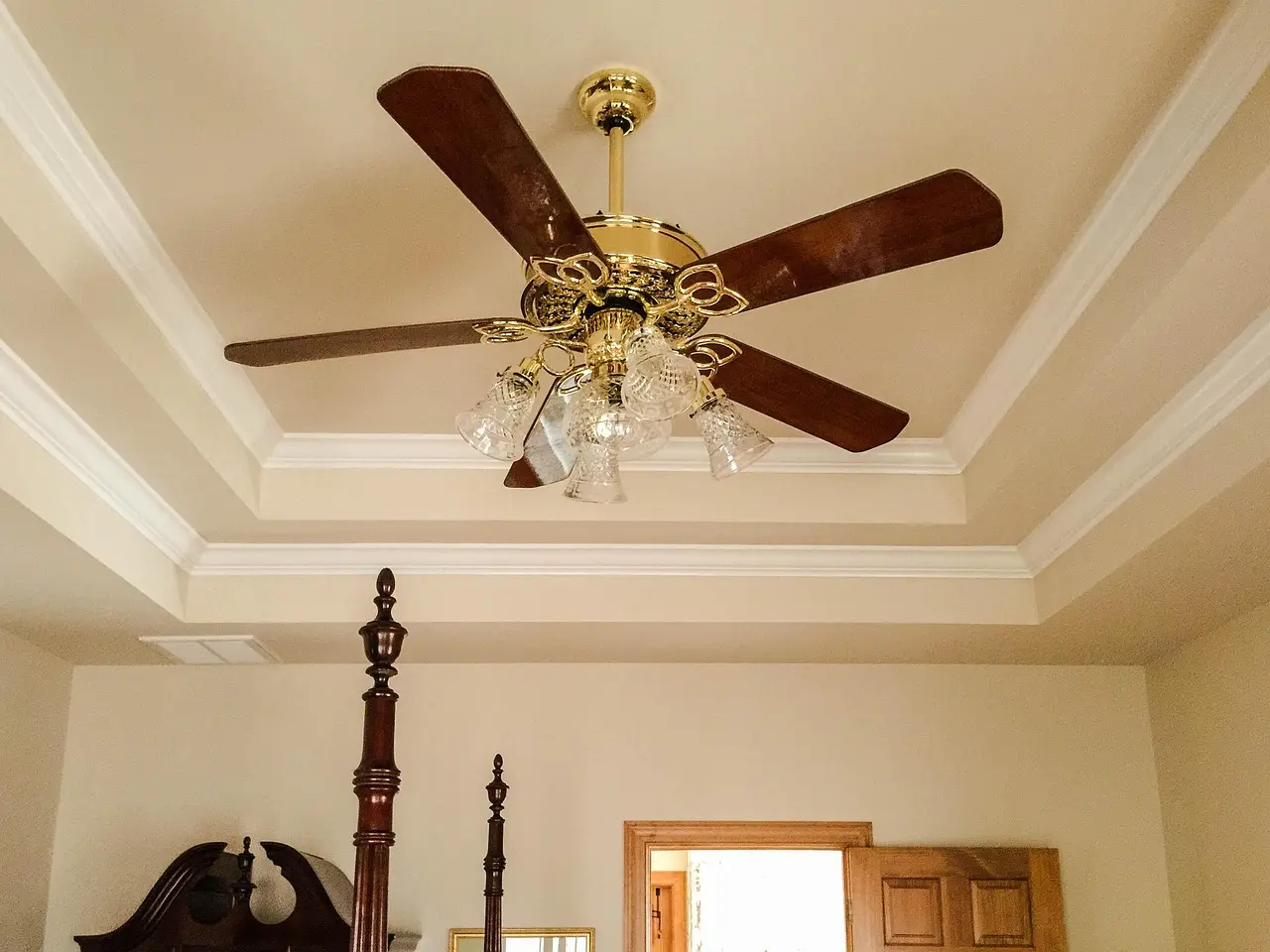
A ceiling fan with a light kit combines airflow and overhead lighting, while a ceiling fan without a light provides airflow only. If the fan must replace the room’s main ceiling light, the lighted version usually fits better. If the room already has enough light, the fan-only option often looks cleaner and stays lower.
| Decision factor | with Light | Without Light | Winner |
|---|---|---|---|
| Main ceiling light replacement | Combines airflow and overhead lighting in one fitting | Leaves lighting to other fixtures | with Light |
| Installed height and clearance | Light kit or integrated LED can add depth | Often slimmer and lower-profile | Without Light |
| Wiring and switch setup | Can use one switch, remote, or dual wall switch | Usually simpler if you only need fan control | Without Light |
| Lighting flexibility | Integrated LED can dim and adjust colour temperature | Depends on other room lights | with Light |
| Maintenance | May involve bulb or module upkeep | Usually simpler upkeep | Without Light |
Main ceiling light replacement
With Light wins when the fan must do two jobs at once. A ceiling fan with integrated light usually replaces an existing central ceiling light, so it handles airflow and room lighting from one ceiling point. Without Light only fits here if other fixtures already cover the room well.
Installed height and clearance
Without Light wins when headroom is tight. Fans without lights give a cleaner, lower-profile look, and that extra clearance matters in rooms with low ceilings or sloped areas where every inch counts. A low-profile fan can still work with a light kit, but you need to check total height carefully.
Wiring and switch setup
Without Light is often easier when you only have one basic ceiling feed and no need for separate lighting control. A lighted fan can still work with one existing junction box, but a dual wall switch or separate control may require wiring changes. The junction box and mounting bracket must support the fan safely in either case.
Lighting flexibility
With Light wins when you need overhead illumination, especially with modern LED fan lights. Integrated LED is common in lighted fans and may be dimmable with colour-temperature adjustment, which helps you avoid a harsh all-day setting. If the room already has recessed lighting, more light from the fan can create glare or over-lighting.
Maintenance
Without Light wins for upkeep because there is no light system to service. Many homeowners pick a fan without light for that reason alone. Lighted models can be easy enough to live with, but bulb changes or LED module replacement add one more task.
Ceiling fan decision matrix

This matrix ties the choice to real room conditions. Use it before you compare finishes or blade styles.
| Room scenario | Recommended option | Why it wins | One caution |
|---|---|---|---|
| Room has recessed lights | Without Light | Recessed lighting can already cover the room, so the fan can stay cleaner and lower-profile. | Check that the recessed layout does not leave a dark center spot. |
| Low ceiling | Without Light | A slimmer fan helps preserve head clearance. | A low-profile fan still needs a careful total-height check. |
| Single junction box | with Light | One central box can replace the old ceiling light with a two-in-one solution. | Make sure the box and mounting bracket are rated for a fan. |
| Bedroom with bedside lamps | Without Light | Bedside lamps already cover reading and ambient light, so the fan can focus on airflow. | Use the lamps and switch locations in the room plan before buying. |
| Rental with limited rewiring | Without Light | Fewer lighting changes usually fit better when rewiring is limited. | Confirm what the lease allows before changing controls. |
| Dining room with pendant | Without Light | The pendant can stay the main light source while the fan adds airflow. | Watch the spacing so the fan does not crowd the pendant zone. |
| Outdoor covered porch | with Light | A lighted fan can serve the seating area better when overhead lighting is part of the porch plan. | A damp-rated fan is generally used on a covered porch, rather than a wet-rated one unless full rain exposure is expected. |
| Room needing dimmable task lighting | with Light | Integrated LED can dim and may adjust colour temperature for task use. | Confirm the control method supports dimming before you buy. |
In the example family room, a 52-inch fan may fit under an 8-foot ceiling. Without Light usually fits better there because the room already has layered lighting, and the slimmer build helps preserve clearance. The caution is glare from the recessed layout if the cans are aimed poorly.
Suppose a small bedroom has one central box, no bedside lamps, and a single wall switch. With Light becomes the practical pick because it replaces the old fixture and gives the room an overhead source that can be controlled from the switch or a remote. The caution is to avoid an oversized light kit that throws more light than the room needs.
Ceiling fan with light kit vs without light
Lighting output and flexibility
With Light wins whenever the fan has to stand in for the room’s main lamp. A ceiling fan with a light becomes a practical two-in-one solution, and modern LED fan lights often offer dimming and colour-temperature adjustment. Without Light is better when the room already has enough lighting, including recessed lighting or bedside lamps.
Ceiling height and installed depth
Without Light usually wins on clearance. Fans without lights give a cleaner, lower-profile look, while light kits and glass shades can add depth below the motor housing. Low-profile or hugger ceiling fan models can help in either category, but the total height still needs checking before purchase.
Wiring, switches, and controls
With Light is more useful when you want separate fan and light control from one location. A remote control is common on modern ceiling fans and can separate fan and light control, often with a receiver in the canopy. A wall switch or dual wall switch can also control each function separately, but that may require wiring changes if the room only has one feed.
Energy use and upkeep
Without Light can be the simpler choice for power use because there is no lighting load at all. With Light may still be efficient, especially with LED, and the fan motor power is separate from the light load. A lighted fan can also let you switch other lights on less often, but that depends on how the room is used.
Can a fan with light fit your ceiling?
Yes, but only if the total depth works with your ceiling height and mounting setup. A light kit adds depth, and even an integrated LED module can still affect clearance. If the room is tight, a low-profile fan may work better, but you should check the complete installed height, not just the blade span.
When a light kit adds too much depth
Traditional bulb-based light kits and glass shades usually add more drop than a fan-only body. Integrated LED often sits shallower, but it still changes the profile compared with a fan without light. That matters most in hallways, small bedrooms, and any room where the blades already sit close to head level.
Why low-profile fans matter
Low-profile or hugger ceiling fan designs keep the blades closer to the ceiling and help preserve head clearance. They are often preferred when fixture depth matters, especially in rooms with standard-height ceilings. If you also want a light, make sure the combined fan and light assembly still stays practical.
Clearance checks before you buy
- Measure from the finished ceiling to the lowest point you can tolerate.
- Check the fan’s total installed depth, not just the motor housing.
- Confirm the junction box and mounting bracket are rated for ceiling fan use.
- Verify whether the light kit, remote receiver, or downrod changes the final height.
- Compare the result with traffic paths, door swing, and bed or table height.
Do you need separate light control?
Separate control matters when the fan and the light will be used differently. If you want the light off while the fan runs, or you want dimming and fan speed on different controls, a remote, wall switch, or dual wall switch becomes more important. Without that setup, a lighted fan can feel clumsy.
Remote control vs wall switch
A remote control is common on modern ceiling fans and can split fan and light control without extra wall wiring. That helps in rooms where adding a second switch is difficult. A wall switch is more familiar, though, and some homeowners prefer it for daily use because it is always in the same place.
When a dual wall switch helps
A dual wall switch is useful when the fan replaces a central ceiling fixture and you want the light and fan to act independently from the wall. It can be a strong choice in family rooms, bedrooms, and dining rooms. The trade-off is wiring work, which can make the install more involved than a simple swap.
Smart control and dimming options
Smart control can help if you want app or voice control, but it should not be the only reason to choose a lighted fan. Dimming matters most when the fan is the room’s main light source or when the room needs task lighting. Modern LED fan lights are the best fit for that job because they can dim and may adjust colour temperature.
Which option works better in each room?
The best choice depends on the room’s lighting plan, not on style alone. Bedrooms, dining rooms, rentals, and covered porches each create different clearance and wiring demands. Recessed lighting and bedside lamps can also change the answer fast.
Bedrooms
Without Light is often better in bedrooms that already have bedside lamps, reading lights, or a ceiling plan with multiple fixtures. That keeps the fan lower and leaves the room feeling less crowded. If the fan must light the room from the ceiling, with Light is the better answer.
Dining rooms
Without Light usually wins if the room already has a pendant or chandelier over the table. That keeps the dining light where it belongs and lets the fan handle airflow only. If the pendant is being removed, with Light can replace it cleanly from the center box.
Rentals
Without Light is often the safer choice in rentals with limited rewiring. It reduces the odds that you will need a new dual wall switch or other changes that may not be allowed. If the existing ceiling fixture must be replaced and the lease allows it, with Light can still work, but confirm the terms first.
Covered porches
with Light can work well on covered porches when you want both air movement and light in the same fixture. Damp-rated fans work best on covered porches, patios, or screened-in decks. If the porch is open to full rain exposure, you need a wet-rated fan instead.
Rooms with layered lighting
Without Light is usually the cleaner answer when the room already has recessed lighting, lamps, or other ambient sources. That lets the ceiling fan stay focused on airflow while the other fixtures handle the lighting layers. If the layered lighting is weak or uneven, with Light may still be the better fix.
Choose with Light if… / Choose Without Light if…
Choose with Light if the fan must replace the room’s main ceiling fixture, if the room needs dimmable task lighting, if you want one central control point, or if a porch or similar space needs overhead light and airflow together. It is also the better pick when integrated LED and separate light control matter.
Choose Without Light if the room already has recessed lighting, bedside lamps, or a pendant that covers the lighting job, if ceiling height is tight, if upkeep simplicity matters more, or if you want the cleanest low-profile look. It is also the better fit when rewiring would be a problem.

Frequently asked questions
Should I get a ceiling fan with light or without light?
Choose a lighted fan if it has to replace the room’s main ceiling fixture. Choose a fan without light if the room already has enough light from recessed fixtures, lamps, or a pendant. The better choice depends on lighting coverage, ceiling height, and whether you need one switch or separate control.
Is a ceiling fan without light better for low ceilings?
Often yes. A fan without light is usually slimmer and lower-profile, so it helps preserve head clearance. That said, a low-profile fan with an integrated LED can still work if the total installed height stays within the room’s clearance limits.
Can I use a ceiling fan with light if the room already has recessed lighting?
Yes, but it is not always the best fit. Recessed lighting can already provide enough room light, so a fan without light may be the cleaner choice. If you still want the lighted fan, watch for glare and over-lighting, especially in smaller rooms.
Do ceiling fans with lights use more electricity?
They can, because the light adds to the fan motor load. The motor power and the lighting load are separate, though, and LED kits usually use far less power than older bulb-based kits. If you run the light often, the total draw will be higher than a fan-only model.
Which is easier to install: a ceiling fan with light or without light?
Without Light is often simpler because there is no lighting system to wire or service. A with Light model can still be straightforward if it replaces a central ceiling light and uses the existing junction box, but a dual wall switch or separate light control can add wiring work.
What if I want separate control for the fan and the light?
Use a remote control, a dual wall switch, or smart control with the right receiver. Remote control is common on modern ceiling fans and can split fan and light functions without new wall wiring. A dual wall switch can be neat and familiar, but it may require electrical changes.
Sponsored / affiliate links. As an Amazon Associate I earn from qualifying purchases. I may earn additional commission from eligible campaigns.