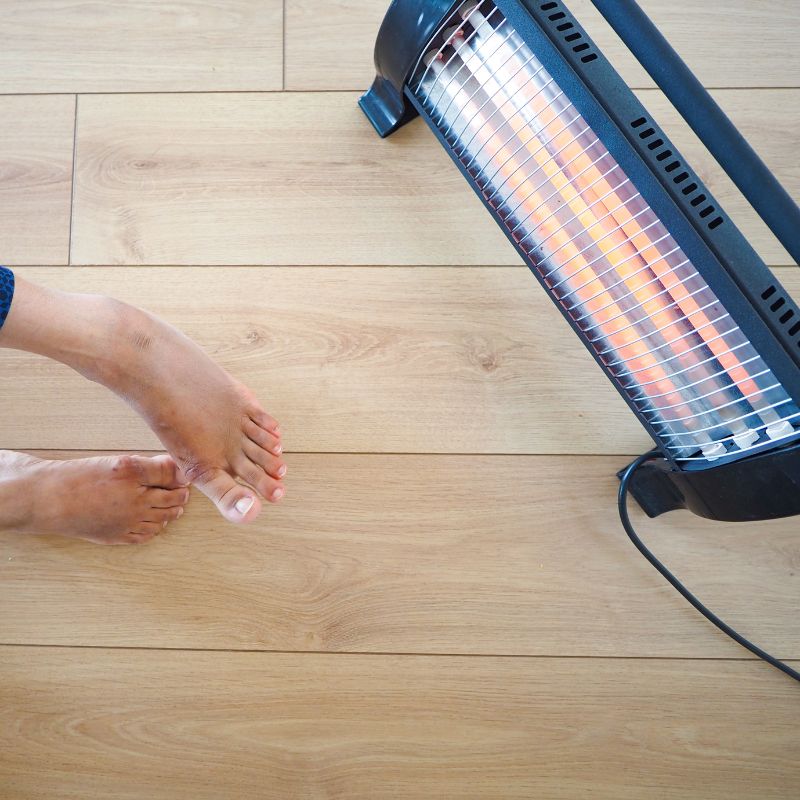
How Many Square Feet Will a 1500-Watt Heater Heat? Solved
A 1500-watt heater is a common choice for warming small to medium rooms, but its coverage area is not always straightforward. In this article, we explain the standard calculation and the key variables that determine how many square feet a 1500-watt heater can effectively heat.
Simply put, a 1500-watt heater usually heats around 150 to 300 square feet under typical conditions. Factors like insulation quality, ceiling height, and climate can shift this range significantly.
Key Takeaways
- A 1500-watt heater generally covers 150–300 sq ft with average insulation and an 8-foot ceiling.
- Use the rule of thumb: multiply watts by 3.41 to get BTUs, then divide by 20 for square feet.
- Heater coverage depends heavily on room insulation, window quality, and regional climate.
- Portable 1500-watt heaters work best for supplemental or zone heating, not whole-house use.
What Is the Standard Calculation for a 1500-Watt Heater?
The basic formula for heating capacity starts with power conversion. One watt equals 3.41 BTUs (British Thermal Units) per hour. So a 1500-watt heater produces about 5,115 BTUs of heat output.
A common heating guideline is 20 BTUs per square foot for rooms with standard insulation and 8-foot ceilings. Using this, divide 5,115 by 20 to get approximately 255 square feet. This is the textbook coverage for a 1500-watt heater under ideal conditions.
The US Department of Energy recommends 20 to 30 BTUs per square foot for most living spaces. Here is a quick reference table:
| Room Size (sq ft) | Required BTUs | 1500-Watt Heater Sufficient? |
|---|---|---|
| 100 sq ft | 2,000 – 3,000 BTUs | Yes |
| 200 sq ft | 4,000 – 6,000 BTUs | Yes |
| 300 sq ft | 6,000 – 9,000 BTUs | Marginal |
| 400 sq ft | 8,000 – 12,000 BTUs | No |
This table shows that a 1500-watt heater works well for rooms up to 300 sq ft, but performance drops beyond that. Always adjust based on your specific room conditions.
- Standard formula: watts × 3.41 = BTUs per hour.
- Divide BTUs by 20 for a rough square footage estimate.
- For colder climates, use 25–30 BTUs per sq ft instead.
- Example: 1500W × 3.41 = 5,115 BTUs ÷ 20 = 256 sq ft.
- Check manufacturer specifications for real-world ranges.
Tip: Always round down your square footage estimate if you have single-pane windows or poor insulation.
How to Determine Your Room’s Square Footage for Heating?
To know if a 1500-watt heater will warm your space, start by measuring the room accurately. For rectangular rooms, multiply length by width. For irregular shapes, divide the area into sections and add them together.
Ceiling height matters too. The standard 20 BTUs per sq ft assumes an 8-foot ceiling. If your ceiling is 9 feet or higher, adjust the calculation.
Add 10% for each additional foot of ceiling height. For example, a 10-foot ceiling requires 25% more heating power.
Here is a step-by-step process to measure your room:
- Measure the length and width of the floor in feet.
- Multiply length by width to get square footage.
- Measure ceiling height from floor to ceiling.
- If ceiling height exceeds 8 feet, multiply square footage by (ceiling height / 8).
- For example: 200 sq ft room with 10-ft ceiling -> 200 × (10/8) = 250 effective sq ft.
- Compare effective square footage to the 1500-watt heater coverage.
Common room sizes and effective coverage for a 1500-watt heater:
| Room Type | Typical Sq Ft | 1500W Heater Suitable? |
|---|---|---|
| Small bedroom | 100–150 sq ft | Yes, easily |
| Home office | 120–180 sq ft | Yes |
| Living room | 250–400 sq ft | Marginally (if well-insulated) |
| Garage or workshop | 200–300 sq ft | No, unless insulated |
Measure your room carefully before buying a heater. An oversized heater wastes energy, while an undersized one fails to keep you warm.
Why Does Insulation Matter for Heater Coverage?
Insulation is the most critical factor after room size. A 1500-watt heater may heat 300 sq ft in a well-insulated home, but only 150 sq ft in a drafty one. Heat loss through walls, windows, and ceilings directly impacts performance.
The International Energy Conservation Code sets insulation standards, but many older homes fall short. According to Energy Star, properly sealing air leaks can reduce heating costs by up to 20%. Poor insulation means your heater works harder and covers less space.
Key insulation factors to consider:
- Wall insulation: R-13 or higher in walls retains heat effectively.
- Attic insulation: R-38 or higher prevents heat escape through the roof.
- Window type: Double-pane windows cut heat loss by 50% compared to single-pane.
- Floor insulation: Uninsulated floors over basements lose heat quickly.
- Door seals: Weatherstripping around doors reduces drafts.
Important: In poorly insulated rooms, reduce your coverage expectation by 30–50%. For example, a 1500-watt heater that normally covers 250 sq ft may only cover 175 sq ft in a drafty space.
Evaluate your home’s insulation level. If you have single-pane windows, add curtains or plastic film to retain heat. The difference can make or break your heater’s effectiveness.
What Factors Affect the Heating Area of a 1500-Watt Heater?
Beyond room size and insulation, several variables influence how many square feet a 1500-watt heater can warm. Recognizing these helps you set realistic expectations and use the heater efficiently.
Climate zone is a major factor. In mild climates like the southern US, a 1500-watt heater may handle larger rooms. In northern winters, it struggles with anything over 200 sq ft.
The American Society of Heating, Refrigerating and Air-Conditioning Engineers (ASHRAE) provides climate zone heating loads that vary regionally.
Other critical factors include:
- Ceiling height: Higher ceilings increase air volume, reducing coverage.
- Windows: Large or uncovered windows amplify heat loss.
- Room shape: Open floor plans allow heat to escape into adjacent spaces.
- Furniture layout: Blocking heater airflow reduces circulation.
- Ductwork: Rooms with unsealed ducts lose heated air to other areas.
- Floor type: Concrete or tile floors feel colder and require more heat.
- Sunlight exposure: South-facing rooms gain passive solar heat, aiding coverage.
Warning: Do not rely on a 1500-watt heater as the primary heat source in large, open, or drafty rooms. It is designed for supplemental or zone heating only.
Consider these factors when planning your heater placement. For example, placing the heater near an interior wall away from windows improves efficiency. Use a programmable thermostat to maintain consistent temperature without overworking the unit.
How to Choose the Right 1500-Watt Heater for Your Space
Not all 1500-watt heaters perform equally. Different types distribute heat in unique ways, affecting coverage area. Selecting the right type for your room improves comfort and efficiency.
Four common types of 1500-watt heaters:
| Heater Type | Best For | Coverage Note |
|---|---|---|
| Ceramic fan heater | Quick heating of small rooms | Heats up fast but may not distribute evenly |
| Oil-filled radiator | Sustained, quiet heating | Better for longer, consistent coverage |
| Infrared heater | Targeted warming on people | Less effective for whole-room coverage |
| Micathermic heater | Low-profile, fast heating | Covers more area than ceramic fans |
For large rooms (250–300 sq ft), an oil-filled radiator offers steadier heat. For quick warmth in a small office, a ceramic fan heater works well. Choose based on your heating pattern and room use.
Our top tips for selection:
- Check the thermostat and timer features for energy savings.
- Look for safety certifications like UL or ETL.
- Consider noise levels for bedrooms or quiet spaces.
- Match the heater type to your room’s layout and air flow.
- Read user reviews for real-world coverage claims.
Common Mistakes When Using a 1500-Watt Heater
Many users overestimate what a 1500-watt heater can do. Avoid these mistakes to get the most from your unit and stay safe.
One frequent error is using the heater in a room larger than 300 sq ft without other heating. This forces the heater to run constantly, increasing energy bills and wear. Another mistake is placing the heater too close to furniture, which blocks airflow and creates fire hazards.
- Using the heater for whole-house heating instead of zone heating.
- Ignoring ceiling height and not adjusting coverage estimates.
- Placing the heater in corners or behind furniture.
- Running the heater on maximum setting continuously without insulation upgrades.
- Failing to seal windows and doors before use.
- Leaving the heater unattended for long periods.
Warning: Never use a 1500-watt heater with an extension cord or power strip. Plug it directly into a wall outlet to prevent overheating.
Correct these mistakes by matching the heater to your needs. Use it for specific zones, improve insulation, and always follow safety guidelines.
Tips to Maximize Heating Efficiency with a 1500-Watt Heater
You can stretch the coverage of a 1500-watt heater by implementing a few smart strategies. These tips help you stay warm without driving up electricity costs.
Start by sealing air leaks around windows and doors. Caulk and weatherstripping are inexpensive fixes that retain heat. Use ceiling fans on low speed in reverse mode to push warm air down from the ceiling.
- Use a programmable thermostat to set the heater at lower temps when not needed.
- Close doors to the heated room to contain the warmth.
- Add thermal curtains over windows to reduce heat loss by up to 25%.
- Place the heater near the center of the room away from walls.
- Use reflective panels behind the heater to direct heat into the room.
- Keep the heater clean from dust to maintain optimal performance.
Tip: Combine your 1500-watt heater with a humidifier. Moist air feels warmer and can allow you to lower the thermostat setting by a few degrees.
These efficiency measures can boost your heater’s effective coverage by 10–20%. For example, a heater covering 250 sq ft in a drafty room might cover 300 sq ft after sealing leaks and using curtains.
Frequently Asked Questions
How many square feet can a 1500-watt heater heat in a standard room?
A 1500-watt heater typically heats 150 to 300 square feet in a room with average insulation and an 8-foot ceiling. The exact range depends on climate, window quality, and room layout.
Is a 1500-watt heater enough to heat a 400 sq ft room?
A 1500-watt heater is generally not sufficient for a 400 sq ft room. It produces about 5,115 BTUs, while a room that size needs at least 8,000 BTUs. You would need a higher-wattage heater or supplemental heating.
What is the formula to calculate heater coverage?
Multiply the heater’s watts by 3.41 to get BTUs per hour. Then divide by 20 for a rough square footage estimate. For example, 1500W × 3.41 = 5,115 BTUs ÷ 20 = 256 sq ft.
Does a 1500-watt heater use a lot of electricity?
A 1500-watt heater uses 1.5 kilowatt-hours per hour of operation. At the average US electricity rate of $0.12 per kWh, running it for 8 hours costs about $1.44. Use thermostats and timers to reduce consumption.
Can I use a 1500-watt heater in a garage or basement?
Yes, but only in well-insulated garages or basements. Uninsulated spaces may need higher wattage or multiple heaters. Ensure the heater has safety features like tip-over shutoff and overheat protection.
Final Thoughts
A 1500-watt heater effectively warms about 150 to 300 square feet under typical conditions. The key is to assess your room size, insulation, and climate before purchasing. Use the basic calculation as a starting point, then adjust for factors like ceiling height and window drafts.
With proper placement and efficiency tips, you can maximize comfort while keeping energy use in check. Always prioritize safety and zone heating for the best results.
Sponsored / affiliate links. As an Amazon Associate I earn from qualifying purchases. I may earn additional commission from eligible campaigns.
 Waterproof Membrane for Shower 3.8 ft x 29 ft / 108 Square Feet Waterproofing Shower Membrane 19.7mil Thickness Waterproof for Sauna Bathroom Walls Tile Underlayment (108 SQ FT-19.7 mils)
 Genesis GHG1500A Dual Temperature Heat Gun Kit With Fast Heat High And Low Settings 572F/1000F, Air Reduction Nozzle, Reflector Nozzle, And Two Deflector Nozzles with 2 Year Warranty