Heat Pump vs Space Heater: Which Uses Less Energy?
A portable space heater is generally more suitable for short, localized heating of one occupied room; for steadier or whole-room heating, a heat pump is commonly reported to use less electricity. Pick the wrong option and your heating bill can climb fast, especially if you run resistance heat for hours. This guide compares room size, runtime, and operating cost so you can choose the cheaper setup. U.S. DOE/Energy Saver explains that heat pumps move heat rather than create it, while portable electric resistance heaters convert electricity to heat at roughly one-to-one efficiency; ENERGY STAR and DOE both note that heat pump efficiency is usually expressed as COP (coefficient of performance).
Methodology: This comparison uses a simple load-based approach. For resistance heat, input kW = heater watts ÷ 1000. For heat pumps, input kW = required heat output (BTU/h ÷ 3412) ÷ COP. Hourly cost = input kW × electricity rate. The decision table below favors the option with the lower expected electricity input for the stated room size, runtime, and rate assumptions.
| Factor | Heat Pump | Space Heater | Winner |
|---|---|---|---|
| How heat is made | Moves heat from outdoors or another source into the room (DOE Energy Saver) | Turns electricity directly into heat (DOE Energy Saver) | Heat pump |
| Typical efficiency | COP of 2 to 4 in many residential applications; performance varies by model and outdoor temperature (ENERGY STAR, DOE) | About 1:1 electrical input to heat output | Heat pump |
| Typical use | Whole-home or multi-room heating | Supplemental or spot heating | Depends on use case |
| Best fit for brief use | Usually loses if you only want one room warm for a short time | Often lower energy for one occupied room | Space heater |
| Best fit for longer use | Usually lower energy for sustained heat | Energy use rises linearly with runtime | Heat pump |
| Cold-weather performance | Efficiency falls as outdoor temperature drops; defrost and auxiliary heat can add consumption. Manufacturer low-temperature performance data commonly shows capacity and COP falling in deeper cold. | No outdoor-temperature penalty, but still limited to resistance heat | Depends on climate |
What Each Option Does
Heat Pump
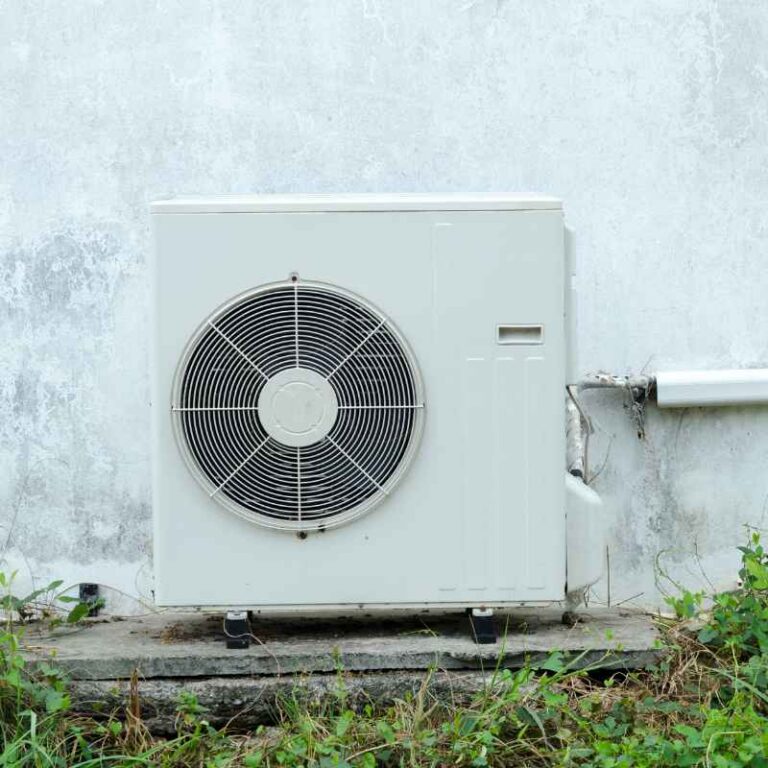
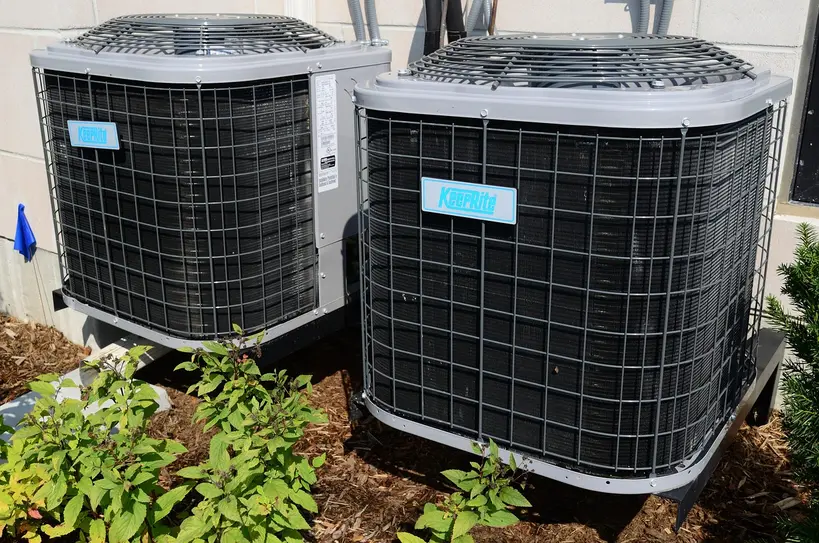
A heat pump moves heat instead of creating it directly. DOE Energy Saver explains that heat pumps transfer heat from outside air into the home, and ENERGY STAR notes that many efficient models achieve higher-than-resistance-heating performance by moving rather than generating heat. A COP of 3 means 1 kWh of electricity can deliver about 3 kWh of heat under the stated conditions.
Space Heater
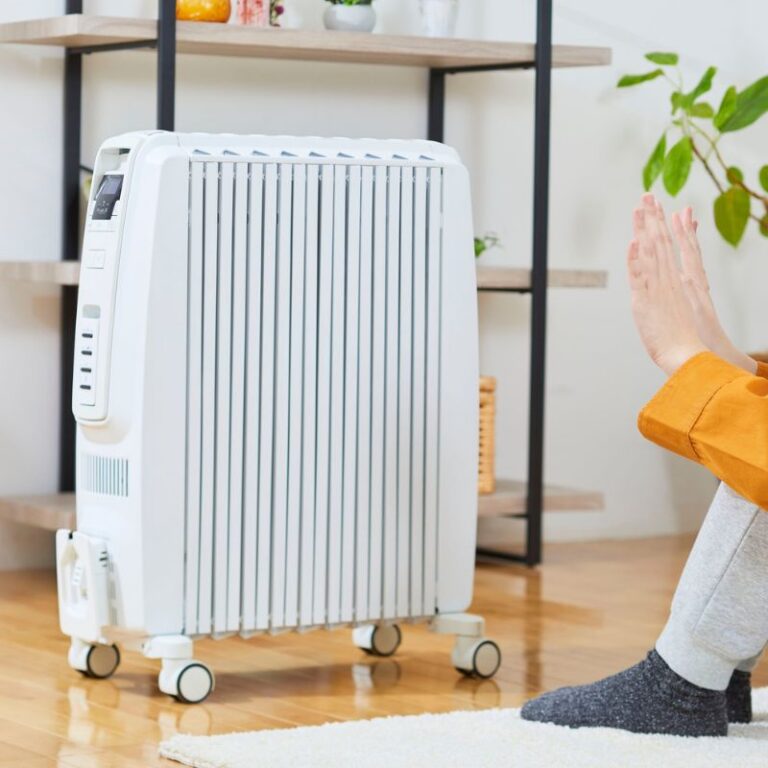
A portable electric resistance space heater is usually a 750–1500 watt plug-in heater. It converts electricity into heat at about 1:1, and a 1500-watt unit puts out roughly 5,100 BTU/h. DOE Energy Saver’s conversion values put 1 kWh at about 3,412 BTU, which is the basis for that estimate. That makes it simple and useful, but not as efficient as a heat pump.
Does a Heat Pump Use Less Electricity Than a Space Heater?
For the same delivered heat, yes, a heat pump usually uses less electricity than a space heater. The key comparison is not “same appliance use,” but the same heating load. For example, if a room needs 10,000 BTU/h of heat, a resistance heater needs about 2.93 kW of input (10,000 ÷ 3,412), while a COP 3 heat pump needs about 0.98 kW (2.93 ÷ 3). DOE and ENERGY STAR both support this basic efficiency difference.
Runtime is the deciding factor. A heat pump may be more efficient per unit of heat, but if you heat only one room briefly, the total kWh can still be lower with a 1500-watt heater. If you keep the heat on for hours, the heat pump usually pulls ahead. For utility-bill context, a 1500-watt heater running 5 hours daily uses 225 kWh per 30-day month, so monthly cost scales directly with the local utility rate.
How the Math Works
Electricity use is measured in kilowatt-hours, or kWh. Hourly cost equals kW multiplied by your electricity rate. For resistance heat: kWh per hour = watts ÷ 1000. For a heat pump: kW input = (BTU/h ÷ 3412) ÷ COP. That makes side-by-side comparisons straightforward once you know the heater wattage, the heat pump COP, the delivered heat load, and the runtime.
How Much Does a 1500-Watt Space Heater Cost to Run per Hour?
A 1500-watt space heater draws 1.5 kWh each hour. At $0.15/kWh, that costs $0.23/hr. At $0.25/kWh, it costs $0.38/hr. Because the heater is near 100% efficient at turning electricity into heat, the operating cost tracks electricity use almost exactly. Utility bill examples are easy to estimate because the calculation is simply 1.5 × rate per hour.
That does not mean it is cheap to run for long stretches. Five hours a day is a different bill from one hour at bedtime. The longer the runtime, the more likely a heat pump will beat it on energy use. For a utility-rate reference point, many local utilities and state energy offices publish residential electricity rates between roughly 15 and 25 cents per kWh, which is why the example range here matters.
When Is a Space Heater Cheaper Than a Heat Pump?
A space heater is cheaper in energy terms when you only need brief, supplemental heat in one occupied room. It can also win in a small, fairly well insulated room where you want to warm the air for an hour or two and do not need the rest of the home heated. If the alternative is running a central system for one room, the space heater can use less electricity overall.
It is also the better match for renters, apartments, garages, and add-on rooms when the goal is spot heating. A common first-timer mistake is heating the whole home just to make one room comfortable. That usually wastes energy if only one person is there.
Short-Duration Supplemental Heating
Supplemental heating is the space heater’s strongest use case. If you are warming a home office before work or a bedroom for a short stretch at night, the lower runtime matters more than the device’s raw efficiency. A heat pump may still be efficient, but it may be conditioning more space than you need.
Small Room or Occupied-Zone Heating
One occupied room is the narrow case where a space heater can use less energy than a heat pump. Picture a 120-square-foot room used for two hours in the evening. Heating that single zone directly can be cheaper than turning up a larger system that serves multiple rooms, especially when the room’s load is modest and the thermostat would otherwise call for more of the home to be conditioned.
Cases Where Heating the Whole Home Wastes Energy
If your heat pump would warm several rooms while you only occupy one, the extra conditioned space can erase its efficiency advantage. That is why room size matters. The decision is not just about the appliance; it is about how much area you actually need to keep warm and how long you need it warm.
Heat Pump Efficiency in Cold Weather
A heat pump still usually uses less electricity than resistance heat, but cold weather narrows the gap. As outdoor temperature falls, capacity and COP both decline. Defrost cycles can also reduce output, and some systems bring on auxiliary heat when the outdoor unit cannot meet demand alone. The same source notes that cold-climate performance is strongly tied to outdoor conditions, and manufacturer performance tables commonly show lower capacity at 17°F, 5°F, or similar test points.
Cold-Climate Units
Cold-climate heat pumps are designed to keep working in lower temperatures, and many manufacturer data sheets publish usable heat output below 0°F. Even so, their efficiency is lower in deep cold than in mild weather. If you are comparing against a space heater in a very cold climate, check the model’s low-temperature performance rather than assuming its mild-weather COP still applies.
Why COP Changes the Answer
COP tells you how much heat you get per unit of electricity. A unit with a COP of 3 can deliver three times as much heat per kWh as a resistance heater, but that does not stay fixed in every weather condition. When the outdoor temperature drops, the real COP can fall enough to change the monthly bill. That is why DOE and manufacturer data both matter when the climate is cold enough to trigger defrost or auxiliary heat.
Energy Break-Even Table
| Room Size | Hours per Day | Insulation Level | Electricity Rate | Likely Lower-Energy Choice |
|---|---|---|---|---|
| 100–150 sq ft | 1–2 | Better insulated | $0.15/kWh | Space heater |
| 100–150 sq ft | 4–6 | Better insulated | $0.15/kWh | Heat pump |
| 150–250 sq ft | 1–2 | Moderate insulation | $0.25/kWh | Space heater |
| 150–250 sq ft | 4–6 | Moderate insulation | $0.25/kWh | Heat pump |
| 250+ sq ft or multi-room | 3+ | Any typical level | Any typical rate | Heat pump |
Simple Break-Even Calculator
Use this quick method: estimate the heating load for the room in BTU/h, then compare the electricity input required by each system. A 1500W space heater provides roughly 5,100 BTU/h because 1 watt equals about 3.412 BTU/h. A heat pump with COP 3 needs only 0.98 kW to provide 10,000 BTU/h, and at $0.15/kWh that is about $0.15/hr for that output.
- Estimate the heating load for the room in BTU/h.
- For a space heater, convert wattage to kWh. A 1500-watt unit uses 1.5 kWh each hour.
- For a heat pump, divide heat output by COP to estimate the electrical input.
- Multiply kWh by your electricity rate to find hourly cost.
- Compare total runtime, not just hourly price.
Say your bedroom needs heat for two hours each evening. A 1500-watt space heater uses 3 kWh over that period. A heat pump with a COP of 3 delivering the same heat output can use much less electricity, but only if it is serving that same space without overshooting the rest of the home.
Suppose a 200-square-foot room is heated 5 hours daily. At $0.15–$0.25/kWh, that can run about $51–$85 per month with resistance heat. That range shows why runtime matters so much: a short nightly window and an all-evening setup are not the same decision.
Choose Heat Pump If… / Choose Space Heater If…
Choose Heat pump if you need steady heat for several hours, want to warm more than one room, or already have a system that can condition the same space efficiently. It is usually the lower-energy choice when the heating load is continuous or broad, especially when the outdoor temperature is not low enough to force much auxiliary heat.
Choose Space heater if you need brief supplemental heat in one occupied room, want a portable plug-in option, or are trying to avoid heating an entire home for a small zone. It is often the lower-energy choice for short, localized use, particularly when the alternative is conditioning unused rooms.


Frequently Asked Questions
How much electricity does a space heater use in a month?
Monthly use depends on wattage and runtime. A 1500-watt space heater draws 1.5 kWh each hour, so 2 hours a day becomes 90 kWh in a 30-day month. At $0.15/kWh that is $13.50; at $0.25/kWh it is $22.50. Longer use raises the total quickly.
Do portable heaters save money compared with central heat?
They can, but only in the right use case. A portable heater may save money if it warms one occupied room for a short time while the rest of the home stays cooler. If you use it to replace central heat for several rooms or many hours, the savings usually disappear.
Are small room heaters cheaper to run than central heating?
Sometimes, but not by default. A small room heater is cheaper when it avoids heating unused space and runs for a limited time. Central heat or a heat pump is usually cheaper when you want even warmth across a larger area for much of the day.
What is a heat pump COP and why does it matter?
COP, or coefficient of performance, measures heat output per unit of electricity. A COP of 3 means 1 kWh of electricity delivers 3 kWh of heat. That matters because it lets you compare heat pump efficiency directly against a space heater’s near 1:1 conversion, using the same BTU/h load and the same utility rate.
Will a heat pump still be efficient in cold weather?
Usually yes, but less so than in mild weather. Efficiency declines as outdoor temperature falls, and defrost cycles or auxiliary heat can raise electricity use. Cold-climate models hold up better below freezing, but even those lose capacity and COP in deeper cold, as manufacturer performance data shows.
Sponsored / affiliate links. As an Amazon Associate I earn from qualifying purchases. I may earn additional commission from eligible campaigns.