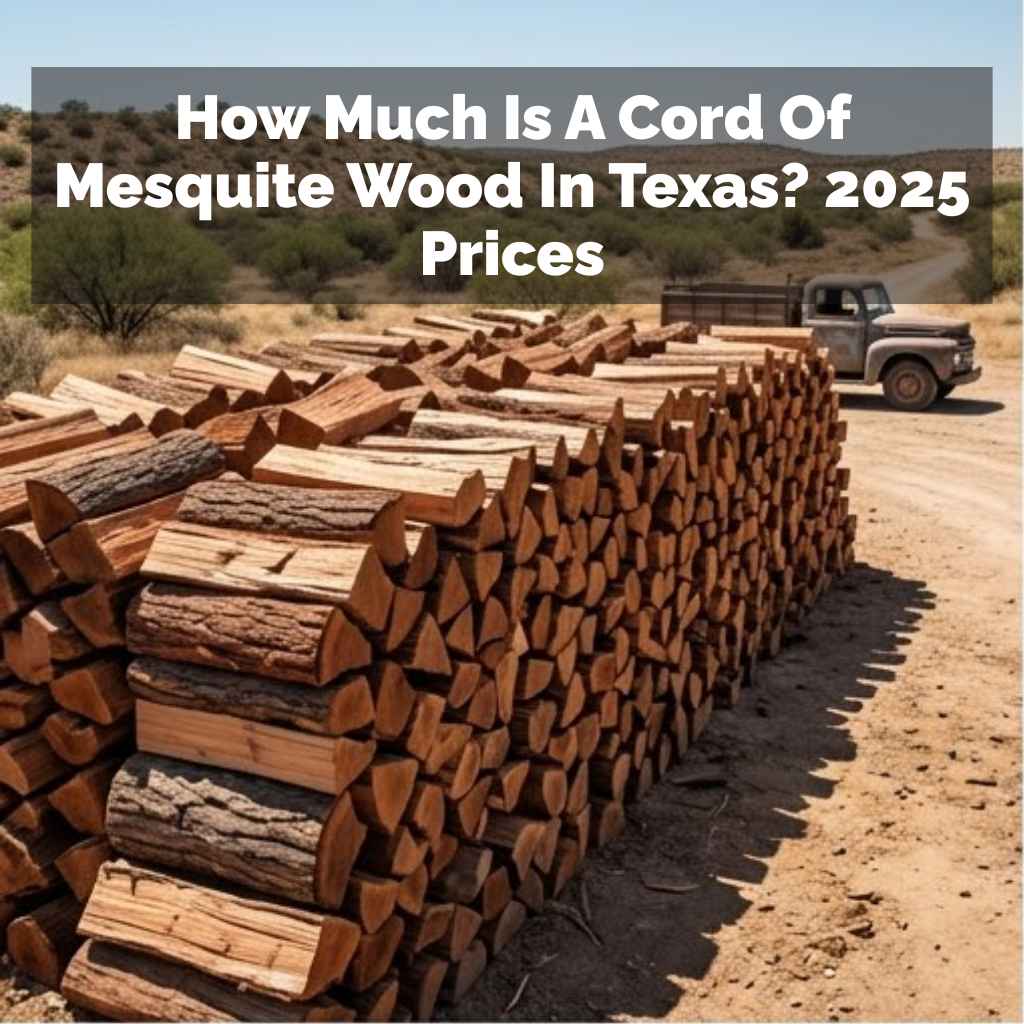
How Much Is A Cord Of Mesquite Wood In Texas? 2025 Prices
A cord of mesquite wood in Texas for 2025 typically costs between $200 and $450. This price varies based on the wood’s quality, density, cut type (split vs. unsplit), delivery charges, and the specific region within Texas. Its high density and excellent burning properties make it valuable for firewood.
Understanding the Value of Mesquite Wood
Mesquite is a special kind of wood, especially in Texas. It’s known for being super hard and dense. This means it burns hotter and longer than many other woods. For people who need a reliable heat source, this is a big deal. Think about those cool Texas evenings. Good firewood is essential.
Mesquite trees grow all over Texas. They are tough and can handle the dry climate. This abundance might make you think it’s cheap. But its hardness and how well it burns make it quite valuable. It’s not just for campfires. Artisans and chefs also love mesquite. Its smoky flavor is great for grilling.
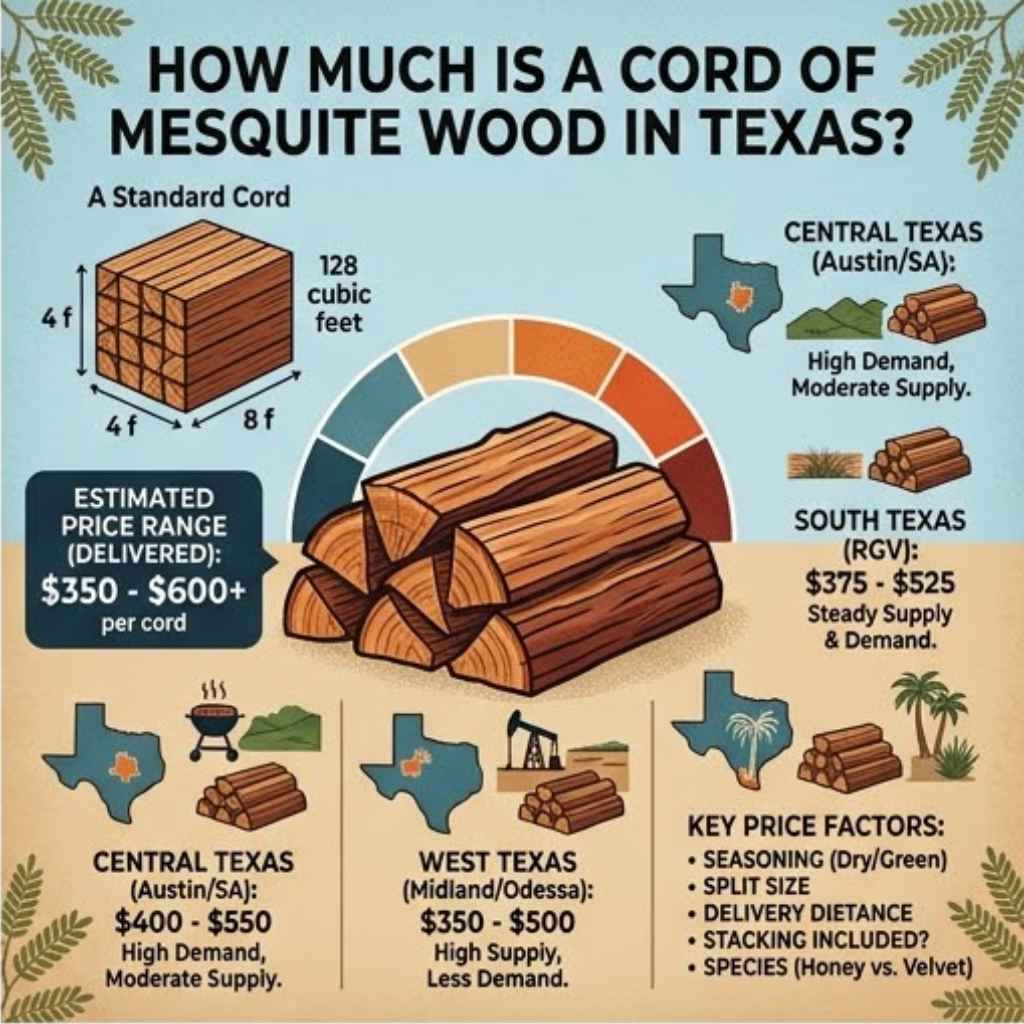
The word “cord” is also important. A cord isn’t just a random pile. It’s a specific measurement. It means a stack of wood that is 4 feet high, 8 feet long, and 4 feet wide. This makes it 128 cubic feet in total volume. This standard helps when comparing prices.
My Mesquite Wood Adventure
I remember one sweltering summer afternoon in central Texas. I was helping a friend clear out some land before building a new workshop. We had a massive mesquite tree that had to go. It was old and quite large. Getting it down was a job in itself. Once it was on the ground, though, the real work began: cutting it up.
My friend said, “This mesquite will make fantastic firewood. It’s going to cost a fortune to buy it, so clearing it is a win-win.” I honestly hadn’t thought about the cost of buying mesquite firewood before. We spent days cutting and splitting the trunk. The wood was incredibly hard. My axe felt like it was bouncing off at times.
By the end, we had a decent pile. I helped him stack it. Seeing that solid, dense wood stacked up, I finally understood its heft. It felt heavy and substantial. He told me that what we had there was likely worth several hundred dollars if we were to buy it from a local dealer. That really opened my eyes to the economics of firewood. It wasn’t just about a tree; it was about a valuable resource.
What Makes Mesquite Wood So Desirable?
The appeal of mesquite wood comes down to a few key traits. These traits directly influence its price.
Density and Burn Time
Mesquite is one of the densest hardwoods. This density means a lot of wood fiber is packed into a small space. When you burn dense wood, it releases a lot of energy. This translates to higher heat output. It also means the wood burns for a much longer time. You don’t have to stoke the fire as often. For heating a home, this is a huge benefit. You can get through a cold night with fewer logs.
Heat Output (BTUs)
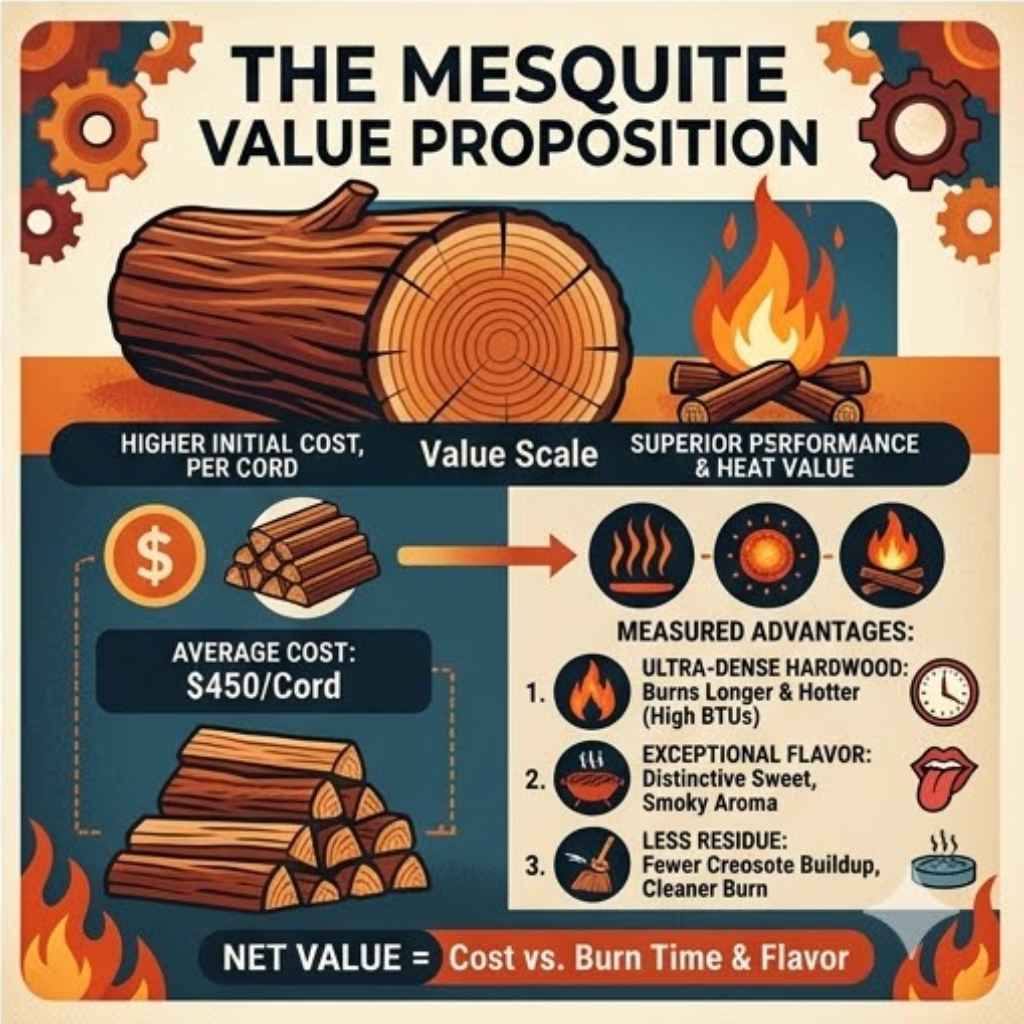
The heat output of wood is measured in British Thermal Units (BTUs). Mesquite has a high BTU rating. This means it generates more heat per pound compared to softer woods like pine. Some sources say mesquite can produce up to 30 million BTUs per cord. This is significantly more than many other common firewood types. For homeowners looking to save on heating bills, this high heat output is very attractive.
Low Smoke and Spark Production
Good firewood should burn cleanly. Mesquite tends to produce less smoke than many other hardwoods. This is great for both indoor and outdoor fires. Less smoke means a more pleasant experience. It also means less creosote buildup in chimneys, which can be a fire hazard. Mesquite also sparks less than some woods. This makes it safer for use in fireplaces and fire pits.
Flavor for Cooking
Beyond firewood, mesquite is a king in the BBQ world. Its smoke imparts a distinctive, savory flavor to meats. This is why pitmasters in Texas and beyond swear by it. This culinary demand adds another layer to its value. While you usually buy chips or chunks for cooking, the underlying demand for the wood itself is high. This culinary appeal often drives up the price of even the wood sold for firewood.
Mesquite Wood: Quick Facts for 2025
Key Characteristics:
- Density: Very High
- Burn Time: Long
- Heat Output: High (High BTUs)
- Smoke: Low
- Flavor: Distinctive, savory (for cooking)
- Availability in Texas: Abundant but high demand
Factors Affecting Mesquite Wood Prices in Texas
So, why the price range for a cord of mesquite wood? It’s not just a simple sticker price. Several things can make the cost go up or down. Understanding these helps you know if you’re getting a good deal.
Quality of the Wood
Not all mesquite wood is created equal. The quality depends on how the tree was harvested and processed. Wood that is cut from healthy, mature trees is generally better. Trees that have been dead for a long time might be rotten or infested with insects. This reduces their value as firewood. Kiln-dried mesquite wood will also command a higher price. This is because it’s been dried in a controlled environment to reduce moisture content quickly and efficiently. Seasoned wood, meaning wood that has been air-dried for at least six months, is also more valuable than green (freshly cut) wood.
Moisture Content
This is a big one. Wood needs to be dry to burn well. Green mesquite can have a moisture content of 50% or more. Dry, seasoned mesquite should be below 20%. Burning wet wood is frustrating. It smolders, produces a lot of smoke, and doesn’t give off much heat. You’re essentially paying to burn water. Reputable sellers will always sell seasoned or kiln-dried wood. They will often tell you its moisture content or how long it has been seasoned.
Cut Type (Split vs. Unsplit)
How the wood is prepared makes a difference. Many people want their firewood split into manageable sizes. Splitting wood takes time and labor. It requires tools like an axe or a hydraulic splitter. So, split mesquite wood will usually cost more than unsplit logs. Unsplit logs might be cheaper if you have the time and tools to split them yourself. This can be a good way to save money if you’re up for the physical work.
Delivery Costs
If you’re buying a full cord, it’s heavy. A cord of mesquite can weigh over 4,000 pounds! Most people can’t haul that much wood themselves. You’ll likely need delivery. The further you are from the seller, the more they will charge for delivery. Some sellers offer free delivery within a certain radius. Beyond that, you might pay per mile or a flat fee. Always factor this into the total cost.
Location within Texas
Texas is a huge state. Prices can vary quite a bit from one region to another. In areas where mesquite is very abundant and easy to harvest, prices might be lower. In more populated areas or regions with fewer mesquite trees, the cost could be higher due to increased demand and transportation. For example, a cord of mesquite in South Texas, where it’s plentiful, might be cheaper than in North Texas.
Mesquite Firewood Pricing Factors at a Glance (2025)
- Wood Quality: Healthy, seasoned wood is pricier.
- Moisture: Dry wood (under 20%) costs more than green wood.
- Preparation: Split logs are more expensive than unsplit.
- Delivery: Distance from seller impacts total cost.
- Region: Local abundance and demand affect local prices.
Typical Price Range for a Cord of Mesquite Wood in Texas (2025)
Based on current trends and market information, here’s what you can generally expect for a cord of mesquite wood in Texas during 2025. Remember, these are estimates.
The Lower End: $200 – $275
At the lower end of the price spectrum, you might find mesquite wood that is:
Sold as unsplit logs or in larger, less uniform pieces.
Requires you to pick it up yourself.
Is locally sourced in areas with a very high abundance of mesquite.
Might be seasoned but not necessarily kiln-dried.
Slightly lower quality (e.g., from younger trees or with a bit more bark).
This price point is often for those who are willing to put in a little extra work. You might need to split the wood yourself or arrange your own transport.
The Mid-Range: $275 – $375
This is where most consumers will find their mesquite wood. In this range, you can expect:
Well-seasoned, split firewood.
Ready for burning.
Delivery might be included within a certain radius, or a reasonable fee will apply.
Wood cut from healthy, mature trees.
Good overall quality and consistent sizing.
This price offers a good balance of convenience and value for a quality product.
The Higher End: $375 – $450+
You’ll be looking at the higher end if you want:
Kiln-dried mesquite wood. This is a premium product.
Premium delivery services, perhaps including stacking at your location.
Wood from particularly sought-after regions or of exceptional quality.
Guaranteed low moisture content (often below 15%).
Smaller, perfectly uniform pieces for a neat stack or specific stove.
This price is for those who prioritize convenience, speed of drying, and top-tier quality.
Comparing Mesquite to Other Firewood Types
To truly understand the value of mesquite, it helps to see how it stacks up against other common firewood types in Texas.
Mesquite Wood vs. Other Texas Firewoods (Estimated Cord Price)
| Wood Type | Estimated Cord Price (2025) | Key Traits |
| Mesquite | $200 – $450 | Very dense, high heat, long burn, great flavor |
| Oak (Live Oak, Post Oak) | $180 – $350 | Dense, good heat, long burn, readily available |
| Pecan | $180 – $320 | Dense, good heat, pleasant aroma, good for cooking |
| Cedar | $100 – $200 | Light, fast burning, aromatic, less heat |
| Pine | $80 – $150 | Light, fast burning, low heat, lots of sparks, cleaner burn for some stoves |
As you can see, mesquite wood is generally on the higher end of the price spectrum for firewood. This is directly related to its superior burning qualities. While oak and pecan are also excellent hardwoods and command good prices, mesquite often edges them out in terms of density and heat output. Softer woods like cedar and pine are significantly cheaper but offer less heat and burn much faster.
Where to Buy Mesquite Wood in Texas
Finding a reliable source for mesquite wood is key. Here are some common places to look:
Local Firewood Dealers
Many small businesses specialize in selling firewood. They often cut, split, and season wood themselves. These are usually your best bet for quality and local knowledge. A quick online search for “firewood for sale Texas” or “mesquite wood Texas” should yield local results. Ask them about their mesquite wood specifically. Inquire about its origin, how long it has been seasoned, and its moisture content.
Landscaping and Tree Service Companies
When tree services remove large trees, they often end up with a lot of wood. Some companies will process this wood into firewood and sell it. This can be a great way to get wood directly from the source. They might have a lot of mesquite if it’s common in your area. You might be able to get a good deal if you can pick it up directly from their yard.
Online Marketplaces and Classifieds
Websites like Craigslist or Facebook Marketplace can have individuals selling mesquite wood. This can sometimes offer lower prices, but you need to be more cautious. There’s less regulation, so you need to be extra sure about the quality and measurements. Always try to see the wood before you buy it, and verify the cord measurement if possible.
Ranchers and Farmers
In rural areas, ranchers and farmers sometimes clear mesquite from their land and sell the wood. They might not be official firewood dealers, but they can be a source of good quality, locally harvested wood. This often comes in larger quantities, and you might need to arrange for its transport.
Is It Worth Buying Mesquite Wood?
The question of whether mesquite wood is “worth it” really depends on your needs and priorities.
For Heating Homes
If you are looking for firewood to heat your home, mesquite is an excellent choice. Its high density and heat output mean you’ll use less wood overall. You’ll get more warmth for your money in the long run, even if the upfront cost per cord is higher. The longer burn time also means fewer trips outside to restock the woodpile. You’ll also notice less smoke and cleaner fires, which is a bonus.
For Grilling and Smoking
If you’re a grilling enthusiast, mesquite is almost indispensable for achieving that authentic Texas BBQ flavor. The smoky aroma and taste it imparts are unmatched. While you might buy smaller quantities for this purpose (chips, chunks), the overall demand for mesquite wood contributes to its market value.
For Projects and Crafts
Mesquite is also used for woodworking, furniture making, and creating beautiful crafts. Its hardness and unique grain patterns make it desirable for these applications. If you’re buying for a specific project that requires mesquite lumber, prices can be significantly higher than for firewood.
What to Ask When Buying Mesquite Wood
Before you hand over your money, have a few questions ready for the seller. This helps ensure you’re getting what you expect.
How long has the wood been seasoned?
Ideally, you want wood that has been seasoned for at least 6-12 months. This allows the moisture content to drop significantly.
What is the moisture content?
A moisture meter can tell you the exact percentage. For good burning, it should be below 20%. Some sellers will gladly provide this information.
Is the wood split, and what size are the pieces?
This matters for ease of use. If you have a small wood stove, you need smaller pieces. If you have a large fireplace, larger pieces might be fine.
Can I see the wood before I buy it?
Always try to inspect the wood. Look for signs of rot, mold, or insect infestation. Make sure the stack looks like a true cord (4x4x8 feet).
What is included in the price?
Does the price include delivery? Does it include stacking? Clarify this upfront to avoid surprises.
When Mesquite Wood Might Not Be the Best Choice
While mesquite is fantastic, it’s not always the perfect choice for everyone.
If you have a very small, inefficient stove: Mesquite burns very hot. In a small stove not designed for high heat, it might burn too quickly or even overheat the stove.
If you need wood that starts easily: While mesquite does catch fire, it’s dense and might take a little more effort to get going than a soft wood like pine.
If your primary concern is the lowest possible cost: As we’ve seen, mesquite is on the pricier side. If budget is your absolute top priority and you don’t need the high heat or long burn time, other options might be more suitable.
If you’re allergic to smoke: While mesquite produces less smoke than many woods, it still produces smoke. If you are highly sensitive, even low smoke might be an issue.
Real-World Scenarios and Considerations
Let’s look at a few typical situations for Texans buying mesquite wood.
The Urban Dweller with a Fireplace
Sarah lives in Dallas and has a decorative fireplace she uses on occasion for ambiance. She doesn’t need a lot of wood, maybe a quarter cord a year. She prefers convenience. She’ll likely buy from a local firewood dealer who delivers split, seasoned mesquite. She might pay a bit more per cord because she’s buying a smaller quantity, and the delivery fee will be a significant part of her cost. She values the clean burn and good heat for those few occasions she really needs warmth.
The Rural Homeowner with a Wood Stove
Mark lives outside of Austin and relies on a wood stove to heat his home during the winter. He needs a substantial amount of wood, possibly two cords or more. He has space to store wood and is willing to do some splitting himself. He might look for unsplit logs from a local rancher or tree service to save money. He prioritizes heat output and long burn times, making mesquite an ideal choice for him, even if it means a larger initial investment.
The Weekend Griller
David lives in Houston and loves to host BBQs. He primarily uses mesquite chips and chunks for smoking. He might occasionally buy a small bundle of split mesquite logs to get a good fire going in his charcoal grill before adding his wood chunks. For his grilling needs, the value of mesquite is in its flavor, not its bulk heating potential. He’ll likely buy smaller quantities from specialty BBQ stores or lumber yards.
Tips for Storing Your Mesquite Wood
Once you’ve bought your cord of mesquite, proper storage is crucial. This keeps it dry and ready to burn.
Elevate the wood: Never store wood directly on the ground. Use pallets or lumber to create a raised platform. This prevents moisture from wicking up from the soil and allows air to circulate underneath.
Cover the top, not the sides: If you’re storing wood outdoors, a tarp or wood shed roof is essential. This keeps rain and snow from soaking the top layers. However, you want the sides to remain open to allow air to flow through. Good airflow is key to keeping wood dry.
Stack it neatly: Stack the wood in rows, leaving small gaps between the pieces. This encourages air circulation. Avoid creating a dense, solid pile.
Store it close, but not too close: Keep your woodpile relatively close to your house for convenience, but not so close that it becomes a fire hazard or invites pests.
When Is a Cord of Mesquite Wood Normal, and When Should You Be Concerned?
It’s good to have a baseline for what’s normal when buying mesquite wood.
Normal Observations:
Price Range: As discussed, $200-$450 per cord is a typical range in Texas for 2025.
Appearance: The wood should be hard, dense, and have a rich brown color. It may have a slightly gnarled appearance due to its growth.
Seasoned Wood: It should feel lighter than green wood and sound hollow when knocked together. You might see small checks or cracks on the ends, which is normal for seasoned hardwood.
Splitting: Split pieces should be dense and show minimal signs of rot or softness.
When to Be Concerned:
Unusually Low Price: If someone is offering a cord of mesquite for $100 or less, be very suspicious. It’s likely green, rotten, or not a true cord.
Excessive Moisture: The wood feels very heavy, or water drips from it. It might also have a damp, earthy smell.
Signs of Rot or Mold: Fuzzy white or green growth on the wood, or wood that crumbles easily, indicates rot.
Insect Infestation: Look for sawdust piles (frass) at the base of the wood or small holes in the wood. This could mean powderpost beetles or other wood-boring insects.
Shortage of Wood: Ensure the stack you’re buying is actually a full cord. Sometimes sellers might stack wood loosely to make it look bigger.
If you notice any of these concerning signs, it’s best to walk away. You might save money initially, but you’ll end up with poor-quality firewood that won’t burn well.
Quick Tips for Buying and Using Mesquite Firewood
Let’s wrap up with some practical advice.
Buy in Bulk for Better Value: While you can buy smaller amounts, a full cord is usually the most cost-effective way to purchase mesquite firewood.
Seasoning is Key: Always prioritize seasoned or kiln-dried wood. Green wood is a pain to burn and won’t perform well.
Consider Your Needs: If you need maximum heat and burn time, mesquite is excellent. If you just want a quick, small fire, other woods might suffice.
Inspect Before You Buy: If possible, see the wood in person. A picture online doesn’t tell the whole story.
Ask About Delivery: Confirm delivery costs and what’s included.
Store Properly: Keep your mesquite dry and off the ground to maintain its quality.
Frequently Asked Questions About Mesquite Wood Prices in Texas
What is the average price of a cord of mesquite wood in Texas for 2025?
In 2025, you can expect to pay between $200 and $450 for a cord of mesquite wood in Texas. The price varies depending on quality, whether it’s split or unsplit, delivery charges, and your specific location within the state.
Why is mesquite wood so expensive compared to other types?
Mesquite is expensive because it’s a very dense hardwood. This density means it burns hotter, longer, and produces more heat (BTUs) than softer woods. Its value is also boosted by its popular use in cooking and grilling for its unique flavor.
Is it better to buy split or unsplit mesquite wood?
Split mesquite wood is more convenient as it’s ready to burn. However, it will cost more due to the labor involved. Unsplit logs are cheaper, but you’ll need to split them yourself, which requires time, effort, and proper tools.
How can I tell if mesquite wood is properly seasoned?
Properly seasoned mesquite wood will feel lighter than green wood. When knocked together, it should make a clear, hollow sound. It should also have a moisture content below 20%, often indicated by small cracks (checks) on the ends of the logs.
What is a “cord” of wood?
A cord of wood is a standard measurement for firewood. It’s a stack of wood that measures 4 feet high, 8 feet long, and 4 feet wide, totaling 128 cubic feet of stacked wood (which includes air space).
Where is the best place to buy mesquite wood in Texas?
Your best bet is usually local firewood dealers, tree service companies, or sometimes ranchers and farmers in rural areas. Online marketplaces can also be an option, but exercise caution and inspect the wood first.
Can I burn green mesquite wood?
While technically you can burn green mesquite, it’s highly discouraged. Green wood has a very high moisture content, resulting in poor burning, lots of smoke, little heat, and potential chimney creosote buildup. It’s much better to wait for it to season.
Conclusion
Figuring out the cost of a cord of mesquite wood in Texas for 2025 involves looking at more than just a simple number. It’s a valuable resource, prized for its dense hardwood properties that offer superior heat, long burn times, and a fantastic flavor for cooking. While prices typically range from $200 to $450, understanding factors like quality, moisture content, preparation, and delivery will help you make a smart purchase. By asking the right questions and knowing what to look for, you can ensure you’re getting a good deal on this Texas treasure. Happy burning!
Sponsored / affiliate links. As an Amazon Associate I earn from qualifying purchases. I may earn additional commission from eligible campaigns.