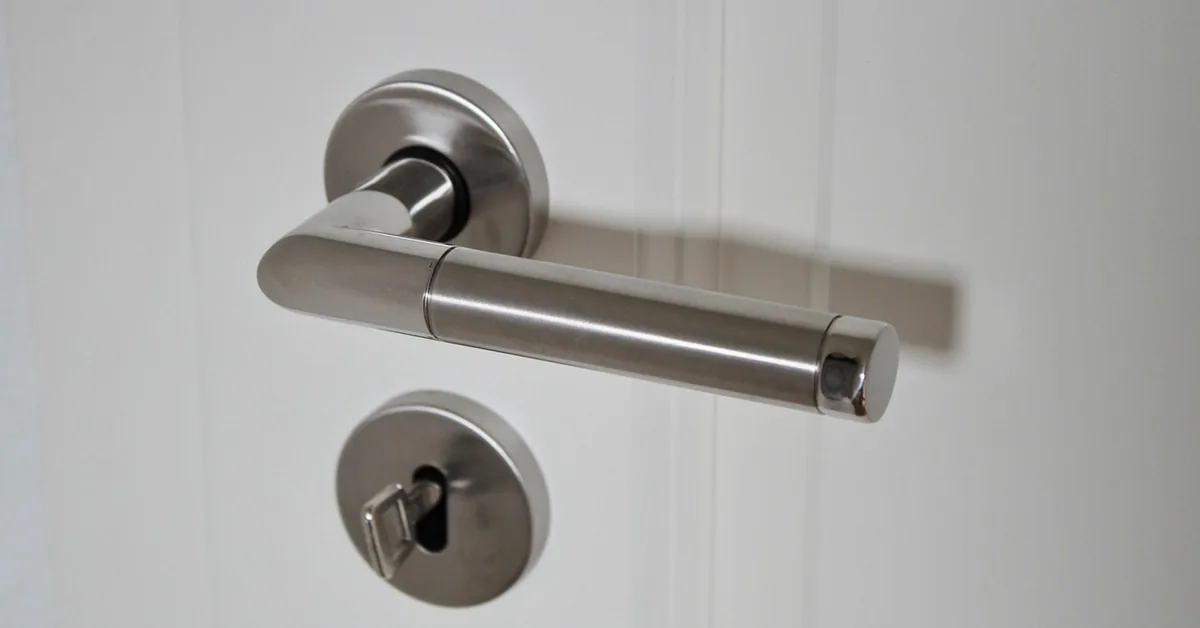
How to Measure a Door Handle: Backset, Spindle & Bore Hole
Measuring a door handle means checking four numbers — backset, spindle size, screw-hole spacing, and bore-hole diameter — before you buy a replacement. Most U.S. interior doors use a 2-3/8-inch backset and an 8mm spindle, but exterior and older doors often differ. Get one measurement wrong and the new handle won’t align with the latch or cover the old bore hole. This guide covers each measurement, the tools you need, and the exact steps to take them.
Quick Answer
To measure a door handle, find the backset (edge of door to center of the spindle hole — usually 2-3/8″ or 2-3/4″), the spindle size (usually an 8mm square), the screw-hole spacing, and the bore-hole diameter (usually 2-1/8″). Compare all four to the replacement handle’s spec sheet before buying.
Why Measuring a Door Handle Matters
Let’s start with the basics. Why does measuring a door handle even matter? Well, door handles aren’t one-size-fits-all. If you buy a replacement without knowing the exact measurements, you might end up with a handle that doesn’t fit your door. I made this mistake once, and let me tell you, returning hardware to the store is no fun. Plus, an ill-fitting handle can wobble, stick, or even damage your door over time. Getting the measurements right ensures a snug fit, smooth operation, and a polished look for your home.
When I started this journey, I didn’t realize how many types of door handles exist—lever handles, knob handles, mortise locks, and more. Each type has its own set of measurements, like the backset, spindle size, or screw hole spacing. Knowing these details upfront helps you pick the perfect handle and avoid headaches later. So, let’s break it down and make sure you’re armed with all the info you need.
Tools You’ll Need to Measure a Door Handle
Before we get to the measuring part, let’s talk about tools. You don’t need a fancy toolbox for this, but having the right gear makes the job easier. Here’s what I always keep handy when measuring door handles:
- Tape measure or ruler: A small, flexible tape measure works best for tight spaces.
- Screwdriver: A flathead or Phillips screwdriver helps you remove the handle if needed.
- Pen and paper: Jot down your measurements so you don’t forget them.
- Caliper (optional): If you want to be super precise, a digital caliper is great for measuring spindle sizes.
- Flashlight: Doors can be dark, especially if you’re measuring inside a closet.
Best Door Hardware Caliper Pick
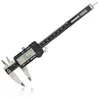
NEIKO 01407A Electronic Digital Caliper – $25.39
Gives precise 0.001-inch readings for backset, spindle, and bore-hole diameter — the exact four measurements this guide walks through — with a quick-change button to switch between inch, fraction, and millimeter.
- Best for: nailing exact backset and spindle measurements before you buy
- Why we picked it: one-button inch/fraction/mm switching matches every measurement in this guide
- Main drawback: LCD screen can be hard to read in low light without a flashlight
Compare more digital caliper options
 Option 1 Adoric Digital Caliper – $6.99
|
 Option 2 HARDELL Digital Caliper – $21.99
|
 Option 3 Starrett Electronic Slide Caliper – $139.99
|
As an Amazon Associate we earn from qualifying purchases.
I learned the hard way that writing measurements down is a must. One time, I thought I’d remember the numbers in my head, but by the time I got to the store, I was second-guessing myself. Save yourself the trouble and keep a notebook nearby.
Understanding Door Handle Types
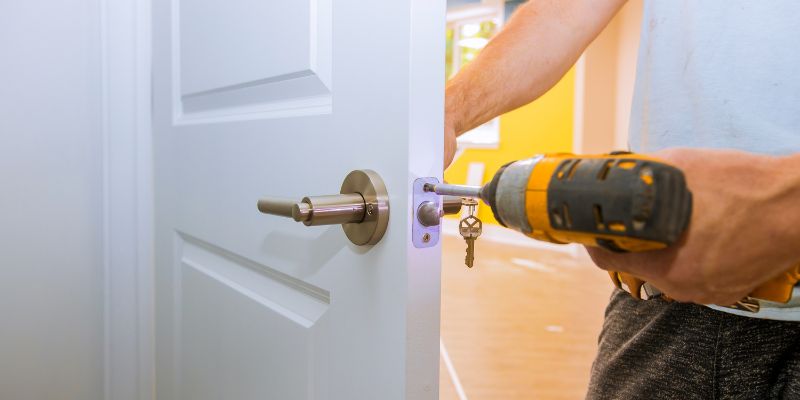
Before you start measuring, it’s helpful to know what kind of door handle you’re dealing with, since door hardware varies more than most people expect. Not all handles are created equal, and the type affects how you measure. Here are the main types I’ve encountered:
- Knob Handles: These are the classic round knobs you twist. They’re common in older homes and interior doors.
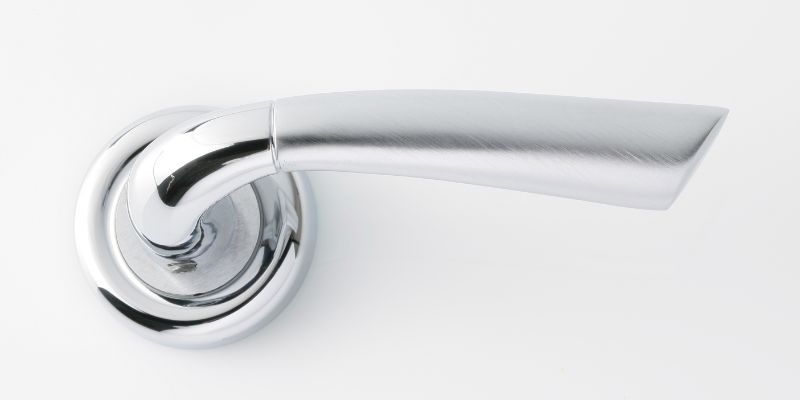
- Lever Handles: These have a long handle you push up or down. They’re popular in modern homes and great for accessibility.
- Mortise Locks: These are heavy-duty locks often found in older or exterior doors. They’re set into a pocket (mortise) in the door.
- Dummy Handles: These don’t turn or lock—they’re just decorative, often used on closet doors.
- Passage or Privacy Handles: Passage handles are for doors that don’t lock, like hallways, while privacy handles have a simple lock for bathrooms or bedrooms.
When I was upgrading my handles, I noticed my front door had a mortise lock, while my bedroom doors had lever handles. Each required different measurements, so identifying the type first saved me a lot of confusion. Check your door and see what you’re working with—it’ll guide your next steps.
Key Measurements for Door Handles
Now, let’s get to the actual measuring. There are a few measurements you’ll need to take to ensure your new handle fits perfectly. I’ll explain each one by one, and don’t worry if it sounds complicated—it’s easier than it sounds once you start. Here’s what to measure:
Backset
The backset is the distance between from the edge of your door and to the center of the hole where your handle’s spindle goes. This is a big one because a mismatched backset means your handle won’t align properly. Most doors in the U.S. have a standard backset of either 2-3/8 inches or 2-3/4 inches. Measure from the flat edge of the door, not the beveled edge or the door stop.
To measure it, close your the door and use your tape measure to find the distance from the edge of the door to the center of the knob or lever. I like to double-check this one because even a small mistake can throw things off.
📊 Measuring to the edge of the bore hole instead of its center is the single most common backset mistake — it can throw your reading off by nearly a full inch and send you home with the wrong latch. — Source: Schlage Residential, 2026
Spindle Size
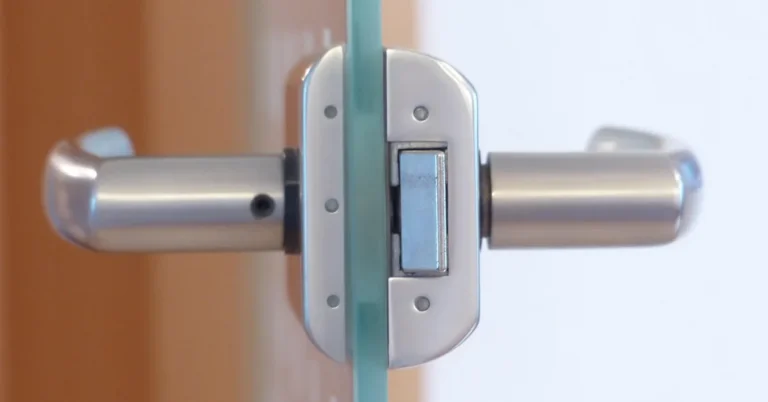
The spindle is the metal rod that connects the two handles or knobs on either side of the door. It’s what makes the handle turn the latch. Spindle sizes vary, but most modern handles use a standard 8mm square spindle. Older doors might have smaller or differently shaped spindles.
To measure the spindle, you’ll need to remove the handle. Use your screwdriver to take off the screws holding the handle in place, then pull it off. Measure the width of the spindle with a ruler or caliper. If it’s not square, note the shape (some older spindles are rectangular or even diamond-shaped).
Screw Hole Spacing
Some handles have visible screws that hold the faceplate in place. If you’re replacing this type, you need to measure the distance between the screw holes. This is called the “pitch” or “center-to-center” measurement.
Remove the handle or faceplate, then measure from the center of one screw hole to the center of the other. Common distances are 4-3/8 inches or 5-1/2 inches, but older doors can vary.
“I once bought a handle assuming it would match my door’s screw holes, only to find out they were off by half an inch. Lesson learned — always measure center-to-center before you order, even when the new handle looks like a drop-in match.”
Door Thickness
Not all doors are the same thickness, and your handle needs to fit snugly. Standard interior doors are usually 1-3/8 inches thick, while exterior doors are often 1-3/4 inches. Some custom or older doors can be thicker or thinner.
To measure door thickness, open the door and place your tape measure across the edge. Make sure to measure at the spot where the handle will go, as some doors have varying thicknesses.
Bore Hole Size
The bore hole is the large hole drilled through the door where the handle or knob sits. Most modern doors have a standard bore hole of 2-1/8 inches, but older doors might have smaller ones.
To measure, remove the handle and use your tape measure to check the diameter of the hole. If you’re replacing a handle, make sure the new one covers the bore hole completely to avoid gaps.
Here’s a quick table summarizing these measurements for easy reference:
| Measurement | What It Is | Standard Sizes | How to Measure |
|---|---|---|---|
| Backset | Distance from door edge to spindle center | 2-3/8” (60mm) or 2-3/4” (70mm) | Measure from edge to center of knob/lever |
| Spindle Size | Width of the spindle rod | 8mm (square) | Remove handle, measure spindle width |
| Screw Hole Spacing | Distance between screw holes | 4-3/8” (111mm) or 5-1/2” (140mm) | Measure center-to-center of screw holes |
| Door Thickness | Thickness of the door | 1-3/8” (35mm) interior, 1-3/4” (44mm) exterior | Measure across door edge |
| Bore Hole Size | Diameter of the hole for the handle | 2-1/8” (54mm) | Measure diameter of hole |
Step-by-Step Guide to Measuring a Door Handle
Now that you know what to measure, let’s walk through the process step by step. I’ll share the exact method I use every time I replace a door handle. Grab your tools, and let’s do this!
Step 1: Identify Your Handle Type
First, figure out if you have a knob, lever, mortise, or another type of handle. This helps you know which measurements are most important. For example, mortise locks require extra measurements for the lock body, while dummy handles are simpler.
Step 2: Remove the Handle (If Needed)
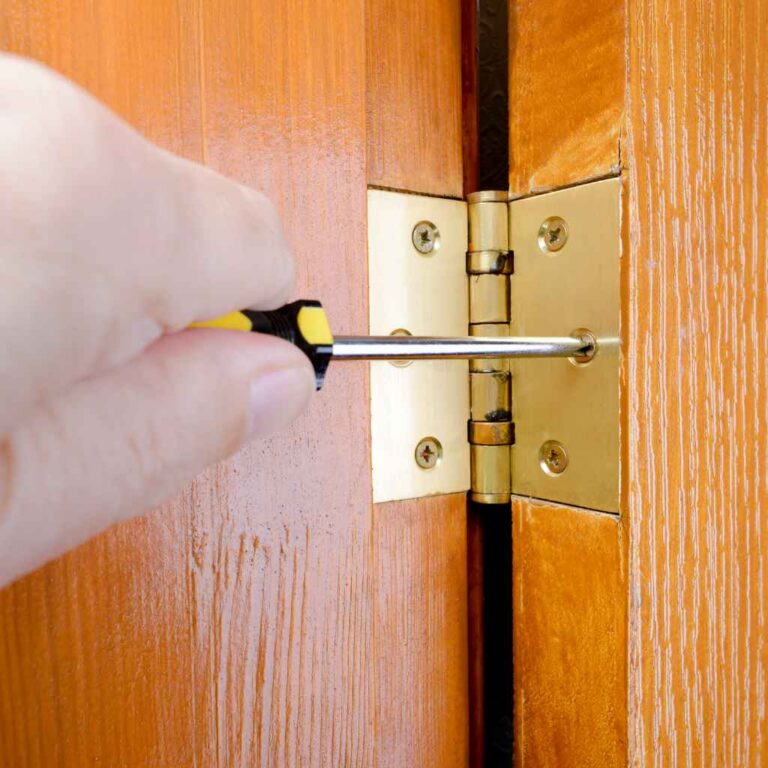
If your measurements require seeing the spindle or bore hole, you’ll need to take the handle off. Use your screwdriver to remove any visible screws. Some handles have hidden screws under a decorative cover—pop it off gently with a flathead screwdriver. Once the screws are out, pull the handle off both sides of the door.
Step 3: Measure the Backset
Close the door and measure from the edge to the center of the knob or lever. Write down whether it’s 2-3/8 inches or 2-3/4 inches. If you’ve removed the handle, you can also measure from the edge to the center of the bore hole.
Step 4: Check the Spindle Size
With the handle off, measure the spindle’s width. Most are 8mm, but double-check. If the spindle is still attached to the latch mechanism, note its shape and length too.
Step 5: Measure Screw Hole Spacing
If your handle has visible screws, measure the distance between their centers. This is crucial for faceplate-style handles. If there are no visible screws, you can skip this step.
Step 6: Measure Door Thickness
Open the door and measure its thickness at the handle’s location. Write down the exact number, as even a slight difference can affect fit.
Step 7: Measure the Bore Hole
Check the diameter of the bore hole where the handle sits. A 2-1/8-inch hole is standard, but older doors might have smaller ones. Make sure your new handle will cover the hole completely.
Step 8: Double-Check Everything
Before heading to the store or ordering online, review your measurements. I always compare them to the product specs to make sure they match. Trust me, it’s better to spend an extra minute checking than to deal with a return later.
Tips for Choosing a Replacement Door Handle
Once you have your measurements, it’s time to pick a new handle. It also helps to know how a door handle mechanism actually works before you choose one. Here are some tips I’ve picked up along the way:
- Match the style: Choose a handle that complements your home’s decor. Brushed nickel or matte black are popular for modern homes, while brass suits traditional vibes.
- Check compatibility: Make sure the handle’s backset, spindle size, and bore hole requirements match your door.
- Consider function: Do you need a locking handle for a bathroom or a passage handle for a hallway? Pick the right type for the door’s purpose.
- Read reviews: I always check customer reviews to see if the handle is durable and easy to install.
- Buy a set: If you’re replacing multiple handles, consider buying a matching set for a cohesive look.
When I upgraded my handles, I went with lever handles in satin nickel. They were easy to grip and gave my home a sleek, updated feel. Just make sure your measurements align with the product specs before you buy.
Common Mistakes to Avoid
I’ve made my fair share of mistakes when measuring door handles, so let me save you some trouble. Here are the most common pitfalls and how to avoid them:
- Assuming all doors are the same: Even in the same house, doors can have different thicknesses or backsets. Measure each one separately.
- Forgetting to measure the bore hole: A handle that doesn’t cover the hole leaves an ugly gap.
- Ignoring the spindle shape: A square spindle won’t fit a round hole (or vice versa).
- Not writing measurements down: Memory isn’t as reliable as you think—trust me on this one.
- Buying without checking specs: Always compare your measurements to the product’s requirements.
One time, I assumed my bedroom door had the same backset as my front door. Big mistake. The handle didn’t fit, and I had to make an extra trip to the store. Learn from my errors and measure carefully!
Conclusion
Measuring a door handle might seem like a small task, but it’s a game-changer for your home’s look and function. With the right measurements in hand, you can confidently pick a handle that fits perfectly, works smoothly, and adds a touch of style to your space — and knowing your measurements ahead of time also helps you budget, since door handle prices vary widely by type and finish. I still remember the satisfaction of installing my new lever handles—they made my home feel brand-new without breaking the bank. So, grab your tape measure, follow these steps, and get ready to tackle this project like a pro. You’ve got this!
Whether you’re fixing a single wobbly knob or upgrading every door in your house, taking the time to measure correctly is worth it. Your doors will thank you, and so will your wallet. Happy DIY-ing, and let me know how your project turns out!
FAQs About Measuring Door Handles
What is a backset, and why is it important?
The backset is the distance from the edge of your door to the center of the handle’s spindle. It’s important because a wrong backset means your handle won’t align with the latch, making it impossible to install or use properly. Most doors have a 2-3/8-inch or 2-3/4-inch backset, so measure carefully to match your door.
Can I replace a knob handle with a lever handle?
Yes, you can! As long as the backset, bore hole size, and door thickness match, you can swap a knob for a lever. Just make sure the spindle size and screw hole spacing (if applicable) are compatible. I did this in my home, and the levers gave it a modern touch.
How do I know if my door handle is a mortise lock?
A mortise lock is set into a pocket (or mortise) in the door, often with a larger faceplate and a keyhole. If your door has a rectangular lock body visible on the edge or requires a key, it’s likely a mortise lock. These are common in older homes or exterior doors and need specific measurements for the lock body.
What if my door’s bore hole is too small for a new handle?
If your bore hole is smaller than the standard 2-1/8 inches, you might need to enlarge it using a hole saw. Be careful, as this can damage the door if done incorrectly. Alternatively, look for a handle designed for smaller bore holes, though these are less common. I’d recommend consulting a professional if you’re unsure.
Do all door handles use the same spindle size?
No, spindle sizes can vary. Most modern handles use an 8mm square spindle, but older doors might have smaller or differently shaped spindles. Always measure the spindle width and shape when replacing a handle to ensure a proper fit.
Can you measure a door handle without removing it?
Yes, for the backset and door thickness. Close the door and measure from the edge to the center of the knob or lever with the handle still attached, and measure across the door’s edge for thickness. You do need to remove the handle to check spindle size and screw-hole spacing accurately, since those parts are hidden behind the faceplate.
What is the standard door handle installation height?
Most U.S. door handles are installed 36 to 38 inches above the finished floor, measured to the center of the handle. The ADA’s 2010 Standards require operable hardware between 34 and 48 inches for accessible doors. Match your new handle to the existing bore hole’s height so you don’t have to drill a new one.
Sponsored / affiliate links. As an Amazon Associate I earn from qualifying purchases. I may earn additional commission from eligible campaigns.