Door Knob Size Guide: 2 1/8″ Bore Hole, Backset & Diameter
Door knob size means matching four measurements: a 2 1/8-inch bore hole, a 2 3/8-inch or 2 3/4-inch backset, 1 3/8 to 1 3/4-inch door thickness, and a 1-inch latch bore, not just picking a knob that looks right. Buying the wrong backset is the most common reason replacement knobs get returned, since the latch cannot reach the strike plate. This guide covers how to measure each dimension, what the numbers mean, and which knob fits a nonstandard door.
What Is Door Knob Size and Why Does It Matter?
Door knob size is a set of four hardware measurements, bore hole diameter, backset, door thickness, and latch bore, used to match a replacement knob to an existing door preparation. Get any one of the four wrong and the knob either will not seat in the hole or will not reach the latch. Interior and exterior doors usually share the same bore hole and backset but differ in door thickness and knob grip diameter. This is one measurement inside our full door hardware and locks library, covering handle styles, deadbolts, and smart locks too.
Tools You Need to Measure Door Knob Size
You don’t need fancy tools to measure a door knob. Simple items work great. Here’s what I use:
- Tape measure: A small one is easy to hold.
- Notepad and pen: Write down your measurements.
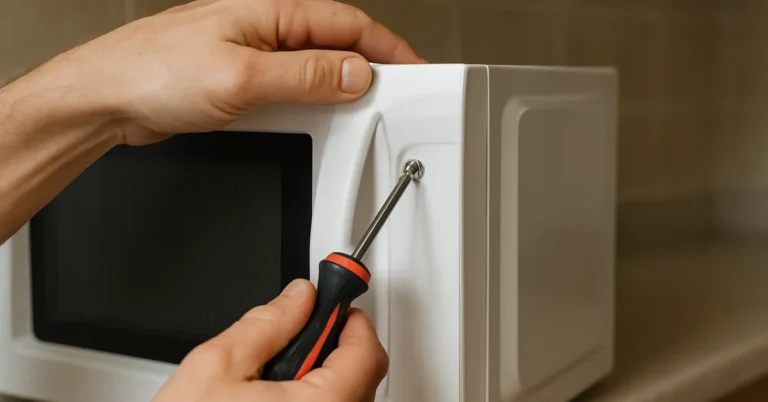
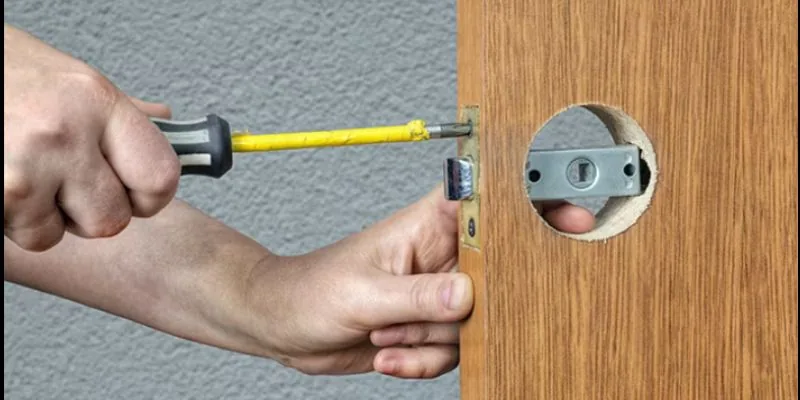
- Screwdriver: To remove the old knob if needed.
These tools are cheap and easy to find. You probably have them at home already!
Step-by-Step Guide to Measure Door Knob Size
Measuring a door knob is simple if you follow these steps. I’ll break it down so anyone can do it.
Step 1: Measure the Bore Hole
The bore hole is the big round hole where the knob goes. Grab your tape measure. Stretch it across the widest part of the hole, from bottom to top. Most bore holes are 2 1/8 inches wide. Write down the number. If the hole is smaller or bigger, note that too. This helps you pick a knob that fits perfectly.
Is a Cross Bore the Same as the Bore Hole?
Yes, in most residential hardware. The cross bore is the large hole that passes through the face of the door, exactly what this guide calls the bore hole, while the latch bore is the smaller hole drilled into the door’s edge for the latch. Manufacturers use “cross bore” and “bore hole” interchangeably on spec sheets, but always distinguish both from the separate latch bore.
Step 2: Measure the Backset
The backset is the distance from the center of the bore hole to the door’s edge. Place your tape measure at the middle of the hole. Pull it to the edge of the door. Common backsets are 2 3/8 inches or 2 3/4 inches. I always double-check this one because it’s easy to mix up. A wrong backset means the knob won’t work right.
What Is the Standard Door Knob Installation Height?
Most door knobs are installed 36 inches from the finished floor to the center of the knob, measured the same way for interior and exterior doors. Commercial and accessibility-focused installs often follow ADA hardware guidance instead, which requires operable hardware between 34 and 48 inches above the floor.
📊 ADA-compliant door hardware must be mounted between 34 and 48 inches above the finished floor and be operable with one hand, without tight grasping, pinching, or twisting of the wrist — Source: 2010 ADA Standards for Accessible Design, ADA.gov
Step 3: Measure Door Thickness
Doors come in different thicknesses. Measure from one side of the door to the other. Most home doors are 1 3/8 inches or 1 3/4 inches thick. Thicker doors, like exterior ones, might need special knobs. I once measured a door wrong and had to return a knob. Double-check to avoid my mistake!
Step 4: Check the Latch Bore
The latch bore is the small hole on the edge of the door where the latch goes. Measure its diameter with your tape measure. It’s usually 1 inch wide. This step is quick but important. If the latch bore is off, the knob won’t lock properly.
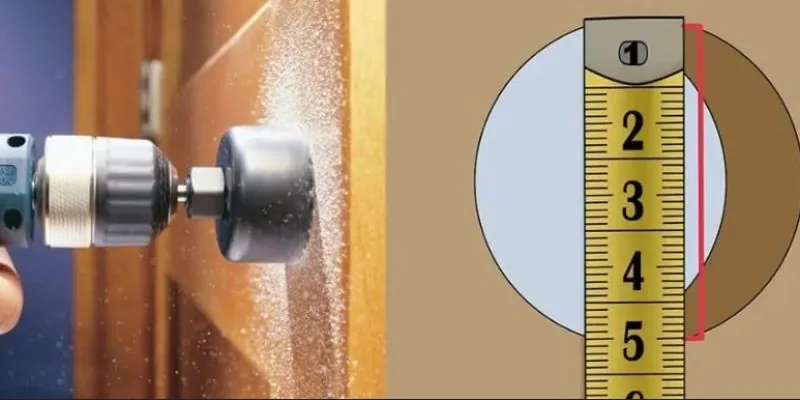
Table 1: Common Door Knob Measurements
| Measurement | Standard Size | Notes |
|---|---|---|
| Bore Hole | 2 1/8 inches | Most common for home doors |
| Backset | 2 3/8 or 2 3/4 inches | Check if residential or commercial |
| Door Thickness | 1 3/8 or 1 3/4 inches | Exterior doors may be thicker |
| Latch Bore | 1 inch | Small hole for the latch |
Caption: This table shows standard sizes to help you pick the right knob.
Door Knob Dimensions: How Big Is the Knob Itself?
Door knob dimensions refer to the grip diameter of the knob itself, not the bore hole it sits in. Interior door knobs typically measure 30mm to 40mm (about 1.2 to 1.6 inches) across the face, while exterior entry knobs run larger at 40mm to 50mm (1.6 to 2 inches) for a firmer, more secure grip.
The larger exterior diameter is not just cosmetic: a wider knob is harder to force with pliers and easier to turn with wet or gloved hands, which is why most manufacturers size entry knobs bigger than interior passage or privacy knobs. When you are replacing a knob, measure the widest point of the existing knob face rather than the rosette, then compare that number to the diameter listed on the new knob’s packaging.
Diameter ranges per Manovella Design, door hardware sizing guide.
Best Replacement Door Knob Pick
Copper Creek Colonial Privacy Door Knob – $10.52
ANSI Grade-3 certified with the standard 2 1/8-inch bore hole and adjustable 2 3/8/2 3/4-inch backset this guide covers, so it drops into most existing door prep without redrilling.
- Best for: bathrooms and bedrooms needing a locking privacy knob
- Why we picked it: adjustable backset matches both standard sizes from Table 1
- Main drawback: passage version (no lock) must be bought separately
Compare more replacement door knob options
 Option 1 Copper Creek Passage Door Knob – $10.85
|
 Option 2 Kwikset Tylo Privacy Knob – $13.34
|
 Option 3 BESTTEN Keyed Entry Knob – $8.69
|
As an Amazon Associate we earn from qualifying purchases.
Types of Door Knobs and Their Sizes
There are different types of door knobs, and size matters for each. Here’s a quick look:
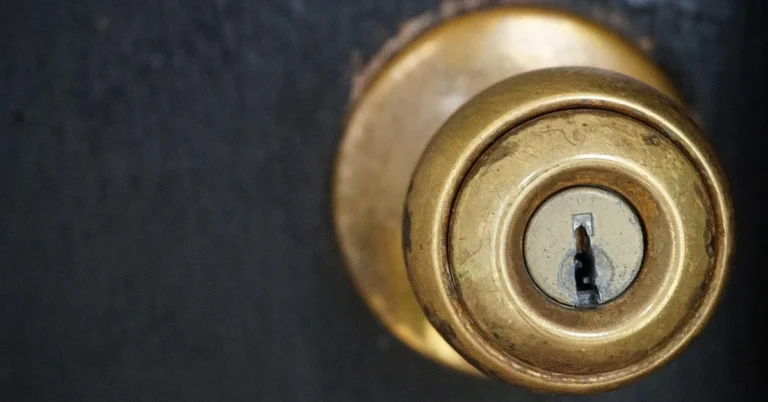
- Passage Knobs: No lock, used for closets or hallways. They fit standard bore holes (2 1/8 inches).
- Privacy Knobs: Have a lock, great for bathrooms. Same bore hole size, but check the backset.
- Keyed Entry Knobs: For outside doors, often paired with a deadbolt. Measure both holes if there’s a deadbolt.
- Dummy Knobs: Decorative, no latch. No backset needed, just check door thickness.
Each type has specific measurements. Always match the knob to your door’s prep.
Table 2: Door Knob Types and Their Uses
| Knob Type | Use | Needs Backset? |
|---|---|---|
| Passage | Hallways, closets | Yes |
| Privacy | Bathrooms, bedrooms | Yes |
| Keyed Entry | Front doors, gates | Yes |
| Dummy | Decorative, closets | No |
Caption: This table helps you choose the right knob type for your door.
Why Getting the Measurement Right Matters
Getting all four measurements right means the new knob locks securely, closes flush, and needs no return trip to the store. Get one wrong, especially the backset, and the knob either will not seat or will not reach the latch, which is the single most common reason replacement knobs get returned. A door that will not lock properly is also a real security gap, not just an inconvenience.
“Guessing the backset instead of measuring it was the costliest mistake in our own doorknob swap: the replacement knob’s spindle came up nearly half an inch short of the latch, and it went straight back to the store.”
Common Mistakes to Avoid (and How to Get It Right)
Most sizing mistakes come from skipping the tape measure, not from bad luck. Guess the bore hole or backset by eye and the numbers are almost always off by enough to matter. Measure every dimension twice, in good light, and write each number down before you shop, since “about 2 3/8 inches” is not the same as 2 3/8 inches at a hardware store checkout.
- Guessing measurements: use a tape measure, not your eyes, and measure twice.
- Forgetting the backset: a wrong backset is the single most common reason a replacement knob gets returned.
- Ignoring door thickness: thicker exterior doors often need a longer spindle or a different knob kit.
- Measuring in poor light: a bright light or headlamp makes the bore hole edges much easier to read accurately.
Write every number down before you shop. A notepad note that reads “bore 2 1/8, backset 2 3/8, thickness 1 3/8” takes ten seconds and prevents a return trip.
Cost-Saving Ideas
Measuring your door knob size can save money. Here’s how:
- Buy adjustable knobs: They fit multiple backsets, so you don’t need to be exact.
- Shop sales: Home Depot or Lowe’s often have deals on knobs.
- Reuse old knobs: If they fit, clean them up instead of buying new ones.
I saved $20 by picking an adjustable knob for my bedroom door. Small choices add up!
Table 3: Tools and Their Costs
| Tool | Estimated Cost | Where to Find |
|---|---|---|
| Tape Measure | $5-$10 | Hardware stores |
| Notepad | $1-$3 | Any store |
| Screwdriver | $5-$15 | Home Depot, Lowe’s |
Caption: This table shows affordable tools you need to measure door knob size.
Other Ways to Choose the Right Door Knob
If measuring feels tricky, try these options:
- Check the old knob: Look for size markings on the packaging or knob.
- Ask the store: Bring your measurements to a hardware store for advice.
- Buy universal knobs: Some knobs fit most standard doors.
I once took my measurements to Lowe’s, and the staff helped me pick the perfect knob — our door knob picking guide covers the same style and finish decisions the associate walked me through. It’s okay to ask for help!
Frequently Asked Questions
What is a bore hole for a door knob?
A bore hole is the big round hole in your door where the knob goes. Measure its diameter, usually 2 1/8 inches, to ensure the knob fits. Use a tape measure across the widest part. If it’s not standard, you might need a special knob.
Why does backset matter for door knobs?
The backset is the distance from the bore hole’s center to the door’s edge. It’s usually 2 3/8 or 2 3/4 inches. A wrong backset means the knob won’t lock right. Always measure it to avoid problems.
How thick should my door be for a knob?
Most home doors are 1 3/8 or 1 3/4 inches thick. Measure from one side to the other. If your door is thicker or thinner, you may need a special knob or kit.
Can I use the same knob for all doors?
Not always. Passage knobs work for closets, but privacy knobs are better for bathrooms. Keyed knobs are for outside doors. Check your measurements and door type to pick the right knob.
What if my measurements don’t match standard sizes?
If your measurements aren’t standard, look for adjustable knobs. They fit multiple sizes. You can also ask at a hardware store for special kits. I’ve used adjustable knobs to save time.
How do I know if my knob needs a deadbolt?
Outside doors often need a deadbolt for extra safety. Measure the second bore hole if there’s one. It’s usually 5 1/2 to 6 inches above the knob hole. Check both sizes before buying.
Are there tools to make measuring easier?
Yes! A tape measure is the main tool. A door knob installation kit with a jig can help too. They’re affordable and make measuring and installing super simple.
Conclusion
Door knob size comes down to four numbers: a 2 1/8-inch bore hole, a 2 3/8-inch or 2 3/4-inch backset, 1 3/8 to 1 3/4-inch door thickness, and a 1-inch latch bore. Measure all four with a tape measure before you shop, and write them down — it is the single step that prevents the most common return: a knob whose backset does not match the door.
Sponsored / affiliate links. As an Amazon Associate I earn from qualifying purchases. I may earn additional commission from eligible campaigns.
 Kwikset Hancock Interior Privacy Door Knob with Lock, Door Handle For Bathroom and Bedroom, Matte Black Keyless Turn Lock Doorknob, with Microban Protection
 Exterior Door Knob with Deadbolt Set, Matte Black Door Knob with Deadbolt for Front Door, Single Cylinder Keyed Alike Deadbolt and Door Knob Set, Square Design, Heavy Duty (1 Pack)