Outlet Receptacle vs. Electrical Box: Choosing the Right Match
Match the receptacle style to a box deep enough for the device and its conductors; many standard duplex outlets need a 1-gang box with enough cubic-inch fill, but check the device and box labels. A box that is too small can leave you with cramped wires, bent conductors, failed inspections, or a return trip for the right parts. This guide explains receptacle types, box depth, fill calculations, and the fit checks that help you buy the right combination the first time.
| Factor | Outlet receptacle | electrical box | Winner |
|---|---|---|---|
| What it does | The device you plug into. | The enclosure that houses, supports, and protects wiring and the device. | electrical box |
| Fit risk | Must match circuit rating, device style, and mounting space. | Must provide enough depth and cubic-inch capacity for the conductors and device. | electrical box |
| Replacement flexibility | Can often be swapped within the same circuit and box limits. | May need replacement if the box is shallow, damaged, or underfilled for the new device. | Outlet receptacle |
| Common homeowner mistake | Buying the right rating but ignoring box depth. | Keeping a cramped box and forcing a larger or deeper device into it. | electrical box |
| Best use case | When you need the actual plug-in connection. | When you need room, support, and protection for the wiring and device. | electrical box |
What is the difference between an outlet and a receptacle?

In NEC Article 100 language, an outlet is the point on the wiring system where current is taken to supply utilization equipment, while a receptacle is the contact device installed at that outlet. Put simply: outlet is the broader term, and receptacle is the part you plug into.
Why the words get mixed up
Homeowners often say “outlet” when they mean the wall device, and that casual use is common enough to cause confusion at the parts aisle. In NEC terms, all receptacles are outlets, but not all outlets are receptacles. A hard-wired dishwasher or garbage disposal is still an outlet in NEC terms, even though it is not a receptacle.
What that means for buying parts
If you are replacing a wall device, you are usually choosing a receptacle that fits an outlet box. If you are changing the wiring point itself, the box depth, fill, and mounting style matter as much as the receptacle rating. The terminology matters because the part changes with the job.
Is a receptacle the same thing as an outlet box?
No. The receptacle is the device with the slots or contacts; the outlet box is the enclosure that holds the wiring and supports the device. A receptacle installs at the outlet, but it does not replace the box, and the box is not the device.
What the box actually does
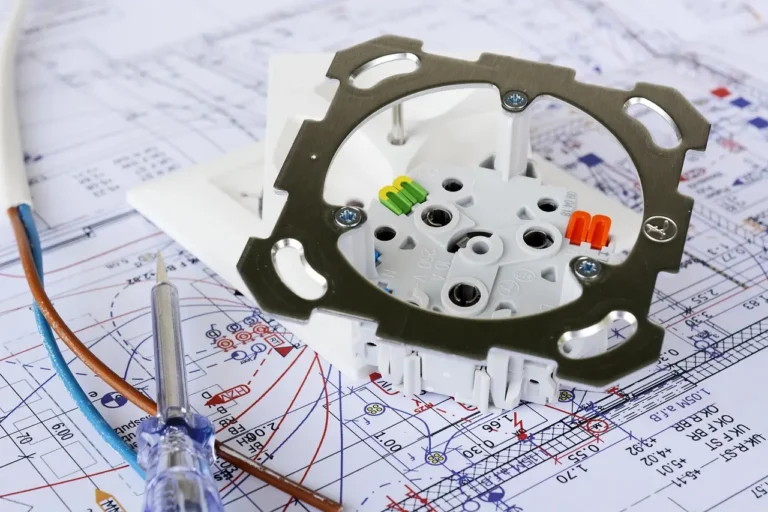
An outlet box, often called a receptacle box, provides the mounting point in the wall or on a surface and protects the conductors. It also gives you the room needed for terminals, splices, clamps, and the body of the device. If the box is too shallow, the device may not sit flush or may crowd the conductors.
When a junction box is not the same term
A junction box is a protective enclosure for spliced or branched wire connections. It is not the same as an outlet box in common use, because it may never hold a device at all. That said, some common metal boxes can be used as device boxes when they are listed and arranged for that use, with the proper cover or raised ring.
When one box can hold more than one receptacle
A single outlet can have multiple receptacles or slots. A duplex receptacle is the most familiar example in homes: one device body, two plug-in openings. That is still one outlet point in everyday speech, but it is a receptacle assembly in the box.
What box depth and fill do you need?
The right box has enough depth and cubic-inch capacity for the conductors, device, and grounds without forcing the wires into a tight bend. A shallow box may work for a simple replacement, but a GFCI, smart receptacle, USB-integrated device, or a crowded old-work box may need more room than the original install provides.
How box fill works in practice
Box fill is about volume, not guesswork. Under common NEC fill rules, each insulated conductor that enters the box counts as one conductor volume based on wire gauge, all equipment grounding conductors together count as one conductor volume, and the device yoke counts as two conductor volumes based on the largest conductor connected to it. Common conductor allowances are 2.0 cu in for #14, 2.25 cu in for #12, and 2.5 cu in for #10.
That means a box with a receptacle, two hot conductors, two neutral conductors, a ground bundle, and a cable clamp can fill faster than it looks. A larger GFCI, smart receptacle, or USB-integrated device can affect fit because of its wiring layout and the space it needs in the box, even though the yoke allowance still governs box-fill volume. If the new device is bulkier than the old one, the box may fail the fit check even when the circuit itself is unchanged.
How to check shallow, metal, plastic, old-work, and new-work boxes
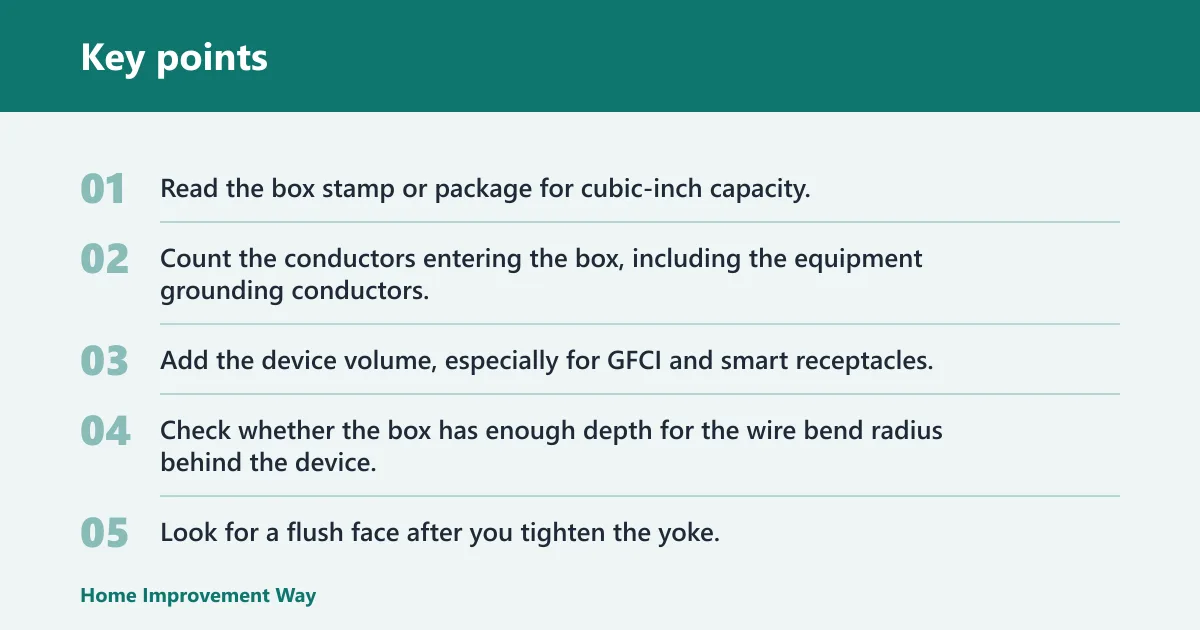
- Read the box stamp or package for cubic-inch capacity.
- Count the conductors entering the box, including the equipment grounding conductors, which together count as one conductor volume.
- Add the device volume, especially for GFCI and smart receptacles.
- Check whether the box has enough depth for the wire bend radius behind the device.
- Look for a flush face after you tighten the yoke.
Shallow metal boxes often run out of room first because the knockout hardware, ground screws, and mounting ears also take space. Plastic boxes can offer more usable room for the same outside footprint, but only if the listed cubic-inch capacity matches the job. Old-work boxes can be fine for retrofits, yet they can pinch conductors if the opening is tight or the cable enters at a bad angle. New-work boxes usually give the cleanest fit because you can choose depth before the drywall goes up.
Common replacement red flags
A cramped conductor bundle, damaged threads, missing clamps, loose mounting ears, overcrowded grounds, or a device that will not sit flush all point to a box problem, not a receptacle problem. If the wires must be shoved sideways to clear the yoke, the install is already telling you the box is too small or too shallow. Do not force the device to hide the issue.
Which receptacle type should you buy?
For most homes, the usual choice is a duplex receptacle, but the circuit rating, device style, and box depth still decide the final fit. Leviton offers standard outlets and receptacles in 15 and 20 amp versions, along with tamper-resistant models and USB-integrated designs. Common home types include 15A 125V duplex receptacles, 15/20A 125V GFCI receptacles, and 20A 125V receptacles.
15A 125V versus 20A receptacles
A 15A 125V receptacle is the common light-duty residential option. A 20A receptacle is used where the circuit and load call for it. Do not assume every 20A branch circuit needs a 20A receptacle; many 15A duplex receptacles are permitted on 20A branch circuits when code conditions are met, so the branch circuit and the outlet arrangement both matter.
Picture a kitchen counter branch circuit with a deep box and a heavier-duty device load. A 20A receptacle may fit the circuit and the load better. Now picture a bedroom replacement where the existing box is shallow and already crowded; a standard 15A duplex may fit better if the circuit and local code allow it.
When a GFCI receptacle makes sense
A GFCI receptacle is a 15/20A 125V safety device commonly used where ground-fault protection is required. It protects people from shock risk in the right setting, but it is not a universal substitute for every standard receptacle or every breaker-level AFCI need. Line and load terminals must be wired correctly, or the device will not work as intended.
How NEMA markings help
NEMA designation helps identify the receptacle style and its compatibility pattern. That matters because the physical blade pattern, wire size expectations, and breaker size are part of the part selection, not just the amp rating printed on the face. If you match only the face shape and ignore the marking, you can still buy the wrong device.
Choose Outlet receptacle if… / Choose electrical box if…
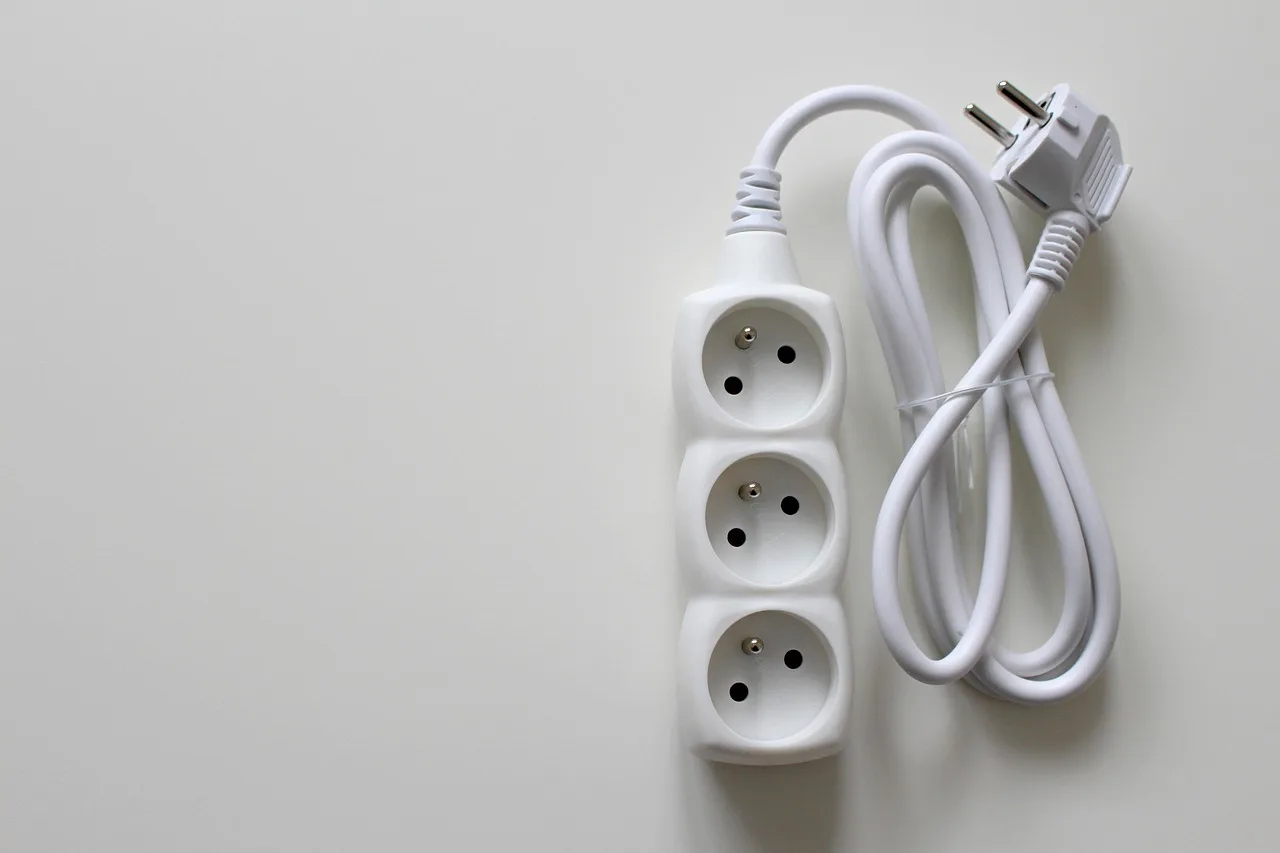
Choose the receptacle when the circuit, function, and face style are the main decisions. Choose the box when depth, cubic-inch fill, mounting support, or box condition is the limiting factor. In many replacements, the box is what decides whether the receptacle can be installed cleanly and safely.
Choose Outlet receptacle if…
Choose Outlet receptacle if the existing box has enough depth and cubic-inch capacity, the mounting ears are sound, and the only change you need is the device style or rating. It is also the better choice when you are matching an existing 15A duplex, upgrading to a tamper-resistant model, or replacing a worn face without changing the enclosure.
Choose electrical box if…
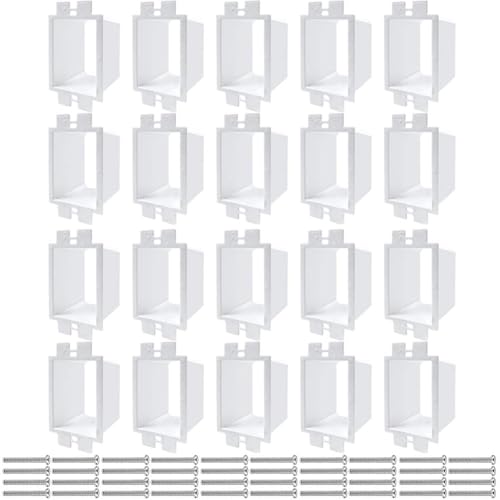
Choose electrical box if the box is shallow, damaged, overcrowded, or not listed for the device you want to install. It is also the better choice when a GFCI, USB-integrated, or other bulkier device will not sit flush, or when the old box leaves no safe path for conductors and grounds. A replacement box can solve the fit problem the receptacle cannot.
Suppose you open a 1-gang metal box and find a bundled ground, two cable runs, and a GFCI that will not sit square. The device is not the only issue. The box volume and layout are the actual bottleneck, so the box needs attention before the new receptacle will install correctly.

Receptacle box compatibility checklist
| Device type | Typical box depth concerns | Box fill warning signs | Replacement red flags |
|---|---|---|---|
| 15A 125V duplex receptacle | Often fits a standard 1-gang box, but shallow old-work boxes can pinch the rear wiring. | Two cable runs, a ground bundle, and a short box depth leave little margin. | Device rocks, face will not sit flush, or screws bottom out before the yoke tightens. |
| 20A receptacle | Body and terminal layout can be bulkier than a basic duplex. | Extra conductor loops crowd the rear of the box. | Need to fold conductors sharply to clear the receptacle body. |
| GFCI receptacle | Usually needs more depth for the device body and line/load conductors. | Front of the device presses outward or clamps snag the wiring. | No room for the label, test/reset access, or proper wire bend radius. |
| Tamper-resistant duplex | Similar to a standard duplex, but confirm the yoke does not bind in a cramped box. | Grounds packed around the screws or splice nuts. | Shutoff shutters feel stiff because the device is forced sideways. |
| USB-integrated receptacle | Often the bulkiest fit concern in a retrofit box. | Back of the box has no room for the charging module and conductors. | Device face bows outward or the wall plate cannot seat flat. |
| Shallow metal box | Depth is the primary limit, especially with two or more cables. | Knife-edge bends, crowded grounds, or missing volume for the yoke. | Damaged threads, missing clamp screws, or no safe clearance behind the device. |
| Plastic old-work box | Depth may be adequate, but cable entry angle can steal space fast. | Conductors bow against the box wall or enter under tension. | Tabs do not grip the drywall well enough for a stable mount. |
| New-work box | Usually the easiest box type to size correctly before drywall. | Overfilled because too many cables were planned for the chosen size. | Box was framed too shallow for the wall finish and device body. |
Frequently asked questions
What does NEC mean by an outlet?
In NEC Article 100, an outlet is the point on the wiring system where current is taken to supply utilization equipment. That includes a wall receptacle, but it also includes hard-wired points for appliances and lighting. The term is broader than the device in the wall plate.
What is the difference between a receptacle outlet and a lighting outlet?
A receptacle outlet is the familiar wall point where you plug in a lamp, while a lighting outlet is a box intended for direct connection of a luminaire. Both are outlets in NEC language, but they serve different end uses and often need different boxes, covers, and mounting hardware.
How do I know whether a box is for a receptacle or a junction?
Look for the function and the listing. A receptacle or outlet box is meant to support a device at the wall or surface, while a junction box is mainly for splices and branches. Some metal boxes can serve either role when they are listed and arranged for the device, cover, or ring being used.
Can one outlet contain multiple receptacles?
Yes. A single outlet can have multiple receptacles or slots. A duplex receptacle is the common residential example, with two plug-in openings in one device body. The box still has to provide enough room for the added device volume and conductors.
What kind of electrical box do I need for a standard receptacle?
Use a listed box with enough depth and cubic-inch capacity for the conductors, grounds, and device body. For many standard duplex installations, a 1-gang box is enough, but shallow boxes and crowded cable entries can push you into a deeper or larger box. Check the box stamp and the device size first.
When should I use a 15 amp receptacle versus a 20 amp receptacle?
Use the receptacle rating that fits the branch circuit, the intended load, and the code conditions for that location. A 15A 125V duplex is common in homes, and a 20A receptacle is used when the circuit and load call for it. Do not assume a 20A circuit always needs a 20A receptacle.
If the box is cramped, replace or resize the box first. If the box is sound and has room, match the receptacle rating, style, and NEMA pattern to the circuit and the device you need.
Sponsored / affiliate links. As an Amazon Associate I earn from qualifying purchases. I may earn additional commission from eligible campaigns.