RV Outlets vs. Home Outlets: Compatibility and Power Limits
An RV plug can fit a home outlet with the right adapter, but fit alone does not mean the circuit can supply enough amperage. The real limit is the branch circuit: a 15-amp or 20-amp receptacle may handle light RV loads, while a 30-amp or 50-amp RV needs a matching source to run at full capacity. If the circuit is undersized, breakers trip, cords heat up, or appliances shut down.
| Decision factor | RV outlets | home outlets | Winner |
|---|---|---|---|
| Plug fit | Matches the RV inlet and branch-circuit layout inside the coach. | May accept the plug through an adapter, but not every RV plug shape fits every receptacle. | RV outlets |
| Available power | Built for the RV’s rated supply, such as 30-amp or 50-amp service. | Limited by the household branch circuit, often 15 amps or 20 amps. | RV outlets |
| Best for light loads | Works well when the RV is connected to the right source and protected circuit. | Can work for charging, small loads, and short-term use if the circuit is dedicated and lightly loaded. | tie |
| Best for air conditioner or heater use | Better fit when the RV has the proper 30-amp or 50-amp supply. | Usually too limited for sustained high-draw appliance use. | RV outlets |
| Safety margin | Higher when the RV is connected to its intended source and cord set. | Depends on the circuit, receptacle condition, cord gauge, and what else is already on that branch. | RV outlets |
Plug fit versus circuit capacity
RV outlets are usually on the 120-volt AC side, but that does not mean every RV outlet can run from any home receptacle. The RV may be powered by shore power, a generator, or an inverter, and each source has its own limit. A plug or adapter only solves connector shape, it does not increase amperage.
What the plug can and cannot do
A 5-15 or 5-20 household receptacle may accept an RV adapter, and a TT-30 or 14-50 connection may match a larger RV inlet more directly. But the source circuit still sets the ceiling. A 30-amp RV plugged into a 15-amp home circuit is still limited to that 15-amp branch.
Think of a small RV with a battery charger, a TV, and a few interior lights. A dedicated outdoor receptacle may handle that load for a while. Add a portable heater or microwave, and the same connection can become the bottleneck even though the plug still fits.
RV outlet compatibility matrix
This matrix separates fit from capacity. A receptacle can accept a plug and still be the wrong power source for the load you want to run.
| Home outlet or circuit | Likely plug fit | Safe continuous load | Typical RV uses | Red-flag symptoms |
|---|---|---|---|---|
| 15A standard receptacle | 5-15 outlet; may accept a 5-15 or adapter-fed RV cord | About 1,440 watts on a 120-volt circuit when you keep continuous use below the branch limit | Battery charging, a few lights, control boards, and brief low-draw use | Breaker trip, warm faceplate, buzzing, dimming lights, or a plug that feels loose |
| 20A receptacle | 5-20 outlet; may accept a 5-20 plug or an adapter-fed RV cord | About 1,920 watts on a 120-volt circuit when managed for continuous use | Charging plus modest interior loads; some low-demand appliance use in a very light setup | Repeated tripping, heat at the receptacle, crackling, or brown discoloration |
| Dedicated outdoor receptacle | Often 5-15 or 5-20; sometimes GFCI-protected and weather-rated | Whatever the branch circuit allows, commonly 15A or 20A | Short-term RV hookup for storage, charging, or low-load maintenance use | GFCI trip, moisture-related shutdown, intermittent power, or nuisance tripping under light load |
| Dedicated RV hookup | TT-30 for 30A RV service; 14-50 for 50A RV service | 30A service or 50A service, depending on the inlet and source wiring | Fuller RV use, including more than one appliance at a time | Breaker trip at the pedestal, inverter shutdown, low-voltage shutdown, or hot cord ends |
15A standard receptacle
A 15A receptacle is the narrowest fit for RV use. It can be enough for a battery charger and a few small loads, but it is not a full-power RV hookup. If the RV already has the refrigerator, converter, or a rooftop unit running, the margin disappears quickly.
20A receptacle
A 20A receptacle gives you more room, but it still does not turn a house outlet into RV service. It helps with charging and light demand. It still falls short for sustained high-draw appliances, especially if the outlet shares the branch with other household loads.
Dedicated outdoor receptacle
A dedicated outdoor receptacle helps most when the branch is truly alone and in good condition. It is often the best home option for storage, pre-trip charging, or light maintenance use. GFCI protection is common outdoors, so a trip may stop the RV even when the plug fit is fine.
Dedicated RV hookup
A TT-30 or 14-50 connection is the proper choice when you want the RV to behave like it does at a campground pedestal. That source is built around the RV’s service level, not around a household convenience outlet. It is the cleanest match for air conditioners and other combined loads.
What a 15A or 20A home circuit can really run
Use the circuit rating as a ceiling, then leave room below it for continuous use. A 120-volt, 15-amp circuit can supply about 1,800 watts at the theoretical limit, and a 20-amp circuit about 2,400 watts. For planning, continuous loads should stay below that ceiling, because appliances do not draw power in a neat, perfectly stable way.
High-draw appliances add up fast
Coffee makers, toasters, hair dryers, portable heaters, air fryers, and microwaves are the usual troublemakers. One of them may fit on a small circuit by itself. Two at once can push the branch past its comfort zone, especially if the RV charger or converter is also active.
Suppose a 15A home circuit is powering the RV charger and a microwave is started for a short burst. The microwave can push the branch over the edge even if the plug still fits and the lights still seem normal at first. The breaker may trip before the receptacle ever looks obviously damaged.
What adapter do you need?
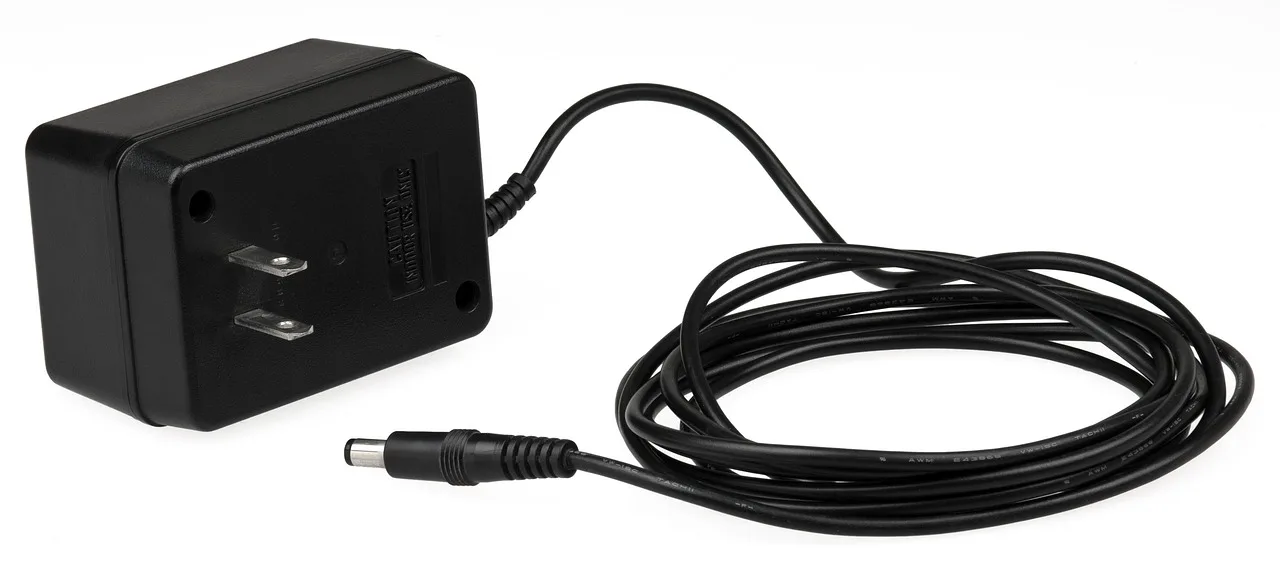
Match the RV inlet and the home receptacle before you buy or borrow anything. A TT-30 RV inlet needs a different adapter path than a 5-15 or 5-20 household receptacle, and a 14-50 source is a different animal again. The adapter must match the blade pattern, polarity, and ground path, but it cannot increase source capacity.
Use the adapter only to match the plug pattern
A 30A-to-15A or 50A-to-15A adapter changes the connector interface, not the power supply. The RV still draws from the home branch circuit behind that receptacle. If the circuit is 15A, the RV is 15A-limited no matter how large the inlet rating is.
- Identify the RV inlet: TT-30, 14-50, or a smaller 5-15/5-20 style use case.
- Identify the home receptacle: 5-15, 5-20, or a dedicated RV hookup.
- Check the branch rating at the breaker, not just the face of the outlet.
- Match the adapter to the connector shape and ground path.
- Reduce RV loads before energizing the circuit.
- Watch for heat, buzzing, or repeated trips during the first few minutes.
Why do RV outlets work on shore power but not on battery?

Because many RV outlets are fed by different sources, one part of the coach can stay alive while another is dead. Shore power comes from an external AC source, generator power comes from the onboard generator, and inverter power converts battery energy to AC for selected circuits. If the outlet side is disconnected or shut down, 12-volt systems may still work.
Source by source
Shore power may fail because of a pedestal breaker, cord issue, surge protector, or RV inlet problem. A generator can also have a tripped breaker and still leave other systems running. An inverter may power some outlets while boondocking, then shut down from low voltage, overload, overheating, or a fault.
That split is why an RV may still have lights, fans, or control power while interior outlets are dead. The 12-volt system and the 120-volt side are related, but they are not the same circuit path.
Why does a GFCI or breaker trip?
A GFCI protects against ground-fault current and can shut off downstream outlets too, so one trip can take out several RV receptacles at once. A breaker protects the wiring from overheating and may trip under overload. If a breaker sits between ON and OFF, it has usually tripped and needs a full reset after the load is removed.
What the trip may be telling you
GFCI protection is commonly used near sinks, bathrooms, kitchens, and exterior outlets. Moisture can trip protection devices or damage RV electrical connections, and neutral-ground bonding or a fault can also cause nuisance trips. Several RV outlets can fail together when the upstream GFCI opens.
Loose outlet connections can create intermittent power in an RV. Buzzing, heat, discoloration, crackling, or an electrical smell are warning signs. Stop using the outlet if you see them.
Signs of a loose or overheated connection
- Plug feels loose in the receptacle
- Outlet face or cord end feels warm
- Buzzing or crackling when the load starts
- Brown discoloration around the outlet
- Burning odor near the plug or panel
- Power cuts in and out when the cord moves
What should you check before connecting an RV to home power?
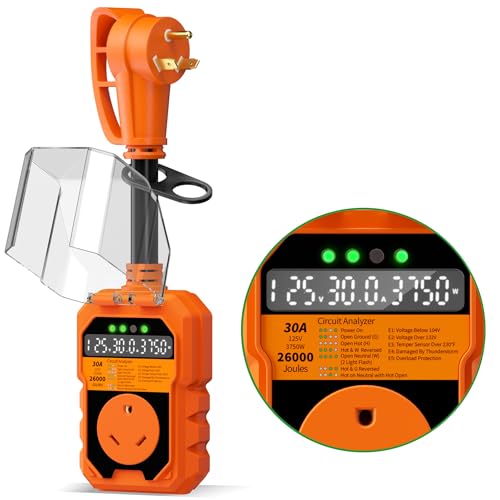
Check the source rating, the adapter, and the cord before you energize anything. The right plug shape is not enough. You also need enough branch capacity, a sound cord set, and a load plan that keeps high-draw appliances off the circuit until you know how much headroom you have.
RV outlets vs home outlets checklist
- Confirm the outlet rating and breaker size.
- Check whether the receptacle is GFCI-protected.
- Inspect the cord, blades, and adapter for damage.
- Use the shortest practical extension cord, with the correct gauge for the load.
- Keep the RV load light at first.
- Look for moisture, rain exposure, wash water, plumbing leaks, or condensation near the connection.
- Feel for heat after a few minutes of use.
A common first-timer mistake is plugging in a 30A RV through a small adapter and then starting the microwave, the coffee maker, and a space heater because the plug fit looks correct. The circuit may accept the adapter and still trip quickly because the source is the limit, not the RV inlet.
Verdict
Choose RV outlets if you need the RV to run near its intended service level, especially for air conditioning, microwave use, or multiple loads at once. Choose home outlets only for light-duty use, battery charging, and short-term hookups on a properly rated branch circuit. If the outlet is warm, buzzing, repeatedly tripping, or exposed to moisture, stop and correct the problem before reconnecting.
Frequently asked questions
Can I plug my RV into a regular home outlet?
Yes, sometimes, but only for light loads and only with the right adapter. A 15A or 20A home outlet can supply a small amount of RV power, yet it does not equal a campground-style connection. The breaker, cord condition, and total load decide whether the setup is usable.
What adapter do I need to charge an RV from a house outlet?
Match the RV inlet to the home receptacle first. A 5-15 or 5-20 household outlet may work with an adapter suited to the RV cord, but the adapter only changes the plug interface. It does not turn a 15A or 20A home circuit into 30A or 50A service.
Will a 15-amp home outlet run my RV air conditioner or microwave?
Usually not for long, and often not at all if other loads are already on. A 15A circuit is better suited to charging and small accessories. A microwave, portable heater, or rooftop air conditioner can push the branch past its limit and trip the breaker quickly.
Can a GFCI in an RV shut off other outlets too?
Yes. One GFCI can protect downstream outlets, so a single trip may take out several receptacles at once. That is common near sinks, bathrooms, kitchens, and exterior locations. If resetting it fails, look for moisture, a fault, or a load problem upstream.
Is it safe to use an extension cord with an RV at home?
Only if the cord is sized for the load and kept as short as practical. A light cord can overheat under RV demand, especially with a heater or microwave running. Check the cord for heat, loose ends, or damage, and stop if the connection buzzes or turns warm.
Sponsored / affiliate links. As an Amazon Associate I earn from qualifying purchases. I may earn additional commission from eligible campaigns.