Electrical Outlet Types: Match Room and Load
Choose the receptacle to match the room and load: use standard 15A or 20A outlets for general living spaces, GFCI protection where water is present, AFCI protection in most living areas, and dedicated 20A or 240V receptacles for appliances that need them. The wrong outlet can trip breakers, leave shock protection missing, or create overheating at the plug. This guide maps common electrical outlet types to rooms, appliance loads, and the safety protection that should come first.
Which outlet fits the room?
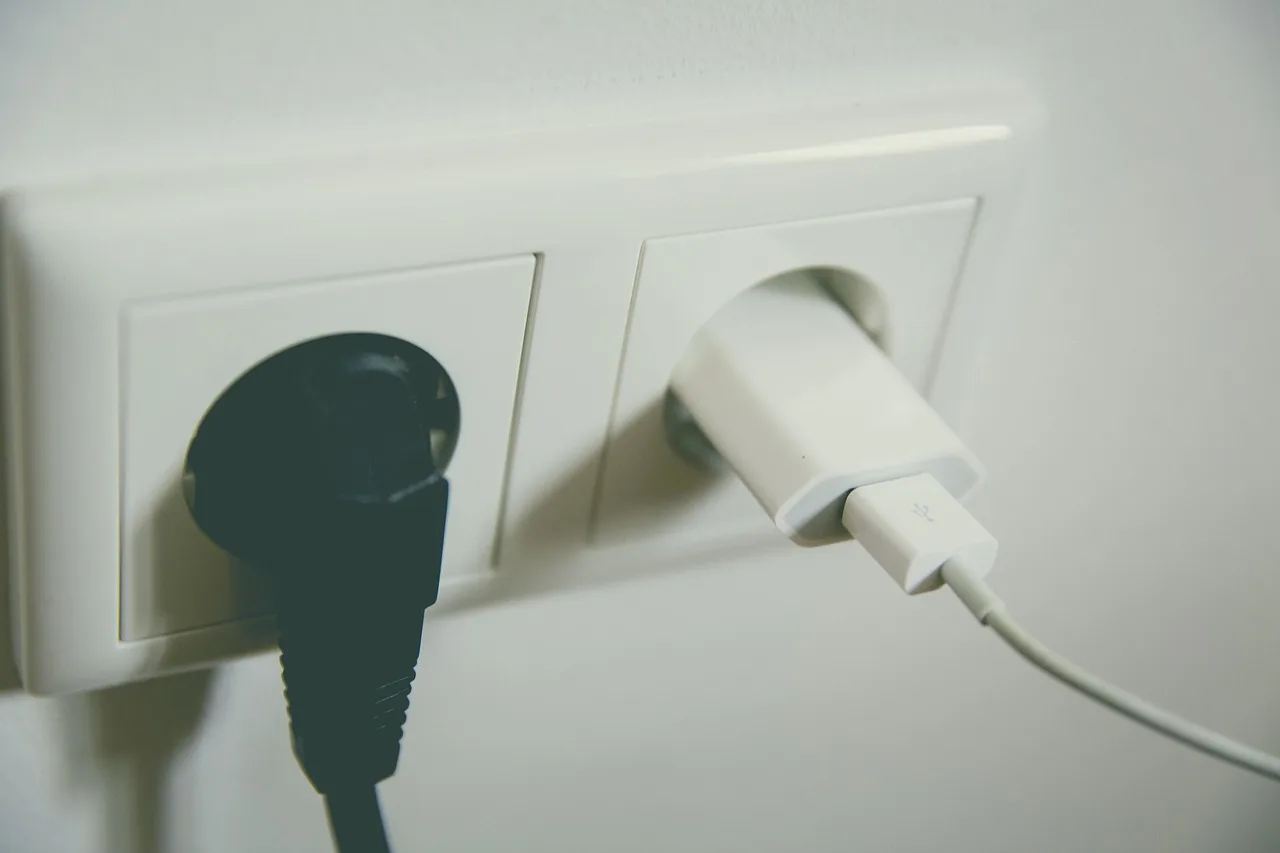


Start with the room, then check the load, then check the circuit rating. A receptacle can fit the wall box and still be wrong for the branch circuit, the appliance, or the hazard level in that location. Near sinks and tubs, protection comes first. Amp rating and grounding decide whether the outlet can actually handle the load.
Use standard 15-amp receptacles for general-purpose 120/125V household use when the circuit and wiring are sized for that load. Use 20-amp receptacles only where the branch circuit and conductor size support them, and use GFCI or AFCI protection when the location calls for it. USB ports are a convenience add-on after those checks.
Outlet decision table
| Room | Typical load | Recommended receptacle type | Required protection | Common mistake to avoid |
|---|---|---|---|---|
| Kitchen countertop | Small appliances, chargers, mixers, toasters | 20-amp receptacle on a kitchen small-appliance circuit; 15-amp only where the circuit is rated for it | GFCI protection; AFCI where the adopted code requires it | Using a standard outlet on a counter location that needs GFCI |
| Bathroom vanity | Hair dryer, shaver, toothbrush charger | 15-amp or 20-amp receptacle that matches the branch circuit | GFCI protection | Replacing a protected outlet with a plain receptacle because the faceplate matches |
| Garage | Hand tools, battery chargers, freezer, seasonal equipment | 15-amp or 20-amp receptacle matched to circuit capacity | GFCI protection; AFCI where required by local adoption | Installing a three-prong receptacle on an ungrounded circuit and treating it as grounded |
| Basement | Storage loads, dehumidifier, small work area | 15-amp or 20-amp receptacle matched to wiring | GFCI protection in many locations; AFCI where required | Skipping protection because the outlet is far from a sink |
| Laundry room | Washer, ironing board, utility charging | 20-amp receptacle for laundry equipment where the circuit is sized for it | GFCI protection; AFCI where required | Using a general living-room outlet for laundry equipment without checking the circuit |
| Bedroom | Lamps, phone charging, alarm clock, TV | 15-amp receptacle for general use; USB only at a charging point | AFCI protection is commonly used; tamper-resistant is standard in many homes | Choosing USB everywhere instead of keeping standard receptacles for lamps and floor lights |
| Living room | Lighting, media, laptop, vacuum | 15-amp receptacle on a general branch circuit | AFCI protection in many jurisdictions; tamper-resistant where required | Assuming any outlet can be upgraded to USB without checking box space and wiring |
| Home office | Computer, monitor, printer, router, desk charger | 15-amp receptacle; USB receptacle at the desk if charging convenience matters | AFCI protection is often appropriate | Replacing the only standard receptacle with USB ports and losing plug-in flexibility |
What belongs in kitchens, baths, garages, and laundry rooms?
These rooms demand protection before convenience. Kitchens and laundry rooms often need higher-current receptacles for appliance loads, while bathrooms, garages, and many basement locations need GFCI protection because the shock risk rises around water, concrete floors, and damp conditions.
Kitchen small-appliance circuits
In a kitchen, the branch circuit is usually a 20-amp small-appliance branch circuit for countertop loads, while the receptacle itself is often a standard 15-amp duplex receptacle; 20-amp receptacles are used where the circuit and load call for them. That matters because a mixer or toaster may fit a standard outlet, yet the circuit can still be wrong for the combined demand. Use GFCI protection at countertop locations, and add AFCI protection where the local code edition calls for it.
Suppose a countertop outlet powers a coffee maker and toaster at the same time. A plain 15-amp receptacle may fit the box, but the room and load still call for the right branch circuit and protection. The receptacle should match the circuit rating, not the plug shape alone.
Bathroom sink area and vanity outlets
Bathrooms need GFCI protection on bathroom receptacles because shock protection matters more than convenience there. A 15-amp or 20-amp receptacle can work if it matches the branch circuit, but the protection is the non-negotiable part. Many modern homes also use tamper-resistant devices in these rooms.
Replacement guidance often points to GFCI devices with Test and Reset buttons, and that is the practical feature to look for when you replace a bathroom receptacle. If the outlet is older and ungrounded, a GFCI replacement may be the code-accepted upgrade path, along with required labeling where applicable.
Garage and basement receptacles
Garages and basements need a closer look than most people expect. These spaces often contain concrete floors, moisture, tools, freezers, and extension cords, so GFCI protection is commonly the safer choice. Choose 15-amp or 20-amp receptacles based on the branch circuit, then verify grounding instead of assuming it.
Picture a garage outlet used for a battery charger and a shop vacuum. A three-prong face does not prove the circuit is grounded. If the circuit is two-wire, a three-prong receptacle alone does not create a grounding path.
Laundry room appliance outlets
Laundry rooms often need 20-amp receptacles for washer circuits and nearby utility loads. The branch circuit matters more than the outlet style on the wall plate. Use GFCI protection where required by the location and adopt AFCI protection when the jurisdiction or remodeling scope calls for it.
A common first-timer mistake is swapping a laundry outlet for a USB receptacle because the room also charges a phone. That trades away utility for convenience. Keep the standard receptacle for the appliance load, then add a separate charging point if needed.
When should you choose 15 amp or 20 amp?
The receptacle must match the circuit, because a device that physically fits can still be the wrong choice electrically. The face is not the whole story.
Standard household loads on 15 amp receptacles
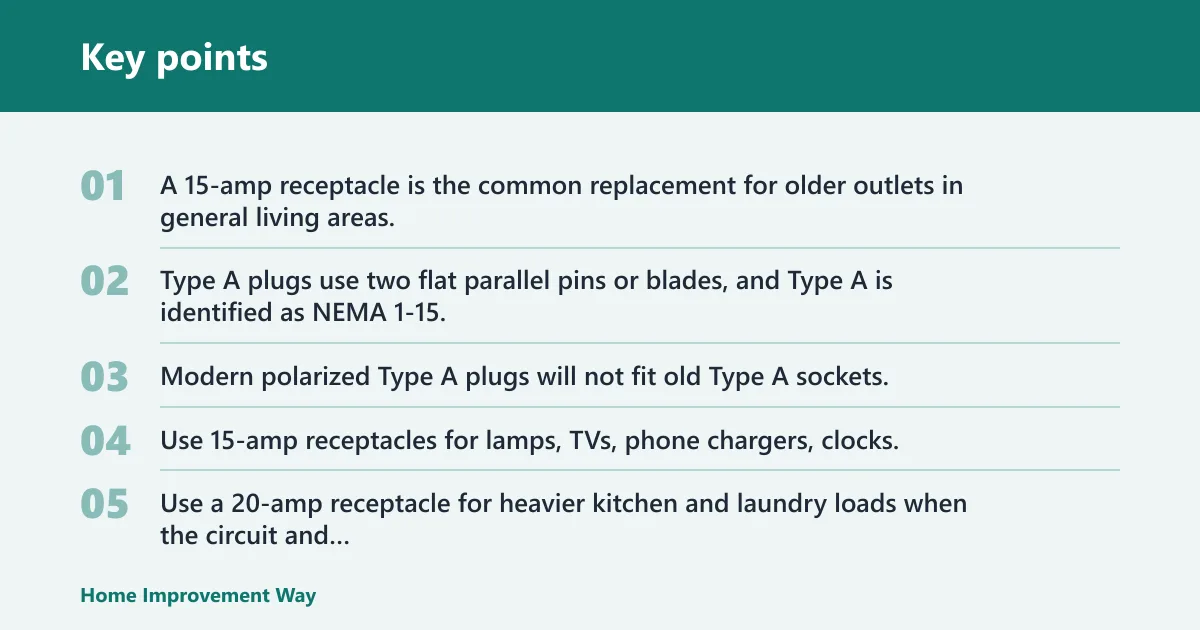
A 15-amp receptacle is the common replacement for older outlets in general living areas. Type A plugs use two flat parallel pins or blades, and Type A is identified as NEMA 1-15, a North American 15 A/125 V ungrounded plug. Modern polarized Type A plugs will not fit old Type A sockets.
Use 15-amp receptacles for lamps, TVs, phone chargers, clocks, and similar everyday loads when the branch circuit is rated for that use.
Heavier branch circuits and 20 amp receptacles
Use a 20-amp receptacle for heavier kitchen and laundry loads when the circuit and wiring capacity support it. A 20-amp, 125-volt outlet is the better fit for larger home appliances like kitchen or laundry equipment. On some 125V versions, the T-shaped slot is a visual clue that it is built for 20-amp use.
Do not install a 20-amp receptacle on a circuit that is not rated for it. That is one of the most common mismatches in replacement work. The outlet can fit the box and still be wrong for the wiring behind it.
Why the circuit matters more than the face
The receptacle face tells you what plugs fit. The circuit tells you what the wiring can safely supply. For example, a standard two-prong receptacle is often described as a 15-amp, 125-volt, two-wired outlet, but replacing it with a three-prong face does not add a grounding conductor.
If the circuit does not support the receptacle you want, the safer fix is at the circuit level, not at the faceplate level. That can mean a new grounded branch circuit, a GFCI replacement where permitted, or a different outlet type entirely.
Do bathrooms and garages need GFCI outlets?
Yes, bathrooms and garages commonly need GFCI protection because the shock hazard rises around sinks, damp floors, and exterior-connected spaces. The protection must be present at the receptacle or upstream in the circuit, depending on the installation method and local code. A GFCI is about ground-fault shock protection, not short-circuit protection.
Where GFCI protection is used
GFCI receptacles are commonly used in bathrooms, kitchens, garages, basements, laundry rooms, and outdoor locations. The exact rule can vary by location and adopted code, so check local requirements before replacing anything.
GFCI receptacles usually have Test and Reset buttons. Those buttons matter because they let you check whether the protection is responding and restore power after a trip. If the GFCI trips repeatedly, the cause may be moisture, a faulty appliance, or a wiring problem that should be found before the receptacle is replaced again.
Common replacement mistakes near water
Do not swap a GFCI outlet for a standard receptacle just because the new faceplate looks cleaner. Also do not assume a plain three-prong outlet is enough in a wet location. A room can have a grounded receptacle and still lack the shock protection that belongs there.
AFCI and tamper-resistant receptacles
AFCI and tamper-resistant devices solve different problems. AFCI protection helps reduce fire risk from arcing, while tamper-resistant shutters help block foreign objects from socket slots. Both show up often in modern homes, but they answer different safety concerns and may be required by different rules.
Where arc-fault protection is commonly used
AFCI receptacles are often used in bedrooms and living rooms. The protection may be built into the outlet or provided at the breaker. Code requirements depend on the adopted NEC edition and local enforcement, so a room that needs AFCI in one jurisdiction may be handled differently in another.
AFCI protection is mandatory for bedroom circuits in homes built after 1999, but that is too simple for actual replacement work. For a remodel or swap, the safer approach is to check the local adopted code and the existing circuit before choosing the device.
Why tamper-resistant shutters are standard in many homes
Tamper-resistant receptacles typically use spring-loaded shutters that block foreign objects unless both slots are pressed in a normal plug pattern. That makes them a standard choice in many modern homes, especially in bedrooms, play areas, hallways, and family rooms where children may be present. They do not change the circuit rating.
When protection belongs at the breaker instead
Some homes use breaker-level AFCI or GFCI protection instead of outlet-level devices. That can be the cleaner choice during a larger panel or remodeling project. The receptacle still needs to match the circuit and the room, but the protective device may live in the panel rather than at the wall.
Two-prong, grounded, and USB receptacles
Older two-prong outlets are outdated, but the right upgrade depends on the wiring behind them. A three-prong receptacle is the safer modern replacement only when grounding is actually present or when the chosen code-accepted replacement method addresses the ungrounded circuit correctly. USB is a convenience feature, not a substitute for proper wiring.
Replacing an old two-prong outlet
Can you replace a two-prong outlet with a three-prong outlet? Sometimes, but not by faceplate alone. A two-prong outlet is often an ungrounded circuit, and installing a three-prong receptacle on it does not create a ground. A code-accepted upgrade may be a GFCI receptacle replacement with required labeling where applicable, or a grounded circuit upgrade.
Replacement guidance describes a standard three-prong receptacle as 15 amp and 125 volts. That does not mean every two-wire circuit is ready for one. The key question is whether the grounding path exists and whether the replacement method is allowed for that circuit.
When a three-prong grounded receptacle is appropriate
A three-prong grounded receptacle belongs on a grounded branch circuit and is the common modern choice in current homes. It supports standard grounded plugs and is the right answer when you are upgrading obsolete wiring with a proper equipment grounding conductor. If the outlet tests ungrounded, do not treat it as a grounded receptacle.
When a USB receptacle makes sense
A USB receptacle makes sense at nightstands, desks, kitchen counters with charging stations, and family-room spots where phones and tablets live. Choose USB-A, USB-C, or a combination based on your charging needs and the devices you actually use. Keep standard receptacles nearby for lamps, vacuums, and other plugs that still need a normal outlet.
USB should be an added convenience, not the only outlet in a room. If a receptacle location is doing double duty for charging and appliances, a mixed setup usually works better than a USB-only replacement.
How do I know if my outlet is grounded?
You can tell a lot from the receptacle and the wiring method, but the face alone is not enough. A three-prong outlet does not prove grounding, and a two-prong outlet usually means the circuit is ungrounded. The reliable check is a proper tester or direct inspection by a qualified person.
- Look at the receptacle style: two slots usually indicate an older ungrounded outlet, while three slots indicate a grounded-style receptacle.
- Check whether the circuit has a visible grounding conductor or metal conduit that serves as the grounding path.
- Use a receptacle tester if the circuit is already energized and accessible.
- If the test shows open ground, do not assume a three-prong face has fixed the problem.
- Choose the replacement method that matches the wiring: grounded receptacle, GFCI replacement where allowed, or a circuit upgrade.
If an older outlet is in a bedroom, living room, or hallway, the right replacement may be a grounded receptacle only after the wiring is updated. If the wiring stays two-wire, a GFCI-based replacement may be the correct path with any required labeling. That is safer than installing a three-prong face and calling it done.
Frequently asked questions
What type of electrical outlet should I use in a kitchen?
Add GFCI protection at countertop locations, and use AFCI protection where the adopted code requires it. Avoid choosing by plug shape alone, because the circuit and protection matter more.
What is the difference between a 15-amp and 20-amp outlet?
A 20-amp receptacle is built for higher-current branch circuits and often has a T-shaped slot on 125V versions. The outlet must match the circuit rating and wiring capacity, not just the appliance plug.
Where are AFCI outlets required in a house?
AFCI protection is commonly used in bedrooms and living rooms, and it may be built into the receptacle or provided at the breaker. Exact requirements depend on the adopted NEC edition and local enforcement. For a remodel or replacement, check the circuit and the local rule set before choosing the device.
Are tamper-resistant outlets required in homes?
They are standard in many modern homes, especially in areas where children may be present. Tamper-resistant shutters block foreign objects from the slots unless a proper plug is inserted. They do not replace grounding or GFCI protection, and they do not change the amperage rating of the receptacle.
Can I replace a two-prong outlet with a three-prong outlet?
Only if the wiring supports the replacement method. A three-prong receptacle on a two-wire circuit does not create a ground by itself. A code-accepted option may be a GFCI replacement with required labeling where applicable, or a full grounding upgrade if you want a true grounded receptacle.
Sponsored / affiliate links. As an Amazon Associate I earn from qualifying purchases. I may earn additional commission from eligible campaigns.